


Most parents watching their kid pitch from the mound focus on one thing: speed. The faster the throw, the better the pitcher, right? That belief is holding a lot of young athletes back. Pitching success at every level, from Little League to high school varsity, comes down to something far more trainable and far more overlooked: knowing the zone. This guide breaks down exactly what pitching zone knowledge is, why it matters more than raw velocity, and how you can start building this skill in your young pitcher today with practical drills, smart tools, and a new way of thinking about the game.
Table of Contents
- What is pitching zone knowledge?
- How the strike zone and MLB changes impact young pitchers
- Zone rate and effectiveness: Teaching young pitchers smart strategy
- Drills and tools to build pitching zone knowledge
- Why most youth pitching development skips zone intelligence (and how to fix it)
- Next steps: Training tools to master pitching zone knowledge
- Frequently asked questions
Key Takeaways
| Point | Details |
|---|---|
| Pitching zone knowledge matters | Knowing where and why to throw in the zone gives pitchers a real advantage over just focusing on speed. |
| Strike zone is evolving | Recent MLB rules and technologies are reshaping how the strike zone is defined and taught. |
| Effectiveness over accuracy | Smart pitching is about blending zone rate with outcomes, not just always aiming for the center. |
| Practice with purpose | Targeted drills and strategic tools help young athletes develop deep pitching intelligence. |
What is pitching zone knowledge?
Now that we’ve challenged the usual focus on power, let’s define what pitching zone knowledge actually means and why it’s an overlooked competitive edge.
Pitching zone knowledge is a pitcher’s ability to recognize, understand, and strategically use the different areas within the strike zone. It goes well beyond simply knowing where the zone starts and ends. A pitcher who “knows the box” can throw strikes. A pitcher with real zone knowledge can place the ball in specific locations to exploit a batter’s weaknesses, change their eye level, and set up the next pitch before they even throw it.
Think of it this way. Knowing the strike zone is like knowing where the goal is in soccer. Zone knowledge is understanding which corner of the goal the keeper can’t reach. The difference between those two levels of awareness is enormous in terms of game outcomes.
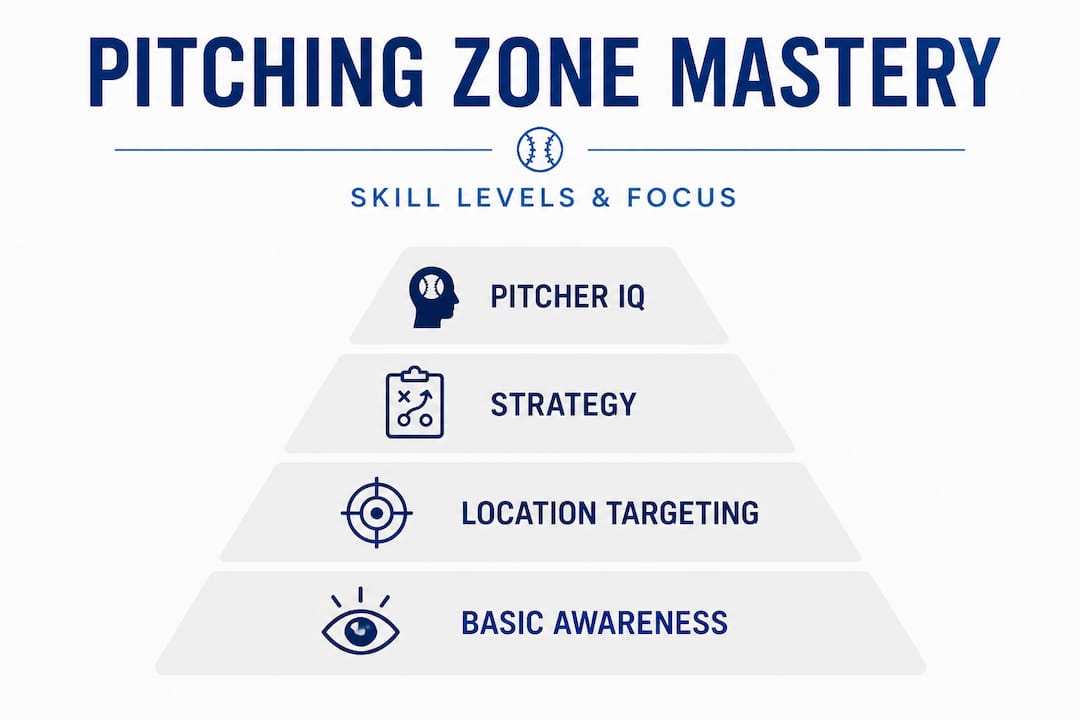
Here’s a quick breakdown of how this skill develops across levels:
Pitching zone knowledge skill levels:
- Basic: The pitcher knows the general strike zone boundaries and aims to throw strikes consistently.
- Intermediate: The pitcher can target specific areas (inside, outside, high, low) and adjusts based on count.
- Advanced: The pitcher understands individual batter tendencies and uses location to generate weak contact, swings and misses, or chases outside the zone.
As research from Baseball Prospectus confirms, expert-level zone knowledge extends well beyond the simple strike zone rectangle to how different locations are differentially effective against different batters. That’s a powerful concept to introduce early in a player’s development.
Here’s a simple table showing how zone knowledge progresses from beginner to advanced:
| Skill level | Zone awareness | Location targeting | Batter-specific strategy |
|---|---|---|---|
| Basic | Knows the box | Throws for strikes | None |
| Intermediate | Knows quadrants | Targets corners | Limited |
| Advanced | Knows batter tendencies | Exploits weak spots | Consistent |
Building toward that advanced level takes time, repetition, and the right kind of practice. Understanding how to grip and release the ball for different locations is also part of the picture, which is why many coaches recommend starting with a solid pitching grips tutorial to connect mechanics with placement strategy from the beginning.
The key takeaway here is that zone knowledge is not a talent you’re born with. It’s a skill you build through intentional practice, and the earlier you start, the bigger the advantage your child develops over time.
How the strike zone and MLB changes impact young pitchers
With zone knowledge defined, it’s important to consider how professional-level changes in strike zone enforcement are already influencing how young players learn and practice pitching.
The strike zone has never been as simple as a fixed rectangle. Umpires have always had slightly different interpretations, and batters and pitchers have always had to adapt. But something significant has shifted in recent years at the MLB level, and it’s already trickling down to how youth coaches and parents think about training.
MLB has been actively testing and rolling out Automated Ball-Strike (ABS) systems, which use technology to call balls and strikes based on a precisely defined zone rather than a human umpire’s judgment. This matters because the technology-defined zone is often slightly different from what umpires traditionally called. As Fangraphs has documented, the strike zone is shrinking under these new enforcement models, particularly at the edges where pitchers have historically gotten borderline calls.
Why does this matter for a 10-year-old pitcher in a local rec league? Because the mental models coaches and parents use to teach the zone are shaped by what they see at the professional level. If the “teachable zone” is shifting, the way you train your child should shift too.
“The edges of the zone are becoming less reliable for pitchers who depend on getting borderline calls. The new emphasis is on true location quality, not just proximity to the zone.” This is the direction the game is heading, and youth development needs to keep up.
What this means practically is that teaching your young pitcher to rely on “painting the black” or getting calls on the outside corner may become less effective over time. Instead, the focus should shift to genuine location precision and understanding which areas of the zone produce the best outcomes regardless of how the zone is called.
Pro Tip: Practice with an adjustable home plate or a zone target that lets you define different strike zone boundaries. This trains your pitcher to be flexible and accurate across multiple interpretations of the zone, which builds real adaptability rather than dependence on a single target area.
This is also a great opportunity to have conversations with your child’s coach about how they’re defining the zone in practice. Are they teaching a rigid rectangle, or are they helping players understand that the zone is dynamic and situational? The answer tells you a lot about how forward-thinking the program is.
Zone rate and effectiveness: Teaching young pitchers smart strategy
Understanding the zone is only the first step. Now, let’s explore how often young pitchers should target the zone and why strategy matters more than statistics alone.
One of the most useful concepts from advanced baseball analytics is “zone rate,” which simply means the percentage of pitches a pitcher throws inside the strike zone. On the surface, you might think a higher zone rate is always better. More strikes, fewer walks, more efficiency. But the reality is much more nuanced, and understanding this nuance can transform how you coach your young pitcher.
According to Fangraphs, zone rate paired with effectiveness is the real metric that matters. A pitcher who throws 70% of pitches in the zone but gives up hard contact on most of them is not performing better than a pitcher who throws 55% in the zone but generates swings and misses and weak grounders. The goal is not maximum zone rate. The goal is maximum effectiveness.
Here’s a comparison of two pitching approaches to make this concrete:
| Approach | Zone rate | Likely outcome | Risk level |
|---|---|---|---|
| High zone rate, no strategy | 70%+ | Hard contact, high batting average | High |
| Strategic zone usage | 50-60% | Weak contact, chases, whiffs | Low |
| Low zone rate, no control | Below 45% | Walks, high pitch count | Very high |
The sweet spot is strategic zone usage. That means knowing when to throw in the zone to get a hitter to swing, when to throw at the edges to generate a chase, and when to waste a pitch to set up the next one.
Here’s a step-by-step approach to teaching this balance in practice:
- Start with accuracy first. Before any strategy, your pitcher needs to be able to consistently hit specific zones on command. Use a target with clearly defined areas and track where each pitch lands.
- Introduce count awareness. Teach your pitcher that a 0-2 count is a completely different situation than a 3-0 count. In a pitcher’s count, you have room to work the edges or go outside the zone. In a hitter’s count, you need to throw a strike.
- Add a “purpose pitch” concept. Every pitch should have an intention. Ask your pitcher before each throw: “Where are you going and why?” This builds the habit of thinking before throwing.
- Practice the setup sequence. Introduce the idea that pitch one sets up pitch two. A fastball inside sets up a changeup away. A high pitch sets up a low pitch. Train these sequences in practice, not just individual throws.
- Track outcomes, not just accuracy. Did the pitch generate a swing? A miss? A weak grounder? These outcomes matter more than whether the pitch was technically in the zone. Start keeping simple notes during practice sessions.
This kind of strategic thinking is what separates a pitcher who simply throws strikes from one who actually gets hitters out. And the earlier your child starts developing this mindset, the more natural it becomes as they advance through competitive levels.
Drills and tools to build pitching zone knowledge
After grasping the strategy behind pitching zone knowledge, here’s how you and your child can put this into practice with targeted training at home or in practice.
The best way to build zone knowledge is through repetition with feedback. That means your child needs to throw a lot of pitches, but more importantly, they need to know where each pitch went and why it worked or didn’t. Here are three at-home drills that target different aspects of zone knowledge:
Three at-home drills for building zone knowledge:
-
Quadrant targeting drill: Set up a target divided into four quadrants (high inside, high outside, low inside, low outside). Call out a quadrant before each pitch and track how many times your pitcher hits the called zone. Start at close range and gradually move back to full pitching distance. This builds the neural connection between intention and execution.
-
Count simulation drill: Set up a fake count before each pitch (0-2, 3-1, full count, etc.) and have your pitcher choose the right location based on the count. This trains decision-making under simulated pressure. You can add a simple scoring system where correct location choices earn points.
-
Chase zone drill: Place a target just outside the strike zone (low and away, or high and tight) and practice throwing pitches that start on the edge and finish just off the plate. This is the foundation of getting batters to chase, which is one of the most valuable skills in pitching.
Color-coded pitching targets are especially powerful for this kind of training. When different zones are visually distinct, young pitchers build a stronger mental map of the zone. As confirmed by Baseball Prospectus research on adversarial pitch location, knowing how different locations produce different results against different batters is the hallmark of elite-level pitching intelligence. Starting to build that map early gives young players a massive head start.
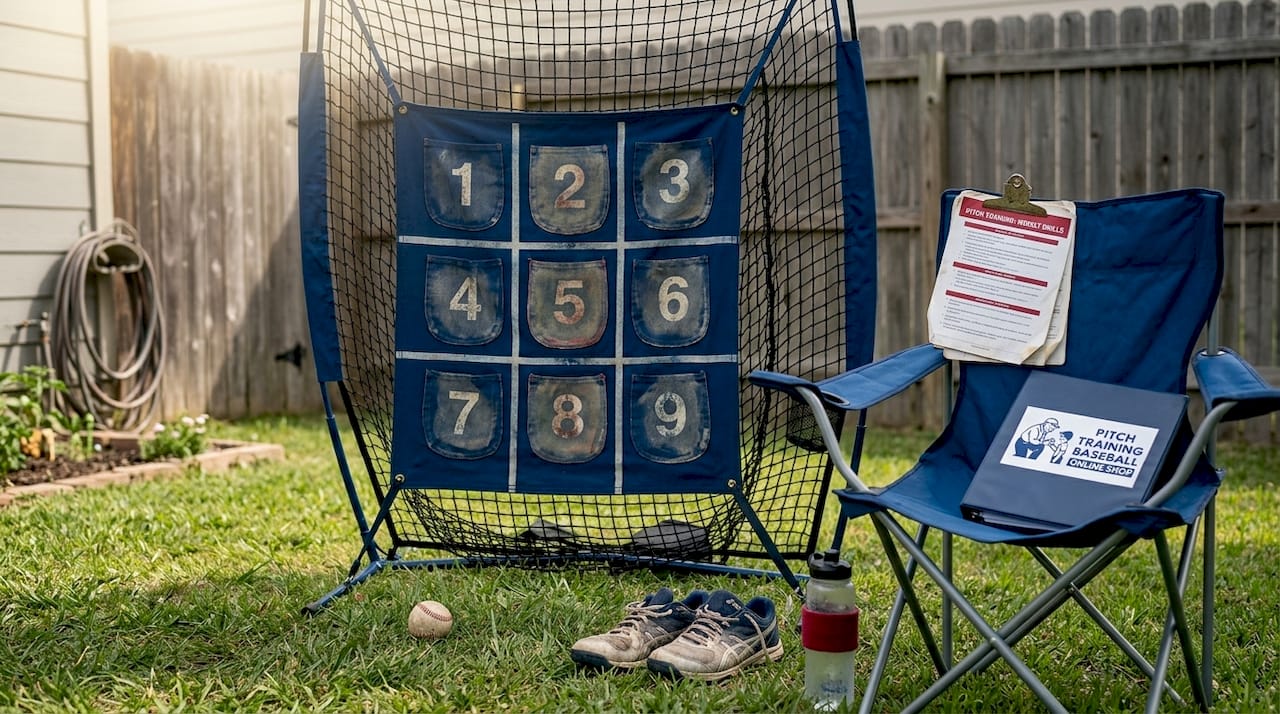
A 9-zone target net is one of the most effective tools for this kind of structured zone training. It divides the strike zone into nine distinct areas, giving your pitcher a clear visual reference for every pitch and making it easy to track patterns over time. For players who also want to develop their softball pitching skills alongside baseball, a dedicated softball pitching trainer can provide the same kind of zone-specific feedback in a format built for that sport.
Pro Tip: Involve your young pitcher in setting up and adjusting the zone targets before practice. Let them act as a mini-coach, deciding which zones to focus on that day and why. This kind of active decision-making reinforces the mental side of zone knowledge just as much as the physical repetition does. When kids feel ownership over their training, they engage more deeply and retain more.
One more thing worth emphasizing: consistency matters more than intensity. Ten focused pitches per day with a clear target and intentional feedback will do more for your child’s zone knowledge than 100 random throws in the backyard. Build the habit of purposeful practice, and the results will come faster than you expect.
Why most youth pitching development skips zone intelligence (and how to fix it)
Here’s an uncomfortable truth that most youth baseball programs won’t tell you: the way young pitchers are typically coached prioritizes what’s easy to see over what actually wins games.
Velocity is visible. A radar gun gives you a number. Mechanics can be filmed and analyzed. But zone intelligence, the ability to think two pitches ahead, to recognize a batter’s weakness and exploit it, to know when to go inside and when to stay away? That’s harder to measure, so most programs don’t bother teaching it.
The result is a generation of young pitchers who can throw hard and look smooth but have no idea what to do when a smart hitter adjusts after two pitches. They’ve been trained to execute, not to think. And at the higher levels of the sport, thinking is what separates the players who advance from the ones who plateau.
We’ve seen this pattern repeatedly. A kid dominates at 10U because they throw harder than everyone else. By 13U, the other kids have caught up physically, and suddenly the “best pitcher on the team” is struggling. It’s not because their mechanics broke down. It’s because they never built the mental game to go with the physical tools.
The fix starts with parents asking better questions. Instead of asking “how fast is he throwing?” after practice, ask “what zones did he work today?” Instead of celebrating strikeouts, celebrate smart pitch sequences. When you change what you pay attention to, you change what your child practices.
Talk to your child’s coach directly. Ask whether the program includes any instruction on pitch location strategy, count-based decision-making, or batter tendency recognition. If the answer is no, that’s not necessarily a reason to leave the program, but it is a reason to supplement at home. A resource like the 12 pitching grips guide can help bridge the gap between mechanics and placement, giving your pitcher both the physical tools and the strategic vocabulary to start thinking about the zone more intelligently.
The best youth pitching development doesn’t just make kids throw harder. It makes them throw smarter. And smart pitchers have longer careers, fewer arm injuries from overcompensating with effort, and far more success as the competition gets tougher. That’s the investment worth making.
Next steps: Training tools to master pitching zone knowledge
Equipped with this understanding, discover the tools that can help your young pitcher master the zone quickly and confidently.
Building real zone knowledge requires consistent, structured practice with tools that give clear, immediate feedback. That’s exactly what the Pitch Training Baseball suite is designed to deliver. A physical Pitching Target Net with a 9-zone strike zone gives your child a visual map of the entire zone, making it easy to practice specific locations and track improvement over time. It’s portable, adjustable, and built for the kind of focused repetition that actually changes habits.
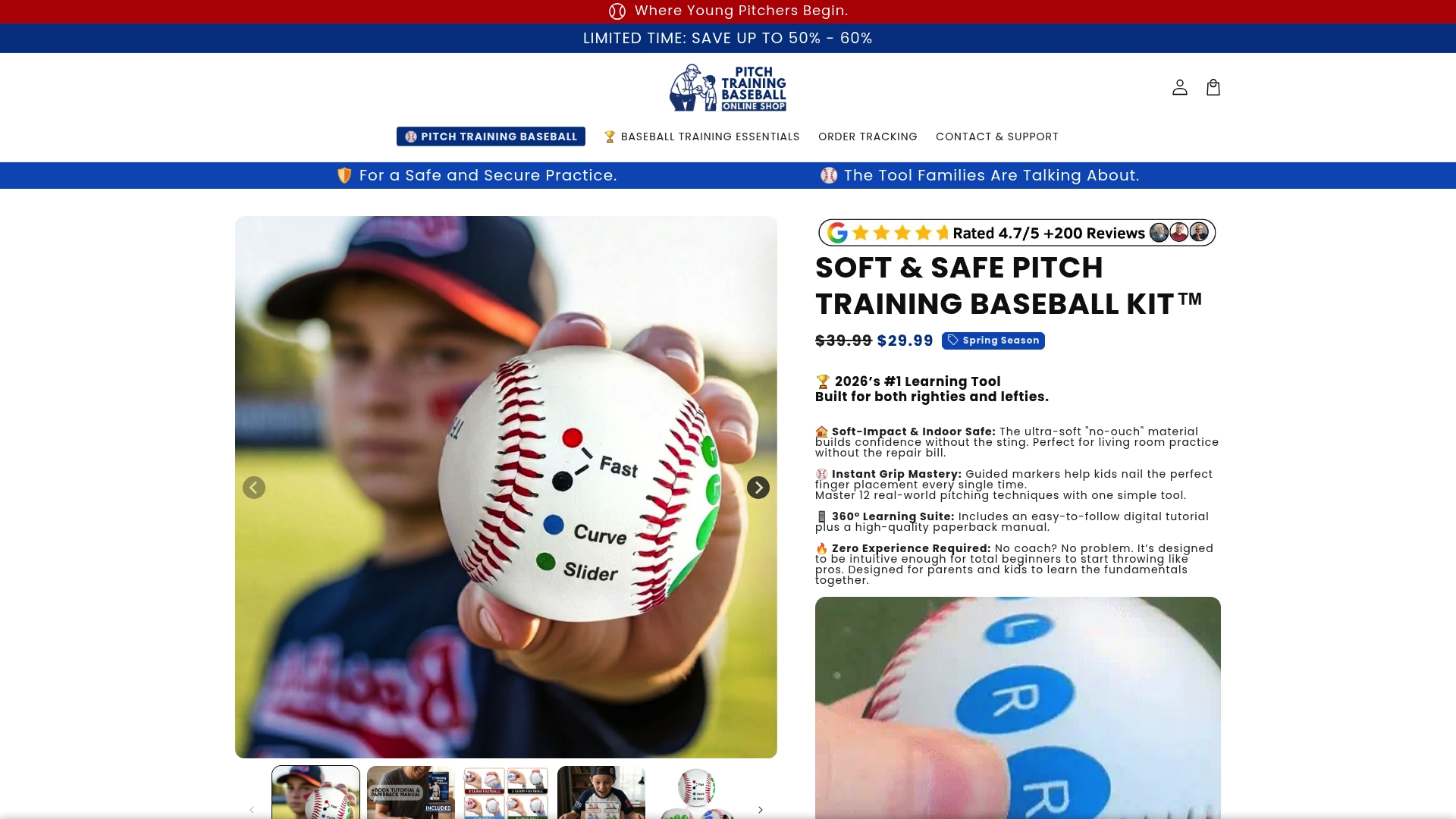
Pair the target net with the Pitch Training Baseball for a complete at-home training setup that makes every session purposeful. These tools are trusted by coaches and parents across the country because they turn abstract concepts like “throw inside” or “work the low zone” into concrete, measurable practice. Your child doesn’t need a full team or a professional facility to build elite zone knowledge. They need the right tools, a willing parent, and a plan. Start today and watch the difference it makes in just a few weeks of consistent practice.
Frequently asked questions
Why is pitching zone knowledge important for young players?
Pitching zone knowledge helps players aim smarter, improve performance, and make better game decisions rather than just throwing harder. Research confirms that zone knowledge extends beyond the basic strike zone rectangle to how specific locations work differently against different batters.
Has the definition of the strike zone changed recently?
Yes, MLB technology and rule changes including ABS automated ball-strike systems have adjusted how the strike zone is called and taught at all levels. As documented by Fangraphs, the strike zone is shrinking under these new enforcement models, which affects how coaches and parents should approach zone training.
What is a “zone rate” and does it matter for youth pitchers?
Zone rate measures how often a pitcher throws in the strike zone, but a high zone rate without strategic intent often leads to hard contact and poor results. According to Fangraphs, zone rate paired with effectiveness is the metric that actually matters for pitching success at any level.
How can parents help their kids get better at pitching zone knowledge?
Parents can introduce structured drills using color-coded or multi-zone targets and encourage players to think about both aim and outcome on every pitch. Because expert-level zone knowledge involves understanding how different locations affect different batters, building this habit early gives young pitchers a lasting competitive edge.