


Pack the legal game bat, a broken-in glove, a properly fitted helmet, cleats, batting gloves, a cup, a full uniform set, and a refillable water bottle, and you’ve covered the non-negotiables. Everything else in this guide builds around that foundation: backups that save a weekend when gear fails, parent logistics that keep the sideline sane, food and hydration that stop the third-game crash, and scenario add-ons for heat, cold, and mud. There’s a printable checklist waiting at the end, too.
TL;DR:
- Pack two bats, a spare set of gloves and socks, and a small repair kit to prevent equipment failures from ruining tournament games.
- Use a layered system for weather protection, including cooling towels, extra sunscreen, or hand warmers, depending on forecasted heat or cold.
- Carry a well-organized parent bag with shade, chairs, emergency supplies, and a printed schedule to avoid stress and wandering during long tournament days.
- Hydrate consistently starting the night before and focus on carbohydrate-rich meals before games to maintain energy levels throughout multi-day events.
- Keep a dedicated, evolving checklist with labeled gear zones and habitual post-tournament updates to ensure nothing is forgotten or outdated.
Table of Contents
- Baseball Packing List Essentials for On-Field Play
- What Parents Should Pack for the Sideline
- Food, Hydration, and Fueling Between Games
- Recovery and First-Aid Items That Save a Weekend
- Hotel and Overnight Tournament Logistics
- Weather Add-Ons: Heat, Cold, Rain, and Mud
- Position-Specific Gear: Catcher, Pitcher, Infield, Outfield
- How to Build a Packing System That Actually Sticks
- Where Portable Pitching Gear Fits Into Tournament Prep
- My Weekend Packing Routine, Start to Finish
- A Simpler Way to Pack for Pitching Warmups
- Sources
Baseball Packing List Essentials for On-Field Play
A tournament weekend punishes anyone who packs like it’s a single Saturday game. You can expect multiple games over two or three days, often with a rained-out schedule getting crammed back in on Sunday. The gear checklist that actually works splits into two piles: what a player must have, and the backups that keep one broken lace or lost mouthguard from turning into a lost tournament.
Primary items, non-negotiable:
- A legal labeled game bat that meets your league’s bat certification (USABat, USSSA, or BBCOR depending on age and division)
- A broken-in glove, not a brand-new one straight out of the box
- A helmet that passes a real fit check, not one that’s been handed down twice
- Cleats matched to the field surface your tournament actually uses
- Batting gloves and a cup
- A full uniform set: jersey, pants, belt, socks, hat
Backups matter more in travel ball than in rec league, because there’s no quick trip home between games. Pack a second bat if your budget allows it. A cracked bat during a Saturday double-header with no replacement is a season-defining bad memory for a nine-year-old. Bring a spare pair of batting gloves, an extra set of socks and undershirts, and a small glove-repair kit (lace and a leather conditioner) so a snapped lace doesn’t sideline a fielder mid-tournament.
Assemble full uniform sets the night before, not piece by piece the morning of. That means belt, socks, and hat are already clipped or folded with the jersey and pants, so nobody’s hunting for a single sock at 6:45 a.m. Labeling every piece with a permanent marker or iron-on tag also prevents the classic lost-and-found pileup at the equipment tent, where a dozen identical navy jerseys end up in a heap by Sunday.
Pro Tip: Run a two-minute “sticker and strap” check before you leave the driveway: confirm the bat’s certification sticker is intact and legible, the helmet chin strap isn’t frayed, and cleat laces have no weak spots. Umpires do check bat stickers at check-in, and a faded or missing one can bench a bat you paid $200 for.
A tournament-tested checklist also recommends confirming footwear rules before you pack cleats. Some tournament complexes restrict metal spikes for younger divisions or ban them entirely on turf fields, so check the tournament’s field rules a few days out rather than discovering the restriction at the gate.
If your player’s equipment fit has been an ongoing issue, it’s worth reading up on custom equipment options for youth players before the next tournament rolls around, since ill-fitting gloves and helmets cause more in-game problems than most parents expect.
What Parents Should Pack for the Sideline
Players need gear. Parents need a system, because a 12-hour day at a tournament complex with no shade structure and a half-mile walk from parking to field three will wreck anyone’s mood by game two.
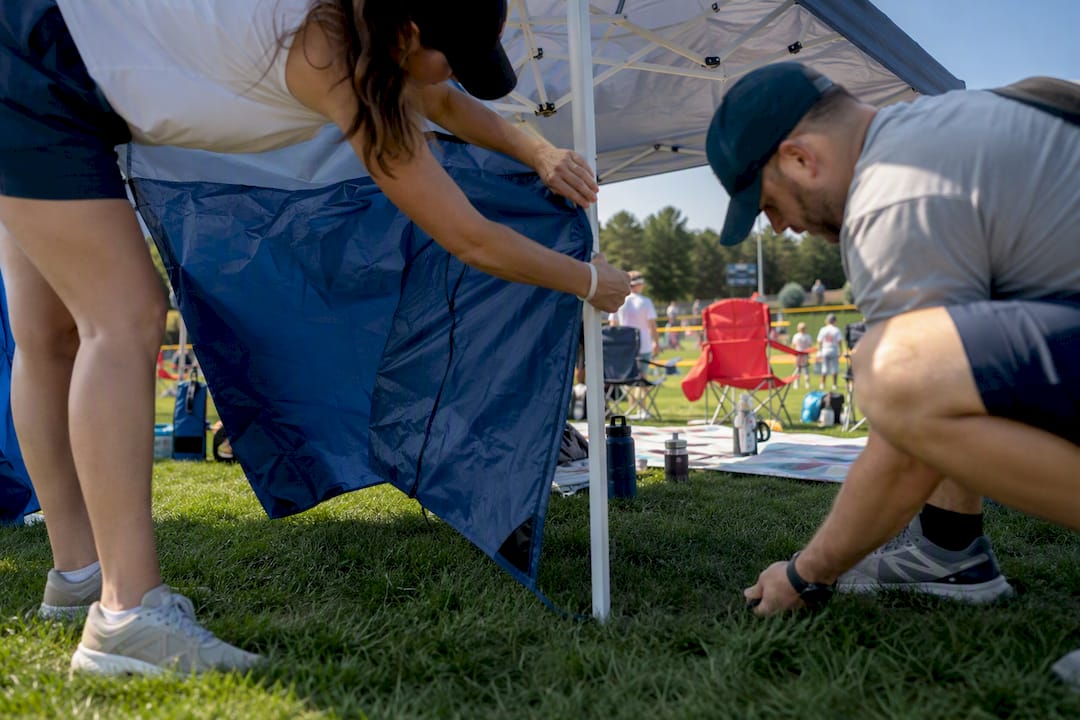
A rolling wagon or collapsible cart is close to mandatory once you’re hauling a bat bag, a cooler, chairs, and a canopy across a gravel parking lot. Carrying all of that by hand across multiple fields adds up to real physical strain over a three-day weekend, and it’s one of the most consistently recommended purchases among parents who’ve done more than one travel season.
What belongs in the parent bag:
- Canopy or pop-up shade tent, especially for complexes with no covered seating
- Folding chairs (the low sling kind holds up better on uneven grass than bulky recliners)
- Sunscreen, hats, and sunglasses for the adults, not just the kids
- A small organization pouch with phone chargers, a portable power bank, cash and cards, the printed game schedule, and emergency contact and medical information for your player
- A shared team cooler and a dugout organizer, split among two or three families so nobody’s carrying the entire load solo
That organization pouch matters more than it sounds. Wifi drops at rural complexes, phones die by the fourth game, and a printed schedule with field numbers and game times saves you from wandering between diamonds asking strangers where field six is. Keep a laminated card with your player’s allergies, medications, and your pediatrician’s number in there too. It’s the kind of thing you hope never to need and are grateful to have the one time you do.
Team logistics work best when they’re divided early, not negotiated in a parking lot on day one; deciding who’s on snack duty and what to pack can be easier with practical game day snacks that please the whole team. Decide who brings the shared cooler, who’s on snack duty, and who tracks the group’s schedule changes before the tournament, not during it.
Food, Hydration, and Fueling Between Games
Hydration starts the night before, not when your player steps off the bus dehydrated in July heat. The CDC’s guidance for athlete hydration recommends starting to hydrate before arrival and sipping consistently through the day rather than chugging water between innings. Clear urine and steady energy levels are the simplest signs your player is drinking enough; dark urine or a mid-game energy crash usually means they’re behind.
Pre-game meals should lean toward carbohydrates with moderate protein, eaten a couple of hours before first pitch. A turkey sandwich on whole-grain bread, a bowl of pasta with grilled chicken, or oatmeal with fruit all work better than a heavy, greasy breakfast that sits in the stomach through the first three innings.
Cooler and snack strategy:
- Split the cooler into two zones: shelf-stable snacks (granola bars, crackers, dried fruit) and perishables (fruit, deli meat, cheese) so nothing spoils by day two
- Pack electrolyte packets for hot afternoons, especially during back-to-back games
- Bring an insulated water jug for group refills instead of buying individual bottles all weekend
- Keep a small trash bag in the wagon so you’re not hauling wrappers around the complex
Concession stands run out of everything by the second game of a big tournament, or they simply don’t exist at some complexes. A well-stocked cooler with shelf-stable and perishable zones separated isn’t a luxury; it’s what keeps a hungry ten-year-old from playing his last at-bat on an empty stomach.
Recovery and First-Aid Items That Save a Weekend
Small injuries snowball fast over a multi-game weekend if nobody’s carrying the basics. A compact first-aid kit belongs in every parent bag, not just the team manager’s.
First-aid must-haves:
- Adhesive bandages in a few sizes
- Athletic tape for finger jams and minor sprains
- Antiseptic wipes
- Blister pads or moleskin
Recovery items worth the space:
- Reusable ice packs for a sore elbow or a foul ball off the shin
- A topical analgesic for general soreness after a long day
- A compression sleeve for pitchers or catchers with recurring arm fatigue
- An extra pair of socks and a spare set of laces, since blisters and foot discomfort ruin more Sundays than any other minor issue
Most of what comes up over a weekend is manageable with rest, ice, and tape. The red flags that mean you stop and get real medical attention: a fall or collision followed by confusion or a headache, a joint that won’t bear weight, or pain that gets worse instead of better after twenty minutes of rest and ice. Don’t talk yourself out of pulling a kid from a game over any of those.
Hotel and Overnight Tournament Logistics
The families who move smoothest through a multi-day tournament separate their gear by where it lives, not by what it is. Car gear and hotel gear serve different jobs, and mixing them means someone’s digging through a suitcase at 6 a.m. looking for cleats.
- Keep in the car: cooler, chairs, canopy, wagon, and the full baseball bag, packed and ready to grab without unpacking the trunk.
- Keep in the hotel room: sleep clothes, phone chargers, a small laundry bag, stain stick for grass and dirt stains, and any melatonin or sleep aid your family uses after a late night game.
- Set a “first-game zone” in the hotel room, near the door, with tomorrow’s uniform and any recovery snacks laid out the night before.
- Run a five-minute room reset after late games: rinse the water bottle, restock the snack bag, and check the laundry bag for anything that needs washing before the next game.
This system means a player grabs one bag on the way to the car and everything else stays where it belongs.
Weather Add-Ons: Heat, Cold, Rain, and Mud
Tournament weather rarely cooperates for three straight days, so the smart move is layering scenario items on top of your core checklist rather than rebuilding it each time.
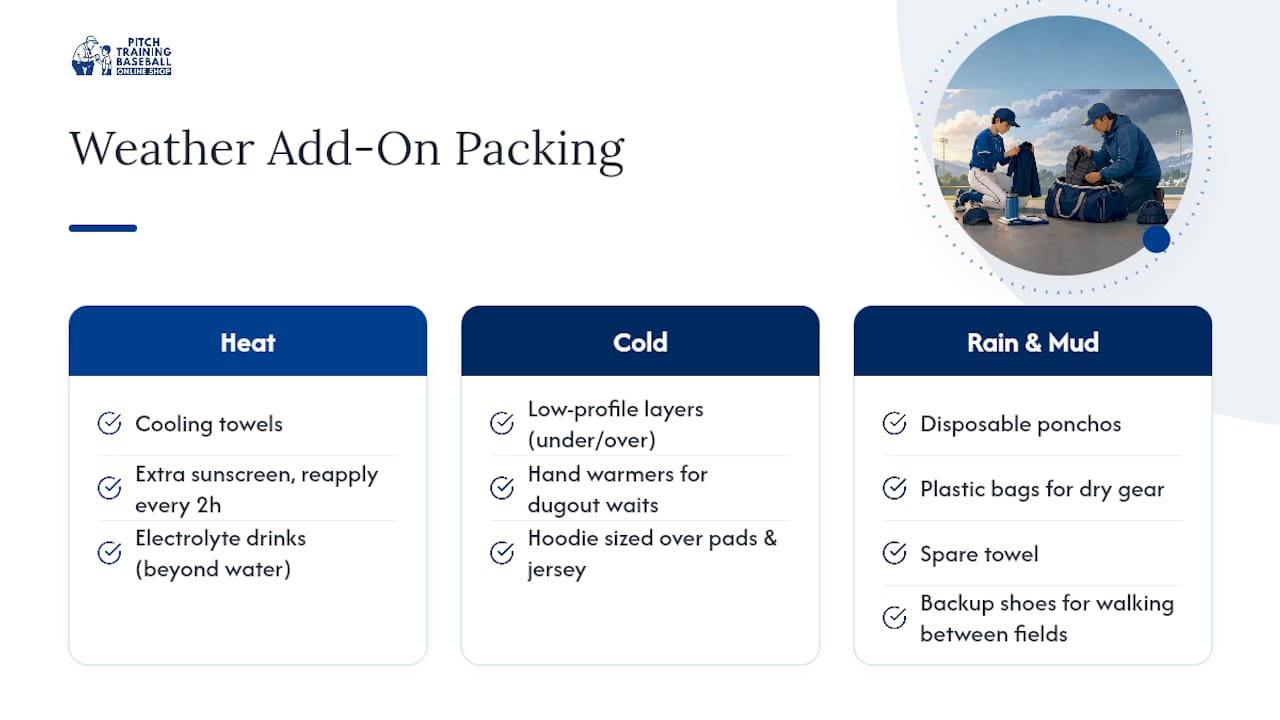
Hot weather: cooling towels, extra sunscreen (reapply every two hours), and electrolyte drinks beyond your regular water supply.
Cold weather: layers that fit under or over a uniform without restricting a swing, hand warmers for dugout waits, and a hoodie sized to go over shoulder pads and jersey both.
Rain and mud: disposable ponchos, a couple of large plastic bags to protect dry clothes and shoes, a spare towel, and a backup pair of shoes for walking between fields when cleats would otherwise track mud through the car.
Field-surface footwear rules often shift with weather. Some complexes switch to turf-only cleat restrictions after heavy rain, so it’s worth a quick check with tournament directors or the posted field rules before assuming Saturday’s cleats work for Sunday’s muddy makeup game.
Position-Specific Gear: Catcher, Pitcher, Infield, Outfield
Every position adds a short list on top of the core essentials, and packing these into a labeled pouch inside the main bag keeps things from scattering.
- Catcher: full catcher’s set (chest protector, shin guards, mask), a throat guard, knee savers for long innings, and an extra towel for wiping down gear between games.
- Pitcher: a warmup towel, a lightweight recovery shirt for after outings, arm-care items like a compression sleeve, and a simple pitch count tracker to help coaches manage workload across the weekend.
- Infield and outfield: a rosin bag where leagues permit it, sunglasses for day games, and glove conditioner to keep leather from drying out under a hot sun.
Pack these extras in one labeled zip pouch rather than loose in the bottom of the bag, so a catcher’s throat guard or a pitcher’s sleeve doesn’t end up buried under batting gloves on game day.
How to Build a Packing System That Actually Sticks
A checklist only works if it evolves. The families who never forget anything treat their packing list as a living document, not a static printout from three seasons ago.
- Label everything with permanent marker, gear tags, or iron-on labels, especially anything that looks identical to a teammate’s.
- Pack in three zones: a first-game zone for tomorrow’s uniform and gear, a backup zone for spares, and a dirty-gear zone that keeps sweaty, grass-stained clothes away from clean ones.
- Keep one master checklist on your phone or a laminated card, and edit it after every tournament, adding what you needed and cutting what you never touched.
- Do a nightly unload-and-restock, refilling the water bottle, checking the first-aid kit, and moving dirty gear into the laundry bag before the next morning.
Pro Tip: Take thirty seconds after the final game of each tournament to write down the one thing you wished you’d packed. That single habit, repeated over a season, builds a far sharper list than any generic template ever will.
Where Portable Pitching Gear Fits Into Tournament Prep
Packing a compact pitching target or a small set of warmup balls alongside the standard bag gives pitchers a way to get loose in a hotel parking lot, a hallway, or any open patch of grass before first pitch, without needing a full bullpen setup. A folding target tucks into a duffel bag corner, and soft training balls travel safely in a side pocket without damaging other gear.
Consistency matters more than intensity in a pre-game warmup. A pitcher who runs the same short warmup routine every outing, using the same tool, tends to settle in faster and reports less pre-game anxiety than one improvising each time. That kind of repeatable routine ties directly into broader arm-care habits that matter across a full tournament weekend, not just a single outing.
My Weekend Packing Routine, Start to Finish
The night before, I lay out uniforms by game order, check the bat bag for stickers and straps, and load the car with everything except the cooler, which goes in the morning. My co-parent handles snacks and the schedule pouch; I handle gear and the wagon. It’s a simple split, and it keeps either of us from carrying the whole mental load.
After every tournament, three things get replaced without exception: batting gloves that are starting to tear, socks with worn heels, and anything in the first-aid kit that got used. Small habit, fewer surprises next time.
— Albert
A Simpler Way to Pack for Pitching Warmups
If your player needs somewhere to loosen up before first pitch that doesn’t require a full bullpen or a patient parent playing catch in a parking lot, a portable target changes that. The Pitching Target Net with Strike 9-Zone folds down small enough to fit in a duffel bag and sets up in under a minute on grass, turf, or pavement, giving pitchers a consistent spot to find their release before games start.
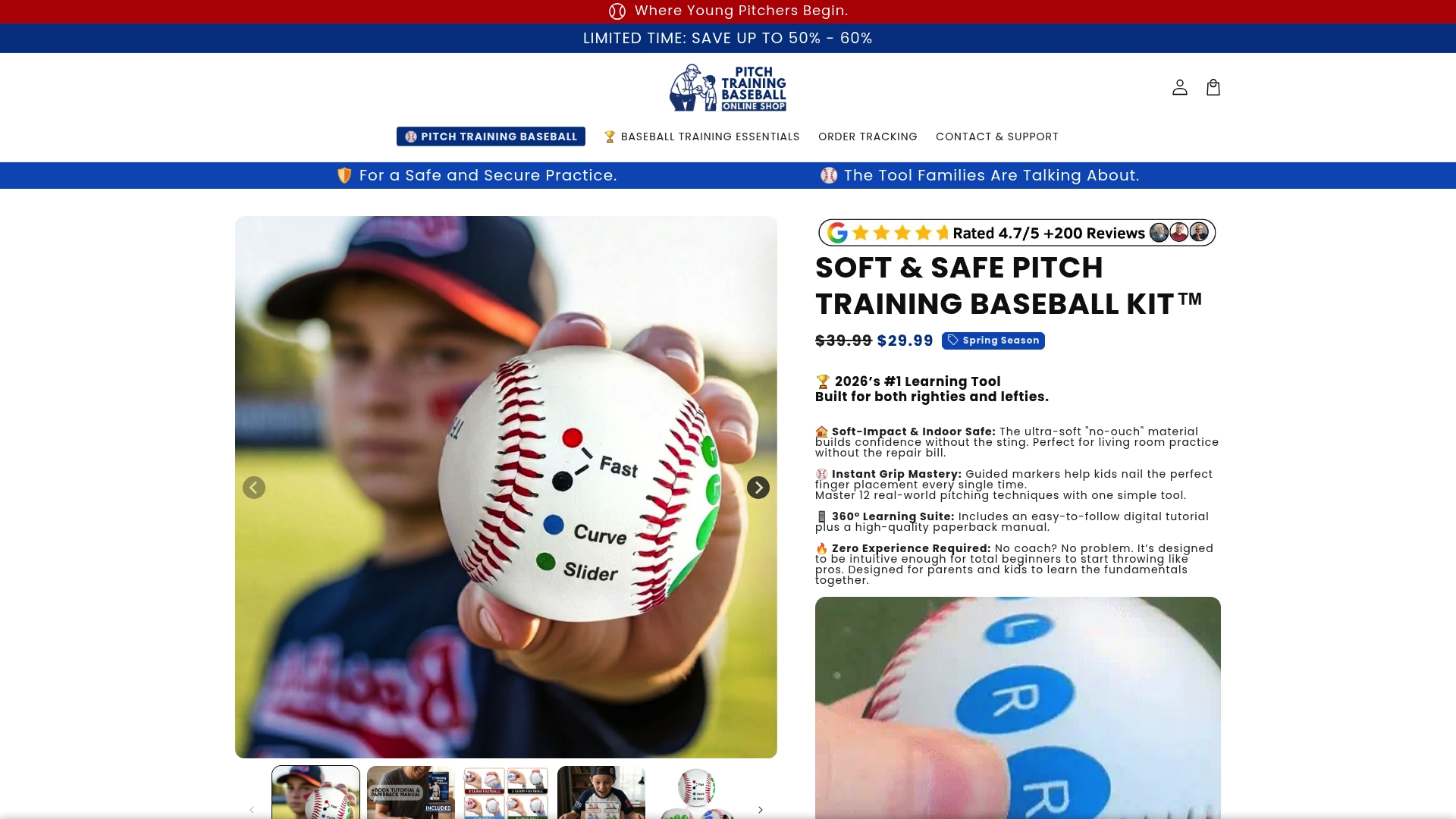
Pair it with a set of 5 Pickeballs for a warmup kit that travels light and doesn’t take up half the trunk. Before you toss either into the bag, check your tournament’s space rules and field policies for pre-game warmups. If your family has a softball player too, the Pitch Training Softball works the same way. Browse the full lineup at Pitch Training Baseball and add a portable warmup option to next weekend’s bag.
Sources
This list draws on hydration guidance from the CDC, tournament-specific advice from Texas Elite Baseball, and gear breakdowns from Yankee.life and GoRout’s free printable checklist, which you can download and adapt for your own team.