


Most parents show up at the baseball field wanting one thing: to help their kid succeed. But the role of parents in baseball training is more complicated than hauling equipment and cheering from the bleachers. Push too hard, and you risk pushing your child out of the sport entirely. Step back too far, and they lose the emotional anchor that keeps them engaged. This guide cuts through the confusion and gives you a clear picture of what works, what backfires, and how to show up in a way that actually builds your young player’s confidence and love for the game.
Table of Contents
- Key takeaways
- The role of parents in baseball training and why motivation matters
- What parents should actually do at practices and games
- Providing emotional and logistical support that builds confidence
- Balancing involvement: finding the right level of engagement
- Setting a positive example and shaping team culture
- My honest take on the hardest part of baseball parenting
- Help your young player build real skills at home
- FAQ
Key takeaways
| Point | Details |
|---|---|
| Parental pressure drives dropout | Nearly 70% of young athletes quit before middle school, often due to pressure from parents. |
| Authoritative beats authoritarian | Warm, supportive parenting tied to better motor skills and intrinsic motivation in young athletes. |
| Moderate involvement works best | Research shows an inverted-U pattern where middle-ground engagement produces the best youth outcomes. |
| Process praise beats outcome praise | Saying “You worked hard today” builds more resilience and motivation than “Great job winning.” |
| The 24-hour rule saves relationships | Waiting before discussing a tough game protects your child’s enjoyment and your relationship. |
The role of parents in baseball training and why motivation matters
Here is a stat that should get your attention: about 70% of young athletes quit organized sports before they even reach middle school. One of the biggest reasons is parental pressure. Not lack of talent. Not bad coaching. Parental pressure.
The 2026 Aspen Institute national survey puts numbers on what many parents suspect but refuse to acknowledge. Kids primarily play sports for fun (48%) and to be with friends (47%). Only 12% say earning a scholarship is part of their motivation. Yet 21% of surveyed youth reported feeling pressured by parents to keep playing, and 18% said they were compared to other players. Those comparisons sting, and they corrode a child’s love for the game faster than any losing streak.
Gender differences you cannot ignore
The data splits along gender lines in a way that should make every parent pause. According to gender disparity findings from the 2026 Project Play survey, female former players are twice as likely as males to report being compared to other players (25% vs 9%), pressured to play (24% vs 16%), and witnessing their parents argue with officials (13% vs 6%). If you have a daughter in baseball or softball, your behavior in the stands carries even more weight than you might realize.
What the research on parenting style says
A 2026 study published in Sport Sciences for Health found a significant link between authoritative parenting and both motor competence and intrinsic motivation in girls aged 7 to 9. Authoritative parents are warm, involved, and set reasonable expectations while listening to their kids. Authoritarian parents demand compliance without much warmth. The difference in outcomes was not subtle.
Dr. Paul McCarthy’s research introduces what he calls the inverted-U pattern of involvement, which shows that both disengaged parents and overly pushy parents produce worse outcomes than parents who land in the moderate, supportive middle. Your presence matters. Your tone matters even more.
What parents should actually do at practices and games
Let’s be direct: your job at your kid’s baseball game is not to coach. It is to support. These are very different things, and confusing them is one of the most common mistakes parents make in youth sports.
Many leagues formalize this boundary for good reason. Most leagues require parents to sign a conduct agreement before the season starts. These agreements typically prohibit shouting instructions from the stands, arguing with umpires, and criticizing players, including your own child, during games. Violations can get you removed from the field. That rule exists because parental interference disrupts the coach’s authority, confuses young players, and poisons the environment for every kid on the field.
Behaviors that help versus hurt
Here is a straightforward breakdown of what actually supports your child during games and practices:
What helps:
- Cheering effort, not just outcomes (“Great hustle getting to that ball!”)
- Staying calm when your child makes an error
- Respecting the coach’s decisions, even when you disagree
- Arriving on time and being fully present
- Interacting positively with other parents and officials
What hurts:
- Shouting technique instructions during live play
- Criticizing the umpire’s calls loudly or aggressively
- Discussing your child’s mistakes immediately after the game ends
- Comparing your child to teammates or players on other teams
- Using the car ride home to analyze what went wrong
The car ride home deserves special mention because it is one of the most loaded moments in youth sports. Many kids dread it. They already know when they played poorly, and a 15-minute critique session from the back seat tells them your approval is conditional on their performance.
Pro Tip: Try the 24-hour rule. After a game, especially a tough one, agree as a family to wait at least 24 hours before discussing performance and emotional reactions. Lead with “I love watching you play” instead. The conversations that happen the next day, when emotions have settled, are far more productive and far less damaging.
Providing emotional and logistical support that builds confidence
The most effective parental support combines practical help with emotional safety. These two things together create the conditions where kids actually develop confidence and stay in the sport longer.
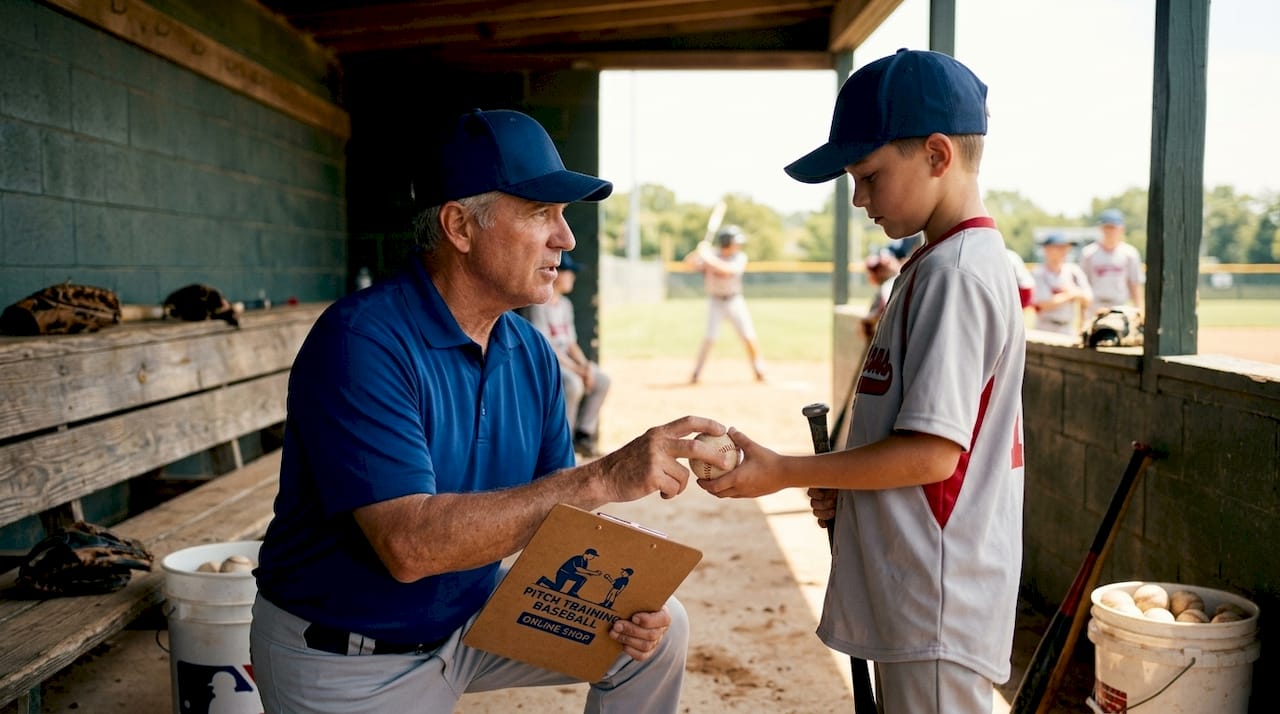
Logistically, your role is real and meaningful. Getting your child to practice consistently, making sure their equipment fits and is in good shape, packing a decent snack and hydration for hot game days. These things matter more than they sound. They signal to your child that their sport is a priority in your family without adding any performance pressure.
The power of process-focused praise
One of the most underrated shifts you can make as a baseball parent is changing how you give praise. Process-focused praise, which targets effort and specific behaviors rather than results, builds intrinsic motivation and resilience. Outcome-based praise like “Great, you got a hit!” can actually increase anxiety over time because the child starts linking your approval to things partially outside their control.
Try these instead:
- Replace “You pitched great today” with “I noticed you really focused on your mechanics out there.”
- Replace “I can’t believe you dropped that ball” with nothing. Let the moment pass.
- Replace “We need to win this one” with “Let’s see you play your game today.”
- Replace “Why didn’t the coach start you?” with “How are you feeling about the game?”
- Replace “You need to work harder in practice” with “What part of practice felt good to you this week?”
Each of these swaps puts the focus on process, growth, and your child’s experience rather than outcomes, comparison, or pressure.
Encouraging autonomy is not the same as checking out
One of the key ways you can support your child’s development is by encouraging them to manage their own baseball experience. Let them talk to the coach directly when they have questions. Let them decide whether they want to do extra practice or rest. Let them set goals for the season in their own words.
Pro Tip: When your child wants to discuss something with the coach, resist the urge to intervene. Coach them on how to approach the conversation, then let them handle it. This builds communication skills, confidence, and independence that extends far beyond baseball.
This approach, sometimes called supporting without suffocating, means staying positively present while letting the child own their development. You are the safety net, not the driver.
Balancing involvement: finding the right level of engagement
The research is clear that moderate parental involvement consistently produces the best outcomes for young athletes. Too little engagement leaves kids feeling unsupported. Too much tips into pressure, control, and eventual burnout.
So what does “moderate” actually look like in practice? It means showing up consistently without micromanaging. It means asking how your child felt about practice rather than demanding a performance debrief. It means being their loudest fan without becoming their toughest critic.
Signs your child might be feeling the pressure
Watch for these behavioral shifts, which often signal a child is experiencing sports-related stress or parental pressure:
- Reluctance to go to practice or games when they used to be excited
- Stomach aches or headaches before games
- Avoiding eye contact with you after errors
- Saying things like “I’m just not good enough” after a game
- Losing interest in talking about baseball at home
These are not just normal performance anxiety. They are signals that the environment around your child’s sport has become more stressful than fun. The consistent parental presence that matters most is emotional availability, not coaching from the bleachers.
Do’s and don’ts for balanced baseball parenting
Do:
- Celebrate effort and attitude over stats
- Ask open-ended questions about how your child is enjoying the game
- Trust the coach to handle skill development
- Keep the sport fun and low-pressure at home
- Show up, be present, and cheer genuinely
Don’t:
- Compare your child to teammates or players on other teams
- Schedule extra training sessions without your child’s enthusiasm
- Live your own athletic dreams through your child’s performance
- Let your emotions about the game become their emotional burden
- Make dinner table conversation about baseball mechanics
You can also find practical guidance on pitching safety for parents that covers how to support your young player without overloading them during the development phase.
Setting a positive example and shaping team culture
Here is something that rarely gets discussed: your behavior in the stands affects every kid on the field, not just yours. The aggressive parental behavior that has become increasingly common at youth sports events is driving coaches and officials out of the game. Volunteer coaches are quitting. Umpires are not returning. The result is a degraded experience for every child in the program.
When you argue with an umpire, you do not just embarrass your kid. You signal to every player watching that authority figures deserve disrespect when things do not go your way. That lesson sticks.
How parental behavior shapes team culture
| Positive Parental Behavior | Negative Parental Behavior |
|---|---|
| Cheering for all players on the team | Cheering only for your own child or criticizing others |
| Thanking coaches and officials after games | Arguing with umpires over calls |
| Staying calm after errors | Audibly reacting with frustration when your child makes a mistake |
| Supporting coaches’ decisions publicly | Undermining the coach in front of players |
| Encouraging team cohesion at snack time | Comparing players or creating hierarchies among parents |
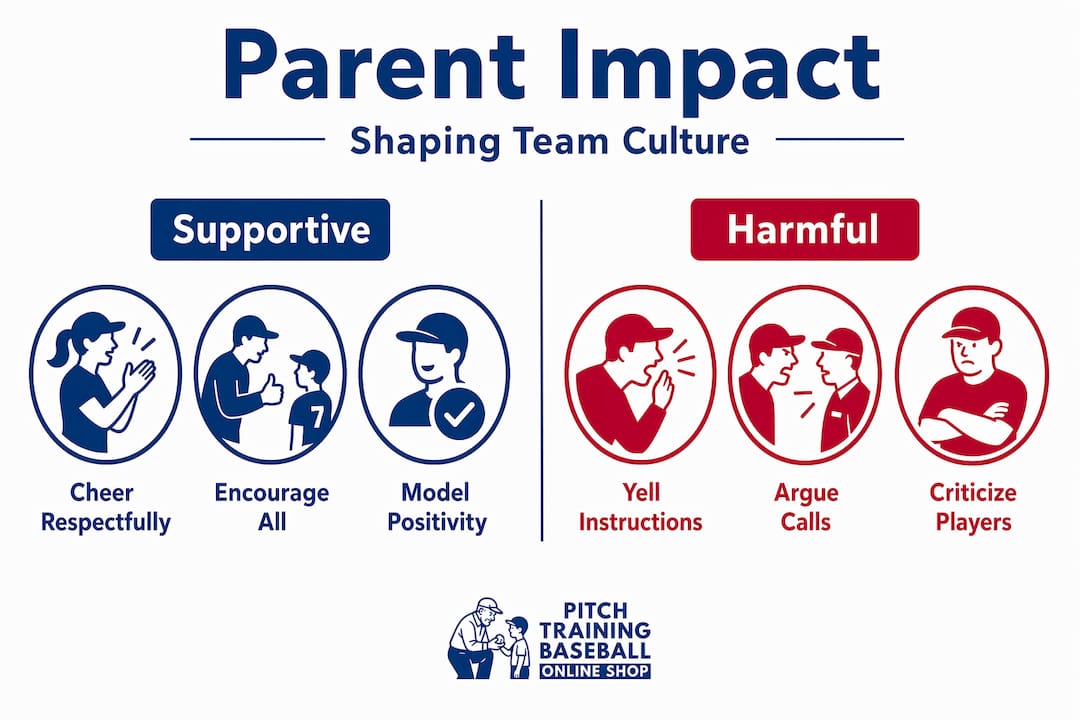
The parents who create the best youth baseball environments are not always the most knowledgeable about the sport. They are the ones who show up with a consistent attitude of respect, patience, and genuine enjoyment. That energy is contagious. It signals to every kid on the team that the game is a safe, fun place to be. Understanding what coaches actually teach can also help you support those lessons from the sideline rather than contradict them.
My honest take on the hardest part of baseball parenting
I’ve watched a lot of parents make the same mistake I almost made myself: confusing investment with interference. When you care deeply about something your child is doing, the instinct is to be involved at every level. And baseball, with all its technical detail and competitive stakes, makes that temptation even stronger.
What I’ve learned is that the moment your kid starts scanning the stands after a strikeout, what they are looking for is not analysis. They are looking for a face that says “I’ve got you no matter what.” That is the job. Everything else is background noise.
I’ve seen kids who had technically brilliant baseball parents, parents who knew pitch counts, mechanics, and every defensive alignment, burn out by age 12 because the sport stopped feeling like theirs. And I’ve seen kids with parents who knew almost nothing about baseball stay in the game through high school purely because they felt safe and supported. The research backs this up, but honestly, you can see it just by watching the dugout.
The hard part is recognizing when your enthusiasm crosses over into pressure. Your child will rarely tell you directly. They show it in their body language, their reluctance, their tone. Stepping back when you most want to step in is genuinely difficult parenting. But it is often the most impactful thing you can do.
My practical advice: make the question “Are you having fun?” more important than “How did you do?” Let that shift your measurement of success for the whole season. You might be surprised what it changes.
— Albert
Help your young player build real skills at home
Every great coach gives young players tools to practice on their own. As a parent, you can extend that work by setting up simple, effective training at home without adding pressure. Pitchtrainingbaseball offers equipment specifically designed to let kids develop accuracy, arm strength, and confidence through independent repetition.
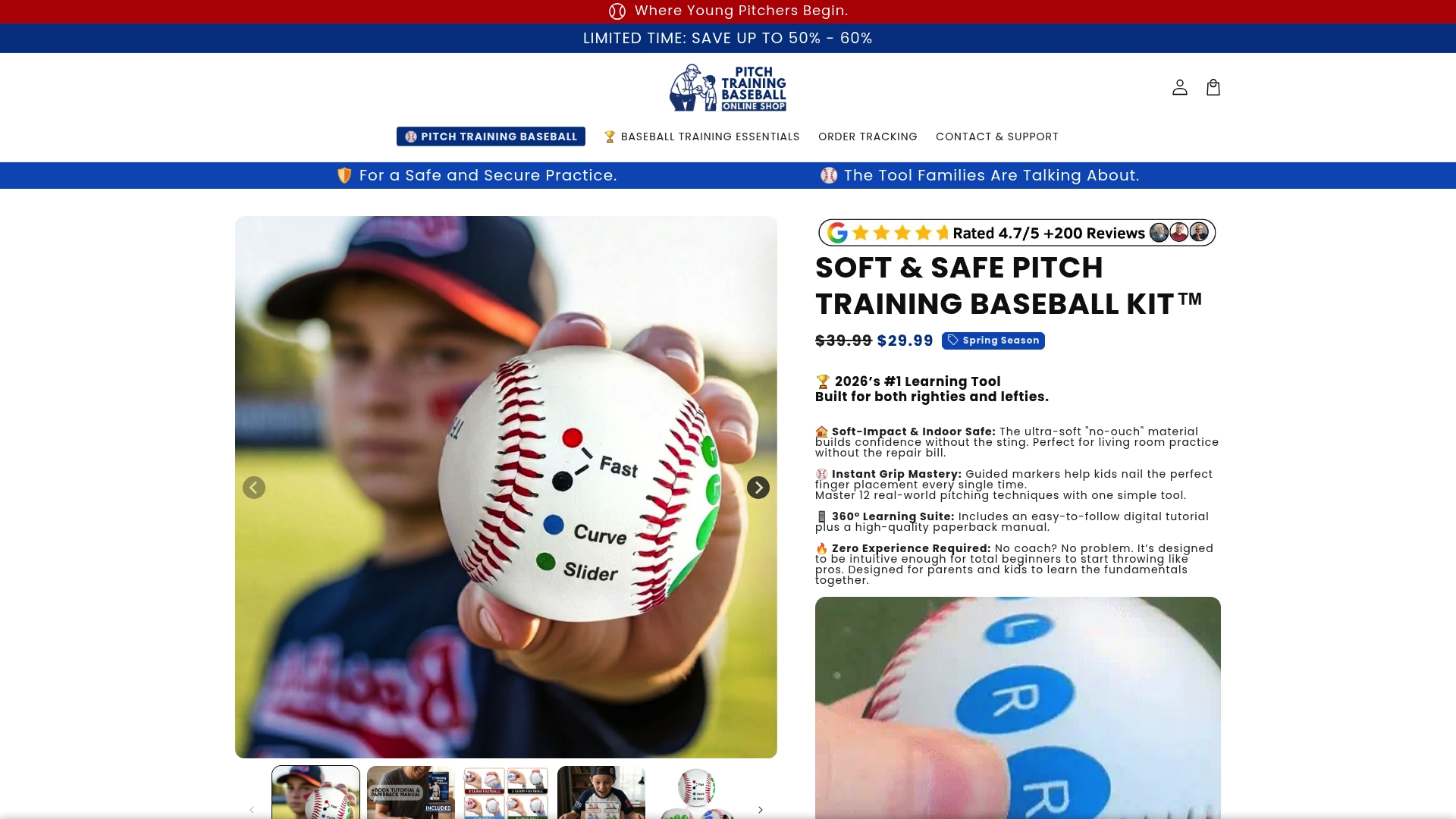
A quality pitching target net gives your player a concrete goal to aim for during backyard practice without needing you to catch or coach. Pitchtrainingbaseball also carries pitching training aids that reinforce the mechanics their coach is already building. When kids can practice on their own terms, they build ownership over their development. That is exactly the kind of independence that keeps young athletes motivated and in the sport longer.
FAQ
What is the role of parents in youth baseball training?
Parents in youth baseball training serve as emotional supporters, logistical providers, and positive role models. Their job is to encourage effort, respect coaches, and create a low-pressure environment where their child can develop confidence and love for the game.
How much involvement is too much for a baseball parent?
Research on the inverted-U pattern shows that both excessive involvement and disengagement produce worse outcomes than moderate, supportive engagement. If your child shows reluctance to attend practice or anxiety before games, that may signal your involvement has tipped into pressure.
Should parents coach their child during games?
No. Most youth leagues, including Little League programs, prohibit parents from shouting instructions from the stands. Coaching from the bleachers confuses young players and undermines the head coach’s authority. Leave technique feedback to the coaches before and after practice.
What is the 24-hour rule for sports parents?
The 24-hour rule means waiting at least 24 hours after a game before discussing your child’s performance. This prevents emotionally charged criticism right after a loss and leads to healthier, more productive conversations once everyone has calmed down.
Does parental pressure actually cause kids to quit baseball?
Yes. About 70% of young athletes leave organized sports before middle school, and parental pressure is one of the most cited reasons. The 2026 Aspen Institute survey found that 21% of youth felt pressured by parents to play, which directly reduces enjoyment and long-term participation.
Recommended
- Baseball parents: safety, support, and pitching success – Pitch Training Baseball
- How to throw a baseball: proven youth coaching tips – Pitch Training Baseball
- Top safe baseball training practices to prevent youth injuries – Pitch Training Baseball
- Why Physical Fitness for Young Pitchers Matters – Pitch Training Baseball