


Watching your child wind up and fire a pitch across home plate is one of the great thrills of youth sports. But for most parents, that excitement comes bundled with a steady current of worry. Are they throwing too much? Is their arm okay? Am I pushing too hard or not hard enough? Supporting a young pitcher is genuinely complex, and the stakes are real. This article pulls together research-backed guidance, practical systems, and honest perspective to help you protect your child’s arm, nurture their love of the game, and give them the best possible foundation for long-term success on the mound.
Table of Contents
- Key criteria for supporting your young pitcher
- Top 5 evidence-backed tips for baseball parents
- How to track pitch counts and rest periods
- Recognizing warning signs and preventing burnout
- Comparing pitch safety practices: common pitfalls vs. parent-led success
- A seasoned baseball parent’s perspective: what really matters most
- Support your player with the best pitching tools
- Frequently asked questions
Key Takeaways
| Point | Details |
|---|---|
| Track every pitch | Count every throw, including outside of games, to prevent injury and manage rest days. |
| Prioritize safety | Never let your child pitch through pain or fatigue; early intervention protects long-term health. |
| Stay involved | Parents, not leagues, are the first and best line of defense in monitoring arm health and balancing fun with ambition. |
| Balance training and fun | Successful pitchers build skills while also enjoying the game, avoiding burnout and pressure. |
Key criteria for supporting your young pitcher
Before you can act on specific tips, it helps to get clear on what actually matters when you’re raising a young pitcher. Parents often focus almost entirely on performance, wins, and standing on the team. Those things aren’t unimportant, but they’re secondary to four foundational pillars that will determine whether your child thrives or burns out.
Health comes first, always. A young pitcher’s arm is still developing. Growth plates in the elbow and shoulder are vulnerable to repetitive stress in ways that adult arms are not. Protecting long-term wellbeing means tracking all pitches, not just the ones thrown in games, and recognizing that a win this weekend is never worth a serious injury that could sideline your child for months or even permanently affect their development. The pitch-count limits and mandatory rest recommended by pediatric health organizations exist precisely because young arms need protection that competitive pressure often ignores.
Skill development is a long game. Parents sometimes get caught up chasing velocity or advanced pitches too early. Consistent mechanics, age-appropriate pitching, and smart routines do far more for a young pitcher’s future than trying to rush to the next level. Think of skill as a building that needs a solid foundation. If you skip the ground floor, the whole structure is at risk. Part of building that foundation involves improving throwing techniques with purpose and consistency, not just throwing more.
Communication is your secret weapon. Many youth injuries happen because kids don’t feel safe telling adults their arm hurts. They want to play. They don’t want to let their team down. Creating an environment where your child knows they can always tell you about pain, fatigue, or emotional pressure without negative consequences is one of the most protective things you can do.
Keep it fun. Burnout is a real, documented problem in youth sports. When the game stops being enjoyable, kids quit. Not because they weren’t talented, but because the pressure crushed the joy. Keeping baseball fun and kid-centered is not “soft” parenting. It’s smart parenting.
Here’s a quick summary of the four pillars to keep in mind:
- Health: Track every throw, enforce rest, and take fatigue seriously
- Skill: Build mechanics and consistency over velocity and complexity
- Communication: Make it safe to speak up about pain or pressure
- Enjoyment: Prioritize fun to sustain motivation and prevent burnout
With these core criteria in mind, let’s look at the essential tips every baseball parent should know.
Top 5 evidence-backed tips for baseball parents
Now, let’s dive into specific, actionable steps you can start using today.
-
Track every throw, not just game pitches. Most parents count pitches during games, but what about the 50 tosses in the backyard Tuesday evening? Or the throws during warm-ups? According to pediatric health guidance, track every pitch including warm-ups and extra throwing outside formal practice, because cumulative load is what injures young arms. It doesn’t matter whether the throw happened in a championship game or a casual game of catch. Every repetition counts.
-
Enforce mandatory rest periods, even if your league is relaxed about it. Some recreational leagues have loose or inconsistently enforced pitch-count rules. That means the responsibility falls on you. If your child has hit their pitch limit for the day, they’re done pitching, regardless of the score or the coach’s request. Rest days allow arm tissue to recover and rebuild. Skipping them is like skipping sleep: you can do it for a while, but the debt accumulates.
-
Encourage honest communication about pain and fatigue. Create a “no toughing it out” rule in your household. Medical professionals consistently advise that kids should never pitch through pain, because what feels like minor soreness can be the beginning of a serious overuse injury. Tell your child explicitly that telling you their arm hurts is brave and responsible, not weak. Role-play the conversation if you need to. Make it comfortable before it becomes urgent.
-
Focus on proper mechanics and warm-ups. Poor mechanics are a primary driver of arm injuries in young pitchers. A rushed warm-up or sloppy delivery puts unnecessary torque on the elbow and shoulder. Good mechanics, learned early and practiced consistently, distribute the stress of throwing across the whole body rather than concentrating it in vulnerable joints. Building pitching zone knowledge from an early age reinforces the kind of body awareness that makes mechanics second nature.
-
Balance structured practice with unstructured, fun baseball time. Not every baseball moment needs to be a drill or a lesson. Letting kids play freely, choose their own games, and enjoy baseball on their own terms is genuinely protective against burnout. Research in youth sports consistently shows that kids who have some degree of autonomy in their sport engagement stay in it longer and develop more robustly.
“The young athlete who learns that speaking up about pain is part of being a good teammate will be safer, more resilient, and more coachable throughout their entire career.” This principle applies at every age, from T-ball through high school.
Pro Tip: At the start of each season, sit down with your child and set one goal together that has nothing to do with winning. It could be improving their change-up or learning to read a batter’s stance. Goals like these keep the focus on growth instead of scorecards.
How to track pitch counts and rest periods
Tracking is only as good as the system you use. Here’s how to make it simple and effective.
The core problem with informal tracking is that it’s easy to forget half the pitches your child throws in a week. You remember the 68 pitches in Saturday’s game. You might forget the 30 throws during Friday’s warm-up, the 20 tosses with a neighbor Thursday, and the 15 throws at the cul-de-sac Tuesday. Added together, those “extra” throws can push a young arm well past safe limits before Sunday practice even starts.
The solution is a simple logging habit. You don’t need fancy software. A small notebook, a notes app on your phone, or a shared spreadsheet works perfectly. Log every session: date, how many throws, how hard they were working (light toss vs. max effort), and any arm complaints. Review it weekly. It takes less than five minutes a day and gives you an enormously clear picture of your child’s true workload.
Here is a general reference table for pitch-count limits and rest requirements, based on commonly cited youth pitching safety guidelines. Note that your specific league may have its own rules, and those should always be followed too.
| Age group | Recommended daily pitch limit | Required rest after 76+ pitches | Required rest after 61-75 pitches |
|---|---|---|---|
| 7-8 years | 50 pitches | 3 days | 2 days |
| 9-10 years | 75 pitches | 3 days | 2 days |
| 11-12 years | 85 pitches | 3 days | 2 days |
| 13-16 years | 95 pitches | 3 days | 2 days |
| 17-18 years | 105 pitches | 3 days | 2 days |
These numbers reflect general safety consensus and are consistent with guidelines that track every pitch, including warm-ups and extra throwing sessions, as part of the total.
Children playing on multiple teams face a compounded risk. Many parents assume each team is tracking pitches independently. In reality, there’s often no coordination at all between teams. Your child’s travel team coach doesn’t know what happened at rec league on Saturday, and vice versa. That’s why you, as the parent, need to be the single source of truth for your child’s total throwing volume across all teams and all contexts.
Pro Tip: Use a simple color code in your log. Green for light days (under 30 throws), yellow for moderate days (30 to 60 throws), and red for heavy days (60 or more). At a glance, you should never see more than two consecutive red or yellow days without a green recovery day in between.
Here are a few practical actions to build your tracking system:
- Choose one logging method and stick with it for the whole season
- Bring the log to every game and practice, not just formal ones
- Communicate your tracking system to coaches at the start of the season
- Review the log with your child weekly to build their own arm awareness
- Note any technique changes or complaints alongside the pitch count, since fixing pitching mistakes early often prevents the injury cascade that follows poor mechanics under fatigue
Recognizing warning signs and preventing burnout
Preventing injury is about paying close attention to the small warning signs before they become real problems.
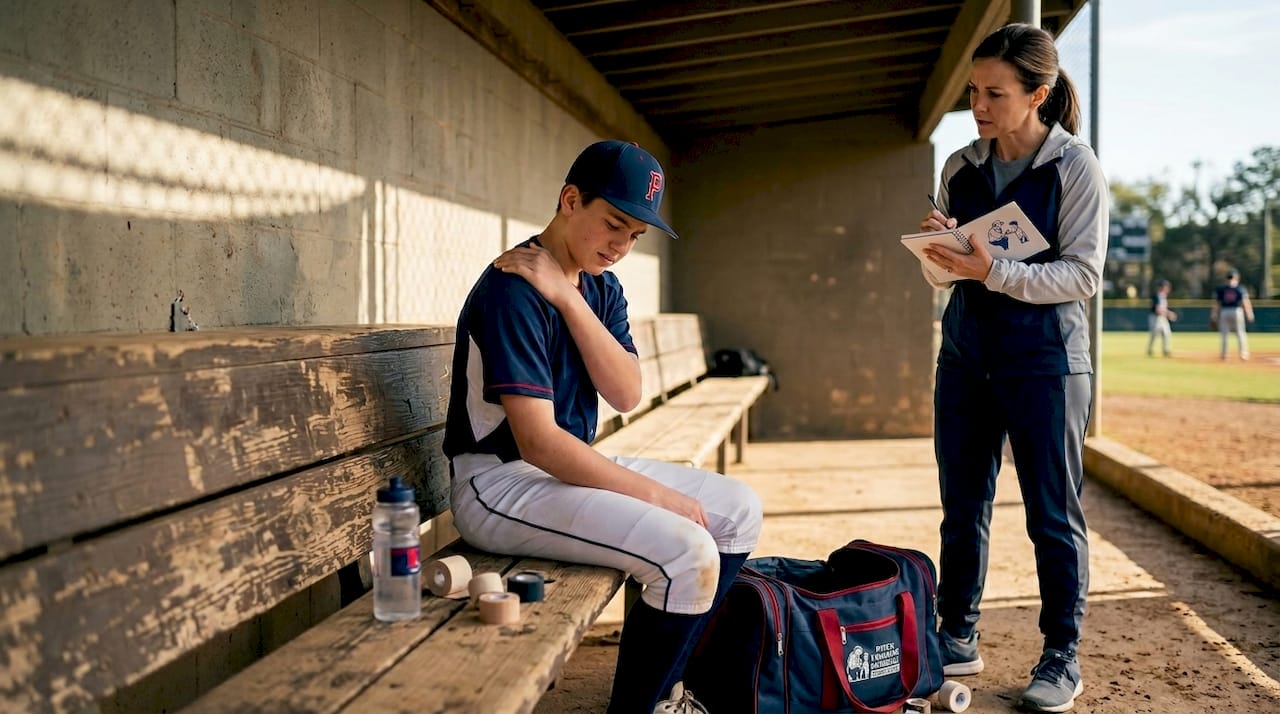
Many serious arm injuries in young pitchers don’t happen in a single dramatic moment. They develop slowly, through repeated stress that goes unaddressed. By the time a child says “my elbow really hurts,” the damage has often been building for weeks. That’s why recognizing early warning signs is such a critical skill for parents.
Physical warning signs to watch for:
- Soreness that doesn’t go away after a full rest day
- Pain specifically in the elbow or shoulder during or after throwing
- A noticeable change in your child’s throwing motion, dropping the elbow, shorter arm path, or loss of velocity
- Swelling or tenderness around the elbow joint
- Numbness or tingling in the hand or fingers
Emotional and behavioral warning signs:
- Reluctance or resistance to going to practice that is out of character
- Irritability or anxiety specifically around game days or pitching situations
- Loss of enthusiasm for baseball after previously loving it
- Complaints about pressure, teammates, or coaches that feel disproportionate
- Sleep disruption or appetite changes around the competitive season
The guidance from sports medicine specialists is consistent and clear: treat symptoms early rather than waiting to see if they resolve on their own, because early intervention almost always results in shorter recovery times and better outcomes.
Creating an open channel means more than telling your child they can talk to you. It means asking specific, low-pressure questions. Instead of “How’s your arm?” which invites a quick “fine,” try “On a scale of one to ten, how does your elbow feel right now compared to last week?” Specificity makes it easier for kids to give honest answers. It also normalizes body awareness as an everyday habit rather than an alarm bell.
Here’s a statistic that should put this in perspective: studies in youth sports medicine estimate that a significant portion of youth baseball injuries are preventable with proper monitoring and rest protocols. The barrier isn’t knowledge. It’s follow-through. Parents who check in consistently and take early complaints seriously protect their kids far more effectively than those who rely on the league to catch problems. The pitching balance insights that prevent injury aren’t complicated. They require attention and the willingness to act before a problem becomes a crisis.
Comparing pitch safety practices: common pitfalls vs. parent-led success
Seeing what works, side by side, helps avoid the biggest errors and build positive habits.
The table below captures the most common mistakes parents make alongside the proven alternative. Use it as a quick self-check at the start of each season or any time you feel uncertain about your approach.
| Common pitfall | Why it’s risky | Parent-led best practice |
|---|---|---|
| Counting only game pitches | Warm-ups and backyard throws add up fast | Log all throws from every context daily |
| Relying solely on league rules | Leagues may under-enforce or have no multi-team coordination | Parents track independently as the final check |
| Encouraging kids to “tough it out” | Masks early injury signals, leading to worse damage | Establish a no-pain culture from day one |
| Prioritizing velocity over mechanics | Poor form under stress accelerates injury | Prioritize correct form in every session |
| Skipping rest days for key games | Fatigue multiplies injury risk exponentially | Enforce rest even when the stakes feel high |
| Ignoring emotional withdrawal | Burnout and anxiety show up behaviorally before kids verbalize them | Ask specific questions and watch behavioral patterns |
| Assuming coaches track everything | Most coaches don’t track across teams or informal throwing | Parents are the only ones with the full picture |
Guidance from pediatric sports organizations is clear: pitch-count limits and mandatory rest must account for all throwing, not just what happens during organized play. Parents who internalize this and act on it consistently give their children a measurably safer experience.
Moving from pitfall to best practice doesn’t require perfection. It requires a system. If you currently track nothing, start with a simple notebook. If you track game pitches, add a column for extra throws. Every step in the right direction reduces risk. The throwing fundamentals guide available through Pitch Training Baseball walks through the mechanical side of this equation in detail, making it a practical companion to the tracking habits described here.
A seasoned baseball parent’s perspective: what really matters most
Here’s something most articles won’t tell you directly. Leagues and coaches are not your primary line of defense. They can’t be. Coaches are managing entire rosters, often without real-time visibility into what each player threw at another practice, at home, or during a visit to the grandparents. League rules, even good ones, are enforced inconsistently and don’t account for cumulative throwing across multiple teams.
That means you are the last and most important safeguard your child has. Not in an alarmist way. In a practical, empowering way.
What this actually looks like day to day is less dramatic than it sounds. It’s keeping a log. It’s asking your child specific questions about how their arm feels after practice. It’s being willing to tell a coach, respectfully but firmly, that your child has hit their limit for the day. It’s resisting the pressure from the bleachers or from your own competitive instincts to push for one more inning when the team needs it.
One of the most common misconceptions among baseball parents is that following league pitch-count rules is sufficient. It’s a good start. But league rules are a floor, not a ceiling. They don’t account for throwing across multiple teams, backyard sessions, or the cumulative fatigue that builds over a long season. Parents who rely exclusively on what the league allows are often surprised when their child develops arm problems despite “following the rules.”
The tougher truth is that advocating for your child’s long-term health sometimes means being the unpopular voice in the dugout. Pulling your child from a close game because they’ve hit their pitch limit isn’t bad parenting. It’s the right call, and it becomes easier when you’re grounded in evidence and your own tracking data rather than coaching decisions made in the heat of competition.
There’s also the matter of the in-depth pitching grip guide and the broader world of advanced pitching skills. Parents often wonder when to introduce breaking balls or off-speed pitches. Our honest perspective is to focus on fastball mechanics and control until those are genuinely solid. Many young pitchers learn grips that put stress on their arm before their mechanics are mature enough to support those pitches safely. Patience here pays compounding dividends.
The goal isn’t to raise a pitcher who wins every game at age ten. It’s to raise a kid who loves baseball at twenty-five and has a healthy arm to show for it.
Support your player with the best pitching tools
Ready to take your support even further? The right tools can make all the difference when it comes to building smart, consistent practice habits that protect your young pitcher’s arm while actually developing real skills.
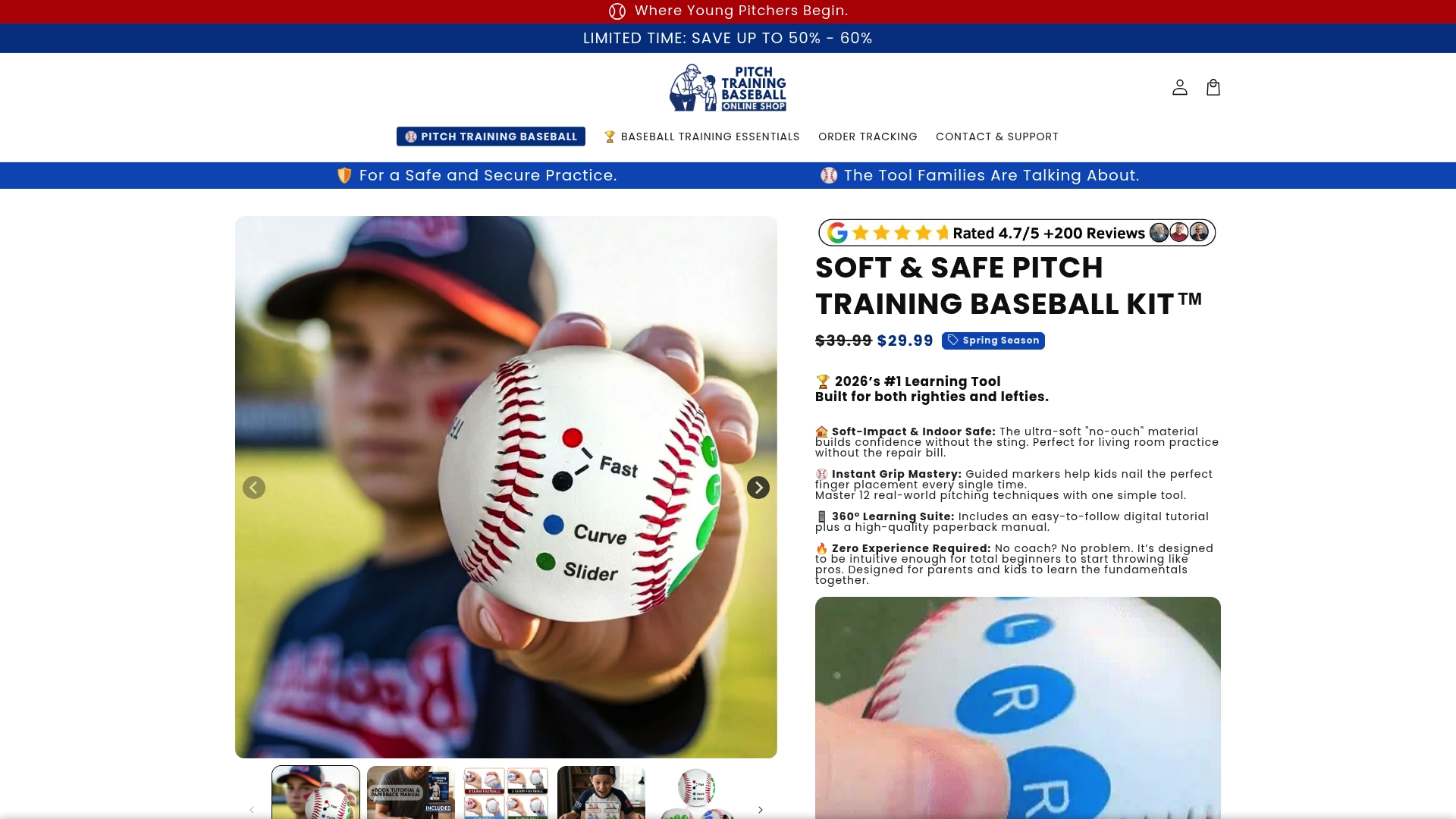
Pitch Training Baseball offers equipment built specifically for youth pitchers and the parents and coaches who support them. The Pitch Training Baseball is designed to reinforce proper mechanics and build arm strength progressively, so your child develops control and confidence without overloading their arm. Pair it with the Pitching Target Net to give your young pitcher a structured, visual target for every throw, turning backyard sessions into purposeful practice with clear feedback. These tools are trusted by parents and coaches who want training that’s safe, effective, and engaging.
Frequently asked questions
How many pitches should my child throw per game or week?
Pitch counts depend on age, but the key rule is that all pitches count, including warm-ups and extra throwing outside games. Following pitch-count limits for your child’s age group and tracking every throw across all contexts is the most reliable way to stay within safe limits.
What are the warning signs that my child might be overusing their arm?
Persistent soreness that doesn’t resolve with rest, a noticeable change in throwing form, and reluctance to play are all red flags. Medical guidance is clear that kids should never pitch through pain, and early treatment almost always leads to faster recovery.
What should I do if my child plays for multiple teams?
Parents must track pitching across all teams combined, not separately for each one. Because extra throwing across teams significantly increases overuse risk, you are the only person with a complete picture of your child’s total throwing volume, and acting on that information is your responsibility.
Is it safe for my child to pitch if they feel sore?
No. Children should never pitch through soreness or pain of any kind. The evidence is consistent: treating symptoms early leads to far better outcomes than pushing through, and establishing a no-pain culture in your household from the start is one of the most protective habits you can build.