


Youth baseball is one of the most popular team sports in America, but it also carries a growing and largely preventable injury problem. Too many young players push through pain, coaches pile on repetitions chasing short-term wins, and parents assume that more practice always means better results. The truth is that how you train matters just as much as how often you train. This article walks you through the evidence-based practices, practical drills, and the right mindset to develop skilled, healthy pitchers from the ground up, giving both parents and coaches a clear roadmap for building a safe training environment.
Table of Contents
- Key principles for safe youth baseball training
- Top safe training practices for youth players
- Recommended drills and tools for injury prevention
- How to spot and address overuse early
- Our perspective: Why culture change matters more than any single drill
- Next steps: Equip your training with proven tools
- Frequently asked questions
Key Takeaways
| Point | Details |
|---|---|
| Prioritize long-term health | Focusing on gradual, supervised development prevents injuries and builds lasting skills. |
| Strictly manage workloads | Age-appropriate pitch counts and frequent rest are critical to safe youth training. |
| Choose youth-adapted equipment | Proper tools and drills cater to young athletes’ needs and lower risk of overuse. |
| Spot overuse early | Watching for warning signs and communicating openly keeps young players safe. |
Key principles for safe youth baseball training
Before you pick a drill, buy a piece of equipment, or schedule a practice session, you need a strong foundation of principles to guide every decision. These principles are not abstract ideals. They are the practical framework that separates coaches who build lasting players from those who burn them out before high school.
The most important starting point is structure. A safe training session does not begin with a pitcher stepping on the mound and firing full-effort throws. It begins with a proper warm-up that gradually raises the heart rate and prepares the shoulder, elbow, and core for the demands ahead. That same structure means building a practice calendar that includes mandatory rest days, not just scheduled games. Young arms are still developing bone and connective tissue, and rest is when that development actually happens.
Communication is the second pillar, and it is often the one that gets ignored. As youth baseball arm protection research makes clear, parents and coaches who educate themselves on pitch count guidelines, share workload data, and prioritize long-term player health consistently produce better outcomes. That means coaches talk to parents after every practice, parents ask their kids honest questions about how their arm feels, and players feel safe enough to say “my elbow is sore” without fear of losing their spot in the rotation.
“The safest youth pitching programs are built on transparency. When a player knows it’s okay to speak up, injuries get caught before they become career-ending problems.”
A third principle is progressive skill development. Young athletes do not need to master a curveball at age 10. They need to master mechanics. Rushing through foundational skills to get to the “exciting” stuff is one of the most common mistakes coaches make. Once you’ve improved throwing techniques and tools at a foundational level, adding complexity becomes natural rather than forced.
Here are the core principles every coach and parent should internalize:
- Always prioritize warm-up and cool-down as non-negotiable parts of every session
- Track pitch counts weekly, not just per game or per practice
- Communicate openly between coaches, parents, and the player after every session
- Match difficulty to development, not to age expectations or competitive pressure
- Watch for behavioral signs of fatigue, such as avoiding throws, dropping mechanics, or seeming withdrawn
- Build in rest weeks every 6 to 8 weeks of active training
- Focus on arm strength development as a long-term process, not a quick fix
Pro Tip: Keep a simple training log for each player. Write down total throws, any pain comments, and notes on mechanics. Reviewing two to three weeks of data gives you a much clearer picture than a single practice.
Top safe training practices for youth players
With the right framework in place, you can start putting specific training practices into action. These are not random suggestions. They are grounded in what sports medicine research and experienced coaches know to be effective for developing youth players without burning their arms out.
1. Follow age-appropriate pitch count and rest guidelines. The American Sports Medicine Institute and Little League Baseball publish age-specific guidelines for a reason. A 10-year-old should not be throwing the same volume as a 14-year-old, even if they seem physically capable of it. Following these limits strictly, including in practice, is the single most protective decision a coach can make.
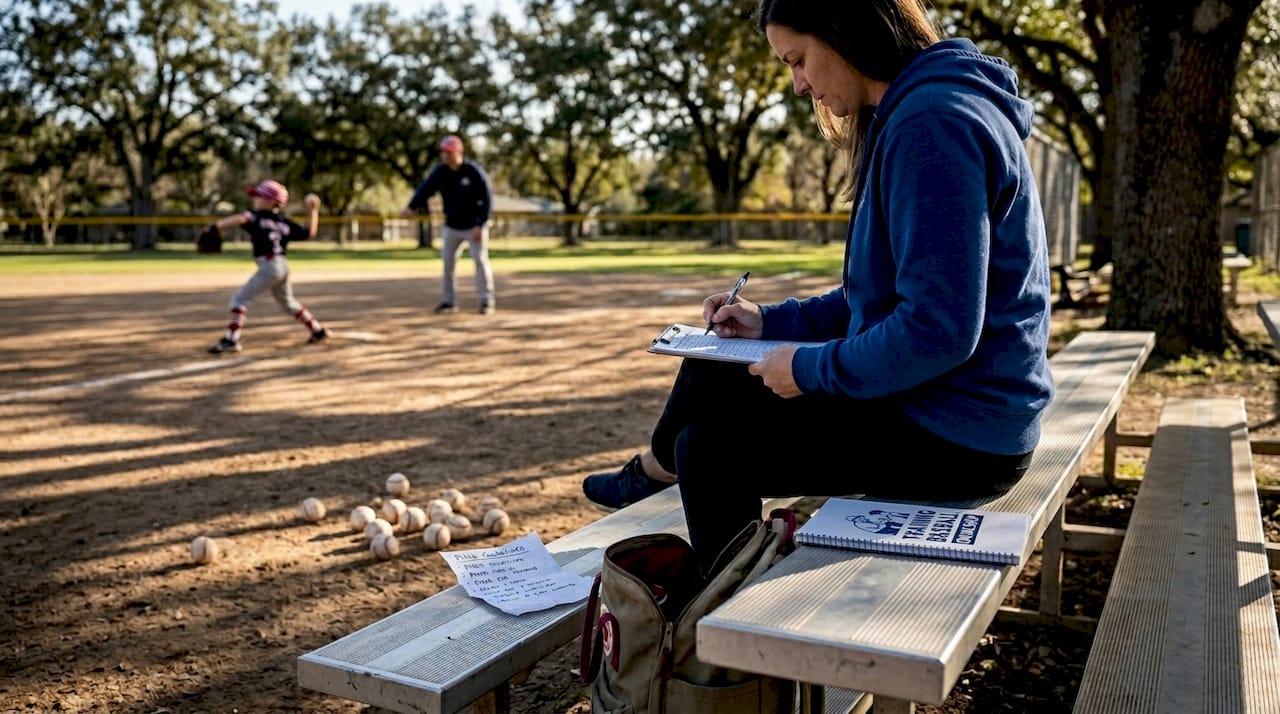
2. Build dynamic warm-ups into every session. A dynamic warm-up is not standing in a circle doing static stretches. It includes arm circles, band exercises, hip rotations, light jogging, and movement-based activation for the shoulder and rotator cuff. This kind of warm-up takes 10 to 15 minutes and measurably reduces soft tissue injury risk.
3. Develop core and shoulder strength alongside throwing. Pitching is a full-body motion. Players who have weak cores or underdeveloped hip rotators put extra stress on their shoulders and elbows to compensate. Simple bodyweight exercises, resistance band work, and balance training can be woven into practice without requiring a gym.
4. Use progressive skill development in drills. Introducing game-like pitching drills too early causes young players to compensate with bad mechanics because they aren’t ready for the full motion under pressure. Start every new skill with low-intensity repetition, build confidence and form, then add game context gradually over weeks.
5. Teach and reinforce proper grip fundamentals early. Grip directly affects arm stress. A player with a poor grip unconsciously adjusts their arm angle and release point to compensate, creating torque in places the arm was not designed to absorb. Learning proper pitching grip tips early reduces this risk and improves accuracy at the same time.
6. Supervise every high-intensity session directly. Coaches and parents should be physically present and watching during any bullpen work or high-effort throwing. If a player’s mechanics break down or they wince on release, that is a moment to stop, not push through. Unsupervised high-intensity sessions are where bad habits and early injuries both take root.
According to sports medicine data, educating coaches and parents on proper workload guidelines and keeping ongoing communication about player condition are among the most effective strategies for reducing youth arm injuries.
Statistic to know: Overuse injuries account for nearly half of all sports injuries in youth athletes. In baseball, the elbow and shoulder are by far the most common sites, and the majority of those injuries are considered preventable with proper workload management.
Pro Tip: During the season, treat the day after a pitching appearance as a recovery day, not a light practice day. Light throwing is fine, but no bullpen work, no max-effort drills, and no pitching in batting practice.
Recommended drills and tools for injury prevention
Knowing the principles and the practices is one thing. Having the specific drills and tools to implement them is what makes training sessions actually change outcomes. The right equipment supports correct mechanics and reduces the physical strain that leads to injury over time.
Safe, form-focused drills for youth pitchers:
- Towel drills: The player holds a towel instead of a ball and focuses purely on arm path and follow-through. There is zero arm stress, and coaches can clearly see mechanical flaws.
- Balance and stride drills: Players practice the balance point and stride direction of their delivery without throwing. This builds the hip-to-shoulder sequencing that protects the elbow.
- Wall-facing drills: Standing close to a wall teaches pitchers to keep their elbow up and avoid flying open early, a common cause of elbow strain in young players.
- Long toss progression: A carefully structured long toss program builds arm strength gradually. Start at short distances and extend over weeks, never jumping in distance too quickly.
- Flat ground work: Most mechanical work should happen on flat ground, not on a mound. The mound adds complexity and intensity. Save it for when mechanics are already clean.
As youth arm care research consistently shows, coaches and parents who are educated on workload guidelines and who monitor player condition actively are the ones most likely to prevent injuries before they happen.
When choosing tools, look for items designed specifically for youth development. Products like the youth pitch training baseball are built to match the hand size and strength of developing players, which directly affects grip, mechanics, and arm stress.
| Tool | Safety benefit | Skill focus | Ease of supervision |
|---|---|---|---|
| Training baseball (youth-sized) | Reduces grip strain, fits small hands | Grip, mechanics, arm path | High |
| Pitching target net | Limits overthrow distance, contains throws | Accuracy and control | High |
| Resistance bands | Builds rotator cuff and shoulder stability | Arm strength, injury prevention | Medium |
| Grip aid tools | Encourages proper finger placement | Grip, spin, release point | High |
| Weighted recovery balls | Gentle arm strengthening post-session | Recovery and conditioning | Medium |
Pro Tip: Rotate drill types every two to three sessions to prevent repetitive strain from any single movement pattern. Variety also keeps young players engaged, which improves focus and mechanical quality.
How to spot and address overuse early
Even with all the right practices and tools in place, overuse can still creep in. The season gets long, the playoffs feel important, and a “just one more bullpen” decision gets made too many times. Knowing the warning signs and responding quickly is what separates a minor soreness from a significant injury.
Monitoring player condition and communicating workload data openly between coaches, parents, and athletes is one of the strongest tools available for catching overuse before it becomes structural damage.
| Symptom | What it may indicate | Recommended response |
|---|---|---|
| Arm soreness lasting more than 24 hours | Muscle fatigue or mild strain | Rest, no throwing for 2 to 3 days |
| Pain specifically in the elbow or shoulder joint | Possible ligament or joint stress | Stop all throwing, consult a doctor |
| Noticeable drop in velocity or control | Central nervous system or muscle fatigue | Reduce workload immediately |
| Mechanical changes mid-session | Compensating for pain or fatigue | Stop session, evaluate and rest |
| Player avoiding throwing or making excuses | Possible hidden pain | Have a private, non-pressured conversation |
| Swelling or visible inflammation | Possible acute injury | Immediate rest and medical evaluation |
Quick action steps when warning signs appear:
- Pull the player from throwing immediately without making it a big deal in front of teammates
- Ask calm, specific questions: “Does it hurt when you throw, or does it hurt right now at rest?”
- Record what you observed, including when it started, what the recent workload was, and what the symptom looks like
- Contact the player’s parents if you are the coach, or the player’s doctor if symptoms do not resolve within 48 hours
- Never apply pressure to play through pain, even if it’s the playoffs
“The hardest part of addressing overuse isn’t identifying the symptoms. It’s building the kind of relationship with young athletes where they feel safe enough to tell you when something hurts.”
Practicing drills in controlled situations helps significantly here. When you simulate game situations safely rather than always pitching under full pressure, players build game-level skills without the physical and emotional intensity that drives kids to hide pain.
Our perspective: Why culture change matters more than any single drill
We’ve worked with enough coaches and parents to know that the problem is rarely a lack of information. Most people reading this already know they should follow pitch counts. They know warm-ups matter. They have read some version of “don’t let your kid throw through pain” before. The real barrier isn’t knowledge. It’s culture.
Here’s what actually happens on the ground. A talented 12-year-old is pitching well in a tournament. The team needs one more inning. The coach looks at the parents, the parents look at the coach, and the kid says “I’m fine.” Everyone knows the pitch count is already at the limit. But the competitive pressure in that moment is enormous, and the decision gets made to keep going. This happens constantly in youth baseball. It is not a villain’s choice. It is a normal human response to social pressure and short-term thinking.
The most effective youth programs we’ve seen are not the ones with the most sophisticated drills. They are the ones that have built a culture where the long-term health of every player is a stated, visible, and enforced value. Coaches say it out loud at the start of the season. Parents reinforce it at home. Players hear consistently that speaking up about pain is a sign of intelligence, not weakness.
This culture change has a real competitive payoff, and this is what most people miss. Teams that protect their pitchers’ arms over a full season finish stronger. They have healthy arms for the postseason. They develop players who are still pitching at 16 and 18 because their bodies weren’t worn down at 11. Prioritizing long-term player health over short-term wins isn’t just the ethical choice. It’s actually the winning strategy when you look at the full picture.
The drills and tools matter. The pitch counts matter. But none of it sticks without a foundational culture of openness. Invest in your throwing skill development systems, absolutely. But invest just as much in the conversations you have before and after practice. Ask your players how their arm feels every single session. Make it a routine, not a reaction. That simple habit, practiced consistently, will prevent more injuries than any single drill ever could.
The coaches who make the biggest difference are not always the ones with the deepest technical knowledge. They are the ones their players trust enough to be honest with. Build that trust, and every other tool you use becomes more effective.
Next steps: Equip your training with proven tools
Ready to put these best practices into action? Having the right equipment makes it significantly easier to reinforce safe mechanics, maintain the right training intensity, and keep sessions engaging for young players who are still developing their love for the game.
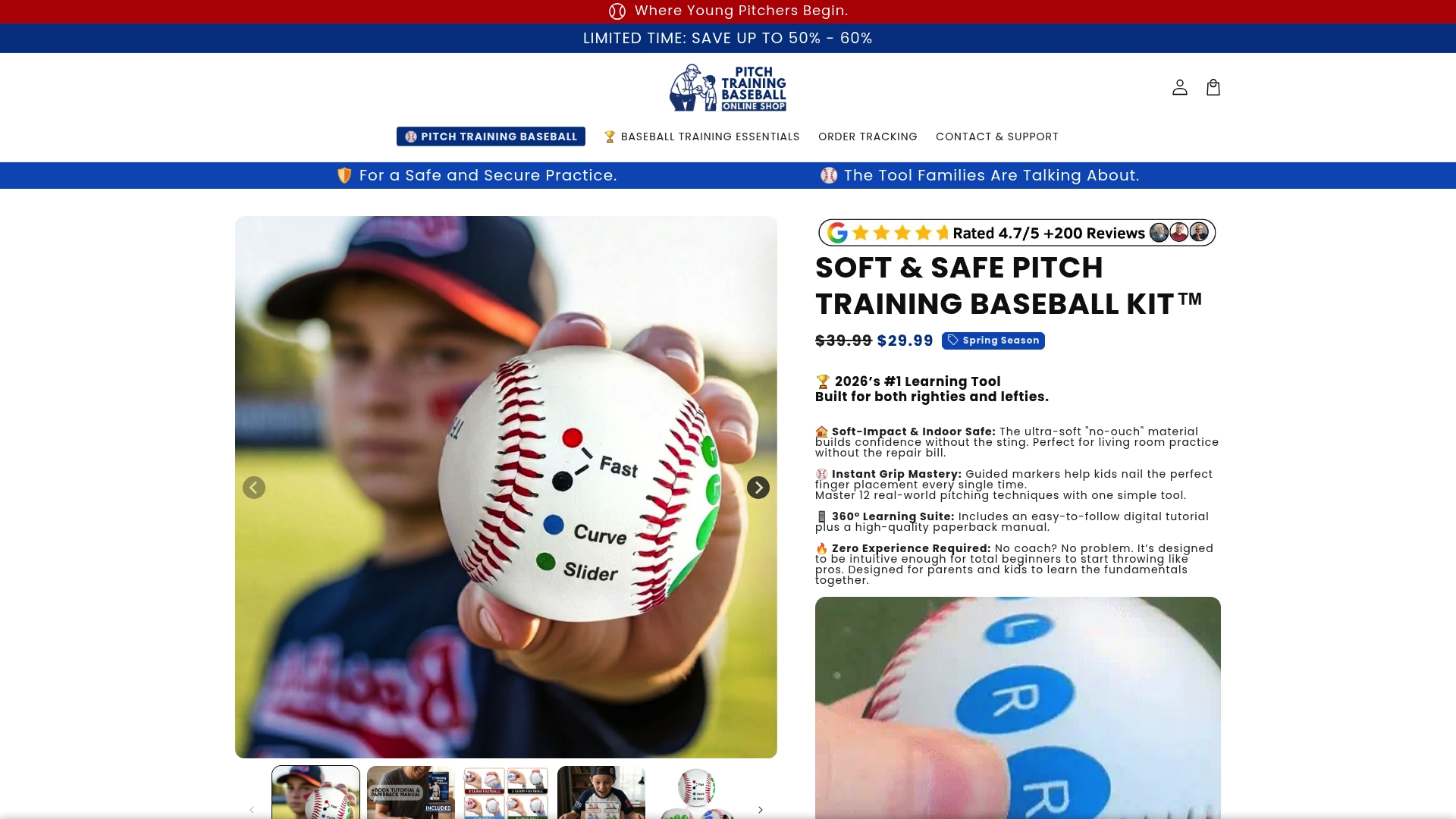
At Pitch Training Baseball, every product in the lineup is designed with youth development and safety in mind. From training baseballs sized for developing hands to pitching nets that focus throws and control distance, the tools are built to support exactly the kind of structured, progressive training this article recommends. Browse the Pitch Training Baseball product page to see youth-adapted pitching tools that fit naturally into any training routine. Or explore the full baseball training essentials collection to find everything you need to build safer, more effective practice sessions starting today.
Frequently asked questions
What is the safest age to start pitching in baseball?
Most experts recommend starting formal pitching at age 9 to 10, with strict workload limits and direct supervision, as outlined in youth pitching guidelines that emphasize education and long-term health over early specialization.
How often should young pitchers train each week to stay safe?
Most guidelines suggest two to three training days per week with at least one full rest day between pitching sessions, keeping total weekly pitch volume managed according to age-specific recommendations.
What are common signs of overuse in young baseball players?
Persistent arm pain, a noticeable drop in velocity or control, and visible mechanical changes mid-session are all warning signs, and monitoring these conditions actively is one of the most effective ways to prevent serious injury.
Which tools help make baseball training safer?
Youth-adapted training baseballs, pitching nets, resistance bands, and grip aids all reduce injury risk when used as part of a structured program, and educating coaches on these tools is a key part of any safe training system.