


Arm strength training is a focused exercise regimen that conditions the muscles supporting the throwing arm, including the rotator cuff, scapular stabilizers, and forearm, to improve pitching velocity, accuracy, and long-term durability. For young baseball athletes, this training is not optional. It is the foundation of a safe, high-performing pitching career. MLB and USA Baseball’s Pitch Smart guidelines set the industry standard for youth workload management, and Pitchtrainingbaseball provides trusted resources and tools that align with those protocols. Getting this right early makes the difference between a pitcher who thrives and one who burns out before high school.
What is arm strength training and why does it matter for pitchers?
Arm strength training is defined as structured, progressive conditioning of the muscles that power and protect the throwing arm. The primary targets are the rotator cuff (supraspinatus, infraspinatus, teres minor, and subscapularis), the scapular stabilizers, and the forearm flexors and extensors. These muscles work together to generate force, control release, and absorb stress on every pitch.
For young pitchers, the stakes are especially high. Growth plates in the shoulder and elbow are still developing through the mid-teen years, making them vulnerable to stress fractures and overuse damage. A pitcher who skips arm conditioning and jumps straight into heavy throwing is asking those underdeveloped structures to handle loads they are not ready for.
The good news is that arm strength exercises done consistently and correctly build the tissue capacity to handle those loads safely. Stronger rotator cuff muscles decelerate the arm more efficiently after ball release, which is where most youth arm injuries occur. Stronger scapular stabilizers keep the shoulder blade in the right position throughout the throwing motion, reducing impingement and labrum stress.
Why is arm strength training critical for young baseball pitchers?
The injury risk from pitching while fatigued is not a minor concern. Pitching with arm fatigue increases injury risk 36-fold in youth players. That number is not a typo. It means a tired arm is not just slightly more vulnerable. It is in a completely different risk category.
“Strict pitch counts and recovery protocols per MLB/USA Baseball Pitch Smart guidelines are not suggestions for young pitchers. They are the minimum standard for keeping a young arm healthy through a full season and beyond.”
Pitch Smart guidelines exist because youth coaches and parents historically underestimated how much cumulative stress a young arm absorbs. A 12-year-old throwing 85 pitches in a game and then playing catch two days later without proper rest is not building toughness. That athlete is depleting tissue capacity faster than the body can repair it.
Growth plate vulnerability adds another layer of concern. The cartilage at the end of developing bones is softer than the bone itself, which means repetitive overhead stress can cause “Little Leaguer’s shoulder” or “Little Leaguer’s elbow,” both of which require weeks or months of rest to heal. Arm strength training builds the surrounding muscle to absorb and distribute force, reducing the load that reaches those vulnerable growth plates.
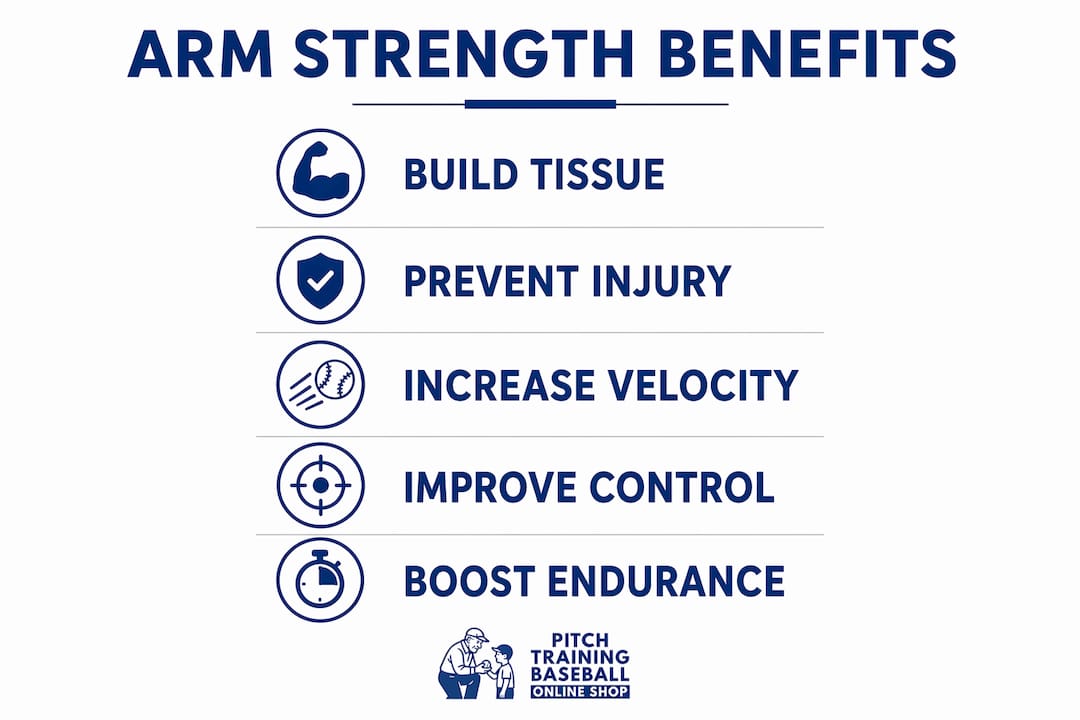
The benefits of building arm strength go beyond injury prevention. Stronger arms throw harder and with better control. A pitcher with a conditioned rotator cuff and strong scapular stabilizers maintains mechanics deeper into a game, which directly affects command and pitch effectiveness. Pitcher recovery between outings is equally critical. Rest is not wasted time. It is when the adaptation from training actually happens.
Pro Tip: Track your young pitcher’s pitch count every outing, including bullpen sessions and warm-up throws. Total throwing volume, not just game pitches, determines cumulative arm stress.
What are the best exercises for safe arm strength development?
The right exercises depend on the athlete’s age and developmental stage. For athletes under 14, light resistance band exercises focusing on scapular stability are the correct starting point, not barbells or heavy dumbbells. Movement quality at this stage matters far more than load.
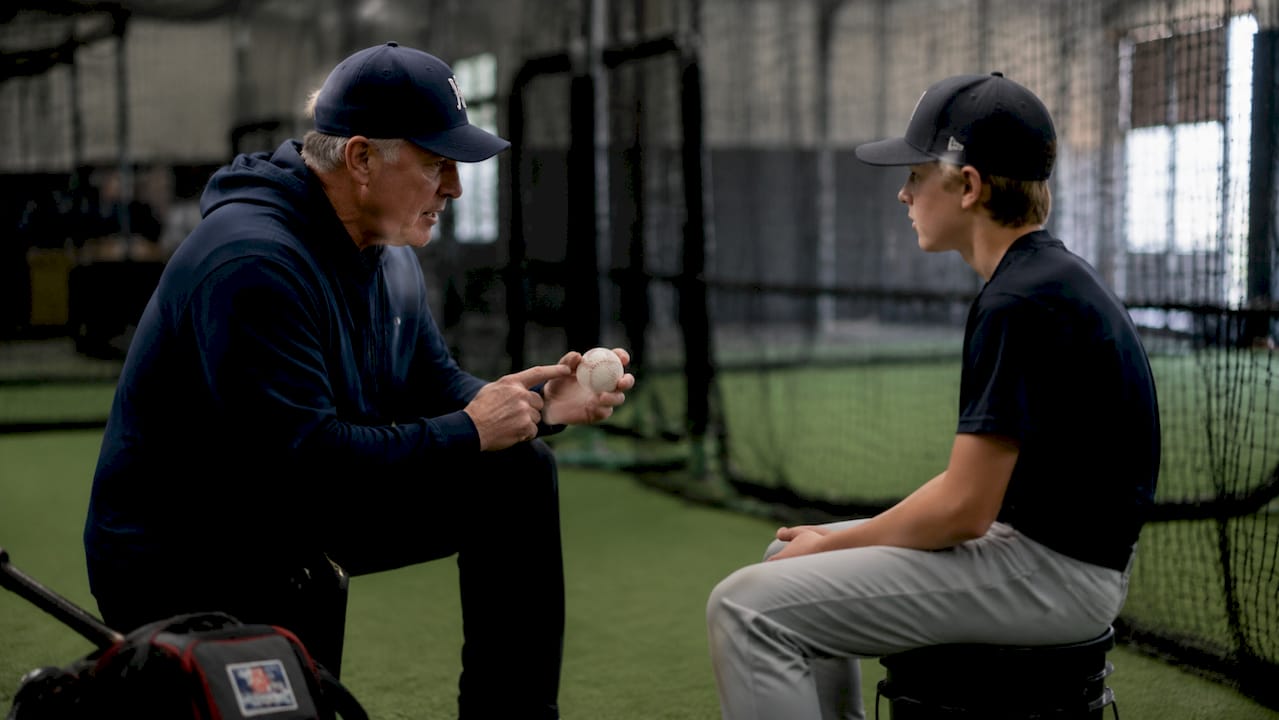
Core exercises for youth arm care
The following exercises form a proven foundation for young pitchers:
- Band external rotation: Attach a resistance band at elbow height. Keep the elbow bent at 90 degrees and rotate the forearm outward against the band’s resistance. This directly trains the infraspinatus and teres minor, the two muscles most responsible for decelerating the arm after release.
- Band pull-aparts: Hold a resistance band with both hands at shoulder width and pull it apart horizontally until it touches your chest. This builds the rear deltoid and mid-trapezius, which stabilize the shoulder blade during the throwing motion.
- Prone Y-T-W raises: Lie face down on a bench or the floor. Raise both arms into a Y shape, then a T shape, then a W shape, holding each position briefly. Y-T-W raises target the lower trapezius and serratus anterior, muscles that are chronically weak in young pitchers.
- Wrist curls and reverse wrist curls: Use a light dumbbell (2–5 lbs for younger athletes). These strengthen the forearm flexors and extensors, which protect the elbow during the snap of ball release.
- Overhead triceps extensions: Using a light dumbbell or band, extend the arm overhead and lower behind the head. This builds the triceps, which play a larger role in arm speed than most coaches realize.
- Core planks: Hold a standard plank for 20–30 seconds. Core strength transfers force from the lower body to the arm, and a weak core forces the arm to generate power it should not have to.
Frequency matters as much as exercise selection. Youth athletes should complete these sessions 2–3 times per week, with at least one rest day between sessions. Doing arm care exercises every day without rest does not accelerate progress. It prevents recovery and increases injury risk.
Pro Tip: Do arm care exercises after practice or a throwing session, not before. Pre-throwing, the muscles need to be fresh. Post-throwing, the exercises serve as both strengthening work and active recovery.
What to avoid in youth arm training
Heavy barbell pressing, Olympic lifts, and max-effort resistance work have no place in a youth pitcher’s arm care program. The goal at this stage is building tissue capacity and movement patterns, not maximum strength. A 13-year-old who can bench press 135 lbs but has weak external rotators is a shoulder injury waiting to happen.
How does total-body conditioning support arm strength?
Arm injuries in baseball often result from hip and core weakness, not just arm overuse. This is the most counterintuitive finding in youth baseball sports medicine, and it changes how smart coaches and parents approach training. When the hips and core cannot generate and transfer force efficiently, the arm compensates by doing more work than it should.
The kinetic chain is the sequence of body segments that work together to produce a pitch. It starts with the foot pushing off the rubber, moves through the ankle, knee, hip, core, shoulder, elbow, and wrist, and ends at ball release. A weak link anywhere in that chain forces the segments above it to compensate. A pitcher with poor hip mobility will leak force before it reaches the arm, then try to make up for it with extra arm effort.
Exercises that strengthen the full kinetic chain
- Single-leg squats: Build the hip stability and quad strength that control the stride leg during the pitching motion. Single-leg stability directly reduces the arm load a pitcher must generate to compensate for lower-body weakness.
- Pallof presses: Using a cable or band anchored at chest height, press both hands straight out from the chest while resisting rotation. This trains anti-rotation core strength, which is exactly what the core does during a pitch.
- Single-leg Romanian deadlifts (RDLs): Balance on one leg and hinge at the hip to lower a light dumbbell toward the floor. Movement quality in single-leg RDLs impacts pitching longevity more than isolated arm exercises alone.
- Hip 90/90 stretches: Sit on the floor with both legs bent at 90 degrees in opposite directions and rotate through the hip. This improves hip internal rotation, which is consistently limited in pitchers who develop arm problems.
- Ankle mobility drills: Tight ankles restrict the stride and force compensation up the chain. Simple wall ankle stretches done daily make a measurable difference in pitching mechanics.
The practical takeaway is straightforward. A young pitcher who does only arm exercises and ignores the lower body is training half the system. Physical fitness for young pitchers means training the whole athlete, not just the throwing arm.
How to structure an arm strength training program for the season
Programming separates athletes who improve steadily from those who plateau or get hurt. The core principle is gradual progression. Throwing volume should increase by no more than 10%–15% per week over a 4–8 week ramp-up period before the season starts. Think of it like an airplane takeoff: a gradual, controlled climb to cruising altitude, not a vertical launch.
Off-season vs. in-season training goals
Periodization with a strength focus off-season and a maintenance focus in-season is the proven model for youth baseball athletes. The off-season is the time to build. The in-season is the time to preserve what was built and recover between outings.
- Off-season (October through february): Focus on building rotator cuff strength, scapular stability, and total-body conditioning. Increase resistance band difficulty gradually. Add single-leg strength work and core training. This is when the real tissue capacity gains happen.
- Pre-season ramp-up (march through april): Begin a structured throwing program with the 10%–15% weekly volume increase. Maintain strength work at 2 sessions per week. Prioritize mechanics over velocity.
- In-season (may through august): Reduce strength training to 1–2 sessions per week focused on maintenance. Prioritize recovery between outings. Follow Pitch Smart pitch count limits without exception.
- Post-season (september): Complete rest from throwing for at least 4–6 weeks. Light movement and general fitness are fine. The arm needs time to fully recover before the next off-season cycle begins.
Established arm care protocols like Thrower’s Ten and J-Band exercises provide a structured daily routine that fits within this framework. Consistent arm care programs like Thrower’s Ten reduce injury risk and build scapular endurance over a full season.
| Training Phase | Primary Goal | Frequency |
|---|---|---|
| Off-season | Build strength and tissue capacity | 3x per week |
| Pre-season ramp-up | Increase throwing volume gradually | 2x per week |
| In-season | Maintain strength, prioritize recovery | 1–2x per week |
| Post-season | Full rest and tissue repair | No throwing |
Multi-sport participation provides a natural 3–4 month break from overhead throwing stress each year, which is one of the most effective injury prevention strategies available. A young athlete who plays soccer or basketball in the fall is not falling behind in baseball development. That athlete is protecting the arm and building a broader athletic base that will pay off on the mound.
Pro Tip: Keep a simple training log. Write down exercises, sets, reps, and how the arm felt after each session. Patterns in that log will tell you when to push and when to back off before an injury forces the decision.
Key Takeaways
Arm strength training is most effective when it combines targeted rotator cuff and scapular work, total-body conditioning, and a periodized program that respects the demands of each season phase.
| Point | Details |
|---|---|
| Define the goal first | Arm strength training targets the rotator cuff, scapular stabilizers, and forearm to build durability and velocity. |
| Fatigue is the biggest risk | Pitching while fatigued increases injury risk 36-fold; follow Pitch Smart pitch counts without exception. |
| Age-appropriate exercises matter | Athletes under 14 should use light resistance bands, not heavy weights, focusing on movement quality. |
| Train the whole body | Hip and core weakness cause arm injuries; single-leg squats and Pallof presses reduce arm compensation. |
| Periodize the program | Build strength off-season, ramp up pre-season, maintain in-season, and rest completely post-season. |
What I’ve learned from watching young pitchers train the wrong way
I have spent years watching young pitchers and their parents chase velocity before they have built the foundation to support it. The pattern is almost always the same. A kid throws hard for one season, skips the arm care routine because it feels boring, ignores the hip and core work because it does not feel like pitching, and then shows up to the next season with elbow soreness that sidelines him for six weeks.
The uncomfortable truth is that the most effective arm strength training is also the least exciting. Band external rotations, Y-T-W raises, and single-leg RDLs do not look impressive. They do not feel like a workout in the traditional sense. But consistency in arm care is the actual driver of long-term arm health, not complexity or volume.
Parents often ask me whether their 11-year-old should be doing weighted exercises. My answer is always the same: movement quality first, load second. A young pitcher who can perform a perfect single-leg squat, hold a 30-second plank with a neutral spine, and execute a band external rotation with full range of motion is better prepared for a long pitching career than one who can lift twice the weight with sloppy form.
The other thing I want parents to understand is that rest is training. The post-season break is not a gap in development. It is a required part of the program. The athletes who skip it are the ones who show up to spring tryouts with a sore arm and spend the first month of the season at reduced capacity. Protect the off-season rest period the same way you protect the training sessions.
— Albert
Tools from Pitchtrainingbaseball to support your arm training
Young pitchers need more than a good exercise plan. They need the right equipment to practice with purpose and build arm strength through quality repetitions.
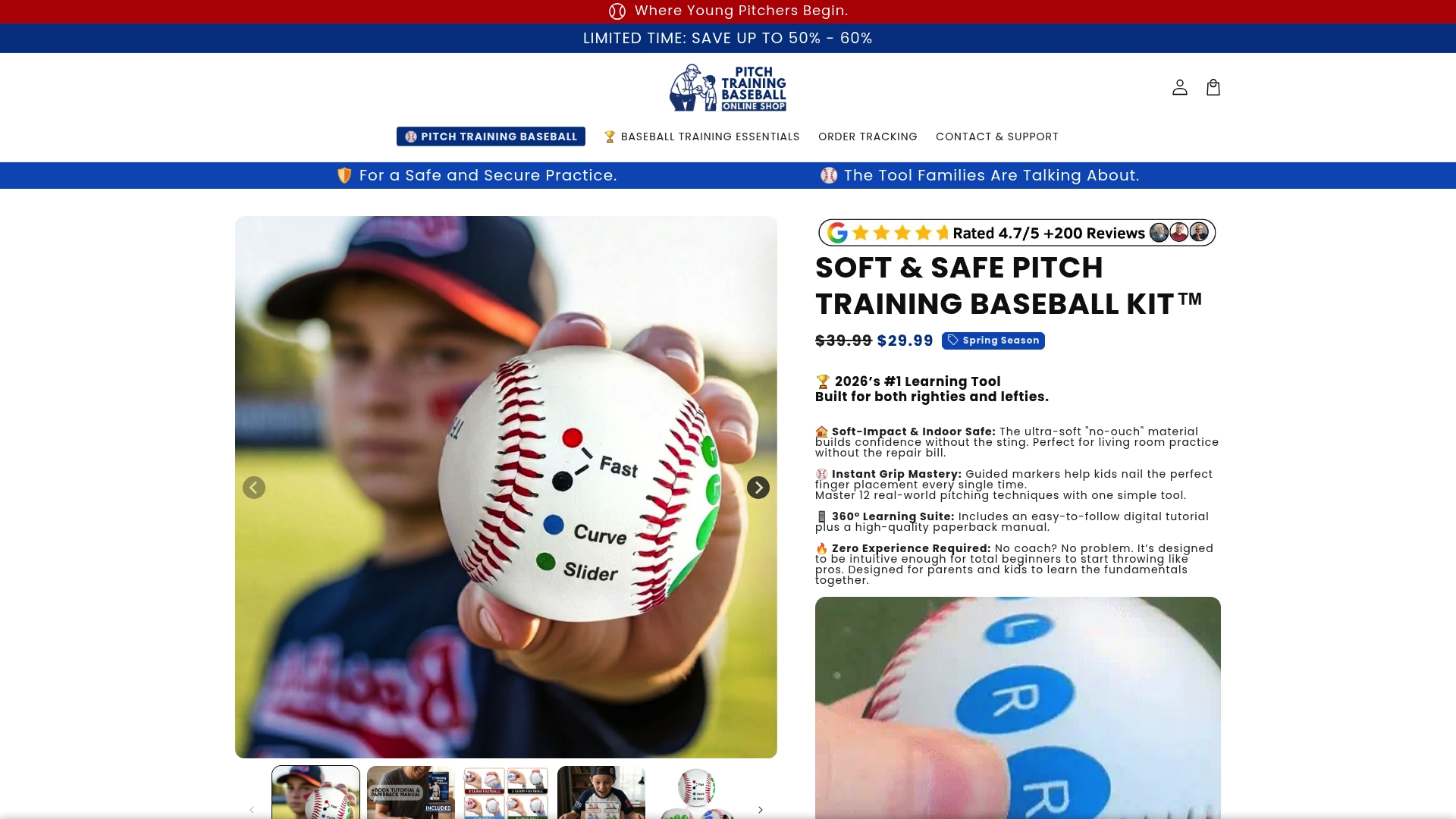
Pitchtrainingbaseball offers training tools designed specifically for youth athletes and their parents, including the Pitching Target Net with Strike 9-Zone, which gives pitchers a structured target to develop accuracy alongside arm strength. Pairing a solid arm care routine with consistent, targeted throwing practice is how young pitchers build both durability and command. Browse the full Pitchtrainingbaseball lineup to find gear that fits your athlete’s age, skill level, and training goals.
FAQ
What is arm strength training in baseball?
Arm strength training is a structured exercise program that conditions the rotator cuff, scapular stabilizers, and forearm muscles to improve throwing velocity, accuracy, and injury resistance. It includes resistance band exercises, total-body conditioning, and workload management protocols.
How often should a young pitcher do arm strength exercises?
Youth pitchers should complete arm care exercises 2–3 times per week during the off-season and pre-season, reducing to 1–2 sessions per week during the competitive season to allow for recovery between outings.
What exercises are safe for pitchers under 14?
Light resistance band exercises including band external rotation, band pull-aparts, and prone Y-T-W raises are the safest and most effective options for athletes under 14. Heavy weights should be avoided until the growth plates are more fully developed.
Can total-body training really prevent arm injuries?
Hip and core weakness directly cause arm injuries by forcing the throwing arm to compensate for lost force in the kinetic chain. Single-leg squats, Pallof presses, and hip mobility drills reduce that compensation and lower arm stress on every pitch.
How many pitches should a youth player throw per outing?
Pitch limits vary by age under MLB/USA Baseball Pitch Smart guidelines. The critical rule is that pitching with arm fatigue increases injury risk 36-fold, so following the recommended pitch counts and mandatory rest days is non-negotiable for protecting a young arm.
Recommended
- Why Physical Fitness for Young Pitchers Matters – Pitch Training Baseball
- Why Pitcher Recovery Is Important for Young Arms – Pitch Training Baseball
- Top pitching workouts for youth baseball: build skill safely – Pitch Training Baseball
- Arm Strength Tips for Baseball: Youth Player Guide – Pitch Training Baseball