


Pitcher recovery is the process of restoring the arm and body to full working condition after pitching, and skipping it is the single fastest way to end a young player’s season early. For parents and coaches of youth baseball players, understanding why pitcher recovery is important means understanding the difference between a healthy arm and a torn ligament. Pitching while fatigued is the strongest modifiable risk factor for arm injury in adolescent pitchers. A structured arm care routine can reduce elbow injuries by up to 48.5%. Those two facts alone make recovery non-negotiable.
Why pitcher recovery is important: the fatigue and injury connection
Fatigue in a pitcher is not just tiredness. It is a measurable, in-game decline in velocity, command, and mechanics that signals the arm is no longer protected. When a pitcher is fresh, the forearm muscles act as shock absorbers for the ulnar collateral ligament, or UCL. When those muscles fatigue, they lose that shock absorber function, and the UCL absorbs the full force of every throw.
A study comparing 95 adolescent pitchers who required surgery against 45 who stayed injury-free found that pitching while fatigued was the single strongest modifiable risk factor separating the two groups. That is not a minor statistical footnote. It means the choice to keep a tired kid on the mound is the most preventable cause of youth arm surgery.
Coaches and parents often confuse three different signals: normal soreness, fatigue, and pain. Normal soreness is a dull ache that appears 24–48 hours after a hard outing and fades with rest. Fatigue shows up during the outing itself, as a drop in velocity, rising pitch counts on simple counts, and mechanical breakdowns like a dropped elbow. Pain is sharp, localized, and a reason to stop immediately.
Watch for these fatigue signals during a game:
- Velocity dropping more than 3–4 mph from the first inning
- Consistent location errors on pitches the player normally commands
- Visible mechanical changes, such as shortened arm path or early trunk rotation
- The player shaking out the arm between pitches
- Complaints of tightness in the forearm or elbow
Pro Tip: Ask your pitcher after every outing to rate arm fatigue on a scale of 1 to 10. Anything above a 6 means no throwing the next day, regardless of the schedule.
Understanding physical fitness for young pitchers is the foundation for recognizing when fatigue becomes dangerous. A stronger, better-conditioned athlete fatigues more slowly and recovers faster.
What are the most effective pitcher recovery methods?
The most effective pitcher recovery methods center on active recovery, not passive rest and ice. This is where conventional youth baseball wisdom is most wrong, and where the gap between healthy and injured pitchers often starts.
Post-pitching icing causes vasoconstriction, meaning it tightens blood vessels and slows the flow of blood to the arm. Blood flow is exactly what the arm needs after pitching to flush out metabolic waste and deliver nutrients for tissue repair. Icing delays that process. It also disrupts proprioception, which is the arm’s sense of position and movement, reducing throwing accuracy in subsequent outings.
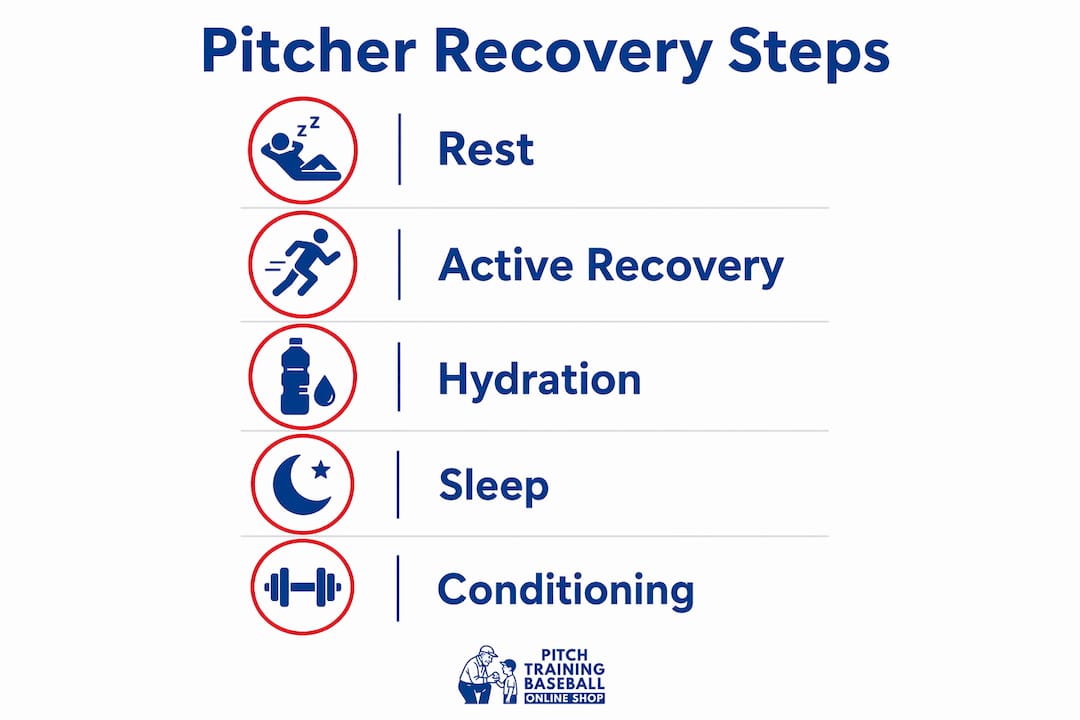
Active recovery works by doing the opposite. Light cardiovascular activity, such as a 10-minute walk or easy bike ride within 30 minutes of the final pitch, keeps blood moving through the arm without adding stress. This is the same approach used at the professional level, and it works just as well for a 12-year-old.
Here is a step-by-step recovery process for the first 24 hours after pitching:
- Immediately post-outing (0–30 minutes): Light walking or easy movement to keep blood circulating. No sitting still on the bench with ice on the arm.
- Nutrition window (within 60 minutes): Consume 20–30 grams of protein and hydrate with water equal to roughly double the player’s body weight in ounces throughout the day. This window is when the body is most ready to begin tissue repair.
- Evening: A full night of sleep. Pitchers averaging under six hours of sleep have roughly twice the injury rate of those averaging eight or more hours. Sleep is when the body does most of its actual repair work.
- Day after pitching: Light band work, shoulder mobility exercises, and easy throwing if the arm feels good. No heavy lifting. No max-effort throwing.
- Day two: Assess readiness. If soreness has cleared and mechanics feel normal in a light bullpen session, the arm is progressing well.
Pro Tip: Track your pitcher’s sleep the night before and after each outing. Poor sleep before a start increases injury risk. Poor sleep after one delays recovery. Both matter.
Heart rate variability, or HRV, is reduced the day after pitching, which shows the nervous system is still under stress. Heavy training or intense practice on a rest day does not just fail to help. It actively delays recovery by keeping the body in a stressed state instead of allowing it to shift into repair mode.
How much rest do youth pitchers need between outings?
Rest day requirements for youth pitchers are not arbitrary. They are based on the documented relationship between recovery time and injury risk. Taking an extra rest day between pitching appearances significantly reduces injury risk without lowering overall performance or pitch counts per game. Pitchers who took the extra day actually maintained or slightly increased their pitch counts per outing.
The table below outlines general recovery timelines based on pitch count and injury status. These are evidence-based guidelines, not hard rules, and individual readiness should always be assessed before returning to the mound.
| Situation | Minimum rest recommended |
|---|---|
| 1–30 pitches thrown | 1 rest day |
| 31–60 pitches thrown | 2 rest days |
| 61–90 pitches thrown | 3 rest days |
| 91+ pitches thrown | 4 rest days |
| Non-surgical partial UCL tear | 2–3 months of structured rehab |
| Full UCL reconstruction (Tommy John) | 12–18 months recovery |
For non-surgical partial UCL tears, about 80% of elite throwers return to play with 2–3 months of rehab rather than the 12–18 months required after full surgery. That statistic makes the case for catching fatigue early and treating minor injuries conservatively. A two-month setback is manageable. A 15-month surgical recovery is not.
Coaches managing youth rotations should build schedules around rest requirements, not around game schedules. When a tournament compresses games into a weekend, the temptation is to push a pitcher back out on one day of rest. That decision is where many youth arm injuries begin.
Managing practice time for pitchers requires the same discipline as managing game appearances. Throwing in practice counts. Bullpen sessions count. Every pitch adds to the cumulative load the arm carries into the next outing.
Signs that a pitcher is not ready to return to the mound include lingering forearm tightness, soreness that has not cleared by day two, reduced grip strength compared to baseline, or an HRV reading that remains suppressed. When any of these signs are present, delay the outing.
Why does total body conditioning matter for arm recovery?
Pitcher recovery is not limited to the arm. The arm is the last link in a chain that starts at the feet and runs through the legs, hips, core, and trunk. When any part of that chain is weak or immobile, the arm compensates, and compensation is how overuse injuries develop.

Deficits in hip mobility and core strength place significantly higher stress on the shoulder and elbow. A pitcher with tight hips cannot rotate the lower half efficiently, so the arm has to generate more force on its own. Over a full season, that extra demand accumulates into chronic stress on the UCL and rotator cuff.
Total body recovery for pitchers should include:
- Hip flexor and hip rotator stretching after every outing, since the stride leg absorbs enormous force during delivery
- Glute activation exercises on rest days to restore lower body power and reduce arm compensation
- Core stability work focused on anti-rotation patterns, such as Pallof press variations, which train the trunk to transfer force efficiently
- Thoracic spine mobility drills to maintain the range of motion needed for a full, healthy arm path
- Ankle and calf mobility work, which is often overlooked but directly affects stride length and landing mechanics
Ignoring lower body recovery creates a compounding problem. A pitcher who returns to the mound with tight hips and a fatigued core will place more stress on the arm from the first pitch. The arm then fatigues faster, and the cycle accelerates toward injury.
Daily pitching habits for youth players that include lower body and core work are not optional extras. They are the foundation that makes arm care actually work. A 10-minute mobility routine after practice costs nothing and protects the arm more than any single arm care exercise.
Key Takeaways
Pitcher recovery works because it restores muscular protection for the UCL, flushes metabolic waste, and rebuilds the total body strength that keeps the arm safe across a full season.
| Point | Details |
|---|---|
| Fatigue drives injury risk | Fatigued forearm muscles lose their shock absorber role, placing full stress on the UCL. |
| Active recovery beats icing | Light movement post-outing increases blood flow; icing constricts vessels and slows repair. |
| Sleep is the top recovery tool | Pitchers averaging under six hours of sleep have roughly twice the injury rate of those getting eight or more. |
| Extra rest days protect performance | An additional rest day between outings reduces injury risk without reducing pitch counts per game. |
| Total body conditioning protects the arm | Hip and core deficits increase arm stress; lower body recovery is as important as arm care. |
What I’ve learned watching youth pitchers push through fatigue
I have watched a lot of young pitchers over the years, and the pattern that leads to injury is almost always the same. A kid has a good first two innings, the coach needs one more out, and nobody wants to be the person who pulls the starter. The arm is tired. The mechanics are off. But the game feels too important to stop.
The uncomfortable truth is that the game is never worth a UCL. A partial tear that gets caught early means two or three months of rehab. A full rupture means a year and a half, a surgery, and a recovery that changes how a young athlete thinks about the sport. Parents and coaches hold enormous power in that moment on the mound, and most of them do not realize it.
The other mistake I see constantly is treating recovery as something that happens after the season. Recovery is not an off-season project. It is a daily practice that happens after every outing, every bullpen session, and every long practice. The pitchers who stay healthy across a full season are the ones whose parents and coaches treat rest days as seriously as game days.
Active recovery is not complicated. A walk, a good meal, eight hours of sleep, and some hip mobility work the next morning. That routine, done consistently, does more for a young arm than any specialized product or program. The research backs it up. The pitchers who follow it stay on the mound.
— Albert
Training tools that support a healthy pitching routine
Recovery and skill development go hand in hand. When a young pitcher practices with controlled, low-stress repetitions, they build mechanics that are more efficient and less likely to cause fatigue-driven injury.
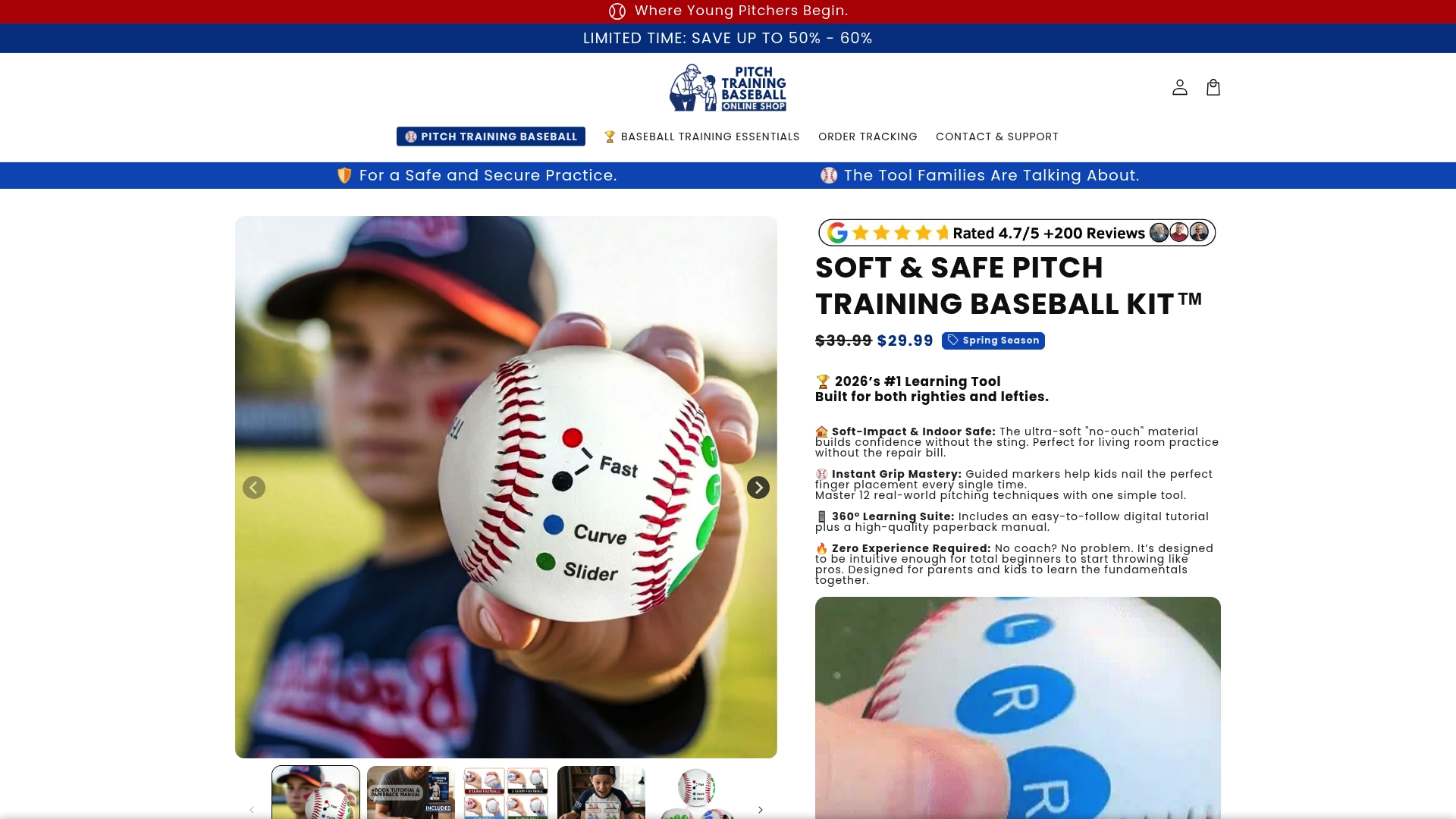
Pitchtrainingbaseball offers training equipment designed specifically for youth pitchers, including the Pitch Training Softball and the pitching target net with a 9-zone strike target. Both tools support controlled, focused practice sessions that build accuracy and arm efficiency without overloading a recovering arm. Coaches and parents trust Pitchtrainingbaseball because the equipment is built for young athletes, not scaled-down adult gear. Shorter, more focused sessions with the right tools protect the arm while still building real skills.
FAQ
What is pitcher recovery and why does it matter?
Pitcher recovery is the process of restoring the arm and body to full working condition after pitching through rest, active movement, nutrition, and sleep. It matters because pitching while fatigued is the strongest modifiable risk factor for arm injury in youth players.
How long should a youth pitcher rest between outings?
Rest requirements depend on pitch count. Pitchers who throw 31–60 pitches need at least two rest days, while those who throw 91 or more pitches need at least four. An extra rest day beyond the minimum reduces injury risk without reducing performance.
Is icing the arm after pitching still recommended?
Icing after pitching is no longer the preferred approach. Post-pitch icing causes vasoconstriction, which slows blood flow and delays the tissue repair process. Light active recovery, such as walking or easy movement, is more effective for flushing metabolic waste.
What role does sleep play in pitcher recovery?
Sleep is the most powerful recovery tool available. Pitchers who average under six hours of sleep have roughly twice the injury rate of those averaging eight or more hours, because tissue repair and nervous system recovery happen primarily during deep sleep.
Does recovery only involve the throwing arm?
Recovery involves the entire body. Deficits in hip mobility and core strength increase stress on the shoulder and elbow, so lower body and core recovery work is as important as direct arm care for preventing overuse injuries.
Recommended
- Why Physical Fitness for Young Pitchers Matters – Pitch Training Baseball
- Why Proper Pitching Technique Matters for Young Players – Pitch Training Baseball
- Recommended Daily Pitching Habits for Youth Players – Pitch Training Baseball
- Arm Strength Tips for Baseball: Youth Player Guide – Pitch Training Baseball