


Managing practice time for pitchers is defined as the deliberate scheduling of throwing sessions, recovery days, and fielding work to maximize skill development while protecting arm health. Most youth coaches make the mistake of measuring practice quality by pitch count alone. The real standard is purposeful structure: every bullpen session, every recovery day, and every pitcher fielding practice (PFP) block should serve a specific goal. Research confirms that progressive arm-loading programs reduce injury risk far more effectively than raw throwing volume. When you build a week with intention, young pitchers develop faster and stay healthier longer.
What is the optimal weekly pitching practice cycle for youth pitchers?
The most effective pitching practice scheduling framework organizes the entire week around a single anchor point: game day. Coaches and players at Texas Baseball Ranch label this “Day 7,” and every other session is positioned relative to it. This structure removes guesswork and gives each day a clear purpose.
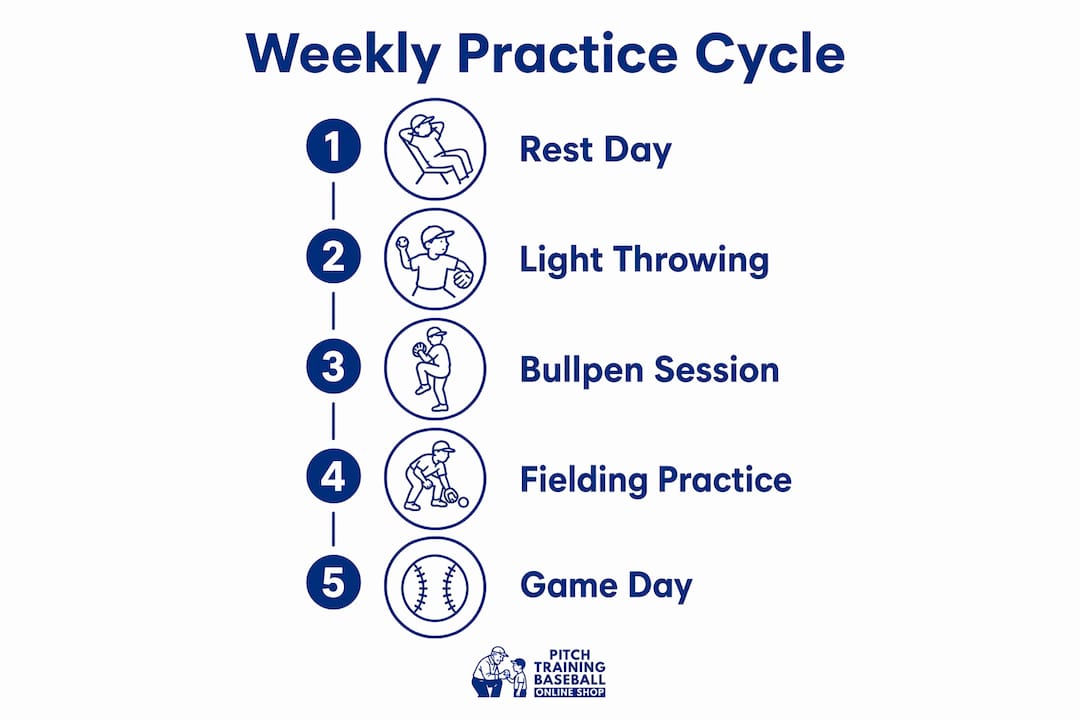
Here is how a well-designed 7-day cycle looks in practice:
- Day 1 (day after game): Active recovery. Light catch at 60 feet or less, arm care exercises, and mobility work. No stress on the arm. The goal is blood flow, not throwing.
- Day 2: Rest or cross-training. Lower body conditioning, core work, or a full rest day depending on how the pitcher’s arm feels. No throwing.
- Day 3 or 4: Bullpen session. According to Texas Baseball Ranch, bullpens during the in-season cycle run 24 to 30 pitches at submaximal intensity. The focus is mechanics maintenance, not maximum effort. This is the week’s primary skill-building session.
- Day 5: Light flat-ground work. Short distance throwing, command drills, or a brief PFP block. Keep intensity low and duration under 20 minutes.
- Day 6: Pre-game preparation. A short warm-up routine, visualization, and light catch. No heavy throwing. The arm should feel loose, not taxed.
- Day 7: Game day. Full effort. Everything in the week has built toward this.
This cycle works because it treats recovery as a training tool, not dead time. Youth pitchers who skip Day 1 and Day 2 recovery often show mechanical breakdowns by mid-season because their arm never fully resets between outings.
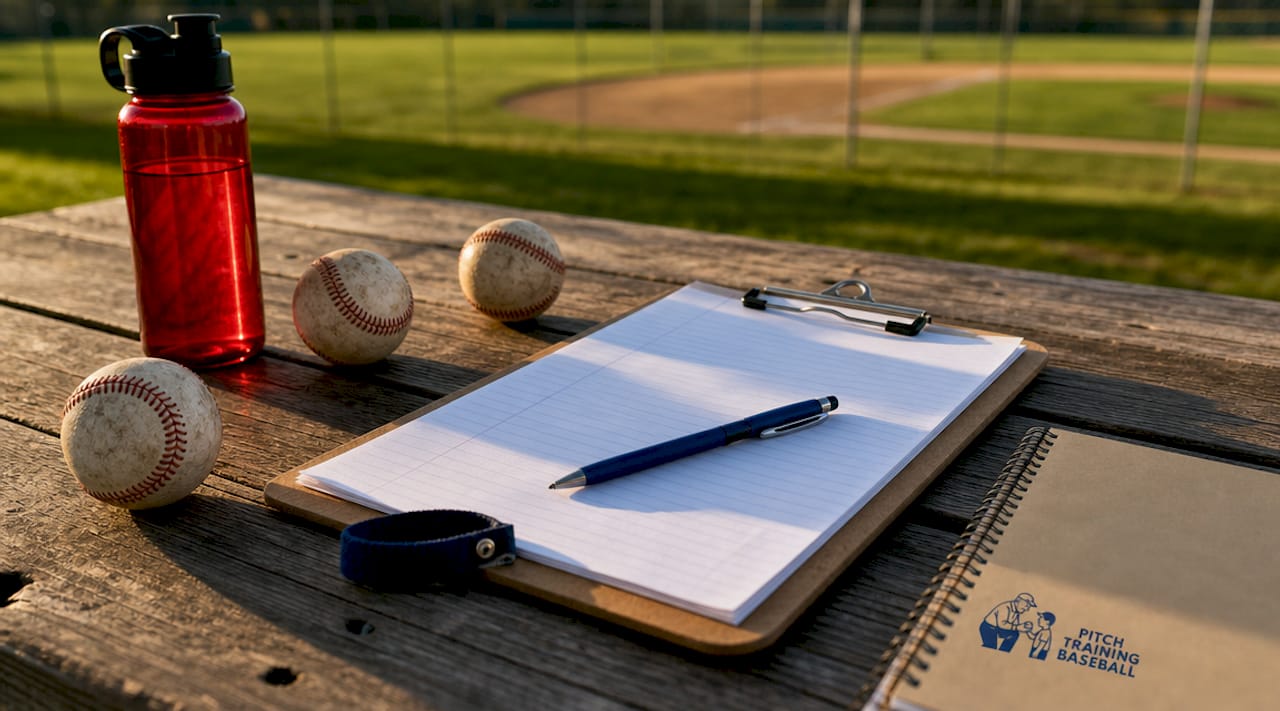
Pro Tip: Write the specific goal for each day on a whiteboard or in a notebook before the week starts. Pitchers who see the plan in writing show up with a clearer mindset and waste less time during sessions.
One common mistake is treating every day as a throwing day. A pitcher who throws lightly every single day without planned rest accumulates fatigue that compounds over a 12-week season. The 7-day cycle solves this by making rest structural, not optional.
How to create purposeful bullpen and fielding practice sessions
Time management for pitchers breaks down at the session level when there is no written goal before practice starts. Writing down a specific focus before a bullpen session is the single most effective habit for improving intentional effort and measurable progress. Two types of bullpen sessions cover most of what youth pitchers need.
Delivery-focused bullpen sessions concentrate entirely on mechanics. The pitcher works over the rubber, repeating the same movement pattern. Pitch results like movement, break, or velocity are irrelevant here. Coaches who interrupt a delivery-focused session to comment on where the ball ended up are undermining the session’s purpose. The goal is a consistent arm slot and repeatable release point, which builds deception and long-term command.
Command-focused bullpen sessions shift attention to strike zone control. The pitcher works with a catcher or a pitching target, aiming for specific quadrants of the zone. Mechanics are assumed to be sound before this session type is used. Mixing delivery work and command work in the same session often produces neither result.
For PFP blocks, the structure matters as much as the content:
- Run PFP sessions 2 to 3 times per week, keeping each block between 12 and 20 minutes.
- Target 8 to 12 quality reps per station, covering comebackers, first-base coverage, and bunt defense.
- Stop the session immediately if execution drops below 90% clean reps. Fatigued reps reinforce bad habits faster than good reps build good ones.
- Rotate through 2 to 3 stations per session rather than drilling one movement repeatedly until the pitcher is exhausted.
Pro Tip: Keep a simple session log with three columns: date, focus area, and execution percentage. After four weeks, patterns become obvious. You will see which mechanics hold up under fatigue and which ones collapse first.
Here is a practical session structure table for a mid-week bullpen day:
| Session block | Duration | Focus |
|---|---|---|
| Arm care and warm-up | 10 min | Band work, hip mobility, light toss |
| Flat-ground mechanics | 8 min | Delivery pattern, arm slot consistency |
| Bullpen pitches (24-30) | 15 min | Delivery focus or command focus, not both |
| PFP block | 12 min | Comebackers, first-base coverage |
| Cool-down and stretch | 5 min | Shoulder stretches, forearm care |
This 50-minute structure covers every major element of a productive mid-week session without overloading the arm or the pitcher’s attention span.
What are best practices for managing pitcher workload and recovery?
Game pitching produces significantly greater stress than bullpen throwing, and recovery time must be adjusted accordingly. Cold weather, long waits between innings, and the adrenaline of competition all increase the systemic load on a pitcher’s body beyond what pitch count alone captures. A pitcher who throws 60 pitches in a tight game under 50-degree weather needs more recovery than one who throws 60 pitches in a controlled bullpen on a warm afternoon.
Effective workload management during the season depends on a few non-negotiable habits:
- Differentiate game stress from bullpen stress. Use the side bullpen session between starts as a planned moderate-intensity day, not a makeup session for poor game performance. Chasing results in a between-start bullpen adds stress without adding skill.
- Build gradually from offseason to in-season. Arm tissues respond to progressive loading. Sudden maximal throwing after a low-volume offseason is a primary cause of early-season arm injuries in youth pitchers.
- Monitor soreness proactively. A pitcher who reports soreness on Day 2 should have their Day 3 bullpen reduced or replaced with flat-ground work. Waiting until the soreness becomes pain is the most common coaching error in youth baseball.
- Customize workload by role. One-size-fits-all practice plans are counterproductive. A starter who throws 70 to 90 pitches per game needs a full 7-day recovery cycle. A reliever or opener who throws 10 to 20 pitches needs far less recovery and can handle more frequent, shorter sessions.
- Plan submaximal throw days. Not every throwing day needs to be a bullpen. Flat-ground work at 70 to 80 percent effort maintains arm feel without accumulating the fatigue of a full bullpen session.
“Game stress includes cold weather, long inning waits, and adrenaline increasing systemic load beyond pitch count alone.” — PRP Baseball
Relief pitchers and multi-position players present a specific challenge. A pitcher who also plays shortstop or catcher throws far more total pitches per week than the coaching staff often tracks. Counting only pitching appearances while ignoring throws from other positions creates a false picture of workload. Track total throws across all positions, not just pitching appearances.
How to integrate arm care, conditioning, and mental prep into practice schedules
Optimizing bullpen practice time requires more than managing pitch counts. The most effective practice routines for pitchers treat arm care, physical conditioning, and mental preparation as scheduled components, not afterthoughts.
A well-integrated weekly schedule includes these elements:
- Progressive long-toss program. Long toss builds arm strength and loosens the shoulder through a full range of motion. Place long-toss sessions on Day 2 or Day 5, never the day before a game or a bullpen. Start at 60 feet and extend to 90 to 120 feet over several weeks as the season progresses.
- Mobility and strength maintenance. Sport-specific training for youth pitchers focuses on hip mobility, rotator cuff stability, and core strength. These are maintenance goals during the season, not strength-gain goals. Heavy lower body work should stay in the offseason. Squats and deadlifts the day before a bullpen session compromise mechanics by creating leg fatigue that disrupts the kinetic chain.
- Visualization during bullpen sessions. Before each pitch in a command-focused bullpen, the pitcher should visualize the target, the pitch type, and the release point. This mental rehearsal takes 5 to 10 seconds per pitch and measurably improves focus and execution over a full session.
- Hydration and nutrition on practice days. Youth pitchers who arrive at practice dehydrated show mechanical breakdowns earlier in the session. Drinking 16 to 20 ounces of water in the two hours before practice is a simple habit that protects both performance and arm health.
- Adjust load based on individual response. Two pitchers of the same age and size can respond very differently to the same workload. One pitcher may handle 28 bullpen pitches with no soreness while another shows fatigue signs at 20. Track individual response over several weeks and adjust the plan accordingly.
For arm strength development in youth players, the principle is consistent low-stress loading over time rather than occasional high-stress sessions. The arm adapts to what it experiences regularly, not to what it experiences once.
Key takeaways
Effective pitching practice scheduling requires a structured weekly cycle, session-specific goals, and workload tracking to develop skills and protect arm health simultaneously.
| Point | Details |
|---|---|
| Use a 7-day cycle | Structure every week around game day, with recovery on Day 1 and bullpen on Day 3 or 4. |
| Write session goals before practice | Separate delivery-focused and command-focused bullpens to get clear results from each session. |
| Adjust recovery by game stress | Game outings require more recovery than bullpen sessions due to adrenaline, weather, and inning waits. |
| Customize workload by role | Starters, relievers, and multi-position players need different weekly throwing volumes and recovery timelines. |
| Track execution quality | Aim for 90% clean reps per session and stop PFP blocks when execution drops due to fatigue. |
Why intentional practice time transforms youth pitching faster than volume ever will
I have watched coaches hand a pitcher a ball and say “go throw a bullpen” with no further instruction. The pitcher throws 30 pitches, hits the showers, and calls it a productive day. Nothing changed. No mechanic improved. No command pattern was reinforced. That session was just wear on the arm.
The shift that actually accelerates development is treating every session as a specific experiment. Before the pitcher throws a single pitch, the coach and player agree on one thing they are testing or building. Is it the hip-to-shoulder separation? Is it locating the fastball down and away to right-handed hitters? That single constraint turns a generic bullpen into a focused skill session. Purposeful throwing produces faster progress than high-volume unfocused throwing every time.
The other habit I advocate strongly is practice logging. Not a complicated spreadsheet. A simple notebook with date, focus, pitch count, and a one-sentence note on execution quality. After six weeks, that log tells you more about a pitcher’s development than any video analysis. You see which mechanics hold under fatigue, which command patterns are improving, and where the arm is accumulating stress before it becomes a problem.
The hardest part of this approach is convincing young pitchers that throwing fewer, more intentional pitches is actually harder work than throwing more. It requires concentration, self-awareness, and honesty about execution. Those are exactly the mental skills that separate good pitchers from great ones at every level. The repetition quality matters far more than the repetition count.
— Albert
Build better pitching sessions with Pitchtrainingbaseball
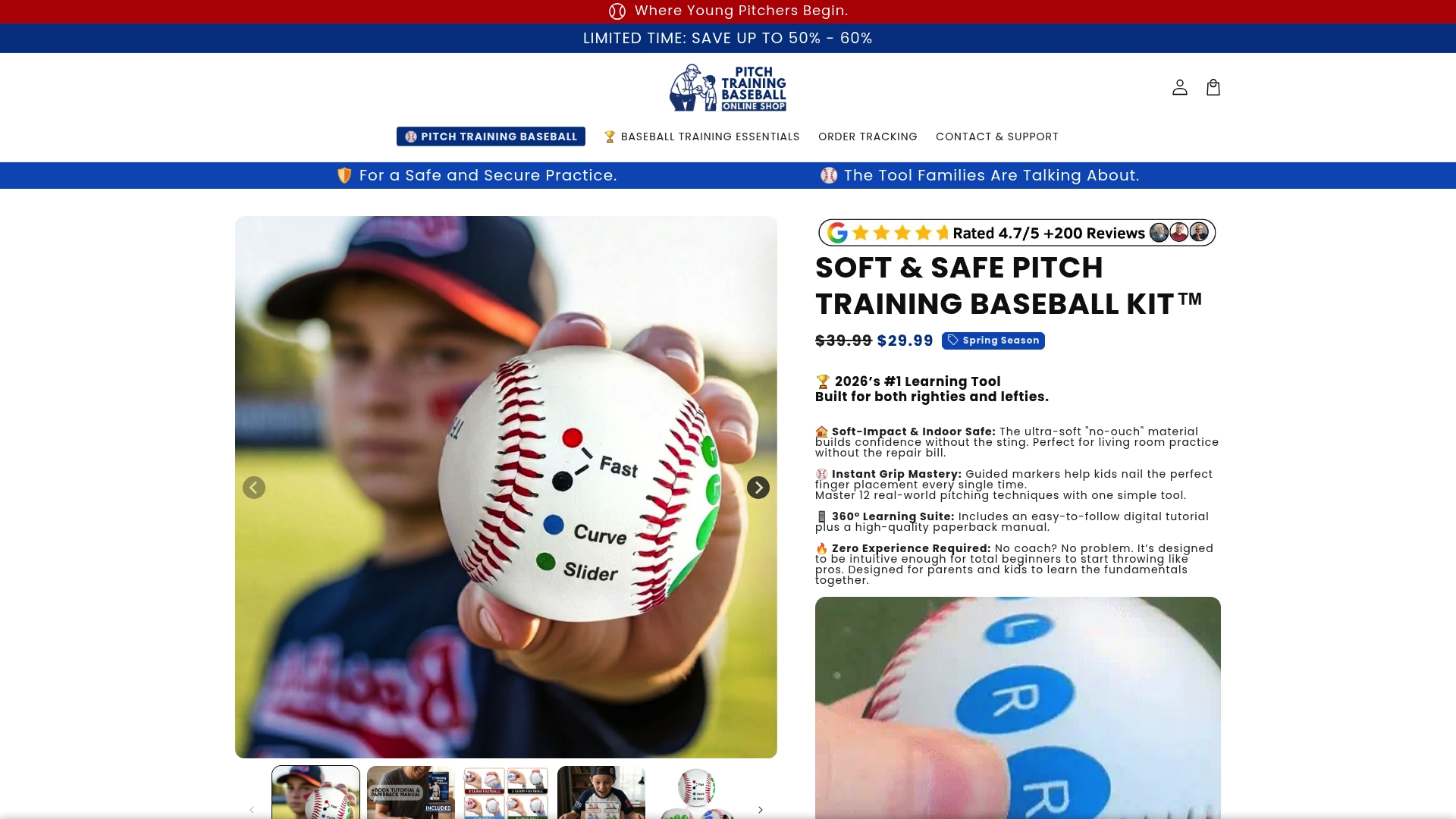
Pitchtrainingbaseball designs training tools specifically for youth pitchers who want to practice with purpose. The pitching targets, training nets, and weighted training balls on the site are built to support the kind of structured, goal-focused sessions described in this guide. Whether you are running a command-focused bullpen or a PFP block, having the right equipment makes every rep count. Explore the pitching training program to find tools that match your weekly practice cycle and help young arms develop safely and consistently.
FAQ
How many pitches should a youth pitcher throw in a bullpen session?
Youth pitchers should throw 24 to 30 pitches per bullpen session at submaximal intensity during the in-season cycle. This range maintains mechanics without accumulating excessive fatigue before game day.
How often should a youth pitcher throw during the week?
Most youth pitchers benefit from 3 to 4 throwing days per week, including one bullpen session, one or two light throwing days, and game day. Rest and active recovery days are as important as throwing days for long-term arm health.
What is the difference between a delivery-focused and a command-focused bullpen?
A delivery-focused bullpen concentrates entirely on repeating correct mechanics, ignoring pitch results like movement or location. A command-focused bullpen shifts attention to hitting specific zones in the strike zone, assuming mechanics are already sound.
How do you track pitcher workload across multiple positions?
Count total throws from all positions, not just pitching appearances. A pitcher who also plays shortstop or catcher accumulates significant arm stress outside of formal pitching sessions, and ignoring those throws creates an inaccurate picture of weekly workload.
When should a youth pitcher’s bullpen session be shortened or skipped?
Reduce or replace a bullpen session with flat-ground work if the pitcher reports soreness on Day 2 of the recovery cycle. Waiting until soreness becomes pain before adjusting the plan is the most common and preventable coaching mistake in youth baseball.
Recommended
- Game-like pitching practice: Raise youth baseball skills fast – Pitch Training Baseball
- Top pitching workouts for youth baseball: build skill safely – Pitch Training Baseball
- Defining Youth Pitching Mechanics: A Coach’s Guide – Pitch Training Baseball
- Baseball Pitching Visualization Techniques for Youth Players – Pitch Training Baseball