


Every coach and parent wants to see a young pitcher improve fast. That desire is completely understandable. But the belief that a few sessions of intense practice will produce a polished, accurate pitcher is one of the most common misconceptions in youth baseball. Understanding why focus on repetition in pitching matters so much comes down to how the human body actually learns movement. Skill development in pitching is not a sprint. It is a long, structured process built on thousands of deliberate repetitions that gradually wire the brain and body to perform the same motion with increasing consistency and confidence.
Table of Contents
- Key Takeaways
- Why focus on repetition in pitching: the muscle memory connection
- The mental side of repetition
- Repetition, injury prevention, and adaptive mechanics
- Practical strategies for repetition-focused training
- My honest take after years of watching pitchers develop
- Build better repetition with the right tools
- FAQ
Key Takeaways
| Point | Details |
|---|---|
| Repetition builds muscle memory | Performing the same pitching motion thousands of times creates automatic, consistent mechanics. |
| Mental confidence follows physical reps | Repeated practice reduces in-game anxiety and builds the focus young pitchers need under pressure. |
| Mechanics must stay correct throughout | High-volume repetition only helps if form is monitored and corrected throughout training. |
| Injury prevention requires smart volume | Effective repetition means managing workload, recovery, and subtle mechanical adjustments together. |
| Consistency beats intensity every time | Short, frequent practice sessions structured around correct movement outperform long, infrequent ones. |
Why focus on repetition in pitching: the muscle memory connection
The technical term coaches and sports scientists use for what repetition produces is motor learning. Muscle memory is the popular shorthand, and while muscles do not literally store memories, the brain absolutely does. Every time a young pitcher goes through the same throwing motion, the nervous system reinforces the neural pathway associated with that movement. Over time, the motion becomes automatic. The pitcher stops thinking about where their elbow is and starts simply throwing.
Research from University of Nevada, Reno’s 2026 pitching study highlights that pitchers repeat the same motion thousands of times across a single season, and it is that volume under stable conditions that builds the consistent mechanics coaches are looking for. This is not an accident of training design. It is exactly how motor learning works.
Without sufficient repetition, mechanics stay fragile. A pitcher who has only thrown a hundred times in a month has not yet built the neural pathways to reproduce that motion reliably under game pressure. The delivery will look different in practice than it does with runners on base. That inconsistency is not a mental problem. It is a repetition deficit.
Here is what coaches need to build into their practice structure to support genuine motor learning:
- Start simple. Use drills that isolate one part of the delivery at a time, such as the arm path or the hip turn, before asking players to put the full motion together.
- Prioritize volume over immediate results. A session of fifty controlled throws with good mechanics beats ten throws where the pitcher is straining for speed.
- Film regularly. Visual feedback helps players connect what they feel to what they are actually doing, which speeds up the learning loop.
- Repeat the same drill across multiple sessions. Novelty feels engaging, but familiarity is what builds automaticity.
Pro Tip: Monitor form on every set of repetitions, not just the first few. Fatigue causes mechanics to drift, and if a pitcher ingrains a tired, compensated motion, that is the motion the body will default to under pressure.
The risk of skipping structured repetition is not just slow improvement. It is actively building bad habits. A young pitcher who throws hard but inconsistently is embedding a range of movements into their nervous system. Each of those variants competes with the others every time they step on the mound. Structured repetition narrows that range and gives the pitcher one reliable motion to trust.
The mental side of repetition
Pitching is not just physical. Ask any coach who has watched a technically sound young pitcher completely unravel in their first competitive game. The mechanics were there in practice. In the game, it all fell apart. This is where the psychological benefits of repeated practice become just as significant as the physical ones.
Repetition builds confidence, focus, and mental resilience because it creates familiarity. When a pitcher has thrown the same delivery hundreds of times in low-pressure environments, the motion no longer feels threatening in high-pressure ones. The brain recognizes it. The body has been here before. That recognition is what separates a pitcher who competes from one who freezes.
You can support mental training for pitchers by structuring practice to gradually increase the challenge level, rather than throwing young athletes into game-like scenarios before they are ready. Here is how those mental benefits stack up when repetition is done right:
- Reduced performance anxiety. Repetition makes the motion feel routine rather than risky.
- Sharper focus under pressure. When mechanics are automatic, mental energy shifts to reading the situation instead of managing the body.
- Greater resilience after mistakes. A pitcher who trusts their mechanics can shake off a bad pitch because they know the next one can be different.
- Stronger competitive identity. Consistent practice builds a self-image grounded in preparation rather than hope.
The key to unlocking these mental benefits is the practice environment itself. Early-stage pitching development works best in low-pressure settings where the focus is on movement quality, not outcomes. Coaches who demand accuracy from a twelve-year-old who has not yet developed movement comfort are putting the cart before the horse. Patience in the early stages is what sets up confidence in the competitive ones.
Repetition, injury prevention, and adaptive mechanics
One of the biggest misunderstandings coaches and parents carry into practice is that more repetition automatically means more risk. The truth is more nuanced. The danger is not repetition itself. The danger is repetition without attention to mechanics quality and workload management. A pitcher who repeats perfect mechanics with adequate recovery is building a durable, efficient body. A pitcher who throws through fatigue with poor mechanics is grinding toward injury.
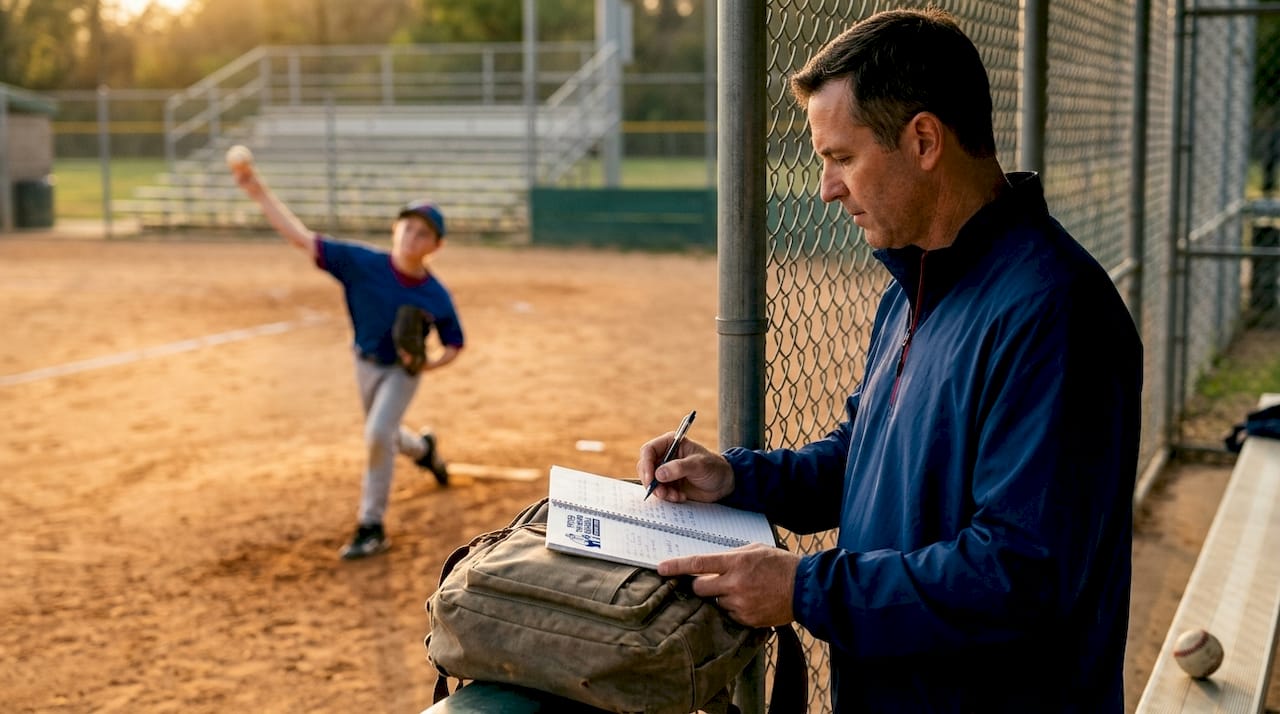
Biomechanical research on stride length and ankle mobility shows that small mechanical adjustments compound across thousands of pitches. Drive-leg stability and ankle mobility directly affect how repeatable a pitcher’s stride is, which in turn affects release consistency and arm stress. These are not details to address at the elite level only. They matter for twelve-year-olds too.
Here is a practical framework for coaches and parents to balance volume with safety:
| Approach | What it means in practice | Why it matters |
|---|---|---|
| Set pitch count limits by age | Follow established youth guidelines for weekly pitch counts | Prevents cumulative arm stress before growth plates close |
| Rotate drill types within sessions | Alternate between full delivery, isolated mechanics, and light toss drills | Reduces repetitive strain on specific tissues |
| Build in structured recovery days | Schedule at least two full rest days per week during the season | Allows muscle adaptation and connective tissue recovery |
| Video mechanics under fatigue | Film pitchers toward the end of sessions, not just at the start | Reveals compensations that develop when the body is tired |
| Include targeted mobility work | Add ankle circles, hip flexor stretches, and thoracic rotations before throwing | Directly supports the movement patterns research links to pitching efficiency |
Pro Tip: Add five minutes of targeted lower-body mobility work before every throwing session. Ankle and hip flexibility are directly linked to stride repeatability, which is where mechanical consistency either holds together or breaks down.
The goal is not to limit repetition. It is to make every repetition count. Safe pitching workouts structured around youth injury prevention produce more durable athletes who are still throwing well at sixteen, not burned out at thirteen.
Practical strategies for repetition-focused training
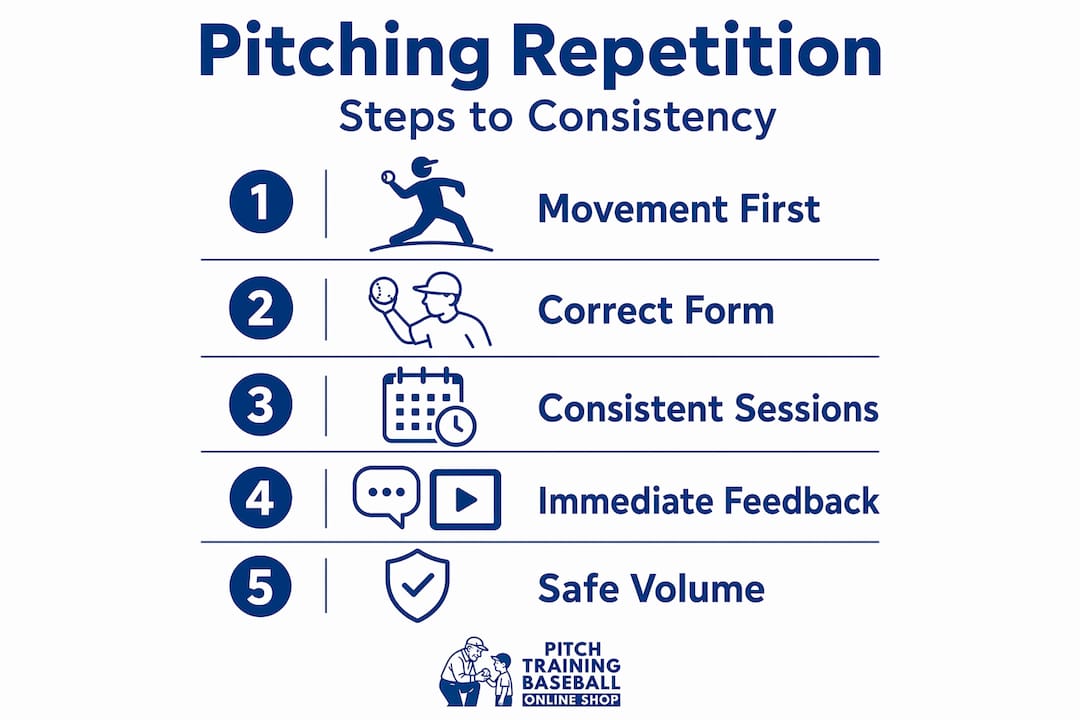
Knowing why repetition matters is only half the picture. The other half is knowing how to structure it so it actually produces results. Consistent, disciplined repetition surpasses raw talent over time. But repetition without structure is just mileage. Here is how to make the reps count.
Start with movement, not accuracy
The staged progression of pitching development begins with coordination and movement comfort, not with hitting a target. Parents often expect fast accuracy gains, but the early months of training should focus entirely on getting the body moving correctly. Once the motion feels natural, accuracy follows as a byproduct. Demanding accuracy before mechanics are established forces young pitchers to develop compensations that are very hard to undo.
Use tools that give immediate feedback
Technology accelerates learning because it closes the feedback loop faster. Digital pitching systems build repetition and game IQ simultaneously by simulating real pitch-call scenarios during training. For younger players, something as simple as a structured pitching target gives immediate visual feedback on location and helps make repetition feel purposeful rather than mechanical.
The comparison below shows how different drill types serve different stages of development:
| Drill type | Primary focus | Best stage to use | Rep volume per session |
|---|---|---|---|
| Isolated arm path drill | Arm mechanics and path | Early development | 30 to 50 reps |
| Balance and load drill | Hip hinge and drive leg | Early to mid development | 20 to 30 reps |
| Full delivery with target | Mechanics integration | Mid development | 40 to 60 reps |
| Game-pace pitch calling | Decision-making under pressure | Advanced development | 20 to 40 reps |
| Simulated at-bat sequences | Full competition readiness | Late development | 15 to 25 reps |
Keep sessions short and consistent
One of the biggest structural mistakes in youth pitching training is front-loading volume into one or two long sessions per week. Research consistently supports long-term consistent instruction over short-term intensity blocks. Three focused sessions of twenty to thirty minutes produce better motor learning outcomes than one ninety-minute grind. Frequency reinforces neural pathways. Long gaps between sessions allow them to fade.
For coaches designing a weekly plan, the most effective approach involves daily or near-daily contact with correct mechanics, even if some sessions are as simple as light toss work focused on arm path. You can find a structured approach to this in game-like pitching practice routines that keep intensity appropriate while maximizing quality repetitions.
For parents supporting practice at home, the goal is not to run a second coaching session. It is to give your pitcher additional low-pressure contact with the motion. Throwing against a net for ten minutes with attention to mechanics is genuinely useful. Throwing hard at a target for thirty minutes because a game is coming up is not.
The underlying principle across all of these strategies is consistency over intensity. A pitcher who shows up every day and throws correctly for twenty minutes will outpace one who throws hard twice a week every single time.
My honest take after years of watching pitchers develop
I have spent enough time around youth baseball to recognize a pattern that never changes. Coaches and parents who trust the repetition process early always produce better pitchers long-term than those who chase shortcuts.
What I have seen happen repeatedly is this: a parent gets frustrated around months three or four because their pitcher still looks inconsistent. They start pushing for more intensity, more speed, more game-like pressure before the mechanics are actually grooved. And the pitcher either stagnates or gets hurt. The ones who stick with quiet, structured repetition through that frustrating middle period? They break through with mechanics that hold up in games because they earned them one rep at a time.
The coaches who have influenced me most treated repetition not as a training tool but as a philosophy. Every drill had a reason. Every rep had an intention. The goal was never to do more. It was to do the right thing enough times that it became the only thing the body knew how to do.
I think the hardest part of this for parents is that progress during repetition-focused training is often invisible from the outside. The pitcher does not look dramatically different after week six. But internally, the neural pathways are being built. The coordination is settling. The movement is becoming theirs. And then one day, seemingly out of nowhere, something clicks. The mechanics consolidate. The pitcher starts throwing with a consistency that surprises everyone watching.
That breakthrough is not sudden. It is the accumulation of every boring, patient repetition that came before it. Trust the reps. Trust the process.
— Albert
Build better repetition with the right tools
Repetition only produces results when the practice environment supports it. That means having tools that give young pitchers clear, immediate feedback on every throw, make mechanics easy to monitor, and keep sessions engaging enough that athletes actually want to show up.
Pitchtrainingbaseball designs training aids specifically for this kind of systematic practice. The Pitching Target Net with Strike 9-Zone gives pitchers a defined target with nine color-coded zones, making every repetition purposeful and measurable. Young pitchers can see exactly where they are hitting and coaches can track improvement across sessions. The core pitch training baseball program pairs training equipment with structured practice guidance, giving coaches and parents a repeatable system rather than guesswork. If you want to explore how training nets specifically support consistent mechanics, Pitchtrainingbaseball has in-depth guidance on net-based training that connects the equipment to the developmental science behind it.
FAQ
Why is repetition so important for young pitchers?
Repetition builds motor learning, which is how the brain and body develop consistent, automatic mechanics. Without enough quality repetitions, a young pitcher’s delivery will vary under pressure because the movement has not yet been deeply encoded.
How many reps does a pitcher need to see real improvement?
There is no universal number, but pitchers repeat their delivery thousands of times across a single season before mechanics become reliably consistent. Progress is gradual and builds across months of structured practice, not days.
Should accuracy be the first goal when starting pitching reps?
No. Early development should prioritize movement quality over accuracy. Correct mechanics practiced consistently will lead to accuracy over time. Demanding accuracy before the movement is established creates compensations that are hard to fix later.
Can too much repetition lead to injury?
Repetition without proper mechanics monitoring, pitch count management, and recovery days can increase injury risk. The solution is structured repetition that includes rest, mobility work and mechanical oversight rather than reduced practice volume.
How can parents support pitching repetition at home?
Parents can set up short, low-pressure throwing sessions focused on correct mechanics rather than velocity or accuracy. Even ten minutes of intentional throwing against a net or target, three to four times per week, meaningfully accelerates development when the motion is done correctly each time.
Recommended
- Game-like pitching practice: Raise youth baseball skills fast – Pitch Training Baseball
- Fix youth pitching mistakes for better performance – Pitch Training Baseball
- Why Mental Training for Pitchers Actually Matters – Pitch Training Baseball
- Mastering proper pitching grip: boost youth baseball skills – Pitch Training Baseball