


Most parents and coaches believe raw speed is the secret weapon that separates elite youth pitchers from average ones. Push harder, throw faster, build arm strength early — that’s the conventional playbook. But that belief is costing young players real development time. The truth is that command and accuracy are the skills that actually move the needle, and modern training nets are specifically engineered to build exactly those qualities. This guide breaks down how training nets work, why they matter more than you might think, and how to use them in ways that produce measurable results on the mound.
Table of Contents
- Understanding the fundamentals: What training nets are and why they matter
- Core benefits: How training nets accelerate skill development and consistency
- What most people miss: The difference between accuracy, command, and velocity
- Practical frameworks: Drills, station setups, and workload management
- Why most youth training misses the mark — and how to fix it with simple tools
- Next steps: Choosing the right training nets and tools
- Frequently asked questions
Key Takeaways
| Point | Details |
|---|---|
| Accuracy matters most | Youth pitchers improve outcomes by prioritizing accuracy and command over velocity, especially during early development. |
| Training nets boost repetition | Specialized nets enable more high-quality, targeted reps, accelerating skill learning and consistency. |
| Safety through station rotation | Rotating practice stations with nets keeps kids within safe workload limits and reduces the risk of injuries. |
| Expert-guided drills | Parents and coaches should define targets, correct errors, and reinforce repeatable mechanics to maximize net effectiveness. |
Understanding the fundamentals: What training nets are and why they matter
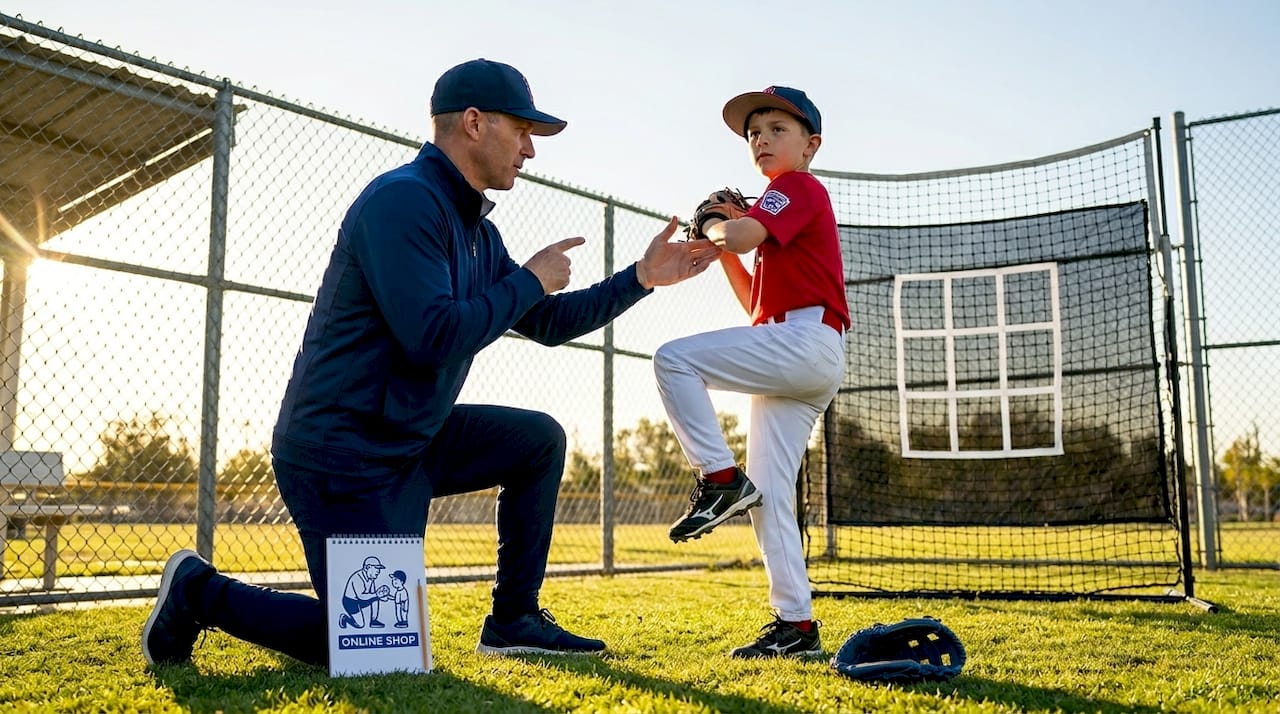
Training nets for youth baseball are not just glorified backstops. They are structured skill-building tools designed to give pitchers a defined, repeatable target that mimics the strike zone in a controlled practice environment. Most quality nets include visible zone markers, adjustable strike zone panels, and portable frames that set up quickly in a backyard, gym, or dugout area. The best models are built specifically for youth proportions and pitching distances.
There are a few main types worth knowing:
- Strike zone nets feature color-coded panels that represent the corners, edges, and center of the zone, giving pitchers an immediate visual target to aim at.
- Rebounder nets return the ball to the pitcher, which is useful for solo practice but less effective for command-focused work.
- Target frame nets use adjustable pockets or zones that coaches can customize based on what the pitcher needs to work on.
- Pop-up practice nets are lightweight and portable, ideal for at-home sessions with minimal setup time.
The key feature that separates a training net from a plain backstop is the defined target zone. Without a specific zone to aim at, a pitcher just throws. With one, they practice pitching. That distinction matters enormously for younger athletes whose mechanics are still forming. Understanding throwing techniques and tools that complement net work helps coaches get even more out of each session.
One important note: research on skill learning confirms that most strongly grounded evidence concerns mechanics and command concepts rather than net-only interventions. This is not a knock against training nets. It’s a reminder that the net is a vehicle. What you do with it, specifically how intentionally you use it, determines the outcome.
Pro Tip: Before your next session, tape or mark four small spots on your strike zone net: high inside, high outside, low inside, and low outside. Ask your pitcher to call the target before each throw. That one habit transforms a casual warmup into focused command training.
The portability factor also matters more than coaches often realize. When practice equipment is easy to set up and break down, it actually gets used more consistently. Consistency compounds. A pitcher who works with a target net three times a week for six weeks will build far more muscle memory than one who sees the bullpen mound once a week.
Core benefits: How training nets accelerate skill development and consistency
Now that we know what training nets are, let’s dig into how they help young pitchers improve faster and safer. The most underrated advantage of training nets is the sheer volume of quality repetitions they make possible. In a team practice setting, a pitcher might throw ten to fifteen pitches from the mound. With a training net set up as a station, that same pitcher can work through thirty to forty focused reps in the same amount of time, with no waiting for fielders, no reset time, and no interruption.
But volume alone isn’t the point. The quality of those reps is what separates improvement from just throwing more pitches. Here’s what structured target work actually builds:
- Repeatable release point: Throwing at a defined spot forces the arm to find the same slot every time.
- Hip and shoulder alignment: Pitchers who throw at vague targets often compensate with arm-only mechanics. A visible zone demands full-body follow-through.
- Mental focus habits: Calling a corner before each pitch builds the kind of pre-pitch routine that directly translates to in-game performance.
- Faster feedback loops: Both pitcher and coach can immediately see whether the ball hit the target or missed, and in which direction.
The best-practice methodology for coaches and parents is clear: treat a training net as a tool to increase high-quality, repeatable command reps, use a specific target, define what “good” looks like for that session, and correct the underlying mechanical error rather than just telling a pitcher to throw harder or straighter. Station rotation also keeps workload age-appropriate.
Here’s a quick comparison of traditional pitching practice versus net-based station work:
| Practice type | Reps per session | Feedback speed | Target specificity | Workload control |
|---|---|---|---|---|
| Traditional bullpen | 15 to 20 | Delayed (coach review) | Low to medium | Difficult to monitor |
| Net station work | 30 to 50 | Immediate | High | Easy to manage |
| Mixed station rotation | 25 to 40 | Immediate | High | Excellent |
That table tells a story. Net-based training doesn’t replace game-like practice. It multiplies the useful work a pitcher can do in a single session. The key word is useful. Throwing sixty pitches with no target is less productive than throwing thirty with a specific corner to hit.
For coaches running group practices, station rotation is the practical solution that keeps everyone working without overloading any one arm. While one group pitches at the net, another runs fielding drills, and a third works on baserunning or hitting. The pitcher’s arm gets rest between rounds, the session moves efficiently, and every player stays engaged. Ideas for raising youth pitching skills with game-like elements fit naturally into this rotation model.
One more benefit worth highlighting: training nets create a safe space for mechanical correction. When a pitcher is working at a net, there’s no batter to hit, no umpire to impress, and no fielders waiting. That lower-pressure environment makes it easier for young players to experiment with adjustments without the fear of making a mistake in front of their teammates. Understanding how to fix pitching mistakes in this environment leads to faster, more lasting improvements.
What most people miss: The difference between accuracy, command, and velocity
With the core benefits outlined, let’s address a subtle but vital difference that shapes training success. Accuracy, command, and velocity are often used interchangeably in casual baseball conversations, but they mean very different things, and confusing them leads to misguided training priorities.
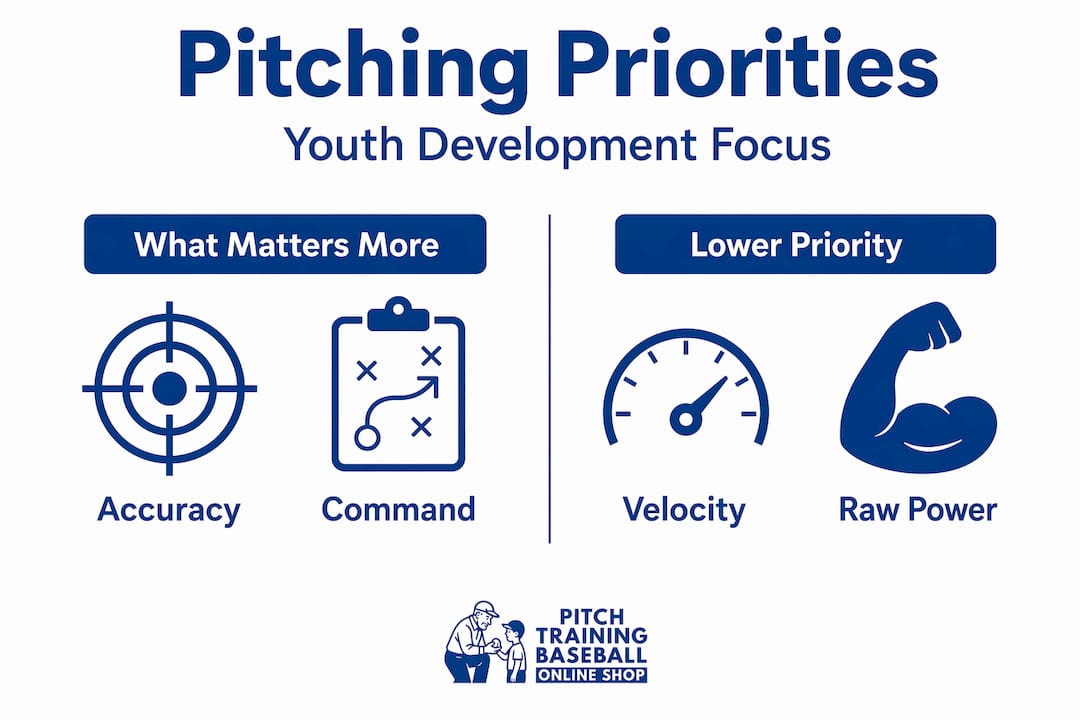
Accuracy refers to how consistently a pitcher can hit an intended location, regardless of pitch type or game situation. Command is a broader concept that includes accuracy but also incorporates the ability to adjust location intentionally, respond to a catcher’s target, and locate different pitches in different counts. Velocity is straightforward: how fast the ball travels from hand to plate.
Here’s the uncomfortable truth that most youth programs ignore:
“Accuracy and locating the intended spot appear to matter more than raw velocity for outcome success. Youth programs should emphasize command and spotting, reducing variability before prioritizing maximum-speed goals.” (The Sport Journal)
That insight from pitch accuracy research deserves a second read. It’s not saying velocity doesn’t matter. It’s saying that for actual pitching outcomes, consistently hitting the spot you’re aiming for produces better results than throwing hard without location.
Here’s how these three attributes compare across youth development stages:
| Attribute | Impact on outcomes | Trainable with nets | Age priority |
|---|---|---|---|
| Accuracy | Very high | Yes, directly | Ages 8 to 14 |
| Command | Very high | Yes, with feedback | Ages 10 to 16 |
| Velocity | Moderate at youth level | Indirectly | Ages 14 and up |
That data tells coaches something actionable. Investing training time in accuracy and command at younger ages pays off dramatically, and training nets are one of the best tools available to do exactly that.
Why does command also reduce injury risk? Because pitchers who rely on velocity to get results tend to throw harder to compensate for missing locations. That extra effort adds stress to the shoulder and elbow. A pitcher who hits the corner at 58 mph is working with proper mechanics. A pitcher who fires 70 mph and misses the plate by two feet is creating both performance problems and injury risk with every rep.
Learning how pitching balance for control connects to accuracy makes this even clearer. Balance at the top of the wind-up directly affects release point consistency, which directly affects command. Net training that emphasizes balance drills before each throw builds all three attributes simultaneously.
Pro Tip: During net sessions, track miss direction rather than just miss distance. A pitcher who consistently misses arm-side low has a specific mechanical issue (usually release point or wrist position) that you can correct. Tracking the pattern gives you a coaching road map instead of just a frustration.
Measuring accuracy during net work doesn’t require expensive equipment. Mark six zones on the net (four corners, middle up, middle down) and keep a simple tally of where each pitch lands. After twenty throws, that chart tells you more than most video analysis systems can.
Practical frameworks: Drills, station setups, and workload management
Understanding the value of accuracy and command, here’s how to apply best practices with training nets in real sessions. The following structure works for youth practices of any size, from backyard solo sessions to full team practice setups.
Setting up your station rotation:
-
Station 1: Command net work. Pitcher throws at the strike zone net from appropriate youth distance (46 feet for Little League, 54 feet for intermediate). Coach or parent assigns a target zone before each pitch. Run 8 to 10 pitches per turn.
-
Station 2: Balance and mechanics drill. Away from the net, pitcher works on balance point holds and stride direction without throwing. This reinforces what the net session trains.
-
Station 3: Catch and feedback. Pitcher throws to a partner who provides verbal feedback on what it felt like to catch the pitch. This builds catcher-pitcher communication habits early.
-
Station 4: Recovery and mental prep. Players rest, hydrate, and visualize their next target assignment. Even at youth ages, a 5-minute mental break between net rounds increases focus quality.
-
Rotate every 12 to 15 minutes. Each pitcher gets two or three turns at the command net station per practice, totaling 20 to 30 focused command reps.
This structure works because it spreads arm stress across the session while keeping mental engagement high. Skill learning evidence consistently supports the idea that mechanics and command work outperform volume-focused approaches for youth development.
Drill examples that work especially well with training nets:
- Four-corner challenge: Assign each corner a number (1 through 4). Call out a number before each pitch. Pitcher earns a point for hitting within one ball-width of the target. First to fifteen points wins.
- Count-based targeting: Set up scenarios (2-0 count, 0-2 count, 3-2 count) and ask pitchers to choose and hit the appropriate location based on that count. This builds real game-decision habits.
- Miss-direction correction drill: If a pitcher misses in the same direction three times, stop the drill, address the mechanical cause, and have them throw five correction-focused reps before resuming.
The best-practice approach confirms that defining what “good” looks like before each rep and then correcting the mechanical root of errors (rather than just outcomes) is the single highest-leverage coaching habit you can build.
Workload management is non-negotiable for youth arms. Net sessions should complement, not replace, the pitch count guidelines set by organizations like Little League International. Use net work for the majority of command reps, reserving live mound work for game prep and realistic scenarios. Check out safe training practices for guidance on how to structure a full season of net-based training without overloading young arms.
If you’re looking for additional resources to round out your program, custom training programs can offer athlete-specific conditioning plans that pair well with on-field net work. This is especially useful for coaches managing pitchers at multiple skill levels on the same roster.
Also think about maintaining pitching balance as a drill anchor across all stations. When balance is the consistent focus from warmup through net reps, mechanics stabilize faster, and command improvements happen more quickly.
Pro Tip: End every net session with a “two for two” challenge. The pitcher must hit any two assigned corners in a row before they can finish. This creates a positive closing habit and reinforces that the goal of practice is accuracy, not just completion.
Why most youth training misses the mark — and how to fix it with simple tools
Here’s the honest assessment that most coaching forums won’t give you directly: the majority of youth pitching programs are accidentally optimizing for the wrong things. Parents measure radar gun numbers at tryouts. Coaches celebrate strikeouts without checking where those pitches were actually located. Kids train to throw harder because that’s what gets noticed, not because it’s what makes them better.
The result is a generation of young pitchers who have been taught that velocity equals skill. But velocity without command is just a fast ball that misses. And missing at 70 mph isn’t more impressive than throwing 58 mph to the back corner of the zone. It’s just faster and more expensive in terms of arm stress.
Training nets get misused in this same pattern. Some coaches set up a net, tell kids to throw into it, and count that as “net training.” That’s not training. That’s unsupervised throwing with a backstop. The net’s value comes entirely from how you use it. Defined targets, intentional reps, corrective feedback, and structured rotation — those are the elements that turn a training net from a piece of equipment into a development system.
What we’ve seen work at every youth level is this: simplify the feedback, tighten the target, and make the pitcher accountable for their location on every single rep. Not every third pitch. Every pitch. That habit, built at ages 8 through 12, becomes automatic by age 14. And a 14-year-old with automatic command habits is years ahead of a peer who throws harder but has no idea where the ball is going.
The proven coaching tips that work consistently are the boring ones: target awareness, balance work, and repetition with correction. No special secret. No velocity program. Just intentional practice with the right tools and the right feedback.
If there’s one thing to take away from working with youth pitchers across many seasons, it’s that the kids who improve fastest are not the ones who throw the hardest. They’re the ones whose coaches made accuracy the priority from day one.
Next steps: Choosing the right training nets and tools
Ready to put these strategies into action? Having covered best practices and expert perspectives, the next step is making sure you have the right equipment in hand before the next practice.
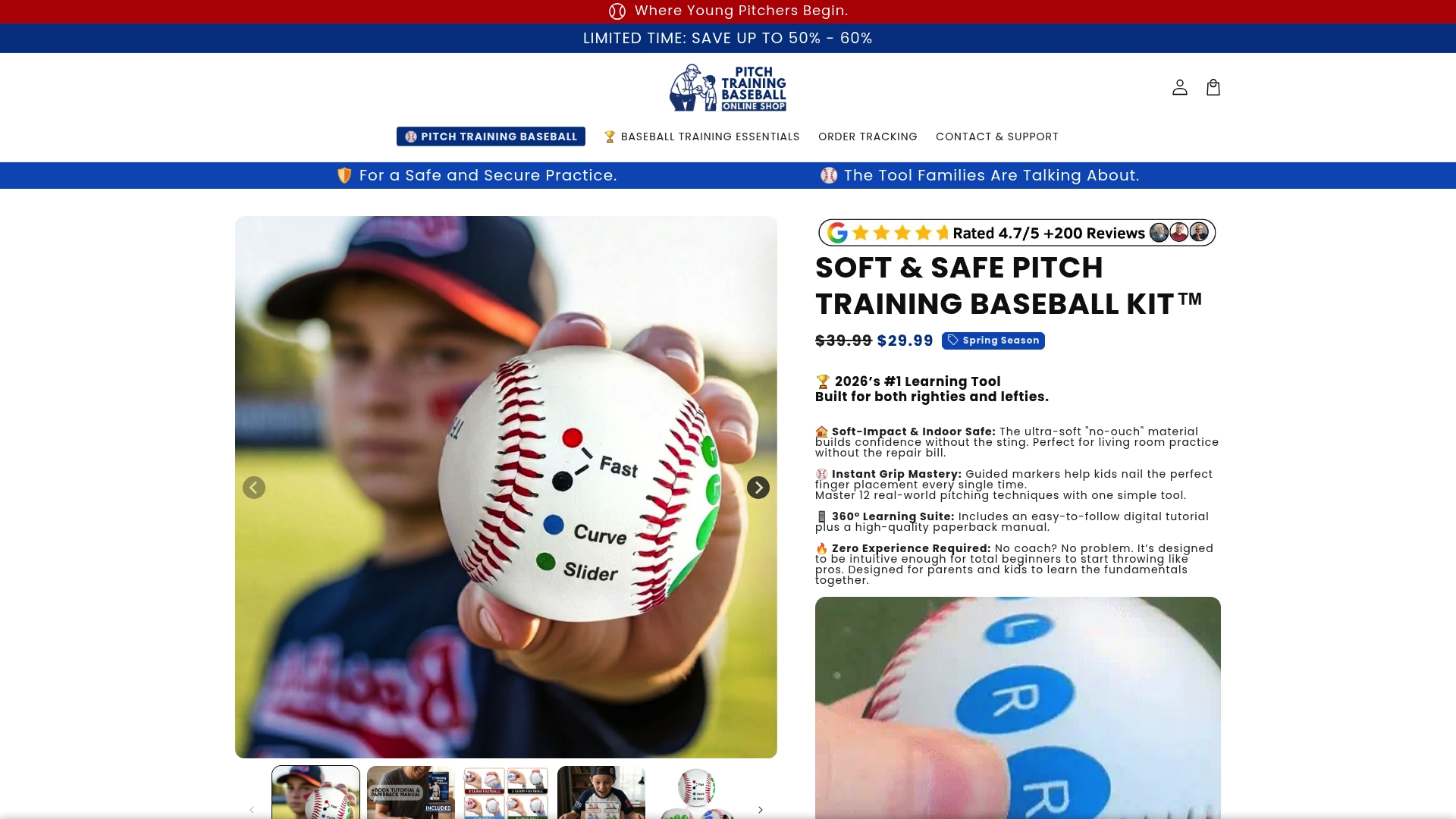
A quality training setup starts with the right target. The colorful strike zone net from Pitch Training Baseball features a nine-zone visual target that gives pitchers an immediate, color-coded reference point for every pitch. It’s portable, durable, and built specifically for youth distances and arm development. Pair it with the pitch training baseball for a complete at-home or team practice setup that reinforces the command-focused approach this guide covers. Both tools are trusted by coaches and parents who want to get more out of every practice session.
Frequently asked questions
Do training nets actually improve youth pitching mechanics?
Research confirms that mechanics and command reps are where nets provide the most grounded developmental benefit, particularly when pitchers use defined targets and receive immediate corrective feedback during sessions.
Should beginners focus on velocity or accuracy with nets?
Experts strongly recommend accuracy and command first, since pitch location outcomes show that hitting the intended spot consistently outperforms raw speed in producing real pitching results.
How do training nets help prevent youth pitching injuries?
Nets support age-appropriate workload rotation by functioning as a station tool, allowing pitchers to accumulate quality command reps without exceeding safe pitch counts during team practices.
Are training nets suitable for both practice and game-like scenarios?
Yes. Training nets can be configured for isolated command drills as well as realistic count-based and game-situation scenarios, making them effective for both foundational skill work and game-preparation practice.
Recommended
- Game-like pitching practice: Raise youth baseball skills fast – Pitch Training Baseball
- Pitching Target Net with Colorful Strike 9-Zone – Pitch Training Baseball
- Pitching zone knowledge: Boost your young player’s skills – Pitch Training Baseball
- How to throw a baseball: proven youth coaching tips – Pitch Training Baseball