


Ask most parents what separates a great young pitcher from a good one, and they’ll say mechanics, arm strength, or natural talent. They’re not wrong. But they’re also missing the half of pitching that no radar gun measures. Understanding why mental training for pitchers is just as critical as physical practice is the difference between a kid who thrives under pressure and one who unravels at the worst moment. This article gives you practical, research-backed strategies you can start using in practice and games this week.
Table of Contents
- Key takeaways
- Why mental training for pitchers is the missing piece
- Core mental skills: process focus and reset
- Managing anxiety and pressure in competition
- Understanding the yips and mental interventions
- Implementing mental training in daily practice
- Comparing mental training approaches
- My honest take on what most people miss
- Build the physical reps that make mental habits stick
- FAQ
Key takeaways
| Point | Details |
|---|---|
| Mental skills are teachable | Process focus, self-talk, and reset routines are learned skills, not innate traits. |
| Match training to anxiety type | Cognitive anxiety responds to reframing; somatic anxiety responds to breathing and mindfulness. |
| Consistency beats intensity | Daily mental repetition in practice produces more durable results than pre-game pep talks. |
| Early yips signals matter | Recognizing involuntary movement patterns early lets coaches intervene before habits solidify. |
| Physical tools reinforce mental habits | Structured pitching equipment creates the game-like repetition mental routines need to stick. |
Why mental training for pitchers is the missing piece
Every pitcher you’ve ever watched struggle through an inning after one bad call has the same problem: they lost the present moment. MLB mental-performance coach Adam Bernero makes this clear. According to his framework, mindset is the true edge in pitching, helping players manage pressure by expressing their authentic selves rather than fighting their own nerves.
For young pitchers, the challenge is even more intense. They’re still developing identity, dealing with peer pressure, and processing failure in real time with an entire dugout watching. A wild pitch in the third inning shouldn’t define the fourth inning. But without mental training, it almost always does.
What is mental preparation for pitchers? At its core, it’s a set of practiced skills: how to focus between pitches, how to recover from mistakes quickly, how to manage anxiety before and during competition. These aren’t abstract concepts. They’re trained behaviors, just like a curveball grip or a wind-up sequence. The sooner coaches and parents treat them that way, the sooner young pitchers stop leaving performance on the mound.
Core mental skills: process focus and reset
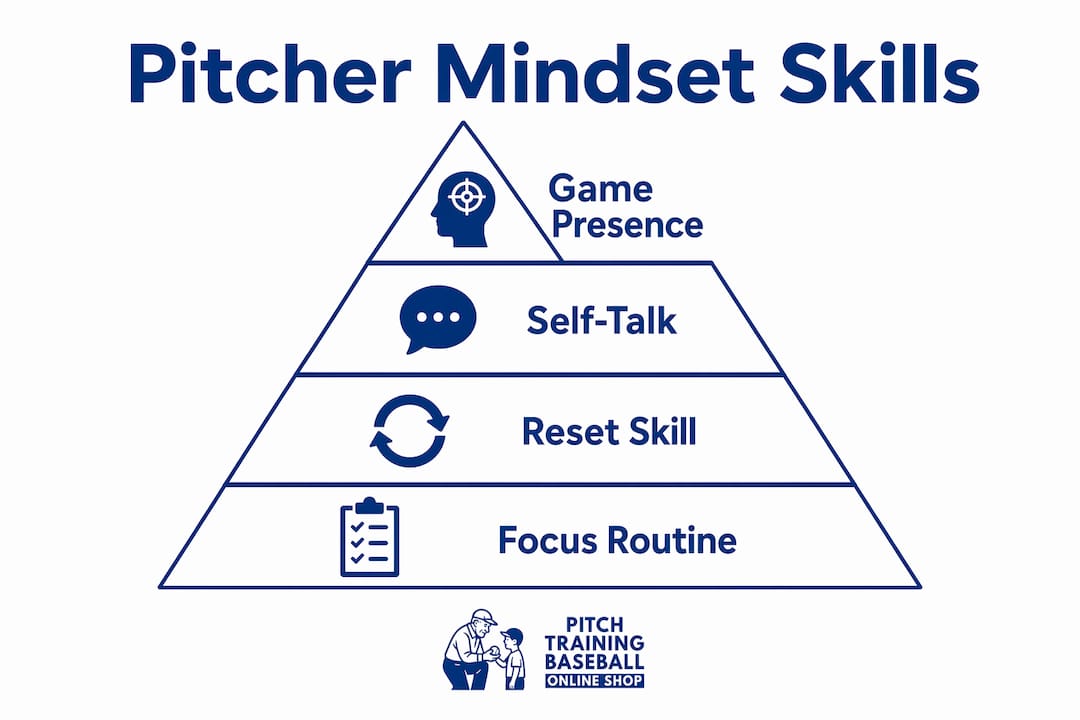
The single most teachable mental skill for young pitchers is something coaches call process focus. Instead of thinking about results, the score, or what just happened, the pitcher locks in on the very next pitch. That’s the whole job. One pitch. This “next-pitch mindset” isn’t a cliché. Research shows that process focus and next-pitch mindset directly reduce rumination and improve composure in youth baseball players.
Here’s what process focus actually looks like in practice:
- Take a breath after each pitch. A single slow exhale signals the brain to release the previous outcome and prepare for the next task.
- Use a physical anchor. Touching the rosin bag, adjusting the cap, or stepping off the rubber creates a physical break that mirrors a mental one.
- Say one short word or phrase. “Next,” “reset,” or “attack” gives the mind something concrete to hold onto rather than spiraling into self-criticism.
- Control body language deliberately. Shoulders back, head up, slow walk. Confidence in posture has a measurable effect on mental state.
The reset skill is equally important. A pitcher who lets a home run or a walk linger in their mind for three more batters is already in trouble. Physical attention resets rehearsed during practice under mild stress are what break the rumination cycle before it starts.
Pro Tip: Run reset drills in practice by intentionally introducing adversity. Have the pitcher throw a bad pitch on purpose, then immediately require a physical reset routine before the next throw. Repetition under mild stress makes the routine automatic under real pressure.
Building these habits takes weeks, not days. But the investment pays off far beyond the mound. A pitcher who develops a genuine process focus also handles academic tests, social stress, and athletic setbacks differently. That’s the broader mental training benefit most people overlook.
Managing anxiety and pressure in competition
Anxiety is not the enemy. Every pitcher who ever threw a no-hitter felt it. The problem is unmanaged anxiety, and the solution is specific, practiced regulation skills. The 2026 sport psychology research is direct: embedding self-talk, cognitive reframing, and present-moment attention into daily training produces better outcomes than any isolated session.
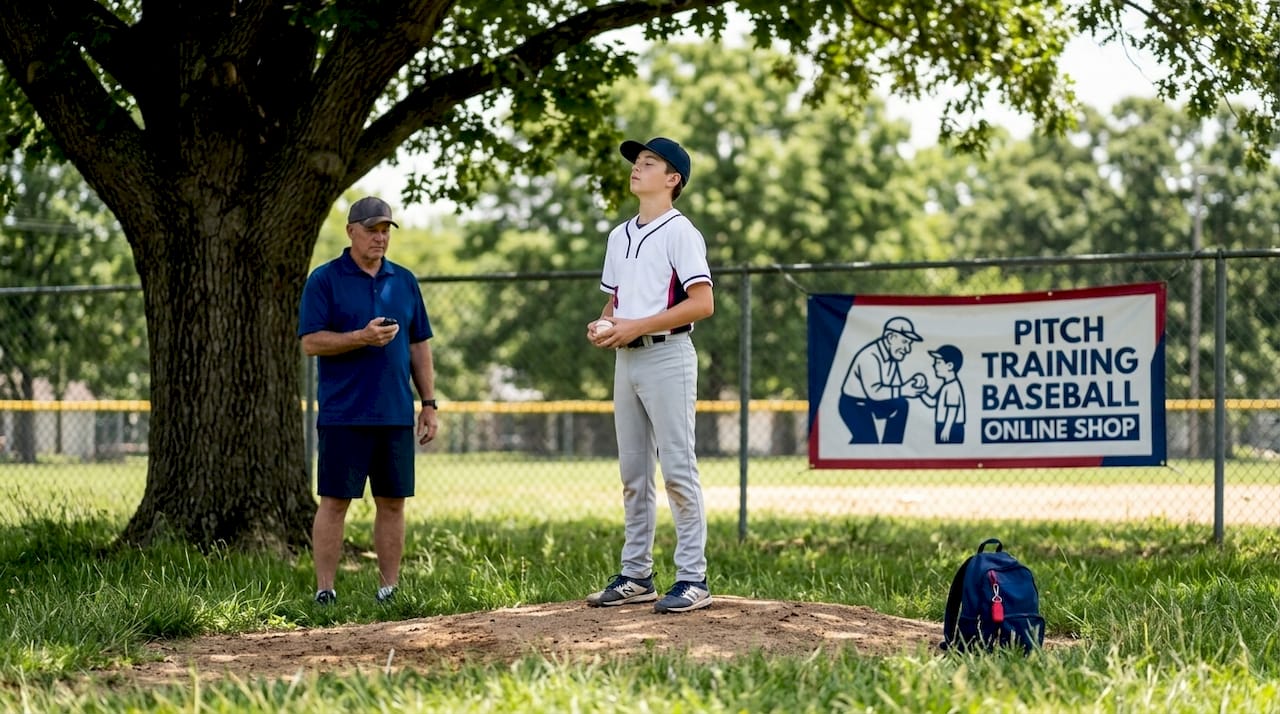
There are two distinct types of competitive anxiety, and they respond to different tools.
Cognitive anxiety is the mental chatter: “I’m going to walk this guy,” “Everyone’s watching,” “I can’t mess this up.” The most effective interventions for cognitive anxiety are reframing and structured self-talk. Reframing means literally changing the meaning of a thought. “I can’t mess this up” becomes “I’ve practiced this a hundred times.” Self-talk means having a scripted inner voice ready for high-pressure moments.
Somatic anxiety is the physical experience: racing heart, tight chest, shaky legs. Mindfulness and relaxation techniques address this type more directly. Present-moment attention training helps pitchers notice the physical sensation without catastrophizing it. Somatic anxiety responds better to mindfulness and relaxation rather than cognitive reframing alone.
Here are the core strategies coaches can begin teaching immediately:
- Box breathing (4-4-4-4): Inhale four counts, hold four counts, exhale four counts, hold four counts. This is a pre-pitch routine, not a mid-game meditation session.
- Structured self-talk scripts: Write two or three phrases the pitcher can use in pressure situations. Practice them in the bullpen until they’re automatic.
- Cognitive reframing practice: During film review or post-practice talks, ask pitchers to reframe one negative thought from the session into a factual, neutral statement.
- Mindful warm-up: Five minutes before the first pitch, have the pitcher silently name five things they can see, four they can hear, and three they can feel. This grounds attention in the present.
Pro Tip: Before big games, have your pitcher spend 90 seconds doing box breathing in the car or locker room. The goal isn’t relaxation for its own sake. It’s to lower baseline arousal so the mound nerves bring them to optimal, not overwhelming.
The key to all of this is consistency. Stress regulation strategies work only when embedded in daily training, not saved for game day.
Understanding the yips and mental interventions
The yips are not just being nervous. They’re one of the most misunderstood phenomena in youth and professional baseball, and they’re worth understanding clearly because catching early signs can save a pitcher’s confidence before serious damage is done.
The yips involve involuntary muscle spasms or movement disruptions during a practiced skill. Here’s how to distinguish them from ordinary choking:
- Choking is a performance decline under pressure caused by increased conscious monitoring of an automatic skill. The pitcher starts thinking too hard about mechanics they’ve done thousands of times.
- The yips involve involuntary muscle spasms that occur regardless of the pitcher’s mental effort to correct them. They can persist even in low-pressure settings.
- Combined cases involve both physical and psychological triggers, making them harder to resolve without a multi-method approach.
- Purely physical yips may have neurological origins and require medical assessment beyond mental coaching.
- Anxiety-driven yips respond well to pre-performance routines, guided imagery, and gradual exposure techniques.
For coaches and parents, the early observable signs include: throwing errors to a very close base that weren’t there before, visible hesitation in the release, or a pitcher who suddenly avoids certain situations they previously handled without issue.
Guided imagery is one of the more effective mental tools for anxiety-related yips. Have the pitcher sit quietly and mentally rehearse the correct movement sequence in vivid detail, including the sounds, feelings, and visual cues of a successful throw. This re-trains the neural pathway before the next live repetition.
When symptoms persist despite mental training, a specialist assessment is appropriate. Combined yips cases may require integrated brain-body approaches, including therapies like EMDR alongside mental routines. There is no weakness in seeking that help. There is only a window of opportunity that closes if ignored.
Implementing mental training in daily practice
Knowing mental skills matter is not enough. You need a practical system for working them into your existing practice structure without adding an hour to your schedule. The good news is that most mental training requires no extra time. It requires repurposed time.
Here’s a simple framework coaches and parents can adopt immediately:
- Pre-practice intention: Spend 60 seconds asking the pitcher what one mental skill they want to focus on today. Naming it activates intentional attention.
- Mid-drill resets: During game-like pitching practice, pause after each bad sequence and require the full reset routine before continuing. Don’t skip it because it slows the drill.
- Video review with emotional awareness: When reviewing footage, don’t just analyze mechanics. Ask the pitcher how they felt during that sequence. This builds self-awareness that transfers to game situations.
- End-of-practice reflection: Two minutes at the end of every session. Ask: What was one moment you reset well today? What was one moment you could reset faster next time?
| Practice element | Mental skill reinforced | Time required |
|---|---|---|
| Pre-practice intention | Self-awareness, focus direction | 60 seconds |
| Reset drills after errors | Process focus, emotional recovery | Built into drill time |
| Structured self-talk during bullpen | Cognitive management | No extra time |
| Box breathing before first pitch | Somatic anxiety regulation | 90 seconds |
| End-of-practice reflection | Metacognition, habit reinforcement | 2 minutes |
The most common mistake coaches make is relying on motivational speeches instead of skill-based practice. Positive thinking alone is not a mental training strategy. “You’ve got this, champ” does nothing if the pitcher has no practiced tool to use when doubt arrives at the mound in the fifth inning. Specific, repeated, structured skills are what hold under pressure.
Encouraging autonomy matters here too. When pitchers begin choosing their own reset cues or developing their own self-talk phrases, they own the process. That ownership is what makes the skills stick. A kid who built his own pre-pitch routine will use it. A kid who was handed one might not.
Comparing mental training approaches
Not every pitcher needs the same mental training. A 10-year-old pitching in a recreational league has a very different anxiety profile than a 16-year-old in a travel ball championship. Matching mental skills to individual anxiety patterns significantly increases their effectiveness.
Here’s a practical comparison of the main approaches you’ll encounter:
| Approach | Best for | Core mechanism | Youth-appropriate? |
|---|---|---|---|
| Cognitive-behavioral (CBT) | Cognitive anxiety, overthinking | Self-talk, reframing, structured routines | Yes, with simplified language |
| Mindfulness | Somatic anxiety, emotional reactivity | Present-moment attention, breathing | Yes, especially pre-competition |
| Biofeedback | Both anxiety types, self-monitoring | HRV or skin-response data for regulation | Yes, with accessible tools |
| Guided imagery | Yips, confidence deficits, skill rehearsal | Mental rehearsal of successful execution | Yes, ideal for pre-game prep |
The observation process is what guides selection. Watch your pitcher during high-pressure moments. Is their head spinning with worried thoughts, or is their body the problem? Shaky hands and a tight jaw point toward somatic anxiety and mindfulness tools. Constant negative commentary and worst-case thinking point toward CBT approaches. Many pitchers show both, which calls for a combined strategy.
Pro Tip: Re-evaluate your pitcher’s mental training approach every four to six weeks. Athletes grow. Their anxiety patterns shift as competition level and confidence change. What worked in April may not be what they need in July’s championship bracket.
My honest take on what most people miss
I’ve watched a lot of young pitchers train. The ones who made the biggest jumps weren’t always the most physically talented. They were the ones whose coaches gave them permission to fail, reset, and try again with the same calm energy. That permission is what mental training actually delivers.
Here’s what I’ve found most coaches and parents get wrong: they treat mental toughness as a personality trait instead of a practiced skill. They say “he’s just not mentally tough” the way they’d say “he doesn’t have a great arm.” But mental toughness for pitchers is built pitch by pitch, just like command is built throw by throw.
What I’ve also seen is that the kids who respond best to mental training are not always the most confident ones. Sometimes the quietest kid on the mound, the one who appears unflappable, is running a completely internal reset routine that nobody taught him. He figured it out through trial and error. Our job as coaches and parents is to stop leaving that to chance.
The subtlest signal I’ve learned to watch for is what a pitcher does in the three seconds after a bad pitch before they step back on the rubber. That three-second window tells you everything about where their mental game is. A blank stare, a head shake, eyes down, those are the signs of a kid still processing the last pitch. Shoulders back, exhale, eyes up, that’s a kid who has a routine. You can teach the second response. You just have to decide it’s worth your time.
Small habits, practiced consistently, are what actually survive a championship game. Willpower fades. Habits don’t.
— Albert
Build the physical reps that make mental habits stick
Mental training doesn’t happen in a vacuum. It needs the right physical environment to take root. When pitchers practice with intention and structure, every throw becomes an opportunity to rehearse their mental routine alongside their mechanics.
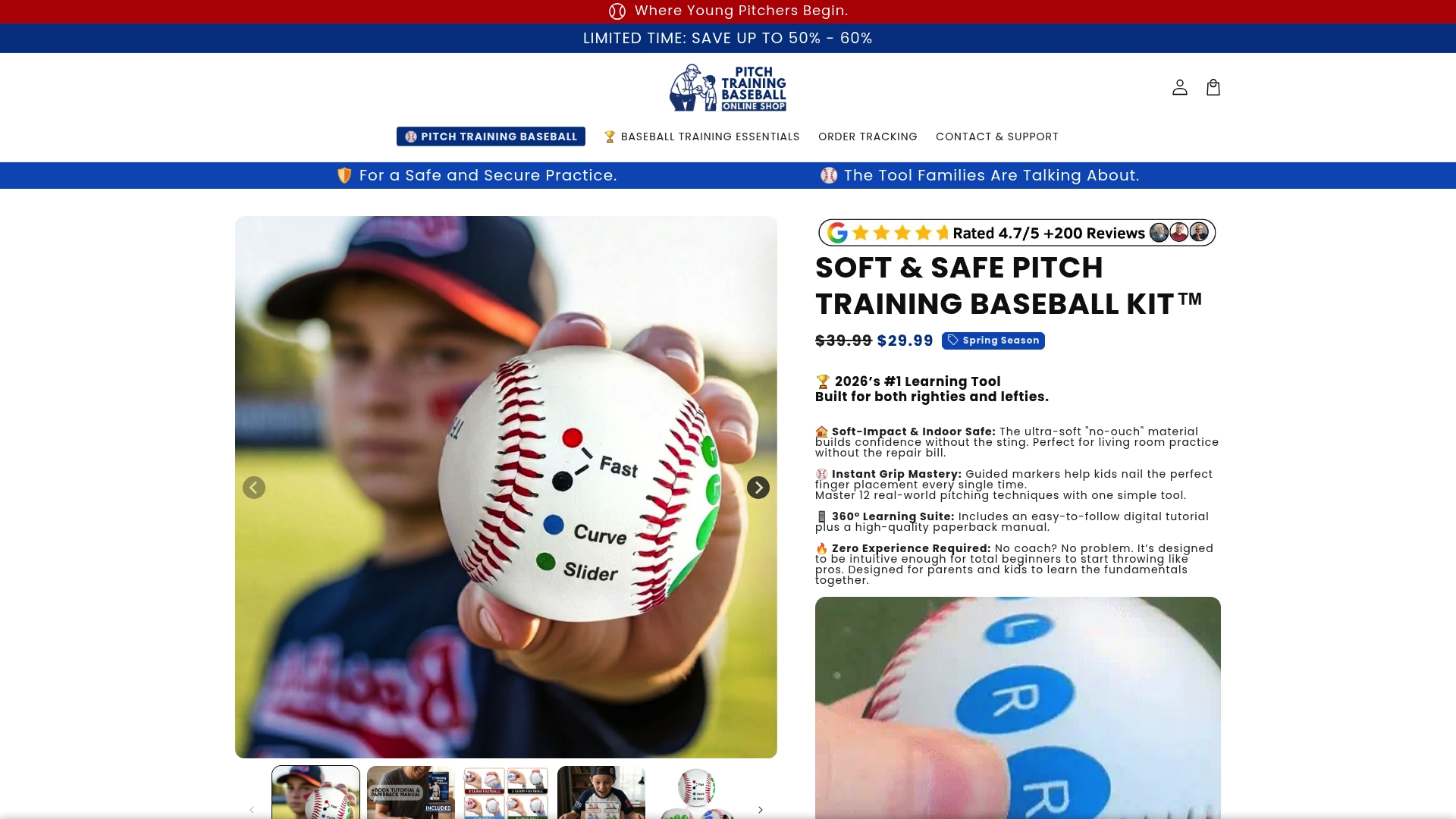
At Pitchtrainingbaseball, the Strike 9-Zone pitching target gives young pitchers an immediate visual feedback system that reinforces zone awareness and process focus on every rep. Instead of throwing into open space and guessing, pitchers aim at a defined target that rewards precision. That clarity mirrors exactly what mental training asks the mind to do: lock in on one specific task at a time.
Pair the target net with a consistent pitching workout and a pre-throw reset routine, and you have a practice session that trains both the arm and the mind simultaneously. That’s the combination that builds pitchers who perform when it matters. Explore the full range of Pitchtrainingbaseball tools at pitchtrainingbaseball.com and find the right setup for your pitcher this season.
FAQ
What is mental training for pitchers?
Mental training for pitchers is a structured set of practiced psychological skills, including self-talk, process focus, breathing techniques, and reset routines, designed to improve composure and performance under pressure.
Why does the next-pitch mindset matter so much?
The next-pitch mindset keeps pitchers focused on the present moment rather than ruminating on past mistakes. Youth coaches emphasize that this short-memory approach is one of the most teachable and impactful mental skills in baseball.
How do I know which mental skills to teach my pitcher?
Watch for the type of anxiety your pitcher shows under pressure. Worried thoughts and negative self-talk point toward cognitive tools like reframing and self-talk scripts, while physical symptoms like a racing heart respond better to mindfulness and breathing exercises.
Can young pitchers really develop the yips?
Yes, though it is less common in younger players. The yips involve involuntary movement disruptions and differ from ordinary nervousness. Early intervention with pre-performance routines and guided imagery helps when anxiety is the primary driver.
How often should mental training be practiced?
Mental training benefits from daily repetition rather than occasional focused sessions. Consistent daily practice of self-talk, reset routines, and breathing techniques builds the durable mental habits that hold up in high-pressure game situations.
Recommended
- Why Physical Fitness for Young Pitchers Matters – Pitch Training Baseball
- Track pitching stats to protect arms and boost performance – Pitch Training Baseball
- How training nets elevate youth baseball pitching skills – Pitch Training Baseball
- Pitching balance: Boost control and power in young players – Pitch Training Baseball