


Recommended daily pitching habits are structured routines that youth pitchers perform every day to protect arm health, sharpen mechanics, and build lasting performance. The industry term for this practice framework is “arm care and workload management,” and it covers everything from pre-throw warm-ups to post-game recovery. MLB Pitch Smart guidelines, Helix Sports Medicine, and Driveline Baseball all agree on one core principle: consistency in daily habits prevents the injuries that end young careers before they start. This article gives parents and coaches a research-backed checklist for building those habits the right way.
1. Recommended daily pitching habits: start with a proper warm-up
The single most skipped step in youth pitching is a structured warm-up, and skipping it is where most arm injuries begin. Daily arm care protocols should include 10 to 15 minutes of band work, mobility exercises, and progressive throwing before any high-intensity pitching begins. This window is not optional padding. It is the foundation that prepares tendons, muscles, and joints for the stress of throwing.
A practical warm-up sequence for youth pitchers looks like this:
- Band pull-aparts: 2 sets of 15 reps to activate the posterior shoulder
- External rotations with a resistance band: 2 sets of 15 reps per arm to strengthen the rotator cuff
- Wrist flicks and forearm circles: 30 seconds each to prime the elbow and wrist
- Arm circles and thoracic rotations: 60 seconds to open the upper back and shoulder girdle
- Progressive throwing: Start at 30 feet and move back gradually over 5 to 7 minutes before reaching game distance
The goal is to raise tissue temperature and activate the neuromuscular pathways used in pitching. Coaches at Helix Sports Medicine describe arm care as a non-negotiable daily habit, comparing it to making deposits in a bank account. Each session builds the resilience that protects against overuse injuries over a full season.
Pro Tip: Consistency matters more than duration. A focused 10-minute warm-up performed every single practice day does more for arm health than a 30-minute session done twice a week.
2. Managing daily throwing volume to prevent overuse
Pitch count limits are the most misunderstood tool in youth baseball. Parents and coaches track game pitches carefully, but the total throws in a “60-pitch” game can exceed 100 when you add warm-up tosses, bullpen throws, and between-inning pitches. That gap between recorded and actual throws is where hidden overuse injuries develop.
MLB Pitch Smart provides clear rest requirements based on pitch volume:
| Pitches thrown | Required rest days |
|---|---|
| 21 to 35 pitches | 1 day |
| 36 to 50 pitches | 2 days |
| 51 to 65 pitches | 3 days |
| 66 or more pitches | 4 days |
These Pitch Smart rest requirements apply to game pitches only. When you factor in warm-ups and bullpen work, the actual rest needed is often longer. Coaches should log every throw, not just competitive pitches, to get an accurate picture of cumulative stress.
Practical rules for managing daily volume:
- Limit high-intensity throwing to 3 to 4 days per week, with at least one full rest day between sessions
- Count warm-up and bullpen throws in the daily total, not just game pitches
- Use a simple notebook or a free app like GameChanger to track throws across all teams and practices
- Never schedule back-to-back high-intensity sessions without a recovery day in between
The day after pitching should be dedicated to recovery, with no high-intensity throwing for at least 48 hours. Light toss and mobility work are fine. Bullpen sessions are not.
3. Building a safe pitching environment checklist
A safe pitching environment is not just about mechanics. It is a daily mindset that covers hydration, gear, heat protocols, and team communication. Safety as a daily habit with hydration checks, equipment inspections, and heat protocols reduces injury risk across an entire program, not just for individual players.
Use this checklist before every practice or game:
- Hydration check: Players should arrive hydrated. During practice, offer water breaks every 15 to 20 minutes. In heat above 85°F, increase break frequency and watch for signs of heat exhaustion.
- Equipment inspection: Check glove fit, cleats, and any protective gear. A glove that is too large reduces grip control and alters mechanics.
- Field surface check: Inspect the mound for holes, uneven footing, or wet spots that increase slip risk.
- Communication between coaches: If a pitcher plays for multiple teams, all coaches must share pitch count data. Multiple team participation without shared pitch volume data is one of the leading causes of hidden overuse injuries in youth pitchers.
- Year-round throwing audit: Young pitchers need at least 2 to 3 months off from competitive throwing each year. Continuous year-round throwing without structured breaks accelerates arm breakdown.
For a deeper look at daily safety measures that parents can monitor from the sideline, Pitchtrainingbaseball has a dedicated resource covering the full picture.
Pro Tip: Post the safety checklist in the dugout or team group chat before every practice. When safety becomes a visible team ritual, players and parents hold each other accountable without the coach having to repeat it every session.
4. Off-field habits that support arm health every day
The arm does not pitch in isolation. Most pitching injuries stem from kinetic chain failures involving the hips and core, not just arm overuse. This means the daily habits that protect a young pitcher happen away from the mound as much as on it.
The kinetic chain connects the legs, hips, core, and shoulder into one coordinated movement. When the hips and core are weak, the arm compensates and absorbs forces it was never designed to handle. Daily strengthening of these areas is the most underused injury prevention tool in youth baseball.
Key off-field habits for youth pitchers:
- Hip and glute work: Exercises like lateral band walks, single-leg squats, and hip hinges build the rotational power that drives velocity without arm strain
- Core stability: Planks, Pallof presses, and rotational medicine ball throws train the core to transfer force efficiently from lower to upper body
- Scapular stabilization: Prone Y-T-W exercises and face pulls strengthen the muscles that control shoulder blade movement, directly reducing rotator cuff stress
- Sleep: 8 to 10 hours per night for youth athletes is the single most effective recovery tool available. Tissue repair happens during sleep, not during practice.
- Nutrition: Protein intake within 30 minutes of practice supports muscle repair. Whole foods, not supplements, should be the foundation for players under 16.
- Visualization: Mental rehearsal of mechanics and game situations builds focus and reduces performance anxiety. Pitchtrainingbaseball covers pitching visualization techniques specifically designed for youth players.
Scheduling matters as much as the exercises themselves. Pair high-intensity throwing days with lower-body and core work. Reserve upper-body strength training for non-throwing days to avoid compounding fatigue in the shoulder and elbow.
5. Adapting daily routines by age and season phase
A 10-year-old pitcher and a 16-year-old pitcher do not need the same daily routine. Applying adult training volumes to younger athletes is one of the most common mistakes in youth baseball development. The structured long toss and band work programs that increase velocity and arm durability in older players require careful scaling for younger athletes who are still developing bone density and connective tissue.
The table below outlines how daily pitching habits should shift based on age and season phase:
| Factor | Younger pitchers (ages 8 to 12) | Advanced pitchers (ages 13 to 17) |
|---|---|---|
| Daily warm-up | 10 minutes, light band work and short toss | 15 minutes, full band circuit and long toss progression |
| High-intensity days | 2 to 3 days per week maximum | 3 to 4 days per week with structured recovery |
| Bullpen sessions | 1 per week, 15 to 20 pitches | 1 to 2 per week, 25 to 40 pitches |
| Off-season throwing | 2 to 3 months complete rest | 6 to 8 weeks rest, then light throwing program |
| Strength focus | Bodyweight movements and coordination | Progressive resistance training for kinetic chain |
In-season habits should prioritize maintenance and recovery over skill building. The off-season is the right time to work on new mechanics, build arm strength, and address weaknesses. Trying to overhaul a pitcher’s delivery during a competitive season adds mental and physical stress that slows development.
A common misconception worth addressing directly: pitching every single day does not accelerate development. It accelerates breakdown. Scheduled rest days are not lost training time. They are when adaptation and growth actually occur. For a step-by-step bullpen routine that fits these principles, Pitchtrainingbaseball has a practical guide built specifically for youth pitchers.
6. Tracking progress and knowing when to stop
Knowing when to pull a pitcher is as important as knowing how to train one. Young athletes rarely self-report pain accurately because they fear losing playing time. Parents and coaches need observable signals that indicate the arm is under too much stress.
Watch for these specific warning signs during and after throwing sessions:
- Velocity dropping more than 3 to 5 mph from the pitcher’s baseline without fatigue as an obvious cause
- Mechanics breaking down late in a session, particularly the elbow dropping below shoulder height
- Complaints of elbow or shoulder soreness that persist more than 24 hours after throwing
- Reluctance to throw at full effort, which often signals protective guarding around a sore joint
- Grip strength noticeably weaker than normal, which can indicate forearm fatigue or early elbow stress
Tracking these signals requires a baseline. Time your pitcher’s velocity in the first inning and compare it to the fifth. Note the pitch count at which mechanics start to break down. Over several weeks, patterns emerge that tell you exactly where the pitcher’s current workload ceiling sits. That ceiling should guide every practice plan you write.
For arm strength development that builds the ceiling safely over time, Pitchtrainingbaseball offers a youth-specific guide that pairs well with the monitoring habits described here.
Key takeaways
Effective pitching habits for success combine daily arm care, accurate throw tracking, and off-field conditioning into one consistent routine that protects young arms and builds real performance over time.
| Point | Details |
|---|---|
| Warm-up is non-negotiable | A 10 to 15 minute band and mobility routine before every session prevents the majority of overuse injuries. |
| Count every throw | Warm-up and bullpen pitches count toward daily totals; a “60-pitch game” often exceeds 100 actual throws. |
| Rest days drive growth | High-intensity throwing limited to 3 to 4 days per week allows tissue repair and performance gains. |
| Kinetic chain first | Hip, core, and scapular strength failures cause most arm injuries, making off-field conditioning a daily priority. |
| Adapt by age and phase | Younger pitchers need lower volumes and longer off-seasons; applying adult programs to young arms causes harm. |
What I’ve learned from watching youth pitching programs succeed and fail
I have watched a lot of youth baseball programs over the years, and the ones that produce healthy, skilled pitchers at 17 share one trait: they treat arm care as a team culture, not a coaching suggestion. The programs that struggle treat it as optional, something the pitcher does if they feel like it or if a parent remembers to ask.
The hardest thing to change in youth baseball is not mechanics. It is the belief that more throwing always means more improvement. Parents who drove their kids to extra sessions seven days a week often ended up in a surgeon’s office by the time their child was 14. The ones who followed structured rest schedules and built off-field conditioning into the weekly plan watched their kids throw harder and stay healthier through high school.
I also want to address the multi-team problem directly. A pitcher playing for a travel team and a school team simultaneously, with coaches who never communicate, is the highest-risk situation in youth baseball. Neither coach sees the full picture. The pitcher pays the price. If your child is on multiple rosters, you as the parent are the only person who can track the cumulative workload. That responsibility is real, and it matters more than any single game.
The most encouraging thing I have seen is how quickly young pitchers respond when the habits are right. Two months of consistent arm care, proper rest, and kinetic chain work produces visible results in velocity, control, and confidence. The process is not complicated. It just requires commitment from the adults in the room.
— Albert
Build better daily habits with the right training tools
Consistent daily pitching habits require more than a plan. They require the right equipment to make practice focused, measurable, and safe. Pitchtrainingbaseball designs training tools specifically for youth pitchers and the coaches and parents who support them.
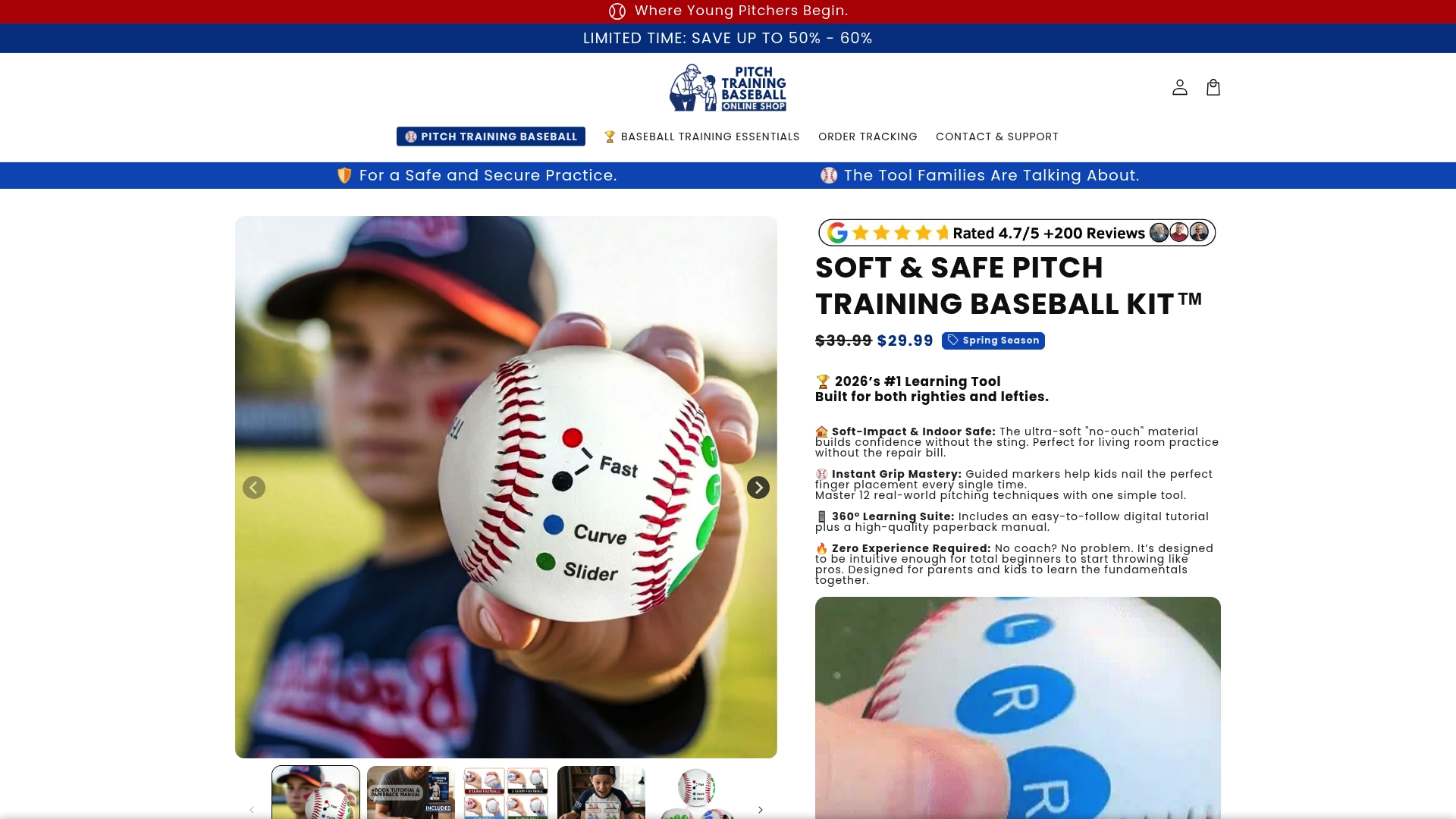
The Pitching Target Net with Strike 9-Zone gives young pitchers immediate visual feedback on location during every bullpen session, turning vague practice into deliberate skill work. Pair it with the Pitch Training Baseball to develop grip strength and arm mechanics with a tool built for youth hands. For coaches building a complete daily program, the Baseball Training Essentials collection covers everything needed to run structured, safe daily sessions from warm-up through cool-down.
FAQ
What are recommended daily pitching habits for youth players?
Recommended daily pitching habits include a 10 to 15 minute warm-up with band work and mobility exercises, progressive throwing that respects pitch count limits, and off-field conditioning targeting the hips, core, and scapular stabilizers. Rest days are a required part of the daily structure, not an exception to it.
How many days a week should a youth pitcher throw at high intensity?
High-intensity throwing should be limited to 3 to 4 days per week, with at least one full rest day between sessions. The day after a pitching outing requires no high-intensity throws for at least 48 hours to allow proper tissue recovery.
Do warm-up pitches count toward the daily pitch limit?
Warm-up and bullpen pitches absolutely count toward cumulative daily totals. A recorded 60-pitch game can involve more than 100 actual throws when pre-game warm-ups and between-inning bullpen tosses are included, which significantly raises injury risk if untracked.
What signs indicate a youth pitcher needs rest?
Watch for velocity dropping more than 3 to 5 mph from baseline, mechanics breaking down late in a session, soreness persisting more than 24 hours after throwing, or any reluctance to throw at full effort. These signals indicate the arm is under more stress than it can safely absorb.
Why do most youth pitching injuries happen?
Most pitching injuries in youth players stem from kinetic chain failures in the hips and core rather than arm overuse alone. When the lower body and core are weak, the arm absorbs forces it cannot handle, making whole-body daily conditioning as important as arm care itself.
Recommended
- Top pitching workouts for youth baseball: build skill safely – Pitch Training Baseball
- Why Proper Pitching Technique Matters for Young Players – Pitch Training Baseball
- Defining Youth Pitching Mechanics: A Coach’s Guide – Pitch Training Baseball
- Baseball Pitching Visualization Techniques for Youth Players – Pitch Training Baseball