


Best practices for baseball retailers are proven strategies that increase sales, build customer loyalty, and keep inventory moving in the youth baseball market. Successful independent retailers target inventory turns of 2.6–3.4 times annually and gross margins between 44% and 48% to compete against national chains. The retailers who hit those numbers share one trait: they operate as community fitting hubs, not product warehouses. This guide breaks down the specific tactics, benchmarks, and tools that separate profitable baseball shops from those that struggle to stay open.
1. Best practices for baseball retailers start with inventory discipline
Inventory management is the single biggest lever for profitability in baseball retail. Dead stock kills margin faster than any competitor. The goal is to move product before it ages, not after.
A 6-week reorder cadence is the standard for specialty sporting goods retailers. That frequency keeps shelves fresh without over-buying, and it forces you to review sell-through data regularly rather than relying on gut feel.
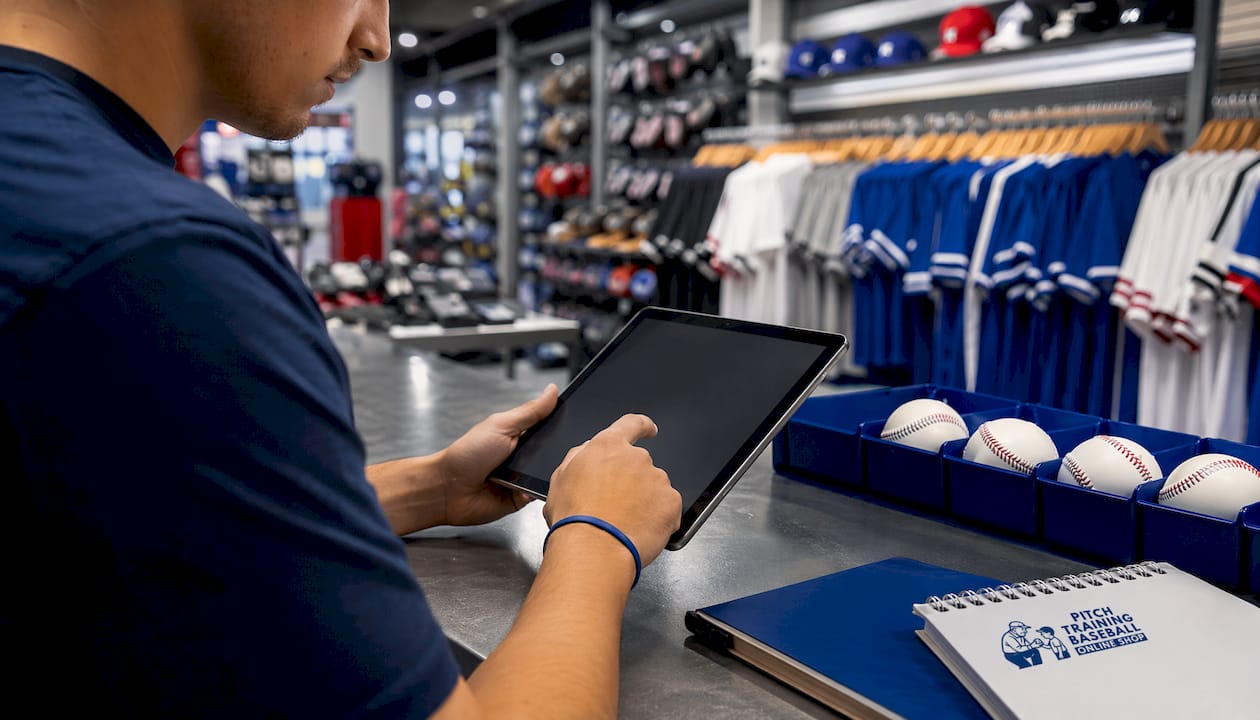
Markdown policy matters just as much as reorder timing. The proven schedule: 30% off after 120 days on the floor, 50% off after 180 days, and 65% off after 270 days. Each discount tier is a decision point, not a failure. Clearing product at 65% margin loss is still better than carrying dead inventory through a second season.
Pro Tip: Track sell-through by SKU, not by category. A glove that moves in week one tells you something different than one that sits for 90 days. That granularity is what makes reorder decisions accurate.
| Days on Floor | Markdown Level |
|---|---|
| 0–119 days | Full price |
| 120–179 days | 30% off |
| 180–269 days | 50% off |
| 270+ days | 65% off |
2. Treat each baseball season as its own profit center
Many independent retailers fail by treating all sports seasons as a single annual purchase. That approach hides losses inside a blended number and makes it impossible to fix the real problem.
Each season deserves its own P&L, tracked with weekly sell-through data and local team counts as the primary forecast inputs. Spring baseball, summer travel ball, and fall instructional leagues each have different customer profiles, price sensitivities, and product mixes. Blending them together produces averages that are accurate for none of them.
Weekly granularity sounds like extra work. It is, but it pays back in fewer markdowns and better open-to-buy decisions. A retailer who knows that a local travel league added two teams in march can adjust their glove and bat order before the season opens, not after inventory sits unsold.
3. Build a deposit structure for custom team uniform orders
Custom team uniforms are high-revenue but high-risk. An order that falls through after production leaves you with unsellable inventory and no margin recovery.
The right deposit structure depends on the customer’s history with your store. Established clubs pay 25% upfront, first-year programs pay 50%, and one-time tournament teams pay 100% before production begins. That tiered approach protects your cash flow without alienating long-term accounts.
Pair the deposit policy with lifecycle tracking inside your POS. Special-order workflows that track every order from deposit to delivery prevent the most common failure mode: an order that gets placed but never followed up, then arrives with no customer to claim it. Document every step.
For retailers stocking custom baseball equipment, the deposit structure also signals professionalism to coaches and team managers. It sets expectations early and filters out low-commitment buyers.
4. Turn your store into a community fitting hub
Community fitting hubs generate 35–50% of revenue from repeat visits. That number reflects a structural advantage that online retailers cannot replicate. A parent who brings their kid in for a bat fitting, gets expert advice, and leaves with the right equipment will come back. A parent who buys online and guesses on sizing often does not.
Fitting services worth building into your operation include:
- Bat fitting: Match swing speed, weight drop, and barrel size to the player’s age and mechanics
- Glove steaming and break-in: A service that takes 20 minutes and creates a loyal customer
- Cleat fitting: Especially valuable for growing kids whose foot size changes mid-season
- Helmet sizing: Safety-driven and parent-appreciated
Retailers who charge standalone fees for expert fitting services improve margin and foot traffic simultaneously. Unbundling the service from the product markup means you get paid for your expertise, not just your inventory.
“Physical stores convert browsers into habitual buyers by using floor space as showrooms and community hubs, creating switching costs that online retail cannot replicate.”
Pro Tip: Schedule fitting events at the start of each baseball season and promote them to local leagues two weeks in advance. A single Saturday fitting event can generate enough custom uniform orders to fund your next inventory buy.
5. Segment customers and use targeted outreach
Customer engagement in sports retail works best when you stop treating every buyer the same way. A travel ball parent spending $800 a season needs different communication than a recreational player buying one glove in april.
Segment your customer base into three groups:
- Frequent athletes: Travel ball and competitive players who buy multiple times per season. Reach them with SMS reminders for new arrivals and early-access fitting events.
- Seasonal parents: Buy at the start of each season and disappear. Email campaigns timed to registration deadlines bring them back before they default to online shopping.
- Recreational buyers: Low frequency, price-sensitive. Trade-in programs work well here. Trade-in credits with a 90-day expiration increase return frequency and lower the barrier for families buying gear for a child who may not stick with the sport.
Local team sponsorships and geo-targeted digital ads are the most cost-effective acquisition channels for baseball retailers. Sponsoring a league banner costs less than a month of broad digital advertising and puts your store name in front of exactly the right audience every weekend.
Loyalty programs protect margin better than price-matching. A points-based system that rewards purchases and fitting appointments keeps frequent buyers engaged without training them to expect discounts. Reserve price-match policies for situations where you are certain the competitor is selling an identical product, not a similar one.
6. Charge for service bays and repair work
Retailers who invest in service bays for fitting, repair, and tuning capture the highest-margin revenue in the store. The payback period is typically under a year. That is a better return than most inventory investments.
Service bay offerings that generate consistent revenue in baseball retail:
- Glove repair and relacing: Parents will pay to save a broken-in glove their kid loves
- Bat grip replacement: Fast, low-cost service with strong perceived value
- Uniform alterations: Especially useful for team orders where sizing varies
- Equipment cleaning and reconditioning: Useful at the end of a season when families are storing gear
Paid services also create a reason to visit the store outside of buying season. A parent who comes in for a glove relace in october is a customer you can convert to a fall training purchase. The service bay is a traffic driver, not just a revenue line.
7. Choose technology that handles baseball retail’s complexity
Baseball retail has specific software needs that generic retail POS systems do not address. Uniform sizing matrices, seasonal forecasting, and special-order tracking are not standard features in most small-business software.
POS systems like Lightspeed Retail or RICS Software, paired with dealer-direct EDI integrations, are the recognized standard for independent sporting goods retailers. These platforms handle the SKU complexity that comes with stocking multiple sizes, colors, and configurations of the same product.
Sizing matrices inside your POS are non-negotiable for custom uniform programs. Without them, you end up with orphaned inventory from partial orders and no clean way to track what was ordered versus what arrived. The matrix maps each player’s size to the correct SKU before the order is placed.
Pro Tip: Before committing to a POS platform, test it with a real uniform order scenario. Enter a 15-player team with mixed sizes and see how the system handles the sizing matrix, deposit tracking, and delivery status. If it requires workarounds, keep looking.
CRM and email marketing tools connected to your POS let you send targeted messages based on purchase history. A customer who bought a bat last spring gets a reminder about new models in february. That kind of timing converts at a much higher rate than generic promotional emails.
8. Track the financial metrics that actually predict survival
Gross margin and inventory turns are the two numbers that predict whether a baseball retail operation survives long-term. Everything else is secondary.
Inventory turns of 2.6–3.4 times annually and gross margins between 44% and 48% are the benchmarks for competitive independent retailers. Falling below these numbers consistently means either the product mix is wrong, the pricing is too low, or the markdown policy is not being enforced.
| Metric | Target Range | What It Signals |
|---|---|---|
| Inventory turns | 2.6–3.4x per year | Healthy stock velocity |
| Gross margin | 44%–48% | Pricing and mix discipline |
| Custom order deposit (new accounts) | 50%–100% | Cash flow protection |
| New hire attrition (with onboarding) | 12% | Structured training works |
Structured onboarding reduces new hire attrition from 40% to 12%. That gap represents real cost. A new employee who leaves after six weeks takes their product knowledge and customer relationships with them. Pairing new hires with a specialist mentor during their first 90 days is the most effective retention tool available to small retailers.
9. Compete on expertise, not price
Retailers achieve competitive advantage by focusing deeply on two or three specialty categories rather than stocking a broad assortment. A baseball shop that knows bats, gloves, and team uniforms better than anyone in the market will outperform a general sporting goods store every time, even if the general store has lower prices.
Price competition with online retailers is a race you cannot win. The margin compression is real, and it accelerates when you try to match prices on commodity products. The answer is to sell products and services that online retailers cannot offer: expert fitting, same-day availability, and relationships with local coaches and league administrators.
Selective price-matching protects margin while keeping customers from walking out. Match only when the competitor is selling the exact same product, not a similar model, and only for customers who have a purchase history with your store. That policy rewards loyalty without training every customer to negotiate.
Key Takeaways
Profitable baseball retailers combine inventory discipline, community-focused services, and targeted marketing to outperform both national chains and online competitors.
| Point | Details |
|---|---|
| Hit the inventory benchmarks | Target 2.6–3.4x annual turns and 44–48% gross margin as non-negotiable performance floors. |
| Treat each season separately | Run each baseball season as its own P&L with weekly sell-through tracking and local team counts. |
| Charge for fitting and repair | Service bays generate high-margin revenue and drive repeat visits outside of buying season. |
| Segment your outreach | Tailor email and SMS campaigns to frequent athletes, seasonal parents, and recreational buyers. |
| Use the right technology | POS systems with sizing matrices and special-order tracking prevent costly inventory errors. |
What I’ve learned about winning as a local baseball retailer
The retailers I’ve seen thrive long-term share one quality that has nothing to do with their product selection: they know their community better than any algorithm does. They know which travel leagues are growing, which coaches influence parent buying decisions, and which families are likely to have a second kid coming up through the program in two years.
That knowledge is not something you build by stocking more SKUs. You build it by showing up at games, hosting fitting events, and training your staff to ask the right questions. A staff member who can look at a kid’s swing and recommend the right bat drop is worth more to your store than any loyalty app.
The biggest mistake I see independent baseball retailers make is trying to compete on price with online sellers. It never works. The margin compression is immediate, and the customer you win that way has no loyalty. They will leave for the next lower price without hesitation. The customers who stay are the ones who trust your expertise and value the experience of shopping with you.
Inventory discipline is the other area where most retailers leave money on the table. The markdown schedule feels aggressive when you first implement it. Taking 30% off a product after 120 days is uncomfortable. But the alternative is carrying that product for another season at full cost, and that is far more expensive. The retailers who enforce the markdown policy consistently are the ones who have open-to-buy dollars when the right product opportunity appears.
The community fitting hub model is not a trend. It is the structural answer to what online retail cannot do. Build your store around that, and the financial metrics follow.
— Albert
Pitchtrainingbaseball products worth stocking for youth players
Baseball retailers serving youth leagues need training aids that parents and coaches actually request. Pitchtrainingbaseball offers a focused line of youth pitching equipment built around skill development, including the Pitching Target Net with Strike 9-Zone, which gives young pitchers a visual target for accuracy training.
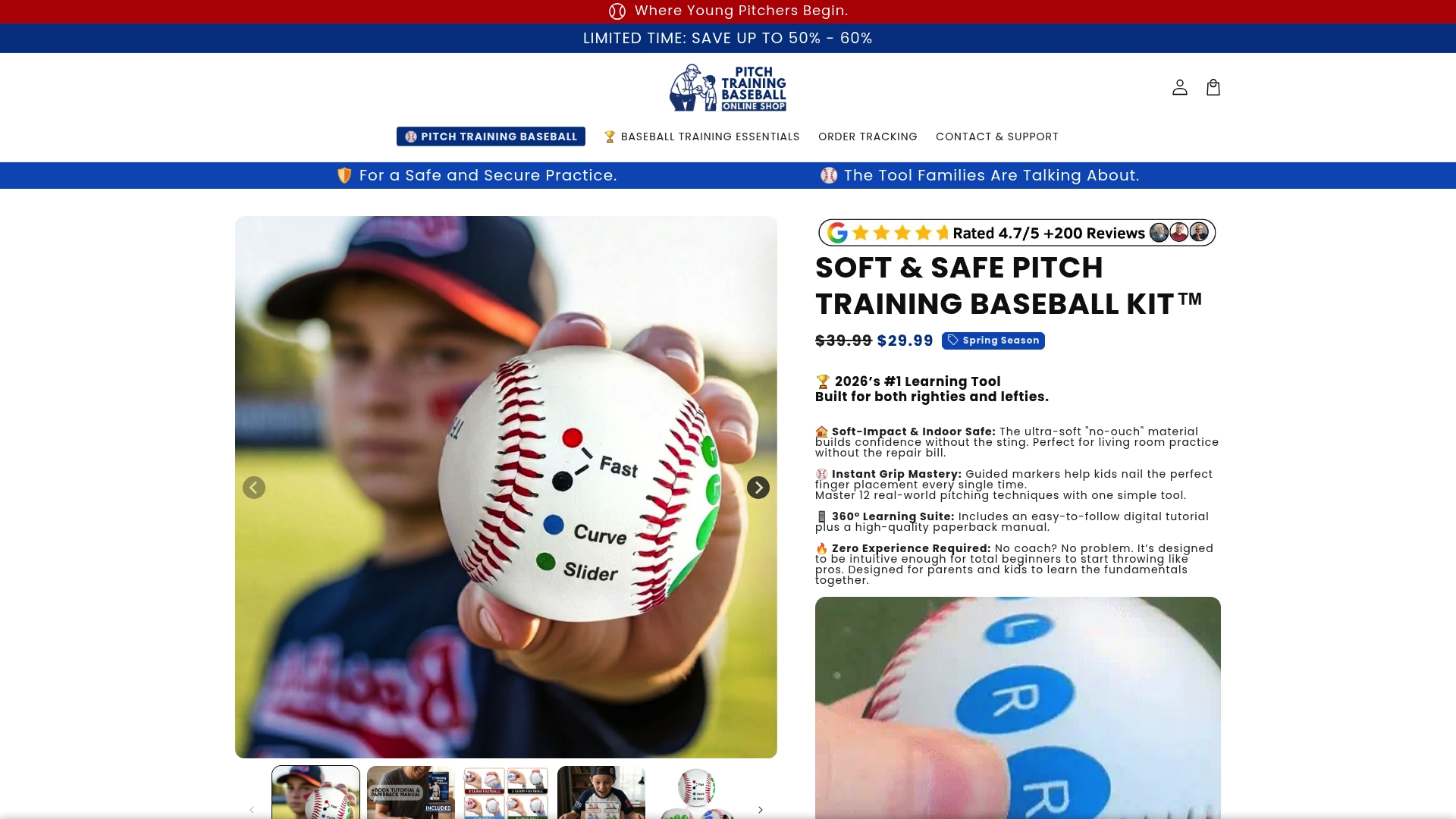
The product line is designed for easy retail packaging and quick turnover. Pitchtrainingbaseball also offers priority processing for retailers who need fast fulfillment during peak season. For stores building out a training aid section, the pitch training baseball kit fits naturally alongside gloves, bats, and team gear as a high-interest add-on purchase for parents investing in their child’s development.
FAQ
What inventory turn rate should baseball retailers target?
Independent baseball retailers should target inventory turns of 2.6–3.4 times per year. Falling below that range signals dead stock accumulation and margin erosion.
How should retailers price custom team uniform orders?
Use a tiered deposit structure: 25% for established clubs, 50% for first-year programs, and 100% for one-time tournament teams. This protects cash flow and filters out low-commitment buyers.
What gross margin should a baseball retail shop maintain?
The target gross margin for competitive independent baseball retailers is 44%–48%. Margins below that range indicate pricing or product mix problems that need immediate correction.
How do fitting events help baseball retailers compete with online stores?
Fitting events drive repeat visits and convert browsers into loyal customers by delivering expert service that online retailers cannot replicate. Community fitting hubs generate 35–50% of revenue from repeat visits.
What POS features matter most for baseball retail operations?
Look for uniform sizing matrices, special-order lifecycle tracking, and CRM integration. Systems like Lightspeed Retail and RICS Software are the recognized standard for independent sporting goods retailers with these needs.
Recommended
- The Role of Parents in Baseball Training: A 2026 Guide – Pitch Training Baseball
- Managing Practice Time for Pitchers: 2026 Youth Guide – Pitch Training Baseball
- Baseball Coaching Methods: Examples for Youth Coaches – Pitch Training Baseball
- Top safe baseball training practices to prevent youth injuries – Pitch Training Baseball