


Baseball coaching methods are structured approaches to training youth players that combine skill-building drills, feedback systems, and practice organization to develop confident, capable athletes. The most effective examples of baseball coaching methods share three traits: they minimize downtime, build skills progressively by age, and give players ownership over their development. Whether you coach a team of six-year-olds or a competitive U12 squad, the methods you choose determine how fast your players grow and how much they enjoy the game. This article covers station-based practice, phased base running progressions, batting cage protocols, and facilitative coaching techniques, all backed by research and ready to use at your next practice.
1. Examples of baseball coaching methods that structure every practice
The foundation of any effective coaching approach is a practice structure that keeps all players active and learning at the same time. Research shows a 65-minute session divided into warmup (10 minutes), fundamentals (20 minutes), stations (20 minutes), situational gameplay (20 minutes), and team review (5 minutes) maximizes skill acquisition for youth players. That structure matters because unstructured practice creates dead time, and dead time is where attention and enthusiasm go to die.
Each block serves a specific purpose. The warmup activates muscles and sets the tone. The fundamentals block targets one or two core skills with direct instruction. Stations allow players to practice multiple skills simultaneously. Situational gameplay applies those skills under game-like pressure. The review closes the loop and reinforces what was learned.
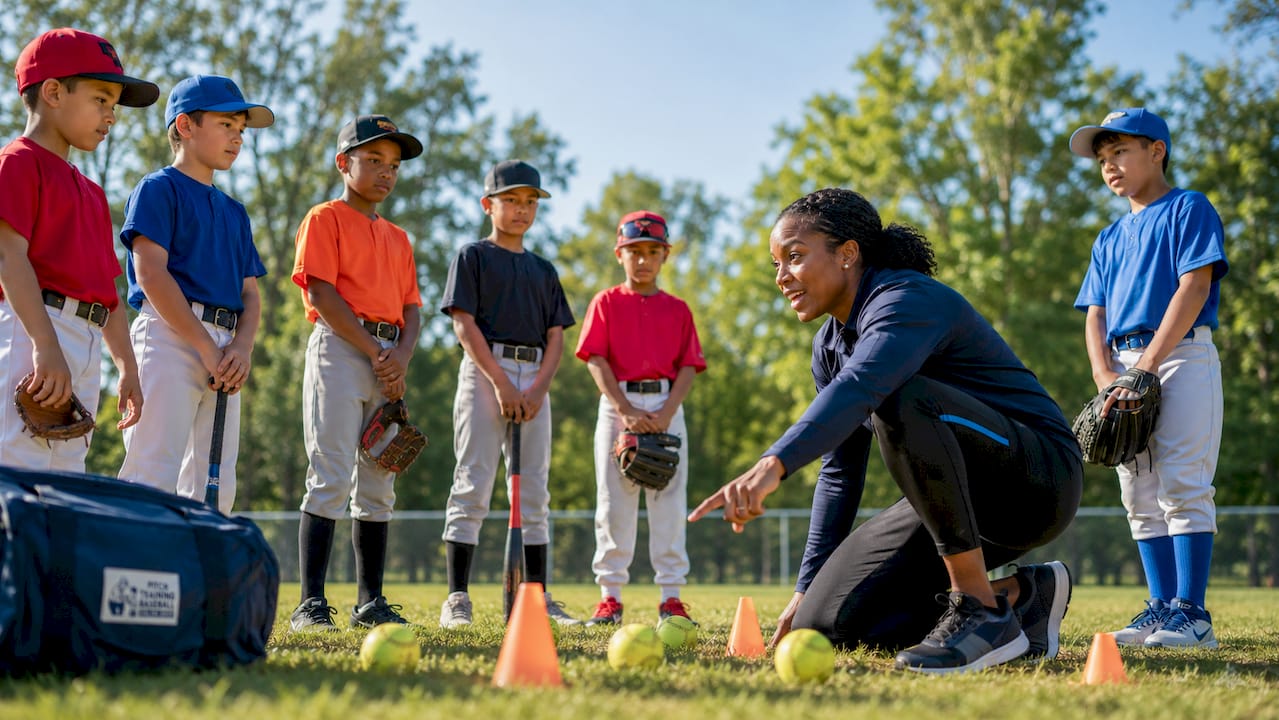
Coaches who follow this format consistently report fewer behavioral issues and higher player retention across a season. When players know what comes next, they stay focused on what is happening now.
2. Station-based practice: keeping young players active and focused
Station-based practice is the single most effective youth baseball training method for teams with more than eight players. Three stations running simultaneously, rotating every 6 to 7 minutes, keeps every player active and prevents any athlete from standing idle for more than two minutes. That matters because youth players have a maximum sustained attention window of about 12 minutes on a single task. Rotation intervals shorter than that window keep energy high and prevent disengagement.
A practical three-station setup for a U10 team looks like this:
- Station 1 (Throwing): Partner throws with a focus on grip and follow-through, supervised by an assistant coach
- Station 2 (Hitting): Tee work or soft toss with a focus on hip rotation and contact point
- Station 3 (Fielding and baserunning): Ground ball repetitions followed by a sprint to first base
Each station has a clear task, a defined space, and a coach or parent volunteer running it. Players rotate on a whistle or timer, which removes the need for verbal announcements and cuts transition time to under 30 seconds.
Pro Tip: Assign each station a color or number on a simple whiteboard. Players read the rotation themselves, which builds independence and cuts the chaos of verbal directions during transitions.
Coaching feedback at each station should stay under 30 seconds per player. One correction per repetition is the rule. Telling a player to fix their grip, their stance, and their follow-through in a single swing produces confusion, not improvement.
3. Phased base running drills: age-appropriate progression
Base running is one of the most under-coached skills in youth baseball, and it is also one of the most game-changing. Phased base running drills organized by age group match the physical and cognitive demands of each skill to what players are actually ready to learn. Skipping phases produces players who run hard but make poor decisions on the bases.
Here is how the progression breaks down by age group:
- U8 (ages 6 to 8): Focus on the explosive first step out of the batter’s box and running hard through first base without slowing down before the bag. No rounding yet.
- U8 and above: Introduce the banana route (a slight arc before first base) to allow rounding toward second on extra-base hits. Teach players to look for the coach’s signal at third.
- U10 and above: Add reading the ball off the bat to decide whether to advance, secondary leads from each base, and proper tag-up mechanics on fly balls.
| Age Group | Primary Focus | Key Coaching Cue |
|---|---|---|
| U8 | First step and running through first | “Run through the bag, not to it” |
| U8 to U10 | Banana route and rounding bases | “Arc early, hit the inside corner” |
| U10 and above | Secondary leads, reading the ball, tag-ups | “Read the ball, then decide” |
The cognitive load of situational decision-making is too high for most players under age nine. Introducing tag-ups or secondary leads to a U8 team produces confusion and frustration. Matching the drill to the developmental stage produces faster learning and more confident base runners.
Pro Tip: Run base running drills at the end of fielding stations so players are already warmed up and positioned on the bases. This saves setup time and keeps the practice tempo high.
4. Focused batting cage drills to accelerate hitting development
Batting cage work is only as good as the structure behind it. Age-appropriate batting cage drills match pitch speed, drill type, and mechanical focus to the player’s developmental stage. A seven-year-old working off a tee is building the same foundational swing sequence as a twelve-year-old facing live pitching at game speed. The difference is complexity, not intent.
The five most effective batting cage drills for youth players are:
- Tee work: The baseline drill for all ages. Isolates contact mechanics without the variable of pitch timing. Best for players ages 7 to 9.
- Opposite field drill: Player focuses on hitting the ball to the opposite field, which corrects early hip rotation and teaches plate coverage.
- Two-strike approach: Player takes the first pitch, then shortens the swing and focuses on contact with two strikes. Builds plate discipline.
- Load and stride isolation: Player freezes at the stride position before swinging, so the coach can check hip alignment and weight transfer before contact.
- Situational hitting: Coach calls out a game scenario (“runner on second, one out”) before each pitch. Player adjusts approach accordingly.
Video review accelerates hitting development by giving players a visual reference that verbal feedback cannot replicate. Slow-motion replay of a swing sequence shows a player exactly where their hands drop or their hips open too early. Players who see their mechanics correct faster than players who only hear about them.
Pro Tip: Limit each batting cage session to 20 to 25 swings per player and focus on one mechanical point per session. More swings with divided attention produce less improvement than fewer swings with a single clear objective.
The universal hitting sequence of load, stride, rotation, and contact applies to every player regardless of age. Isolating one element of that sequence per drill session produces clearer learning than trying to fix the entire swing at once.
5. Facilitative coaching methods: promoting player autonomy
Facilitative coaching is the practice of guiding players toward their own solutions through questions and structured reflection rather than issuing corrections. This approach sits at the opposite end of the spectrum from directive coaching, where the coach identifies a problem and tells the player how to fix it. Both have their place, but facilitative coaching fosters deeper engagement and longer-lasting skill retention, particularly in players ages 10 and older.
The GROW model, developed for leadership coaching and adapted widely in sports, gives coaches a repeatable framework for facilitative conversations. GROW stands for Goal, Reality, Options, and Will. A coach using GROW with a struggling hitter might ask: “What are you trying to do at the plate?” (Goal), “What is actually happening when you swing?” (Reality), “What could you try differently?” (Options), and “What will you focus on in your next at-bat?” (Will). The player arrives at the solution. The coach guides the process.
“The shift from fixer to facilitator is the single biggest upgrade a youth baseball coach can make. Players who solve their own problems in practice solve their own problems in games.”
Psychological safety is the foundation that makes facilitative coaching work. Players who fear being criticized for mistakes will not experiment, and players who do not experiment do not improve. Creating a practice environment where errors are treated as data rather than failures produces athletes who take risks, try new techniques, and develop faster over a full season.
Specific, measurable goals set collaboratively with players outperform vague goals like “be a better hitter.” A goal like “reduce my stride length to six inches and make contact on three of five opposite-field tee reps” gives both the player and the coach a clear benchmark. Multi-source feedback, including coach observation, peer input, and game performance data, produces more accurate development plans than coach assessment alone.
Key takeaways
The most effective youth baseball coaching methods combine structured practice formats, age-phased skill progressions, and facilitative feedback to produce engaged, confident players who develop faster over a full season.
| Point | Details |
|---|---|
| Structure every practice | A 65-minute session with defined blocks maximizes skill acquisition and minimizes dead time. |
| Use station-based rotation | Rotating players every 6 to 7 minutes keeps all athletes active and maintains attention. |
| Phase drills by age | Match base running and hitting drills to cognitive and physical readiness for faster learning. |
| Limit coaching corrections | One coaching point per repetition prevents overwhelm and sharpens player focus. |
| Shift to facilitative coaching | Asking open-ended questions builds player autonomy and produces more durable skill retention. |
What I’ve learned coaching youth baseball with these methods
I spent three seasons coaching a U10 travel team before I understood why my practices felt exhausting for everyone involved. I was running one large group through one drill at a time, which meant 14 kids were watching while two were working. The moment I switched to three simultaneous stations, the energy in practice changed completely. Players stopped drifting. Parents stopped checking their phones. The noise level went up, but it was productive noise.
The phased base running approach was the second shift that changed my results. I had been teaching secondary leads to eight-year-olds who could not yet consistently run through first base without slowing down. Stripping the curriculum back to age-appropriate fundamentals felt like going backward, but within four weeks those same players were making better decisions on the bases than older players I had coached with more complex instruction.
Facilitative coaching was the hardest adjustment. My instinct when a player struggles is to fix the problem immediately. Replacing “keep your elbow up” with “what do you think your arm is doing on that throw?” feels slower in the moment. Over a full season, though, the players who were asked questions rather than given answers made better in-game adjustments without looking to the dugout for guidance. That independence is the goal. You want players who can use feedback effectively during a game, not just during practice.
My advice for coaches starting with these methods: pick one change per practice cycle. Add stations first. Then layer in phased progressions. Then start asking more questions. Trying to implement everything at once produces the same overwhelm you are trying to prevent in your players.
— Albert
Tools from Pitchtrainingbaseball to support your coaching methods
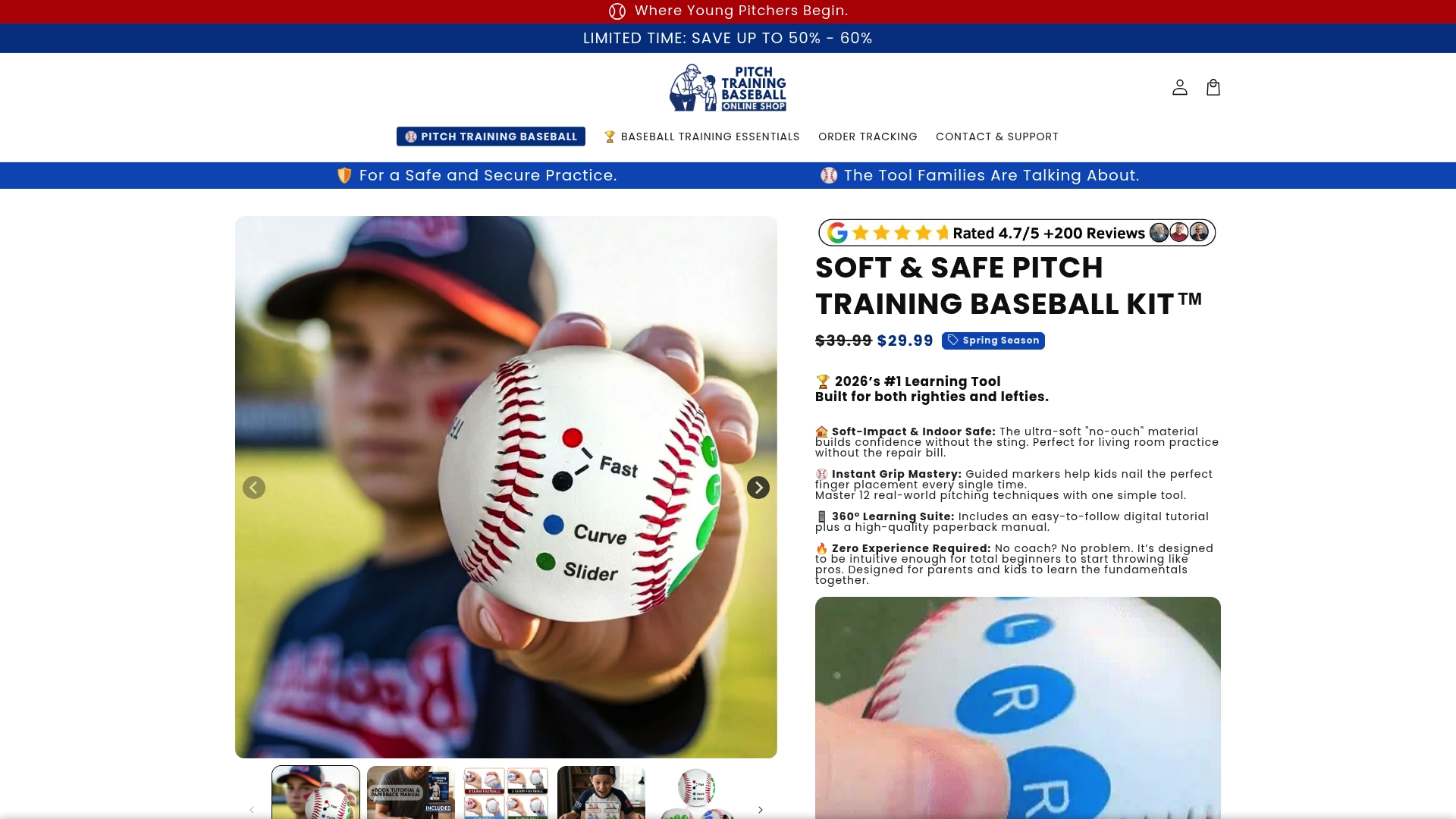
The coaching methods in this article work best when players get maximum repetitions with quality equipment. Pitchtrainingbaseball offers training tools built specifically for youth skill development at home and at practice. The 9-zone pitching target net gives pitchers immediate visual feedback on location during station-based throwing drills, and the pitch training softball is designed to build arm strength and accuracy safely for younger players. For coaches running game-like pitching practice, these tools turn any backyard or field into a structured training environment. Explore the full product range at Pitchtrainingbaseball to find equipment that fits your team’s current development stage.
FAQ
What are the most effective baseball coaching methods for youth players?
Station-based practice, phased base running drills, and facilitative coaching are the three most effective methods for youth baseball. They maximize repetitions, match skill demands to player age, and build player confidence and decision-making over a full season.
How long should a youth baseball practice be?
A structured 65-minute session covering warmup, fundamentals, stations, situational gameplay, and review is the research-backed standard for youth baseball. Sessions longer than 75 minutes produce diminishing returns as player attention and energy drop.
How many coaching corrections should I give per player per drill?
One correction per repetition is the standard. Youth players have a maximum sustained attention window of about 12 minutes on a single task, and coaching feedback should last no more than 30 seconds per player to maintain focus and engagement.
What is facilitative coaching in baseball?
Facilitative coaching replaces direct corrections with open-ended questions that guide players toward their own solutions. Frameworks like the GROW model structure these conversations around goal-setting, self-assessment, and player-driven decision-making.
At what age should base running drills include secondary leads?
Secondary leads and situational decision-making like reading the ball off the bat are appropriate starting at U10 (ages 9 to 10). Players under age nine should focus on first-step mechanics and running hard through first base before adding situational complexity.
Recommended
- How to throw a baseball: proven youth coaching tips – Pitch Training Baseball
- Game-like pitching practice: Raise youth baseball skills fast – Pitch Training Baseball
- Defining Youth Pitching Mechanics: A Coach’s Guide – Pitch Training Baseball
- Top pitching workouts for youth baseball: build skill safely – Pitch Training Baseball