


Most parents and coaches assume that more pitching means better pitching. It’s an honest mistake. You see your young player struggling with control, so you schedule more mound time. But volume without quality is how mechanics get cemented in the wrong direction. The role of adjustable pitching trainers is to break that cycle by giving youth players structured, progressive reps that actually build skill rather than just build arm fatigue. This article covers what these tools are, what they do, and exactly how to put them to work.
Table of Contents
- Key Takeaways
- What adjustable pitching trainers actually are
- Benefits of using adjustable pitching trainers for youth players
- How to integrate adjustable trainers into youth practice
- Adjustable trainers vs. other training methods
- Choosing the right adjustable pitching trainer
- My honest take on what these tools actually change
- Get your youth pitcher the tools that match the training
- FAQ
Key Takeaways
| Point | Details |
|---|---|
| Adjustability drives skill progression | Trainers with variable speed, height, and angle settings match a player’s current level and grow with them. |
| Quality reps beat raw volume | Structured sessions with adjustable tools build motor patterns faster than uncontrolled mound time. |
| Workload management prevents injury | Keeping throwing volume within a safe ratio protects young arms and sustains long-term development. |
| Integration beats isolation | Adjustable trainers work best when paired with arm care routines and drill-based practice games. |
| Choosing the right tool matters | Age, skill level, portability needs, and budget all shape which adjustable trainer will deliver the most value. |
What adjustable pitching trainers actually are
Before you invest in any piece of adjustable baseball training gear, it helps to know exactly what you are buying and why the adjustability matters.
An adjustable pitching trainer is any device designed to deliver pitches or receive throws in a way that can be modified during practice. That modification might involve speed, pitch height, horizontal location, spin angle, or target zone size. The category includes adjustable pitching machines, adjustable pitching nets with multiple target zones, and constraint-based training systems that include plyo balls and weighted ball sets with variable resistance levels.
What separates adjustable pitching equipment from a standard batting tee or a fixed target is that you can change the challenge in real time. You do not need to buy a new product every season. You move a dial, shift a panel, or resize a zone.
Here is a comparison of the most common types of adjustable pitching trainers and how they differ:
| Trainer Type | Adjustable Features | Best For | Price Range |
|---|---|---|---|
| Pitching machine | Speed (25 to 85+ mph), height, horizontal angle | Game-like hitting reps and command training | $300 to $1,500+ |
| Target net with strike zones | Zone size, panel configuration, height | Accuracy and pitch location training | $40 to $200 |
| Plyo/weighted ball kit | Ball weight, resistance level | Arm strength and movement efficiency | $80 to $300 |
| Portable pitching net | Height, distance, target attachment | Backyard and solo practice | $50 to $250 |
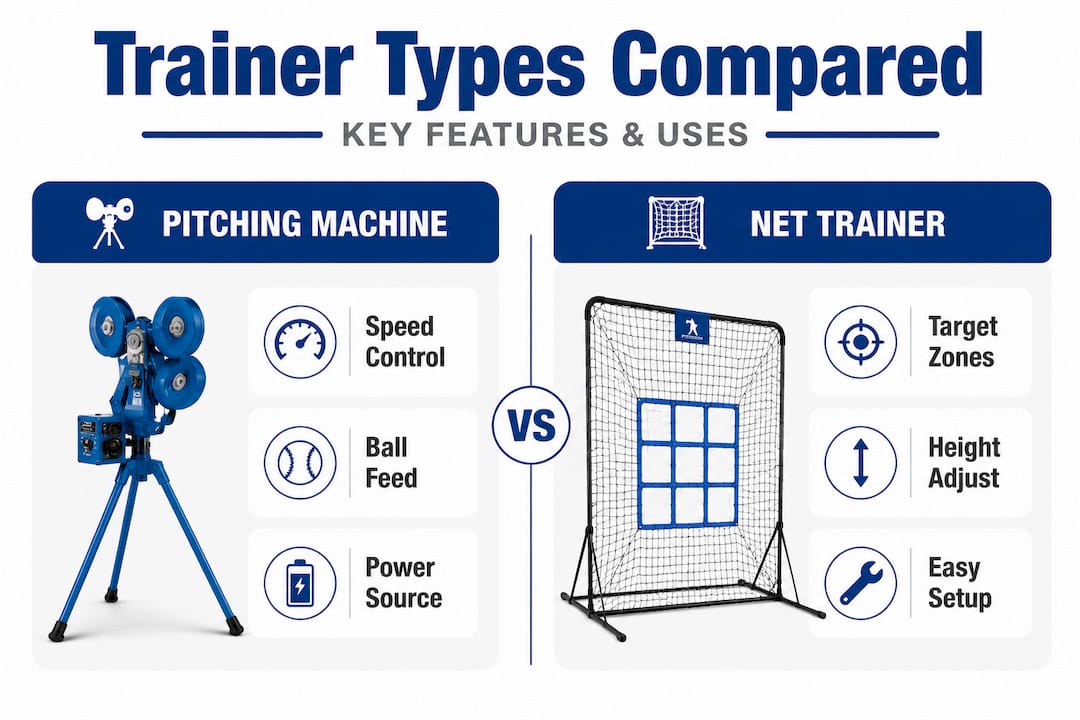
The most widely discussed adjustable pitching equipment in youth programs is the pitching machine. For example, machines designed for youth offer speed ranges from 25 to 85+ mph with increments as small as 1 to 5 mph, plus integrated elevation and horizontal controls.
Key features to look for in any adjustable pitching trainer include:
- Variable speed control to match a player’s reaction time as it improves
- Height and angle adjustment without fully repositioning the machine or net
- Zone-specific target panels that reward accuracy in different pitch locations
- Portability so practice can happen at home, at the park, or in the gym
Benefits of using adjustable pitching trainers for youth players
This is where the case for adjustable pitching aids gets concrete. The advantages are not just about convenience. They are about how young athletes actually learn motor skills.
Building real command, not just arm strength
Many coaches focus on arm strength because velocity is visible and measurable. But command improvement comes from training movement adjustability far more than from simply aiming at a target. When a youth player adjusts leg lift, drift, or coil to hit different zones, they are developing the internal feedback loops that create consistent command over time. An adjustable trainer forces that adaptation repeatedly in a single session.
High-quality reps without wasted time
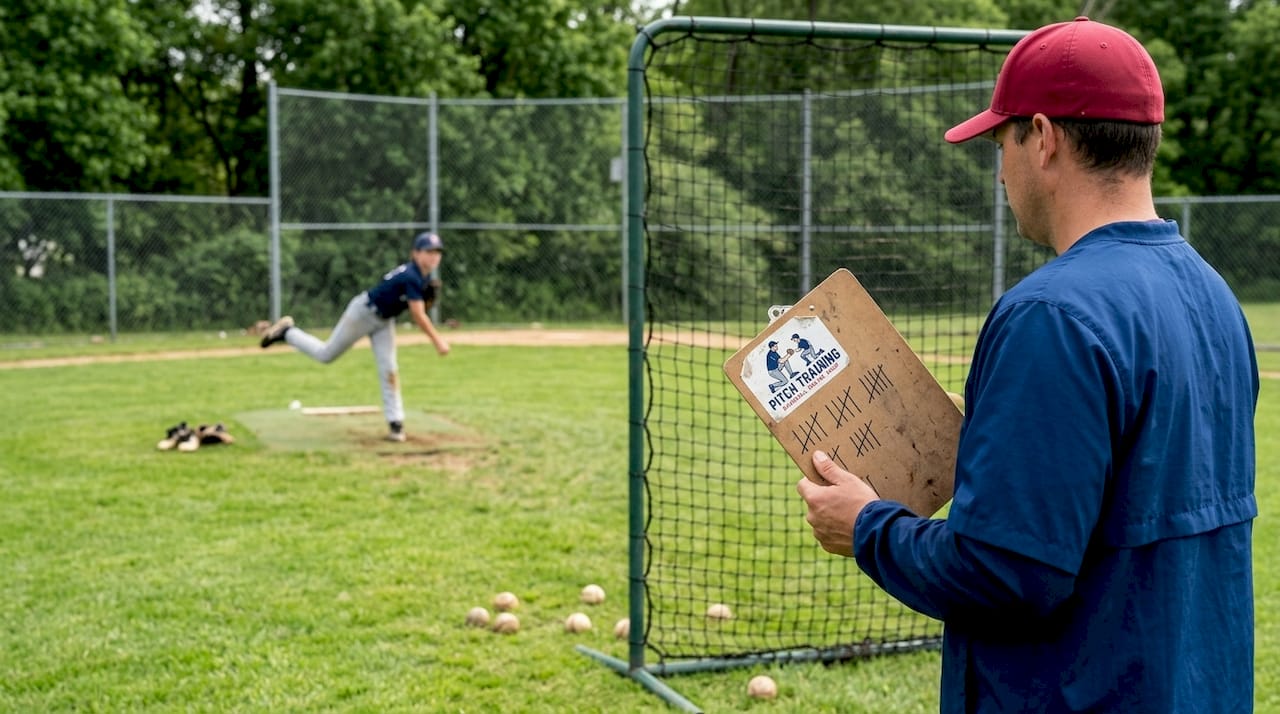
One of the clearest benefits of pitching trainers is rep density. Youth training systems can deliver 100+ pitching reps in a 20-minute session, which is a volume most players never approach during standard mound practice. That density matters because motor learning is largely a product of repetition quality and frequency, not effort alone.
Injury risk reduction
This one matters most to parents. Pitch velocity increases as a byproduct of improved movement efficiency, not from throwing harder or more often. Adjustable trainers allow coaches to control intensity progressively, which keeps young arms out of the danger zone. Youth training guidelines specifically recommend keeping the acute:chronic workload ratio between 0.8 and 1.3 to reduce injury risk from workload spikes.
The core benefits of adjustable pitching aids in a youth program include:
- Progressive overload without risking arm abuse
- Immediate feedback through zone-specific targets
- Skill-matched practice that stays in a player’s development window
- Reduced dead time compared to traditional bullpen setups
- Replicable conditions that allow coaches to track improvement over time
Pro Tip: When introducing an adjustable trainer to a younger player, start at the lowest speed or smallest target zone for two full sessions before bumping the difficulty. Confidence built on early success accelerates the learning curve.
How to integrate adjustable trainers into youth practice
Knowing the advantages of adjustable pitching gear is one thing. Knowing how to structure a session around these tools is another. Here is a framework that works for both parents running backyard sessions and coaches managing a full team practice.
-
Start with a short arm care routine. Daily 12 to 15 minute arm care beats occasional long sessions for reducing injury and improving skill. Band work, shoulder mobility drills, and light catch should happen before any trainer reps.
-
Set the trainer to a level the player can succeed at 70 to 80 percent of the time. This is the sweet spot for motor learning. Too easy and there is no adaptation. Too hard and frustration kills focus.
-
Run skill-specific blocks. Spend 7 to 10 minutes on a single location (inside corner, for example) before shifting the zone. Adjustable pitching aids let you change the challenge mid-session without losing momentum.
-
Track reps and outcomes, not just effort. A player who throws 40 accurate reps at a challenging zone has trained more effectively than one who throws 80 reps at a comfortable spot. You can find a detailed method for this in youth pitching performance assessment.
-
End with game-like scenarios. Use the trainer’s adjustability to simulate at-bat situations. A right-handed batter in the box? Adjust to the outer half. Full count? Target a different zone. Making practice feel like a game accelerates retention. You can read more about this approach in game-like pitching practice.
-
Close with a cooldown and log the session. Tracking workload is how you stay inside that safe 0.8 to 1.3 ratio. Even a simple notebook works.
Pro Tip: For players aged 8 to 11, keep total trainer sessions to 3 times per week maximum. Young arms adapt faster than we expect, but they also fatigue faster. Spacing sessions protects the arm and actually improves retention between practices.
Common mistakes parents and coaches make include jumping straight to high-speed reps before movement patterns are stable, using adjustable trainers as a substitute for live bullpen work rather than a complement to it, and skipping the arm care component entirely because it feels like overhead.
Adjustable trainers vs. other training methods
Parents and coaches often ask how adjustable pitching trainers stack up against other tools. The honest answer is that they are not replacements. They are complements. But understanding what each tool does differently helps you allocate your practice time.
| Training Method | Strength | Limitation |
|---|---|---|
| Adjustable pitching trainer | Progressive, high-rep skill building | Requires adult supervision to set correctly |
| Traditional pitching machine | Realistic pitch simulation for hitters | Limited command development for pitchers |
| Weighted/plyo ball kits | Arm strength and movement efficiency | Not ideal for accuracy or game-simulation reps |
| Live bullpen sessions | Full game-feel with catcher | Low rep density, high arm stress per rep |
| Video analysis tools | Mechanical feedback | Passive, no live practice reps |
The key difference between adjustable pitching trainers and weighted ball programs comes down to what skill they prioritize. Constraint-based tools like weighted plyo balls build motor patterns through hundreds of low-stress repetitions, which is powerful for arm development but less specific to pitch location training. Adjustable trainers can target command and location with high rep density at controlled intensity.
Advantages of adjustable pitching nets over a basic open net include:
- Zone feedback tells a pitcher whether a throw hit the intended quadrant
- Target variety through removable panels lets you isolate weaknesses
- Motivation increases when hitting a specific zone earns a visible result
The best top pitching workouts for youth combine all three categories: adjustable trainer work for location, constraint-based tools for arm development, and limited live bullpen sessions for competition-feel. Prioritizing one over the others will create a gap.
Choosing the right adjustable pitching trainer
Not every parent or coach needs the same tool. A backyard training parent has different needs than a travel ball coach running team practices twice a week. Here is how to narrow the choice.
Age and skill level should drive the starting point. A nine-year-old working on basic mechanics does not need a $1,200 multi-wheel machine. A well-built adjustable target net with a 9-zone strike panel delivers more value at that stage because command, not velocity, is the priority.
Adjustability range matters more than most buyers realize. A trainer that only offers two or three settings will become obsolete within one season as a young player improves. Look for tools with enough range to grow alongside the player for at least two to three years.
Key factors to evaluate before buying:
- Portability: Can it be set up and taken down in under five minutes? If not, it will get used less often.
- Durability: Check whether the frame and target materials are rated for outdoor use in varied weather.
- Ease of adjustment: Controls should be simple enough for the player to understand, not just the coach.
- Drill support: Does the product come with training guidance or suggested drills? This makes a meaningful difference in how often it actually gets used.
- Price vs. lifespan: A $60 adjustable net that lasts one season is a worse value than a $150 net that lasts four.
For most youth players aged 8 to 14, a combination of an adjustable pitching net with a multi-zone target and a basic plyo ball set covers the majority of development needs. If budget allows, adding a portable pitching machine with variable speed settings takes the training quality up another level.
My honest take on what these tools actually change
I have watched a lot of youth pitchers go through a practice with no structure, no feedback, and no plan. They throw until their arm feels tired and call it a good session. The problem is not effort. It is the absence of any mechanism that forces them to adjust.
What I have seen over years of working with youth programs is this: the players who develop command fastest are rarely the ones with the most arm talent. They are the ones whose practices are structured around feedback loops. Adjustable trainers create those loops by design. When a player misses the inside target, the trainer tells them immediately. When they dial in a specific zone after three sessions, they feel it.
In my experience, the most overlooked benefit of adjustable pitching aids is the confidence that comes from measurable progress. When a 10-year-old can see that they hit the upper-inside zone 8 out of 10 times today versus 3 out of 10 times last week, they believe in the process. That belief drives consistency better than any external motivation.
I will also say this plainly: I think too many coaches dismiss these tools as supplemental. They treat them as something you use when you cannot get to the field. That framing is backwards. The adjustable trainer session might be the most productive work a youth pitcher does all week, because it gives more quality reps at controlled intensity than most full team practices do.
One caution I always share with parents: do not add a new training tool to a schedule that is already too full. Prioritizing movement efficiency and injury risk management does not mean adding more. It means replacing low-value throwing time with structured, intentional reps. Less, but better. That is the principle that actually works.
— Albert
Get your youth pitcher the tools that match the training
If you have been running practices on effort alone and wondering why improvement feels slow, the answer is usually structure. That is exactly what Pitchtrainingbaseball was built to provide.
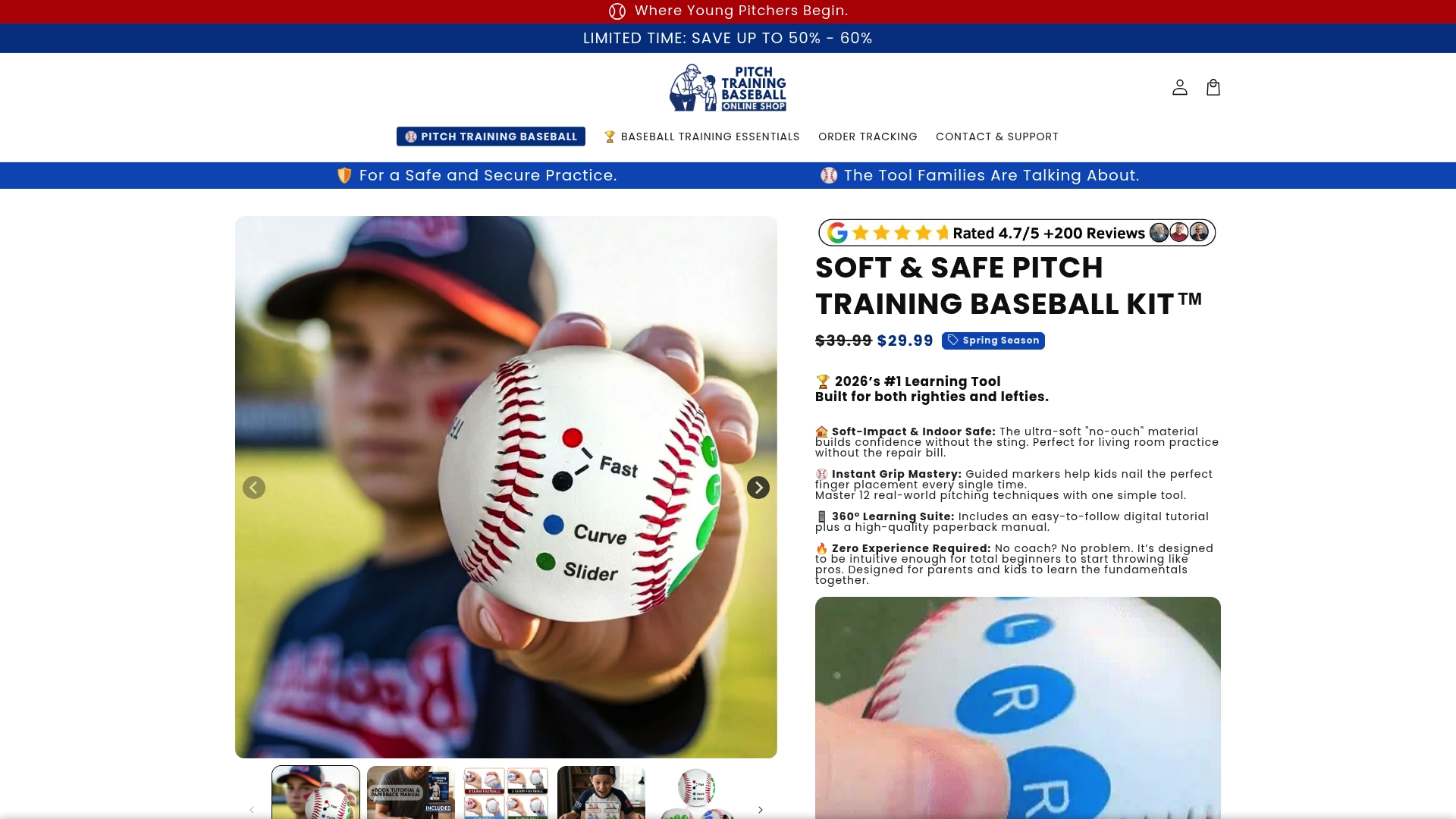
Pitchtrainingbaseball carries a curated selection of youth pitching training products designed specifically for the 8 to 14 age range, including adjustable target nets, training ball sets, and portable practice gear that works in your backyard or at the field. The 9-zone pitching target net is one of the most practical tools on the site for command development, offering zone-specific feedback without the cost or complexity of a full machine setup. Every product is selected with parents and coaches in mind: easy to set up, easy to adjust, and built to last more than one season. Browse the full range and find the right fit for where your player is today.
FAQ
What is the role of adjustable pitching trainers in youth development?
Adjustable pitching trainers provide structured, high-rep practice with real-time feedback on pitch location, helping youth players build command and mechanics faster than unstructured mound time.
How do I know which skill level is right for the trainer settings?
Start at a setting where the player succeeds 70 to 80 percent of the time. If they are hitting the target almost every rep, increase the difficulty. If they are missing more than half, reduce it.
Can adjustable pitching trainers help prevent arm injuries?
Yes. By controlling intensity and rep volume, these tools help coaches keep a young pitcher’s workload within the recommended acute:chronic ratio of 0.8 to 1.3, which significantly lowers injury risk.
How often should youth players use adjustable pitching trainers?
For players aged 8 to 11, three sessions per week is a safe and effective frequency. Each session should follow a short arm care warm-up and stay within 20 to 30 minutes of active throwing.
Are adjustable pitching trainers better than traditional pitching machines?
They serve different purposes. Pitching machines excel at simulating game-pace pitches for hitters. Adjustable trainers focused on target accuracy are more effective for developing a pitcher’s command and consistency.