


Coaches are defined as the primary architects of athletic and personal development in youth sports. The role of coaches in training extends far beyond teaching a curveball or correcting a batting stance. Coaches shape how young athletes handle failure, build relationships, and carry themselves off the field. Research confirms that positive coach-athlete relationships explain 45.7% of youth athlete well-being variance through life skill development. That number tells you something critical: the coach standing in the dugout influences a player’s mental health and character as much as their on-field performance. Pitchtrainingbaseball recognizes this reality and builds its resources around the full picture of what great coaching produces.
How do coaches impact skill improvement and life skills in youth baseball?
Coaches drive both athletic skill and psychosocial growth at the same time. A youth baseball coach who commits to the relationship, not just the scoreboard, produces athletes who are more resilient, more communicative, and more confident. That dual impact is not accidental. It results from deliberate coaching choices made during every practice and every game.
The research is clear on this point. A study of 312 adolescent athletes found that coach commitment to athlete well-being accounts for nearly half of the variance in psychosocial outcomes. That means a coach’s attitude and behavior matter more than most parents and players realize. Coaches who invest in the relationship produce athletes who develop life skills that transfer well beyond the diamond.
In baseball specifically, the connection between coaching quality and player growth shows up in concrete ways:
- Resilience: Coaches who frame strikeouts as learning moments teach players to recover from failure rather than fear it.
- Communication: Regular team meetings and one-on-one check-ins build a player’s ability to express needs and listen to feedback.
- Teamwork: Coaches who assign rotating leadership roles during practice teach players to trust and rely on each other.
- Emotional regulation: Calm coach reactions after errors signal to players that mistakes are part of growth, not cause for shame.
The role of coaches in skill improvement also depends on how they structure repetition. Coaches who use structured feedback methods during pitching drills accelerate mechanical improvement while reinforcing confidence. Feedback delivered consistently and constructively compounds over a season.
Pro Tip: After every practice, give each player one specific thing they did well and one thing to work on next session. This two-part feedback loop builds confidence and direction simultaneously.
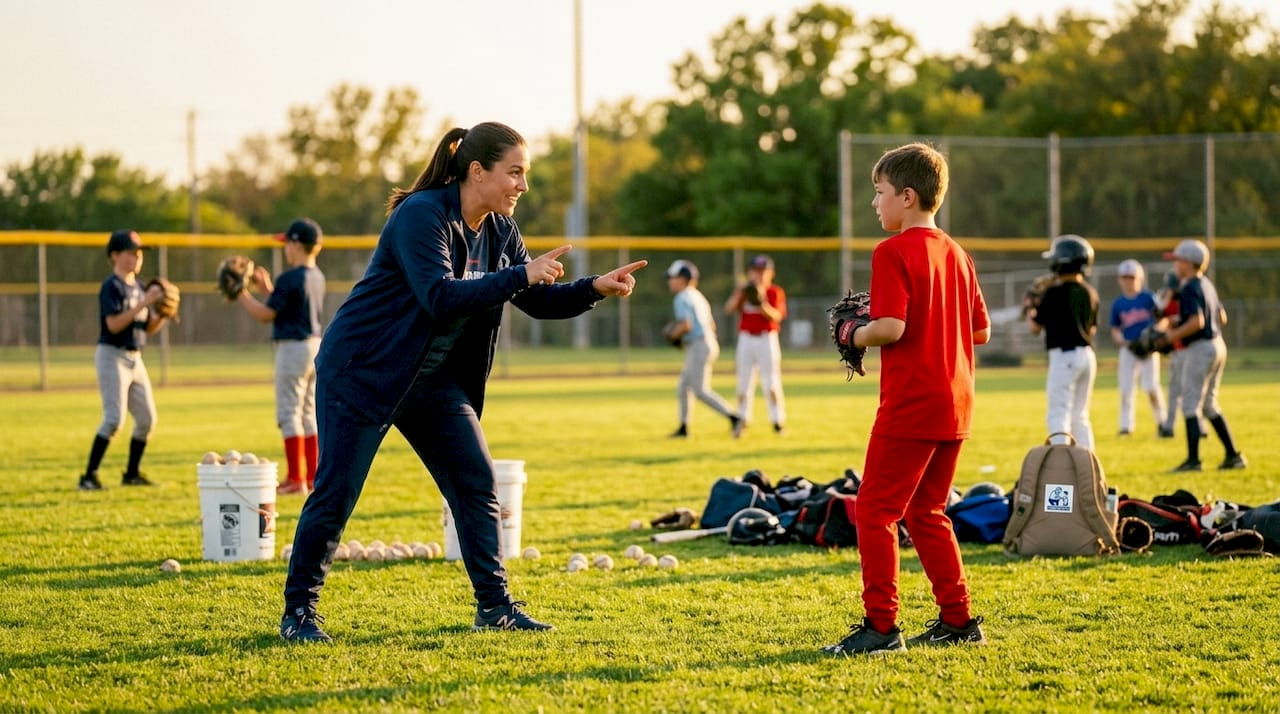
The benefits of coaching in training are most visible when coaches treat every drill as a chance to teach both a skill and a mindset. A pitcher who learns to reset after a wild pitch is developing emotional control. A shortstop who calls off the center fielder is practicing leadership. Coaches who see these moments and name them out loud accelerate development far faster than coaches who only correct mechanics.
What coaching techniques best support positive youth development?
The most effective coaching techniques in training combine clear communication, consistent feedback, and a deliberate focus on the whole athlete. Research involving 38 youth athletes aged 15–18 found that facilitative coaching behaviors like active listening and constructive communication directly improve resilience and team connection. These are not soft skills. They are the foundation of a high-performing team.
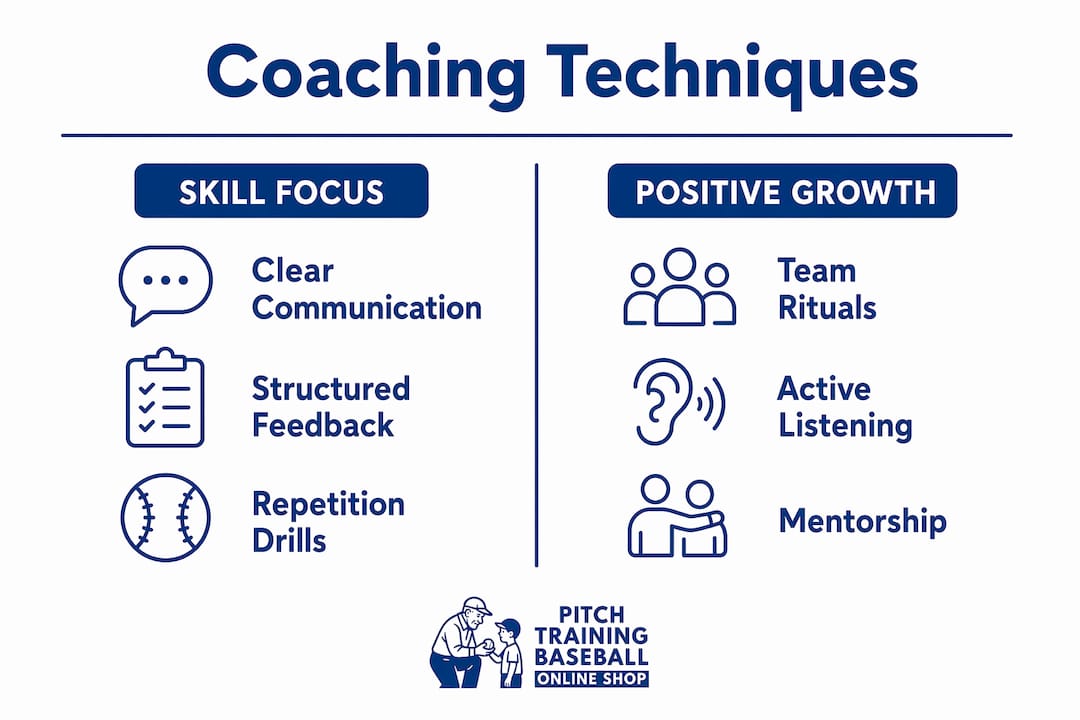
Observation of 113 youth sport coaches revealed a significant gap: coaches most strongly support competence and confidence in athletes, but place far less emphasis on character and contribution. That imbalance matters because character and contribution are what make a player a good teammate and a good person. Coaches who deliberately address all four areas produce more complete athletes.
The four development areas every coach should address:
- Competence: Teach mechanics, strategy, and sport-specific skills through deliberate practice.
- Confidence: Celebrate progress, not just performance. Recognize effort publicly.
- Character: Model integrity. Hold players accountable with respect, not humiliation.
- Contribution: Give players ownership. Let them lead warm-ups, call plays, or mentor younger teammates.
Inclusive team environments also depend on rituals. Coaches who promote team rituals and active listening create a culture where every player feels they belong. A pre-game handshake sequence, a team chant, or a post-practice circle where players share one word about how they feel are all low-cost, high-impact practices. These rituals signal that the team is more than a collection of individual players.
Pro Tip: Build a “growth board” in your dugout or practice space. Write down one player improvement each week. Players who see their name on the board internalize that growth is recognized and valued.
The table below shows how different coaching approaches affect key development outcomes in youth baseball players.
| Coaching approach | Primary outcome | Secondary outcome |
|---|---|---|
| Mastery-oriented climate | Intrinsic motivation | Reduced dropout rates |
| Active listening and feedback | Resilience | Stronger team connection |
| Character-focused mentoring | Integrity and accountability | Leadership readiness |
| Contribution-based roles | Ownership and engagement | Peer trust |
Mastery-oriented coaching climates that focus on personal improvement reduce youth sport dropout by counteracting adult-driven competitiveness. That finding is especially relevant in youth baseball, where early specialization and win-at-all-costs cultures push talented kids out of the sport before they reach their potential. Coaches who prioritize development over results keep players in the game longer and develop deeper skills over time.
How does mentorship extend a coach’s impact beyond the field?
Coaches function as mentors, role models, and in many cases, community anchors. Their influence does not stop when practice ends. For many youth athletes, the coach is one of the most consistent adult figures in their lives. That relationship carries real responsibility.
An ethnographic study found that Black male coaches often serve as social fathers and community advocates, providing mental health support and cultural mentorship that extends far beyond athletic training. This role fills a critical gap in underserved communities where access to counselors or mentors is limited. The coach becomes a trusted adult who models how to handle adversity, navigate institutions, and maintain dignity under pressure.
“Coaches who act as social fathers provide the kind of consistent, culturally grounded support that shapes a young person’s identity and sense of possibility. Their impact is measured not in wins, but in the adults their players become.”
Baseball mentorship programs use shared struggles as learning moments to teach resilience, emotional regulation, and life application beyond technical skills. A coach who shares a story about their own failure, and what they did next, gives players a framework for handling their own setbacks. That kind of mentorship is irreplaceable.
The community role of coaches also includes advocacy. Coaches who show up to school events, attend parent meetings, and connect players with academic resources signal that they care about the whole person. That investment builds trust that makes every coaching conversation more effective. Players who trust their coach accept feedback more readily and push harder in practice.
| Coach role | Community impact | Player outcome |
|---|---|---|
| Social father figure | Fills adult mentorship gap | Stronger identity and confidence |
| Cultural broker | Bridges family and institution | Greater academic engagement |
| Mental health support | Reduces crisis risk | Improved emotional regulation |
| Community advocate | Models civic responsibility | Long-term character development |
The benefits of hiring a coach extend into mental health and well-being in ways that parents often underestimate. A coach who checks in on a struggling player, connects a family to resources, or simply listens without judgment can change the trajectory of a young person’s life. That is the full scope of what great coaching looks like.
What practical strategies help parents and coaches maximize coaching impact?
Parents and coaches working together produce the best outcomes for youth baseball players. The relationship between the dugout and the bleachers sets the tone for how players experience the sport. When parents and coaches align on expectations, players receive consistent messages that reinforce development rather than create confusion.
The following strategies give coaches and parents a concrete framework for maximizing their impact:
- Set expectations early. At the start of every season, hold a parent meeting. Explain your coaching philosophy, your communication style, and what you expect from players and families. Clarity prevents conflict.
- Prioritize development over wins. Development-first coaching sequences growth before winning and produces better long-term team performance and deeper player confidence. Coaches who chase wins at the youth level often sacrifice the skill-building that produces strong high school and college players.
- Use technology as a feedback tool. Video review of pitching mechanics, for example, gives players a concrete visual of what needs to change. Pitchtrainingbaseball offers training aids that make this kind of targeted practice accessible at home and at the field.
- Manage non-verbal communication. Coaches communicate expectations mainly through non-verbal cues. Frustration after errors signals that results matter more than growth, which damages player confidence. A calm, steady reaction after a mistake teaches players that errors are part of the process.
- Teach mental skills explicitly. Breathing techniques, pre-pitch routines, and visualization exercises give players tools for handling pressure. These skills transfer directly to academics, relationships, and careers.
Coach education programs often improve knowledge but fail to produce sustained behavioral changes in how coaches actually behave on the field. That gap explains why the best coaches commit to ongoing reflection, peer observation, and feedback from players and parents. Knowledge alone does not change behavior. Practice and accountability do.
Pro Tip: Ask your players at the end of each month: “What’s one thing I could do differently to help you improve?” Their answers will tell you more than any coaching clinic.
Parents play a specific role in reinforcing the coach’s work. Avoid coaching from the stands. Ask your player open-ended questions after games, such as “What did you learn today?” rather than “Why did you strike out?” That shift in language mirrors the development-first approach and keeps the experience positive.
You can also explore baseball coaching methods that build resilience, teamwork, and leadership through structured practice. The best methods are repeatable, measurable, and designed around the player’s current level, not the coach’s expectations.
Key Takeaways
The role of coaches in training youth athletes is to develop both athletic skill and personal character through consistent mentorship, deliberate feedback, and a development-first approach that keeps players engaged and growing long after the final out.
| Point | Details |
|---|---|
| Coach-athlete relationships drive outcomes | Positive coach commitment explains 45.7% of youth athlete well-being variance. |
| Balanced development matters | Coaches must address competence, confidence, character, and contribution equally. |
| Mentorship extends beyond the field | Coaches serve as social fathers, community advocates, and mental health supports. |
| Development before winning | Prioritizing growth over results produces stronger players and longer careers. |
| Non-verbal cues shape confidence | Calm coach reactions after errors build growth mindset and player trust. |
Why I think most youth coaches underestimate their own influence
After years of watching youth baseball programs succeed and struggle, the pattern I keep seeing is the same. The coaches who produce the best players are rarely the ones with the most technical knowledge. They are the ones who make players feel seen.
Most coaches focus on mechanics because mechanics are measurable. You can count strikeouts, track ERA, and film a pitching motion. What you cannot easily measure is whether a 12-year-old feels safe enough to try something new and fail in front of his teammates. That psychological safety is what separates a good practice environment from a great one.
The research on positive youth development through coaching confirms what experienced coaches already sense: character and contribution get the least attention, but they produce the most lasting results. A player who learns to contribute to a team, to show up for others, and to hold himself accountable becomes a better athlete and a better person. That is the real return on investment for every hour spent on the field.
The coaches who changed my understanding of this work were not the ones with the longest win streaks. They were the ones who remembered a player’s name years later, who showed up to graduation, who sent a text before a big game. Those small acts of investment compound over time in ways that no drill or training aid can replicate. The technical tools matter. The relationship is what makes them work.
— Albert
Pitchtrainingbaseball: tools built for coaches who develop players
Coaches who commit to player development need training tools that match that commitment. Pitchtrainingbaseball designs its equipment specifically for youth athletes and the coaches who work with them, making it easier to build the repetition and feedback loops that drive real improvement.
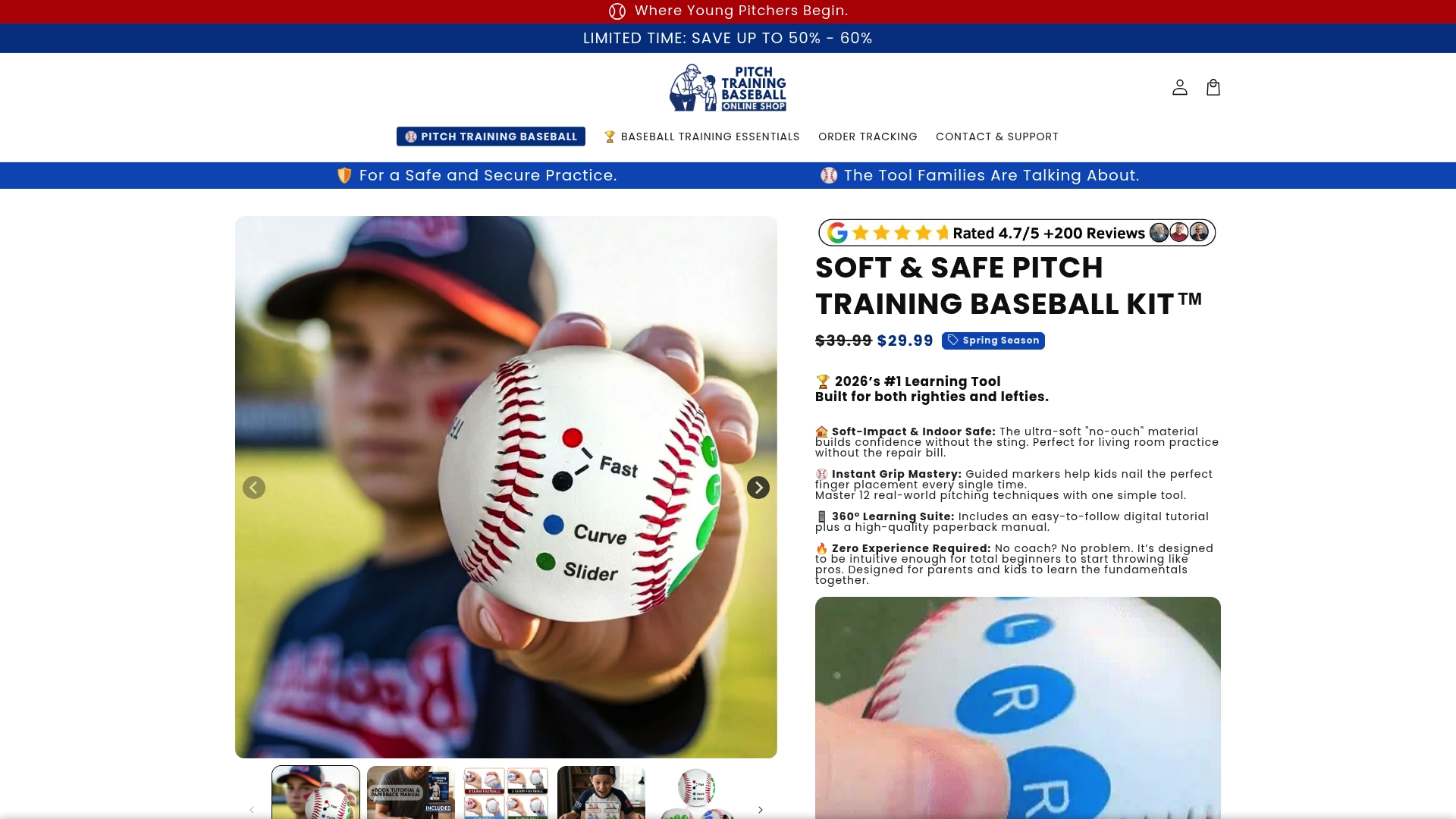
The Pitching Target Net with Strike 9-Zone gives coaches a visual, zone-specific feedback tool that reinforces accuracy and control during every session. Players see exactly where their pitch landed, which makes the feedback immediate and concrete. Pitchtrainingbaseball also offers youth pitching training tools designed to support the kind of consistent, development-focused practice that the best coaches build their programs around. When the right tools meet the right coaching philosophy, players improve faster and stay in the game longer.
FAQ
What is the primary role of coaches in youth sports training?
The primary role of coaches in training is to develop athletic skills and life skills simultaneously through mentorship, structured feedback, and a development-first approach. Research shows that coach commitment explains 45.7% of youth athlete well-being outcomes.
How do coaching techniques affect player confidence?
Coaches communicate expectations largely through non-verbal cues. Calm, steady reactions after errors build player confidence and a growth mindset, while visible frustration signals that results matter more than development.
Why is mentorship important in youth baseball coaching?
Mentorship in youth baseball uses shared struggles to teach resilience and emotional regulation. Coaches who act as mentors provide consistent adult support that shapes a player’s identity and ability to handle pressure on and off the field.
What is a mastery-oriented coaching climate?
A mastery-oriented coaching climate focuses on personal improvement rather than winning. This approach reduces youth sport dropout rates by maintaining intrinsic motivation and counteracting adult-driven competitiveness.
How can parents support effective coaching in youth baseball?
Parents support effective coaching by aligning with the coach’s development-first philosophy, avoiding sideline coaching, and asking open-ended questions after games that focus on learning rather than performance outcomes.
Recommended
- The Role of Feedback in Baseball Training for Coaches – Pitch Training Baseball
- The Role of Parents in Baseball Training: A 2026 Guide – Pitch Training Baseball
- Youth Baseball Terminology: A Beginner’s Guide for Families – Pitch Training Baseball
- Baseball Coaching Methods: Examples for Youth Coaches – Pitch Training Baseball