


Youth baseball terminology is the specialized vocabulary that describes gameplay, player positions, statistics, and in-game actions, giving players, coaches, and parents a shared language to communicate clearly on and off the field. Understanding these terms is not optional for anyone serious about the sport. When a coach shouts “force out at second” or a parent hears “ERA” in a post-game recap, knowing what those phrases mean changes how everyone experiences the game. This guide breaks down what is youth baseball terminology into four core categories: basic play terms, player positions, statistics, and slang, with practical tips for learning each one.
What is youth baseball terminology and why does it matter?
Youth baseball terminology is defined as the complete set of words and phrases used to describe every aspect of the game at the youth level, from how a play unfolds to what a pitcher’s stats reveal about their performance. This vocabulary is not just for coaches. Parents who understand baseball lingo can support their child more effectively, and young players who know the terms react faster and make smarter decisions on the field.
One structural difference worth knowing immediately: most youth games last 6 innings, compared to the 9-inning standard in professional baseball. That difference shapes how coaches use terms like “save situation” or “late-inning pressure,” which carry different weight at the youth level. Recognizing these distinctions early prevents confusion when players move up to more competitive leagues.
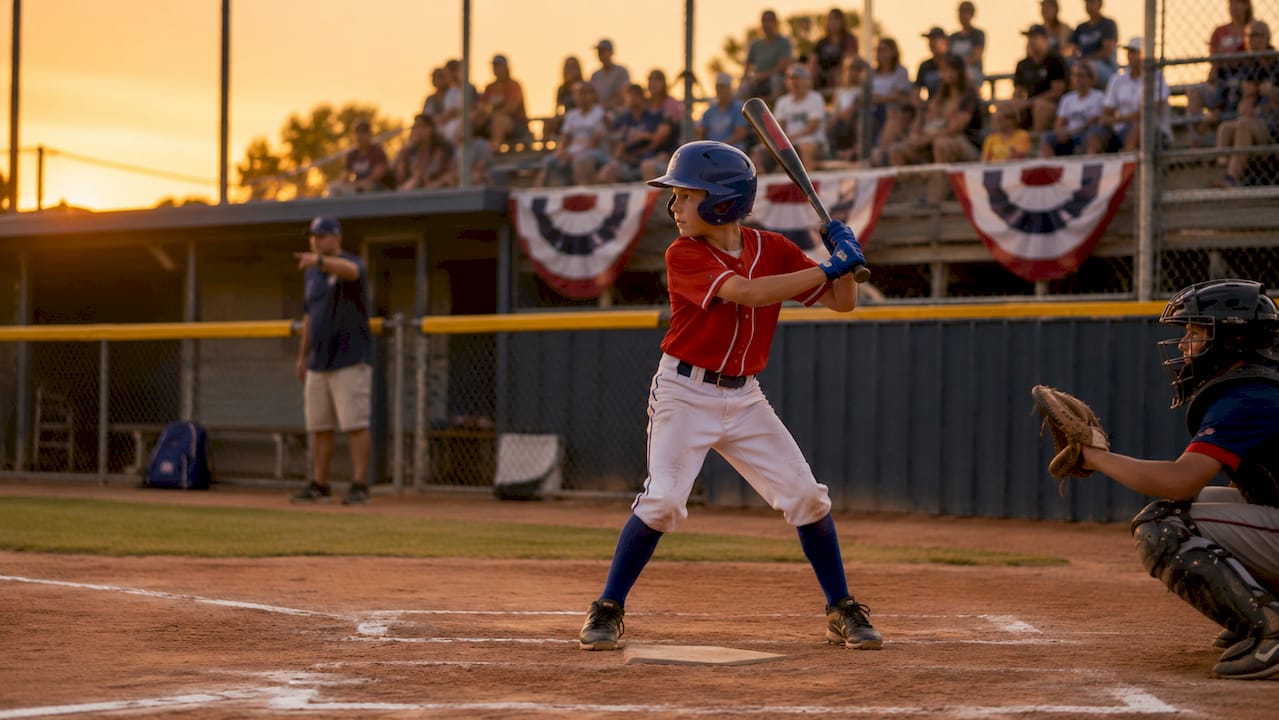
The vocabulary also builds what coaches call “baseball IQ,” the ability to read a situation and respond correctly before the ball is even hit. A player who knows the difference between a force out and a tag out will be in the right position before the play develops. That kind of anticipation comes directly from understanding the language of the game.
Core gameplay terms and player positions explained
Basic play terms every player should know
The foundation of baseball terminology for kids starts with six terms that appear in every single game: strike, ball, out, safe, inning, and run. A strike is any pitch the batter swings at and misses, hits foul, or fails to swing at when it passes through the strike zone. A ball is a pitch outside the strike zone that the batter does not swing at. Three strikes end a batter’s turn; four balls send the batter to first base.
An out removes a batter or runner from play, and three outs end a team’s half-inning. Safe means a runner reached a base without being put out. An inning is one full cycle of both teams batting, and a run scores when a player crosses home plate. These six terms appear in nearly every coaching instruction, so players who know them well follow directions without hesitation.
Two more terms that confuse beginners are the force out and tag out. A force out happens when a fielder touches the base with the ball before the runner arrives, and the runner had no choice but to advance. A tag out happens when a fielder touches the runner with the ball while the runner is off a base. Coaches drill this distinction constantly because getting it wrong costs runs.
Player positions and their roles
Nine players take the field on defense, each with a specific name and number used in scorekeeping. The table below covers every position and its primary responsibility.
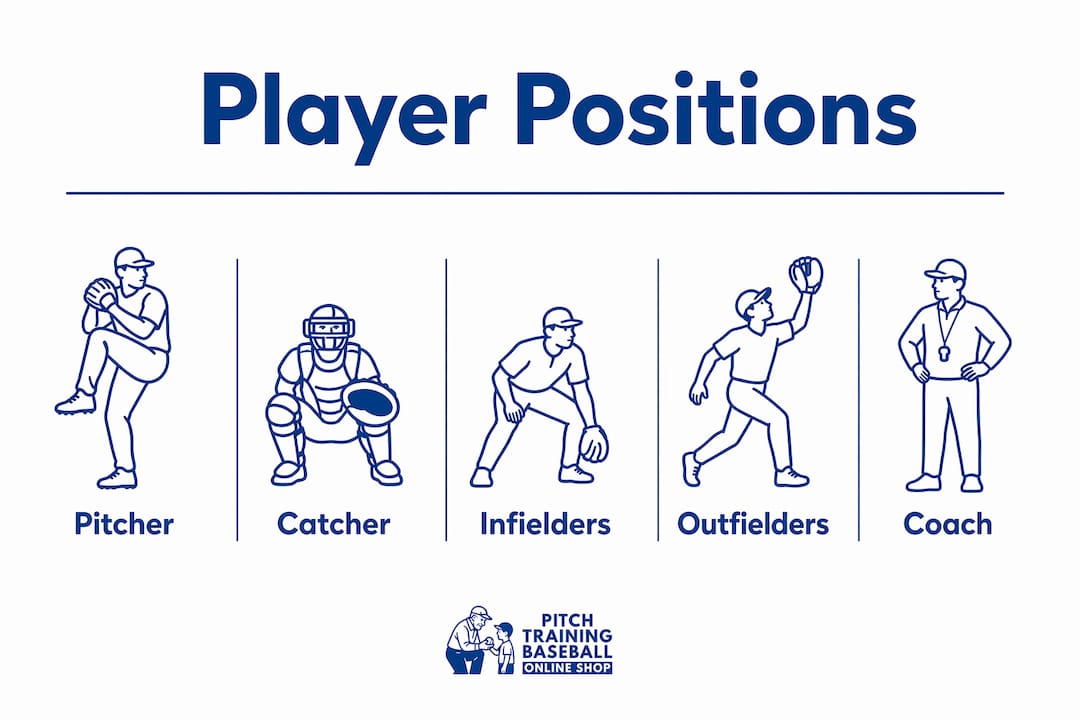
| Position | Number | Primary role |
|---|---|---|
| Pitcher | 1 | Throws pitches to the batter from the mound |
| Catcher | 2 | Receives pitches, manages the defense behind home plate |
| First baseman | 3 | Guards first base, handles throws from infielders |
| Second baseman | 4 | Covers second base and the right side of the infield |
| Third baseman | 5 | Guards third base, handles hard-hit balls down the line |
| Shortstop | 6 | Covers the area between second and third base |
| Left fielder | 7 | Covers the left portion of the outfield |
| Center fielder | 8 | Covers the middle of the outfield, often the fastest outfielder |
| Right fielder | 9 | Covers the right portion of the outfield |
Understanding pitching mechanics and roles at the youth level goes hand in hand with knowing these position names. When a coach calls for a “1-6-3 double play,” players who know position numbers react immediately. Those who do not are still processing the instruction when the ball is already in play.
What do common youth baseball statistics mean?
Statistics give coaches and parents a way to measure performance, but not every stat applies equally at every age level. The three most common youth baseball stats are Batting Average (AVG), Runs Batted In (RBI), and Earned Run Average (ERA).
- Batting Average (AVG): The number of hits divided by the number of at-bats. A player with 10 hits in 25 at-bats has a .400 AVG. Higher is better, and .300 is generally considered strong at the youth level.
- Runs Batted In (RBI): The number of runs a batter directly causes by getting a hit, walk, or sacrifice. RBIs measure a player’s ability to produce in key moments.
- Earned Run Average (ERA): ERA measures runs a pitcher allows per nine innings, excluding runs that scored because of fielding errors. A lower ERA means the pitcher is performing better.
- Error: A fielding mistake that allows a batter or runner to advance when a competent play would have recorded an out. Errors affect ERA calculations and team defense ratings.
- On-Base Percentage (OBP): How often a batter reaches base by any means, including hits, walks, and hit-by-pitch. OBP is a broader measure of a batter’s value than AVG alone.
Younger players benefit more from focusing on effort and situational awareness than from tracking detailed statistics. Stats like ERA and AVG are better introduced gradually as players reach older youth levels and can contextualize what the numbers mean. Throwing stats at an eight-year-old before they understand the flow of the game creates confusion, not motivation.
Pro Tip: Introduce one stat per season for younger players. Start with AVG in the first year, add RBI in the second, and introduce ERA when the player begins pitching regularly. This pacing keeps stats meaningful without turning practice into a math class.
What slang and jargon do coaches and parents use?
Baseball slang is part of what makes the sport feel like its own world. Common youth baseball slang includes terms that have been passed down through generations of players and coaches, and learning them makes communication faster and more fun.
- Can of Corn: An easy, routine fly ball that an outfielder catches without much effort. The term dates back to old general stores where clerks used a stick to knock canned goods off high shelves into their aprons.
- Hot Corner: Third base. The name comes from the fast, hard-hit balls that third basemen face, making it one of the most demanding positions in the infield.
- Southpaw: A left-handed pitcher. The term is believed to originate from old ballpark orientations where a left-handed pitcher’s throwing arm faced south.
- Cheddar (or Heat): A high-velocity fastball. When a coach says a pitcher has “cheddar,” they mean the pitch is fast enough to be difficult to hit.
- Ducks on the Pond: Runners on base. When a coach says “we’ve got ducks on the pond,” they mean scoring opportunities are in place.
- Chin Music: A pitch thrown high and inside, near the batter’s chin, intended to move them off the plate.
- Rubber Arm: A pitcher who can throw a high volume of pitches without tiring. Youth coaches use this term carefully given pitch count rules.
Slang builds team culture. When players share a common vocabulary of informal phrases, it creates a sense of belonging and reduces anxiety during high-pressure moments. A coach who calls out “can of corn, you’ve got it!” gives the outfielder both an instruction and a confidence boost in the same breath. Parents who know these phrases can also follow the action more closely and cheer with more accuracy.
How do you learn and use baseball terms effectively?
Introducing baseball terminology gradually prevents young players from feeling overwhelmed and builds confidence over time. The most effective approach combines structured learning with real-game observation.
- Start with position names and basic play terms. Before the first practice, teach the nine positions and the six core play terms. These appear in every drill and every game, so early mastery pays off immediately.
- Use situational questions during practice. After a play, ask the player what just happened in their own words. If they say “he was out,” follow up with “was that a force out or a tag out?” This method builds baseball IQ through repetition without feeling like a test.
- Create flashcards for stats and slang. Write the term on one side and the definition on the other. Run through five cards before each practice. Players who can define ERA and RBI before they track their own stats understand the numbers when they see them.
- Observe practices before using new terms. Teams often develop informal jargon for specific drills or plays that does not appear in any rulebook. New coaches and parents learn these team-specific phrases fastest by watching and listening before trying to use them.
- Reinforce terms during casual conversation. Talking about a game on the drive home is one of the most effective learning moments. Ask your player what the pitcher’s ERA looked like or whether the shortstop made a force out or a tag out. Casual repetition locks in vocabulary faster than formal study.
Pro Tip: Integrate terminology into fun drills. Set up a situation on the field, call out a term, and have players act it out. “Force out at second” becomes a physical memory, not just a definition. Physical learning sticks longer than reading alone.
Coaching methods that reinforce terminology through game-like scenarios produce players who react faster and communicate better. The goal is not memorization. The goal is fluency, where the right word triggers the right action without a pause to think.
Key Takeaways
Youth baseball terminology is the foundation of clear communication on the field, and players who learn it gradually outperform those who are overwhelmed with information all at once.
| Point | Details |
|---|---|
| Start with core play terms | Strike, ball, out, safe, inning, and run appear in every game and every drill. |
| Know your positions by number | Position numbers like 1-6-3 speed up defensive communication during live plays. |
| Introduce stats by age | Start with AVG, then add RBI and ERA as players grow into pitching roles. |
| Slang builds team culture | Terms like “can of corn” and “hot corner” reduce anxiety and speed up communication. |
| Learn by observing first | Team-specific jargon develops in practice; watching before speaking is the fastest way to learn it. |
Why terminology is the most underrated part of coaching youth baseball
Coaches spend hours on mechanics and conditioning, but the players who improve fastest are almost always the ones who understand what is being asked of them. I have watched kids with average physical tools outperform more athletic teammates simply because they knew the language of the game. When a coach calls a play, a player who knows the terms is already moving. A player who does not is still processing.
The tag out versus force out distinction is the clearest example I keep coming back to. This difference trips up beginners more than almost any other concept. I have seen middle infielders hold the ball at second base waiting for a runner who was not forced, giving the batter time to reach first safely. That is not a physical error. That is a vocabulary error. One clear explanation, repeated in a few drills, fixes it permanently.
For coaches who are new to baseball, studying terminology is not optional. Volunteer coaches who prioritize learning the terms give clearer instructions, run tighter practices, and earn more trust from players and parents. A coach who uses terms confidently signals competence, even to a nine-year-old. Kids notice when adults know what they are talking about.
The deeper benefit of terminology is what it does to a player’s confidence. When a young player can name what just happened on the field, they feel like they belong in the game. That sense of belonging keeps kids in the sport longer than any trophy or highlight play. Teach the words. The skills follow.
— Albert
Build real skills with Pitchtrainingbaseball
Understanding baseball terms is the first step. Putting them into practice is where real development happens.
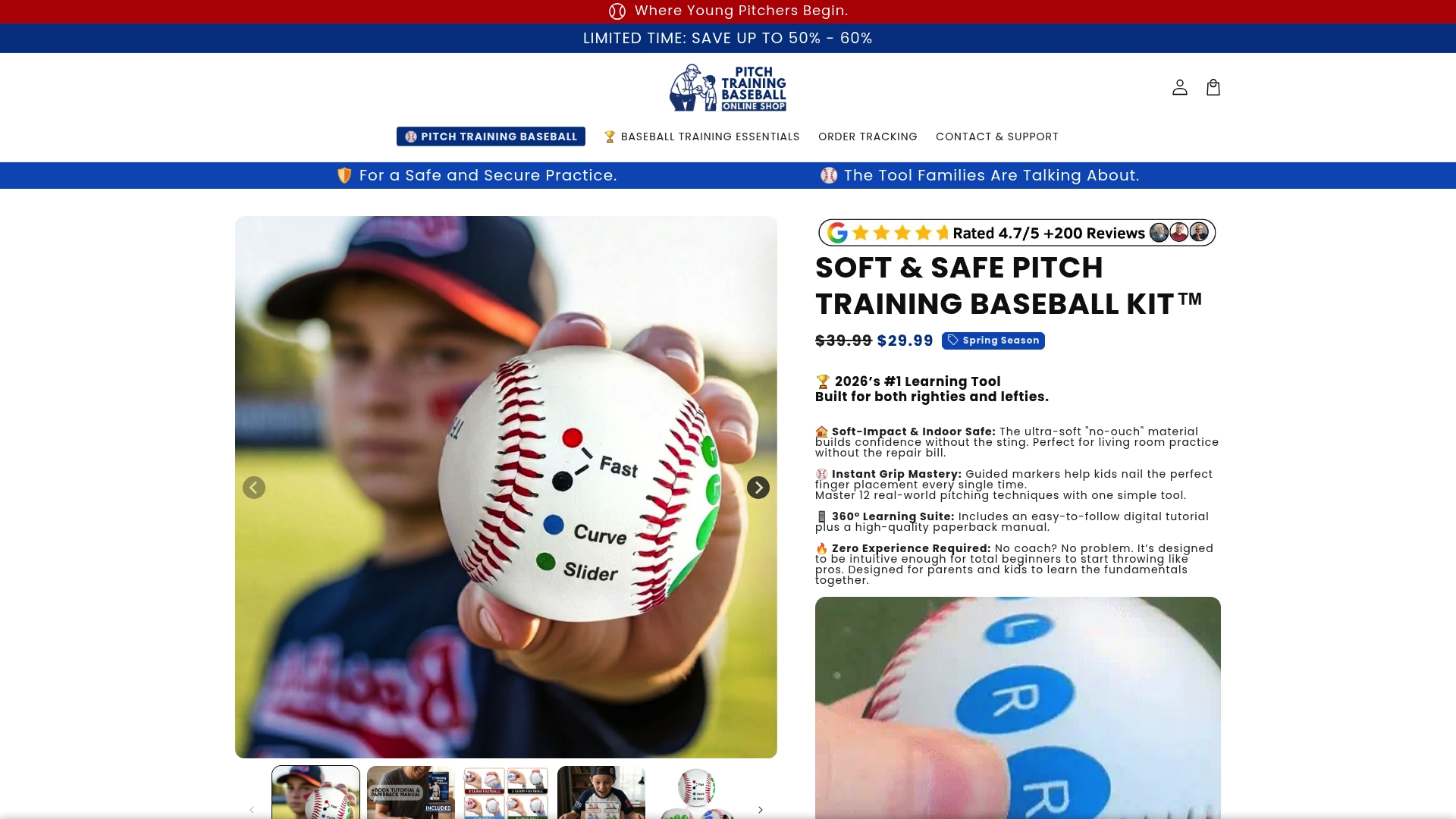
Pitchtrainingbaseball offers training tools designed to turn terminology into muscle memory. The Pitch Training Baseball product helps young pitchers work on mechanics and control through consistent, focused repetition. The Pitching Target Net with Strike 9-Zone gives players a visual reference for the strike zone, making terms like “ball” and “strike” concrete and immediate. Both tools are portable, adjustable, and built for the kind of regular practice that turns baseball knowledge into baseball skill.
FAQ
What is youth baseball terminology?
Youth baseball terminology is the specialized vocabulary used to describe gameplay, player positions, statistics, and in-game actions at the youth level. It gives players, coaches, and parents a shared language to communicate clearly during practices and games.
How many innings are in a youth baseball game?
Most youth baseball games consist of 6 innings, compared to the 9-inning standard in professional baseball. This shorter format affects how coaches use terms related to late-game strategy.
What is the difference between a force out and a tag out?
A force out happens when a fielder touches the base before the runner arrives and the runner had no choice but to advance. A tag out requires the fielder to physically touch the runner with the ball while the runner is off a base.
When should kids start learning baseball statistics?
Younger players should focus on effort and game flow before tracking stats. ERA and Batting Average are better introduced at older youth levels when players can understand what the numbers actually measure.
What does “southpaw” mean in baseball?
Southpaw is a slang term for a left-handed pitcher. It is one of the most widely recognized pieces of baseball lingo used by coaches, broadcasters, and players at every level of the game.
Recommended
- How to throw a baseball: proven youth coaching tips – Pitch Training Baseball
- Defining Youth Pitching Mechanics: A Coach’s Guide – Pitch Training Baseball
- Baseball Coaching Methods: Examples for Youth Coaches – Pitch Training Baseball
- What Is Pitch Selection? A Youth Baseball Guide – Pitch Training Baseball