


Educational baseball content is defined as any structured learning resource, from scenario-based apps to formal seminars, that teaches players physical skills, strategic decision-making, and mental readiness simultaneously. The role of educational baseball content goes far beyond handing a kid a bat and telling them to swing harder. Programs like USA Baseball’s National Team Development Program (NTDP) and tools like the Thinking Baseball app prove that the most effective player development combines on-field repetition with deliberate off-field learning. Baylor College of Medicine research confirms that youth sports are a primary vehicle for social and psychological growth, not just athletic conditioning. Parents, coaches, and young athletes who understand this distinction gain a measurable edge in long-term development.
How does educational baseball content improve physical skills and game IQ?
Structured baseball education improves physical performance by training the brain to make faster, more accurate decisions before the body ever moves. Most youth programs focus almost entirely on mechanics, which is necessary but insufficient. The gap between a player who can throw correctly in a drill and one who throws correctly in a game is almost always a decision-making gap, not a mechanics gap.
The Thinking Baseball app addresses this directly with over 8,000 defensive scenarios that players work through independently. Each scenario asks a player to choose the correct response to a specific game situation, with custom filtering by position, skill level, and game context. This kind of repetition builds what coaches call “baseball IQ,” the ability to read a play and react correctly without hesitation.
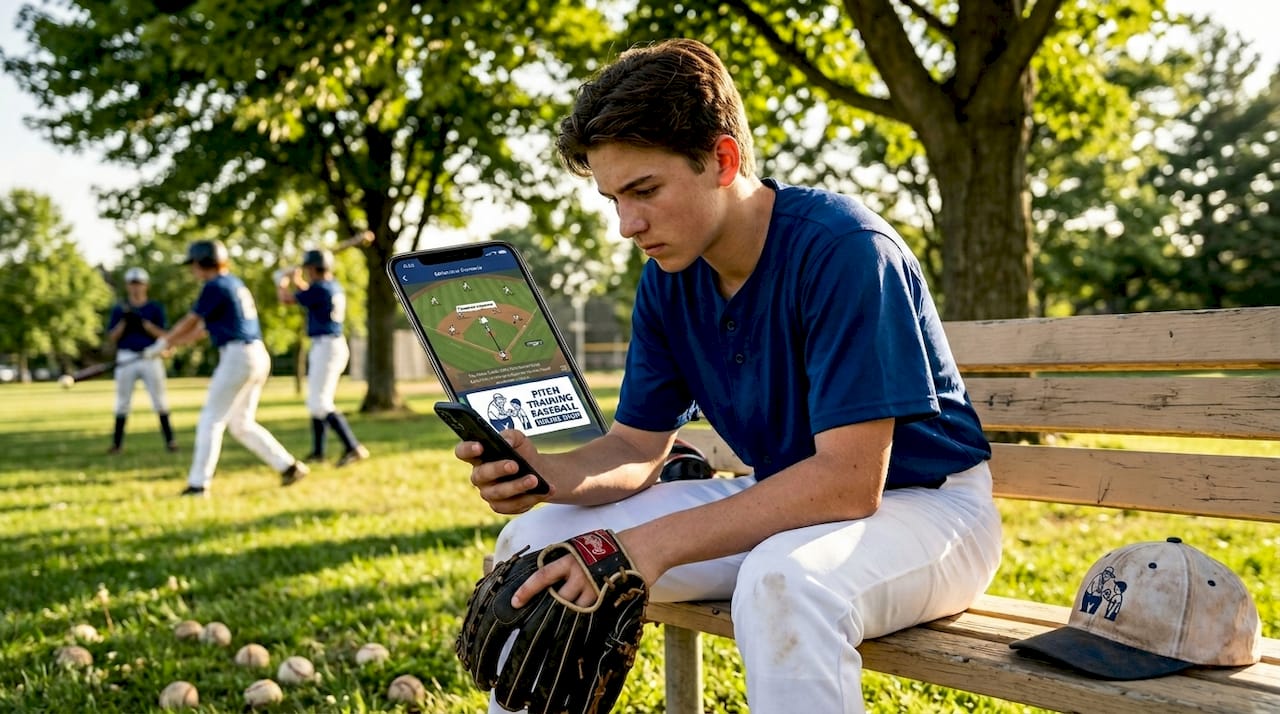
USA Baseball’s NTDP program for 2026 structures its 88-player roster across four teams, combining competitive scrimmages with formal educational seminars and scout exposure. That combination is deliberate. The program treats off-field learning as a performance variable, not a bonus activity. Players who attend seminars on positioning, situational awareness, and role responsibilities perform better in scrimmages because they already know what decision to make before the pitch is thrown.
Pro Tip: Have your young player spend 10 minutes on a scenario-based app like Thinking Baseball before each practice session. The mental priming transfers directly to faster on-field reactions during drills.
The benefits of baseball instruction that combines cognitive and physical training include:
- Faster reaction times in game situations because players have already mentally rehearsed the correct response
- Fewer mental errors on defense, since role-based responsibilities are understood before pressure situations arise
- Better communication between players, because shared educational language creates shared expectations on the field
- Stronger retention of mechanics coaching, since players understand why a technique works, not just how to execute it
Teaching baseball fundamentals through this dual approach produces players who are genuinely prepared for game speed, not just practice speed.
What are the social and psychological benefits of baseball education for youth?
Baseball education does more than sharpen skills. It shapes character, builds confidence, and protects mental health in ways that isolated athletic training cannot replicate. The research on this point is consistent and specific.
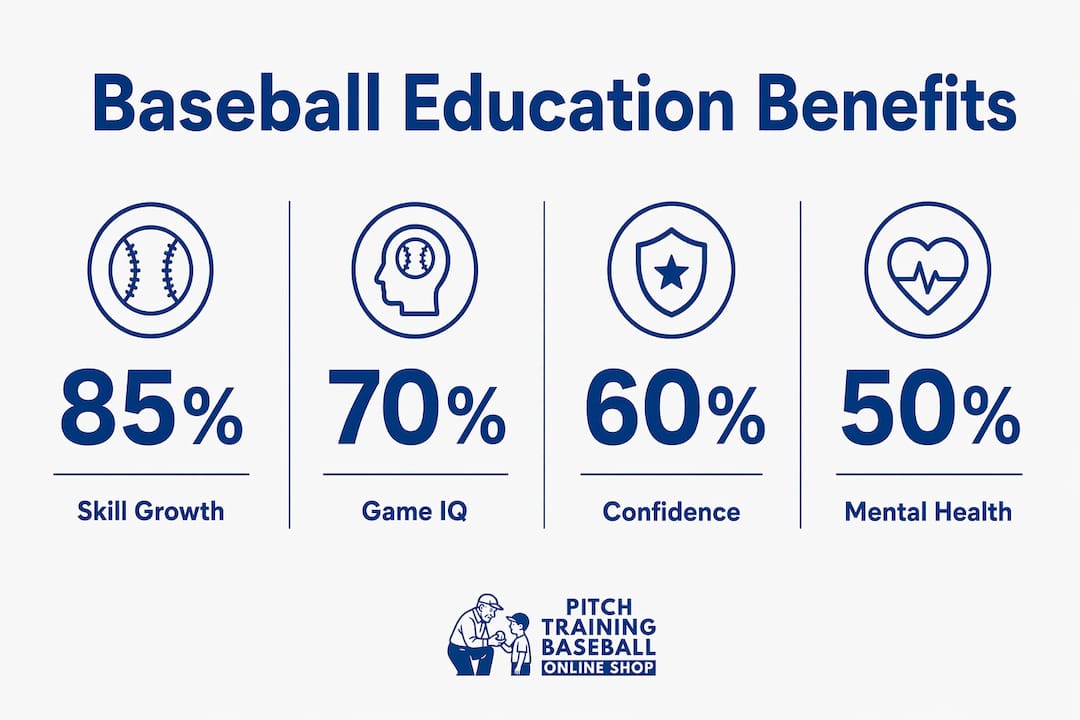
Baylor College of Medicine researchers identify youth sports as a critical environment for children to learn social rules, understand team roles, and develop the kind of cooperative behavior that carries into adult life. Baseball, with its highly defined positional responsibilities and team-dependent outcomes, is particularly well-suited to this kind of social learning. A shortstop who understands their role through educational content does not just play better. They communicate better, trust teammates more, and handle adversity with greater composure.
A peer-reviewed review from Western Sydney University found that organized team sports consistently improve psychological health outcomes in children and adolescents, including higher self-esteem and reduced anxiety. The mechanism is not simply physical activity. It is the sense of belonging and social support that team environments create. Educational baseball content accelerates this effect by giving players a shared vocabulary and shared goals, which are the two foundations of genuine team cohesion.
The psychological benefits that flow directly from quality baseball education include:
- Increased self-confidence as players gain competence through structured learning rather than trial and error
- Reduced performance anxiety because players who understand game situations feel prepared rather than reactive
- Stronger peer relationships built on shared learning experiences and mutual accountability
- Greater resilience developed through understanding that mistakes are teachable moments, not failures
The impact of baseball education on mental health is not a soft benefit. It is a measurable outcome supported by university-level research. Coaches and parents who treat educational content as a mental health tool, not just a skill tool, see the difference in how their players carry themselves under pressure.
What types of educational baseball content and coaching techniques work best?
The field of baseball education has expanded well beyond printed playbooks and whiteboard sessions. Today’s coaches and parents have access to a range of formats, each with distinct strengths depending on the player’s age, learning style, and development stage.
| Content Type | Best Use Case | Key Strength |
|---|---|---|
| Scenario-based apps (e.g., Thinking Baseball) | Individual study between practices | Builds decision-making through repetition |
| Video tutorials | Visual learners and mechanics review | Allows slow-motion analysis of technique |
| Educational seminars (e.g., USA Baseball NTDP) | Elite development programs | Combines expert instruction with scout exposure |
| Interactive curricula (e.g., Baseball Hall of Fame programs) | School-age and community leagues | Connects history, values, and fundamentals |
| Role-centric coaching sessions | Team practices | Clarifies positional responsibilities under game conditions |
The Baseball Hall of Fame’s educational programs, for example, connect the history of the game to its fundamentals, giving young players context that makes the sport feel meaningful rather than mechanical. That sense of meaning drives intrinsic motivation, which is the single strongest predictor of long-term athletic development.
Baseball coaching techniques that produce the best learning transfer share one characteristic: they target teachable decisions rather than isolated mechanics. Ron Washington, currently working with the San Francisco Giants, emphasizes coaching that aligns with how players perceive and correct their own errors, rather than simply increasing drill volume. This approach recognizes that a player who understands why an error happened will fix it faster than a player who simply repeats the correct motion without understanding the cause.
Pro Tip: When correcting a player during a drill, ask “What did you see?” before explaining what they did wrong. This question activates the player’s own perception and makes the correction stick far longer than a direct instruction alone.
Timing matters as much as content. Instruction delivered immediately after an error, while the player’s attention is fully engaged, produces significantly better retention than feedback given at the end of a session. This is why educational feedback integrated into reps outperforms end-of-practice reviews for skill acquisition in youth athletes.
How to integrate educational baseball content into training routines
Combining educational content with physical practice is not complicated, but it does require intentional structure. The most common mistake coaches and parents make is treating education as something that happens separately from training, when the most effective programs weave them together continuously.
Here is a practical framework for integrating educational baseball resources into any training routine:
-
Start each session with a mental warm-up. Before any physical activity, spend five minutes reviewing one scenario or concept. This could be a Thinking Baseball question, a video clip of a defensive play, or a brief discussion of a game situation. Mental priming before physical reps accelerates skill transfer.
-
Assign role-specific educational tasks between sessions. A catcher should study pitch-calling sequences. An outfielder should review cutoff responsibilities. Position-specific learning makes educational content immediately relevant and easier to retain.
-
Use scrimmages as structured learning environments. USA Baseball’s NTDP model treats scrimmages as evaluation and education events simultaneously. Coaches observe decisions, not just outcomes, and debrief players on the reasoning behind each choice.
-
Set learning goals alongside performance goals. Instead of only tracking strikeouts or batting average, track decision accuracy. Did the player execute the correct defensive assignment? Did the pitcher attack the right zone in a two-strike count? Learning goals make educational content measurable.
-
Debrief after every practice with one teachable moment. End each session by identifying one decision that was made correctly and one that can improve. This habit builds a culture where learning is continuous and expected, not occasional.
The University of Kansas baseball program under its current coaching staff demonstrates this philosophy at the collegiate level. The Kansas Jayhawks’ approach prioritizes player maturity and in-game decision-making over raw physical tools, trusting players who demonstrate preparation and baseball intelligence in high-pressure situations. That philosophy starts with educational content at the youth level. Players who learn to think through game situations at age 12 arrive at the collegiate level already equipped with the decision-making framework that most programs spend years trying to install.
Avoiding the overemphasis on mechanics is the single most important adjustment most youth programs need to make. Game-like pitching practice that incorporates situational context produces better pitchers than isolated mechanical repetition, because it trains the whole skill, not just the motion.
Key takeaways
Educational baseball content works because it trains decision-making, social development, and physical skills together, producing players who perform under pressure rather than only in practice.
| Point | Details |
|---|---|
| Decision training over drill volume | Scenario-based tools like Thinking Baseball build game IQ faster than mechanics repetition alone. |
| Mental health is a measurable outcome | Western Sydney University research links team sports education to higher self-esteem and lower anxiety in youth. |
| Integrate, do not separate | USA Baseball’s NTDP model proves that seminars and scrimmages work best when treated as one connected system. |
| Timing of instruction matters | Coaching aligned with player perception, as Ron Washington demonstrates, produces faster and more lasting corrections. |
| Role-specific learning accelerates development | Position-based educational content gives players immediate context, making retention and transfer far more likely. |
Why I think most youth baseball programs are leaving half the development on the table
I have watched hundreds of youth practices over the years, and the pattern is almost universal. Coaches spend 80% of session time on physical repetition and maybe 10 minutes, if that, on anything resembling structured learning. The assumption is that enough reps will eventually produce good decisions. They will not.
The players who develop fastest are not the ones who take the most swings or throw the most pitches. They are the ones who understand why they are doing what they are doing. That understanding comes from educational content, whether it is a conversation with a coach, a scenario-based app, or a well-designed seminar. Physical reps without cognitive context are just fatigue.
What strikes me most about programs like USA Baseball’s NTDP is that they treat education as a performance variable with the same seriousness as conditioning or mechanics. That is the correct framing. A player who cannot make the right decision in a two-out, runner-on-third situation is not undertrained physically. They are underprepared mentally. Educational content is the solution to that specific problem.
Parents have more influence here than they often realize. Encouraging a young player to study game situations at home, watch film with intention, or work through a pitching zone knowledge resource between practices compounds the work done at the field. The players who arrive at practice already thinking about the game learn faster, retain more, and enjoy the sport longer. That last point matters more than any statistic. Enjoyment drives participation, and participation drives development.
The future of youth baseball development runs through education. Programs that recognize this now will produce better players and better people. The ones that do not will keep wondering why their talented kids plateau at 14.
— Albert
Train smarter with Pitchtrainingbaseball
Educational content teaches players what to do. The right training tools give them the repetitions to make it automatic.
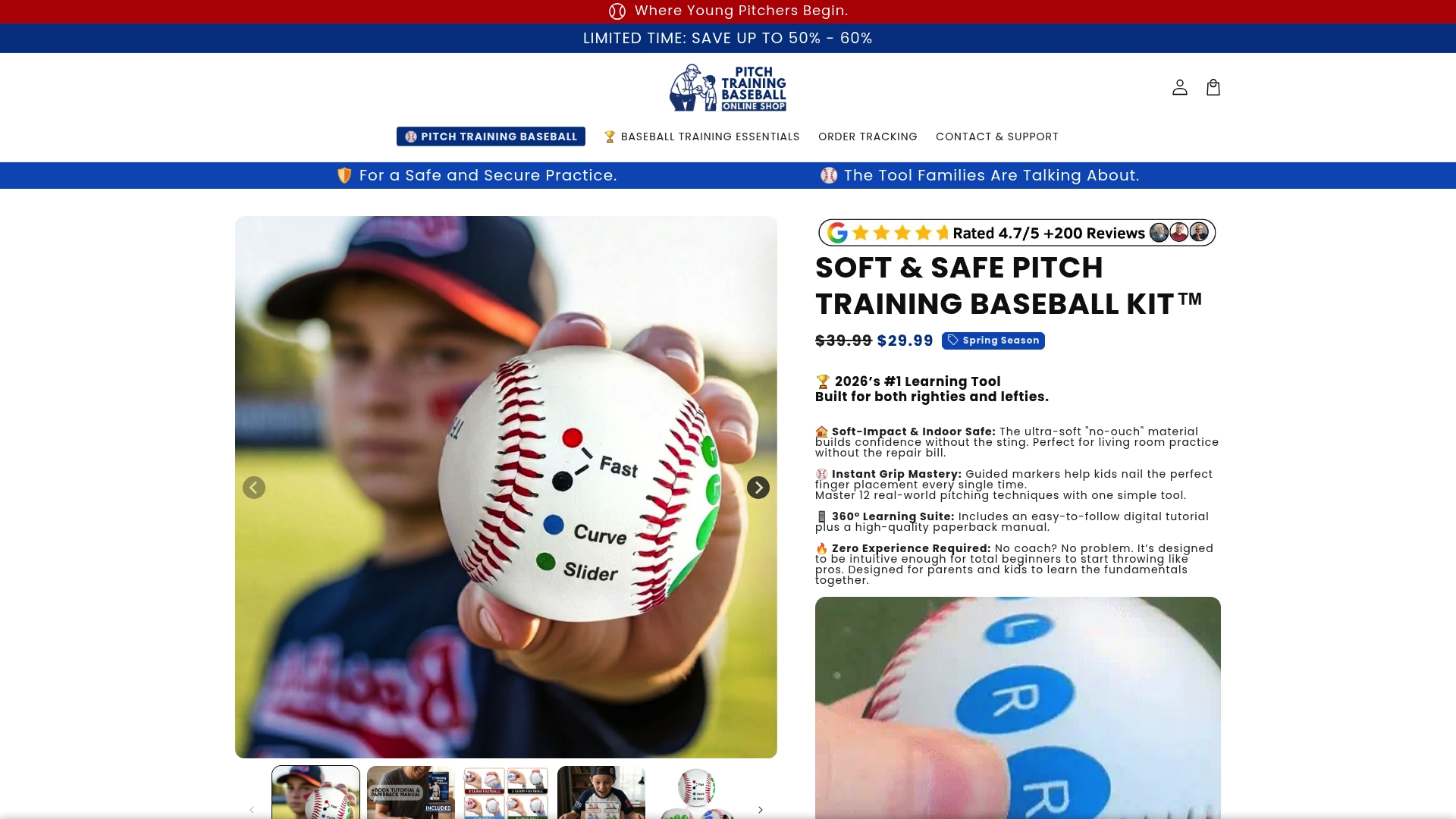
Pitchtrainingbaseball designs equipment specifically for youth players who are ready to practice with purpose. The Pitch Training Baseball develops arm strength, accuracy, and control through consistent, focused reps that reinforce what players learn in educational sessions. For players working on strike zone command, the pitching target net with a 9-zone strike layout turns abstract zone knowledge into measurable practice. Every tool Pitchtrainingbaseball offers is built to make educational learning visible and repeatable on the field.
FAQ
What is educational baseball content?
Educational baseball content refers to structured learning resources, including apps, seminars, video tutorials, and scenario-based curricula, that teach players decision-making, game strategy, and mental readiness alongside physical skills. Programs like USA Baseball’s NTDP and tools like the Thinking Baseball app are leading examples.
How does baseball education help players beyond physical skills?
Baseball education builds game IQ, reduces performance anxiety, and strengthens team communication. Research from Western Sydney University shows that organized team sports education consistently improves self-esteem and reduces anxiety in youth athletes through belonging and shared learning.
What age should players start using educational baseball resources?
Players as young as 8 or 9 can benefit from age-appropriate scenario discussions and role-based learning. The earlier a player develops decision-making habits, the more those habits compound into genuine game intelligence by the time they reach competitive levels.
How can coaches integrate educational content without losing practice time?
The most effective approach is to embed education within physical reps rather than separating them. A five-minute mental warm-up, role-specific assignments between sessions, and a one-minute debrief after each practice add educational depth without reducing time on the field.
Are scenario-based apps like Thinking Baseball effective for youth players?
Yes. The Thinking Baseball app offers over 8,000 defensive scenarios with custom filtering by position and skill level, making it accessible for youth players and genuinely challenging for advanced ones. Regular use builds the kind of automatic decision-making that drills alone cannot produce.
Recommended
- The Role of Feedback in Baseball Training for Coaches – Pitch Training Baseball
- The Role of Parents in Baseball Training: A 2026 Guide – Pitch Training Baseball
- Game-like pitching practice: Raise youth baseball skills fast – Pitch Training Baseball
- Educational eBook:“12 Pitching Grips Tutorial” (Value: $20) – Pitch Training Baseball