


Youth baseball pitching myths are widespread misconceptions that actively harm player development and raise injury risk when coaches and parents accept them without question. The American Sports Medicine Institute and MLB’s Pitch Smart program have spent years publishing research that directly contradicts what many dugouts still treat as gospel. This article breaks down the most damaging myths, explains the real science behind each one, and gives you practical guidance grounded in evidence rather than tradition.
1. the biggest youth baseball pitching myths at a glance
Before diving into each myth individually, recognize one overarching truth: most pitching misconceptions in youth baseball share a common root. They prioritize short-term performance over long-term arm health. Coaches want wins. Parents want velocity. Young players want to impress. That combination creates fertile ground for bad advice to spread fast and stick hard.
The five myths covered below are the ones Pitchtrainingbaseball sees repeated most often across youth leagues, travel ball programs, and backyard practices. Each one has a real cost.
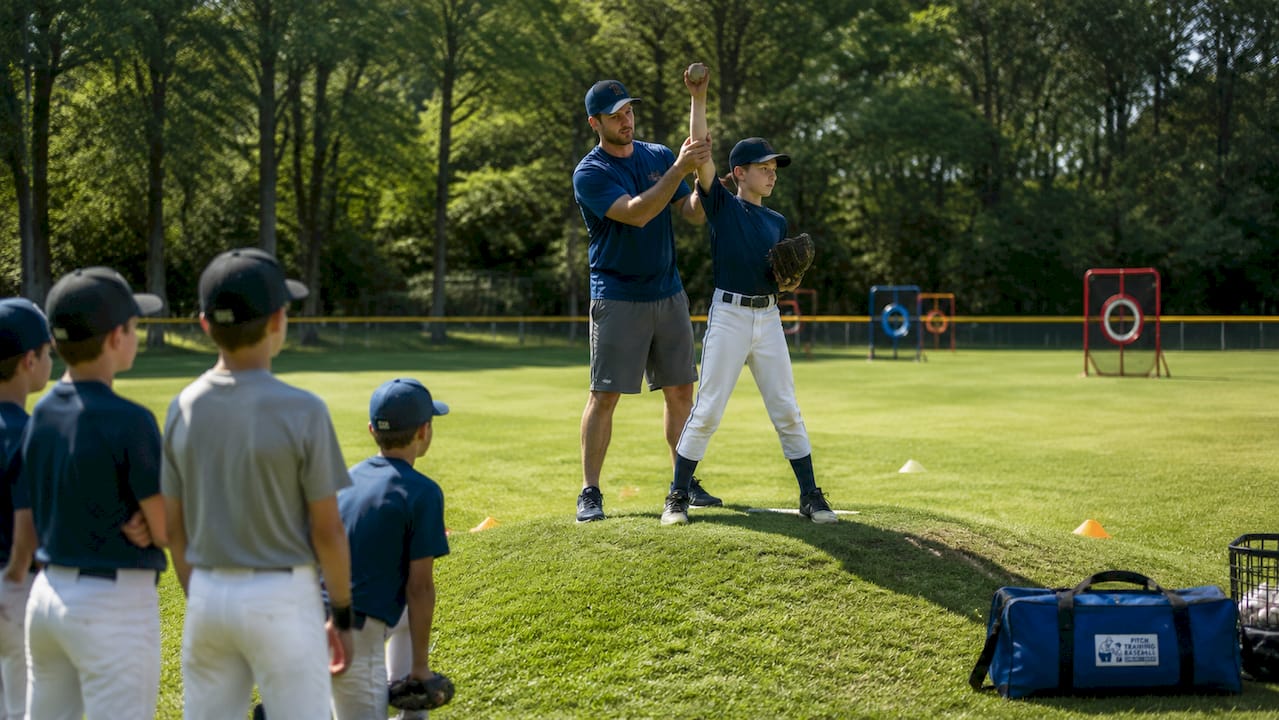
2. myth 1: pitch counts alone protect young arms
Pitch count rules are necessary but not sufficient. Pitch counts alone do not capture the total throwing volume that contributes to arm fatigue and injury. A pitcher who throws 50 game pitches, then runs a 30-pitch bullpen session the same afternoon, then plays catch the next morning has accumulated far more stress than the scorebook shows.
The real danger is workload stacking. Workload stacking combines game pitches, bullpen sessions, practice throws, showcase appearances, and recreational throwing into a total load that no single pitch count rule tracks. A 10-year-old who pitches in a Saturday tournament, attends a Sunday lesson, and throws batting practice on Monday is stacking workload in a way that bypasses every Little League pitch count guideline on the books.
The injury stakes are serious. Research from the American Sports Medicine Institute shows youth pitchers who throw while fatigued are 36 times more likely to suffer serious arm injury. That number should stop every coach and parent cold. Fatigue is not just soreness. It changes mechanics, reduces muscle protection around joints, and turns routine throws into injury events.
Pitching injuries often develop gradually due to overuse and improper management, not single dramatic events. That gradual nature makes them easy to miss until the damage is significant.
Pro Tip: Track all throwing, not just game pitches. Keep a simple weekly log that includes bullpen work, lessons, and any recreational throwing. If the total exceeds your player’s age-appropriate threshold, rest comes first.
A proper post-pitching cool-down routine is also often neglected in youth baseball, which leaves the arm tight and inflamed after high-effort outings. A structured recovery protocol that includes cool-down exercises and mobility work significantly reduces arm injury risk. Build it into every practice, not just game days.
3. myth 2: breaking balls are safe if taught early
The curveball debate is one of the most persistent common baseball myths in youth coaching circles. Many coaches believe that teaching a curveball at age 8 or 9 gives young pitchers a competitive edge. The research says otherwise.
Industry guidelines advise delaying breaking balls until after age 10–12 due to injury risk. The reason is skeletal maturity. Young pitchers have open growth plates in their elbows and shoulders. The torque generated by a curveball or slider places stress directly on those growth plates in ways that a fastball does not. The arm is simply not built to handle that load before the bones have matured.
Here is what the evidence supports for pitch sequencing by age:
- Ages 8–10: Focus exclusively on the fastball and change-up. Build arm strength and command.
- Ages 10–12: Introduce the change-up as the primary off-speed pitch. Avoid wrist-snap breaking balls.
- Ages 12–14: A curveball may be introduced only when the player has consistent fastball command and a coach trained in proper mechanics is present.
- Ages 14 and up: Sliders and other breaking pitches can be considered, with continued emphasis on arm health monitoring.
Fastball mastery is not a consolation prize. A pitcher who can locate a four-seam fastball to all four quadrants of the strike zone is more effective and more durable than one who throws a shaky curveball at age 9. Throwing curveballs or sliders too early correlates directly with higher elbow and shoulder injury rates. The competitive edge parents hope to gain often disappears by age 14 when peers catch up mechanically, while the early breaking-ball pitcher is managing chronic elbow pain.
4. myth 3: “lead with your chin” is a reliable mechanical cue
The “lead with the chin” cue has been passed down through youth baseball for decades. Coaches use it to encourage extension toward the plate and forward momentum. The problem is that it oversimplifies a complex movement pattern and often produces the opposite of what coaches intend.
When young pitchers focus on driving their chin toward the target, they frequently rush their upper body ahead of their lower half. That early trunk rotation kills hip-to-shoulder separation, which is the actual mechanical driver of velocity and command. The cue addresses a symptom while creating a different problem.
“Overloading beginners with complex mechanical cues often harms rhythm, balance, and strike command. Experts recommend focusing on repeatable delivery rather than technical perfection for youth pitchers.” — TeamGenius Baseball Pitching Research
Many coaches over-complicate pitching instruction. Rhythm and balance are more important for young pitchers than any single positional cue. A 10-year-old who throws with consistent tempo, a balanced leg lift, and a relaxed arm action will outperform a peer who has memorized five mechanical checkpoints but cannot repeat the same delivery twice.
The better coaching approach is to build a repeatable pitching delivery through drills that emphasize feel and rhythm. Use the rocker drill, the balance point drill, and towel drills to develop body awareness. Save positional corrections for older players with the physical maturity to process and apply them. For little league pitching advice, less instruction is often more effective.
5. myth 4: more months pitching builds skill faster
Year-round pitching feels logical to competitive parents. More reps equal more development, right? The data says this belief is one of the most dangerous in youth sports.
Pitchers who compete more than 8 months a year are 5 times more likely to require surgery later in life. That statistic comes from 2026 research tracking long-term outcomes for youth pitchers. Five times the surgical risk is not a marginal increase. It represents a fundamental failure of the year-round model.
The arm needs unloading periods to repair micro-damage from throwing. Without those periods, small tears and inflammation accumulate into structural problems. Here is a healthy annual pitching structure for youth players:
- Competitive season (4–5 months): Full pitching with pitch count and workload tracking.
- Active recovery (1–2 months): Light throwing only. No pitching. Focus on mobility and general athleticism.
- Off-season training (3–4 months): Strength work, mechanics refinement with low intensity, and cross-sport activity.
- Pre-season ramp-up (4–6 weeks): Gradual return to pitching volume before the next competitive season.
Off-season training should not be idle time. Sport-specific training for youth athletes builds the athletic foundation that makes pitching development possible. Core strength, hip mobility, and rotational power all improve during the off-season and translate directly to better mechanics when the season starts.
Strength training for youth pitchers should focus on core, balance, and flexibility using bodyweight and light resistance. Heavy lifting risks growth plate injuries in developing athletes. Safe programs build the athletic base without compromising the skeletal structures that pitching depends on. For guidance on introducing resistance work appropriately, weight training for teenagers requires a structured, age-appropriate approach.
6. myth 5: perfect mechanics matter more than throwing strikes
Mechanical perfection is a goal that no professional pitcher has ever fully achieved. Chasing it in a 9-year-old is a misuse of practice time and a reliable way to erode a young player’s confidence.
The table below shows the real difference between chasing perfection and building functional command:
| Focus | Mechanical Perfection | Functional Repeatability |
|---|---|---|
| Primary goal | Flawless form on every pitch | Consistent delivery that produces strikes |
| Coaching style | Constant correction and adjustment | Rhythm-based drills with minimal cues |
| Velocity outcome | Often forced, increasing injury risk | Natural result of good mechanics over time |
| Player experience | Frustrating, confidence-draining | Encouraging, skill-building |
| Long-term result | Mechanical confusion, inconsistency | Durable command and arm health |
Velocity is the natural outcome of proper mechanics and should not be chased prematurely in youth pitchers. Chasing velocity leads to “muscling” the ball, which creates mechanical flaws and raises injury risk. A pitcher who throws 58 mph with consistent command is more valuable to a youth team than one who occasionally reaches 65 mph but walks four batters per inning.
The coaching philosophies that produce the best long-term results prioritize balance, consistent release point, and strike-throwing above all else. A coach’s guide to pitching mechanics will consistently emphasize that command is the skill that separates effective youth pitchers from ineffective ones. Velocity follows. It is not the starting point.
Pro Tip: Use a simple strike percentage target in practice. If your pitcher throws 60% strikes in bullpen sessions, focus on that number before touching mechanics. Command is the foundation everything else builds on.
Key takeaways
Debunking pitching myths in youth baseball requires replacing tradition with evidence, and the evidence consistently points toward workload management, age-appropriate pitch selection, and repeatable mechanics as the three pillars of safe development.
| Point | Details |
|---|---|
| Track total workload | Log all throwing, including bullpens and lessons, not just game pitch counts. |
| Delay breaking balls | Wait until age 10–12 minimum before introducing curveballs or sliders. |
| Simplify mechanical cues | Prioritize rhythm and balance over positional corrections for young pitchers. |
| Protect the off-season | Limit pitching to 8 months per year to reduce long-term surgical risk by 5x. |
| Command beats velocity | Strike-throwing consistency is the primary skill goal; velocity develops naturally. |
What 15 years of watching youth pitchers taught me
I have watched hundreds of young pitchers walk into practice carrying the weight of bad advice. Parents who read one article about curveball grips and decided their 8-year-old needed one. Coaches who ran 45-pitch bullpens the day after a tournament because “the arm needs work.” Kids who were so overloaded with mechanical cues that they stopped trusting their own bodies.
The pattern is always the same. Well-meaning adults, genuinely invested in a child’s development, accidentally become the biggest obstacle to it. The myths covered in this article are not fringe beliefs. They are mainstream. You will hear them at every travel ball tournament and rec league practice in the country.
What actually works is boring by comparison. Consistent fundamentals. Honest workload tracking. Age-appropriate pitch selection. A cool-down routine after every outing. Rest that is protected, not negotiated away for one more showcase appearance. These are not exciting coaching philosophies. They do not make for great social media content. But they produce pitchers who are still throwing at 18 without a surgical scar on their elbow.
The most important thing you can do as a parent or coach is stay curious and stay skeptical. When someone tells you a young pitcher needs to throw year-round to stay competitive, ask them for the research. When a coach insists on curveballs at age 9, ask about growth plate development. The evidence is there. Use it.
— Albert
Build better pitchers with the right tools
If you are ready to move past the myths and build real pitching skills safely, the right training equipment makes a measurable difference. Pitchtrainingbaseball offers tools designed specifically for youth development, with accuracy and arm health as the core priorities.
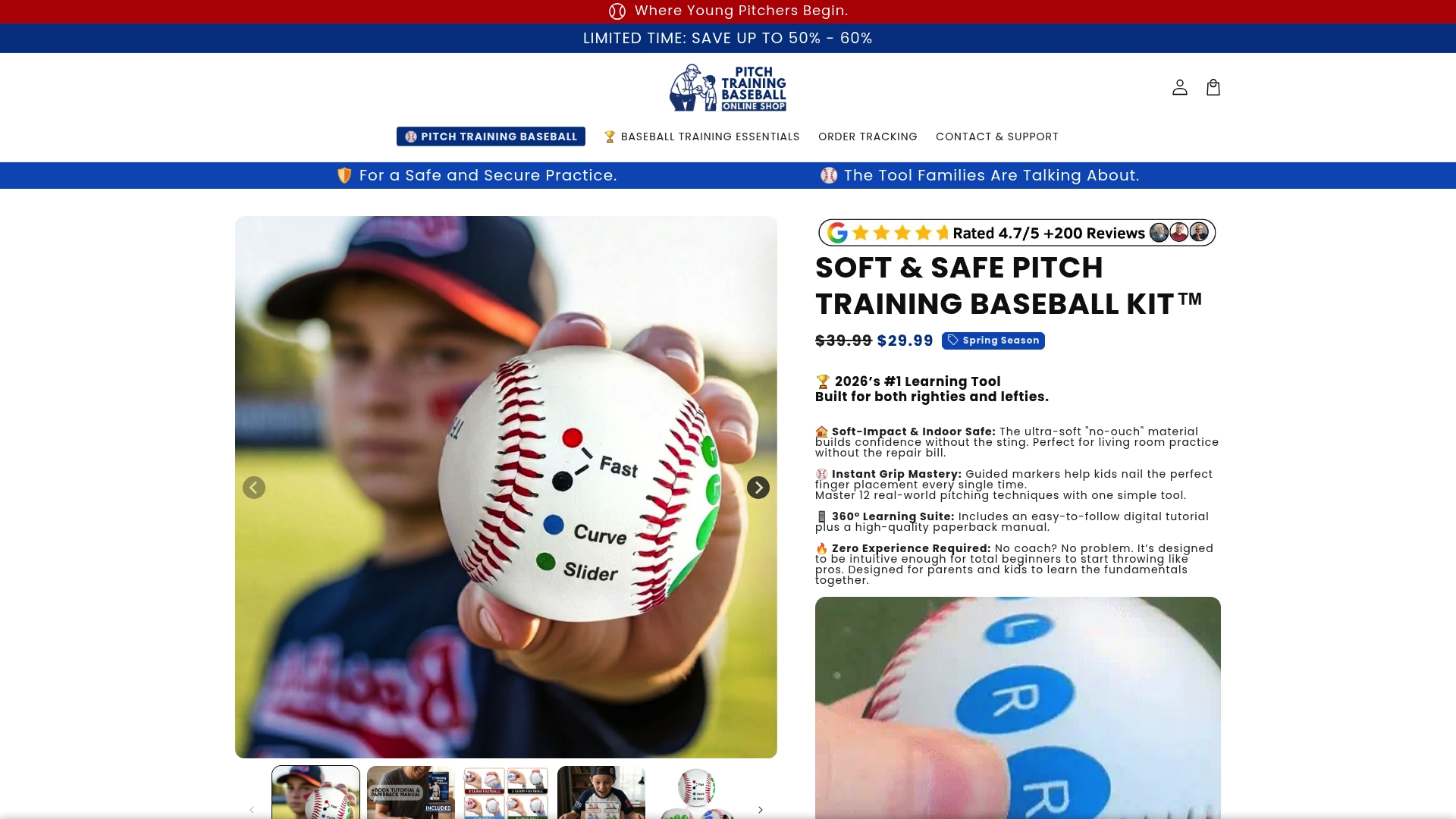
The Pitching Target Net with Strike 9-Zone gives young pitchers immediate visual feedback on location, which is the fastest way to build the command that matters more than velocity. Pair it with the pitch training baseball for a complete practice setup that works in the backyard, at the park, or in a gym. Pitchtrainingbaseball products are built for the age groups and skill levels where good habits are formed, making them a practical investment for any coach or parent serious about development done right.
FAQ
What age should a youth pitcher start throwing a curveball?
Youth pitching guidelines recommend waiting until age 10–12 at the earliest before introducing breaking balls. Skeletal maturity and consistent fastball command should both be present before adding curveballs or sliders.
Do pitch count rules prevent arm injuries in youth baseball?
Pitch counts reduce risk but do not prevent injuries on their own. Total workload, including bullpen sessions and practice throws, must also be tracked to accurately assess arm stress.
How many months per year should a youth pitcher throw?
Research shows pitchers who compete more than 8 months per year are 5 times more likely to require surgery. A structured season of 4–5 months of competitive pitching followed by active recovery is the recommended model.
Is velocity the most important skill for young pitchers to develop?
Velocity is the natural result of proper mechanics, not the primary training goal. Strike-throwing consistency and repeatable delivery produce better outcomes and lower injury risk than early velocity focus.
What is the most common mistake coaches make with youth pitching mechanics?
Overloading young pitchers with too many mechanical cues is the most common coaching error. Rhythm, balance, and a repeatable delivery are more effective foundations than positional corrections for players under age 12.
Recommended
- Recommended Daily Pitching Habits for Youth Players – Pitch Training Baseball
- Defining Youth Pitching Mechanics: A Coach’s Guide – Pitch Training Baseball
- How to throw a baseball: proven youth coaching tips – Pitch Training Baseball
- Why Proper Pitching Technique Matters for Young Players – Pitch Training Baseball