


Pitcher rotation planning is the process of organizing your pitching staff’s game assignments, rest schedules, and role assignments to protect arm health and maximize performance across a tournament or season. Every coach who has watched a tired arm blow a championship game understands why knowing how to plan pitcher rotations matters more than any single player’s talent. The good news is that this is a learnable system, not a guessing game. Start planning 1–2 weeks before your tournament and finalize assignments once the official schedule is set. That lead time gives you room to account for rest days, catcher eligibility rules, and your roster’s actual depth.
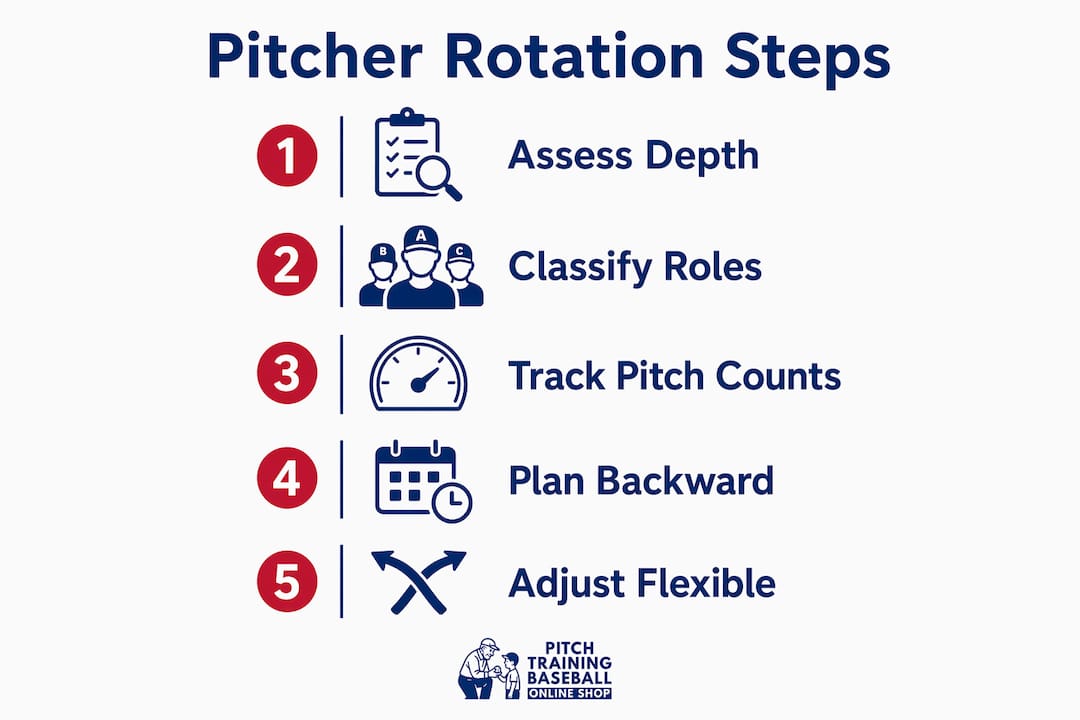
How to plan pitcher rotations: assess your depth first
The first step in pitching rotation management is knowing exactly how many arms you have and what each one can do. Coaches who skip this step end up overusing their best pitcher in game one and scrambling by game three.
Effective tournament rotations require a minimum of 4–5 viable arms for a 3-game tournament and 5–7 arms for tournaments of 5 or more games. That number is not about having backups. It is about maintaining competitive depth across every bracket stage without burning out your top pitchers.
Classify every pitcher by role
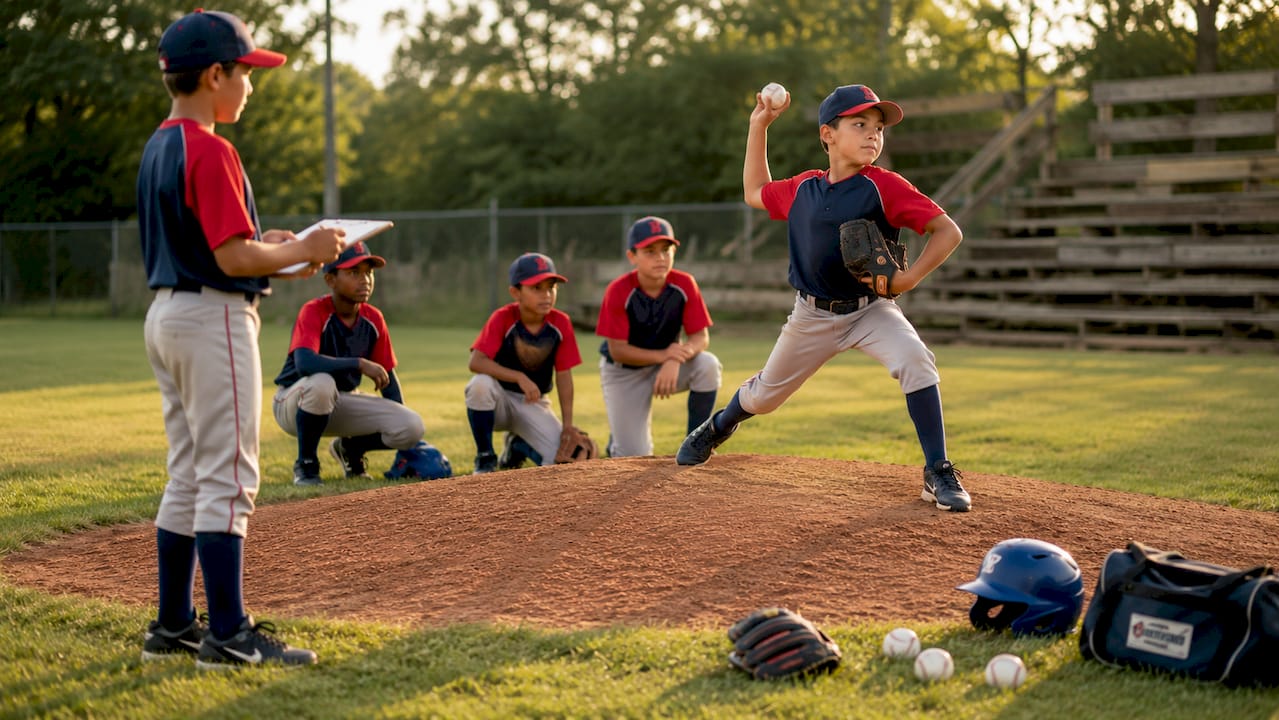
Assign each pitcher one of three roles before the tournament begins:
- Starters: Your most reliable arms. They can handle 3–5 innings and set the tone for a game.
- Relievers: Pitchers who work best in 1–2 inning stints. They bridge the gap between starters and closers.
- Emergency arms: Players who can throw in a pinch. They are not your first choice, but they keep you from forfeiting innings or overloading a tired arm.
Knowing these roles in advance prevents panic decisions during games. When your starter exits in the third inning, you reach for a reliever, not your next day’s starter.
Account for the catcher-to-pitcher rule
One rule that catches coaches off guard is the catcher-to-pitcher eligibility restriction. Catchers who catch 4 or more innings face pitching restrictions that can remove them from your rotation entirely. That rule can derail a carefully built plan if you have not accounted for it. Track every catcher’s innings behind the plate alongside their pitch counts. A player who catches a full game on saturday may be unavailable to pitch on sunday, even if their arm feels fine.
Pro Tip: Use a simple spreadsheet or a printed game-day roster card to track each pitcher’s pitch count, innings caught, and rest day status. Reviewing it before every game takes less than five minutes and prevents eligibility surprises.
Tools like GameChanger or a basic notebook work equally well. The format does not matter. Consistency does.
Why should you plan rotations backward from the championship game?
Planning rotations forward from game one is the most common mistake youth coaches make. Reverse-engineering rest requirements from the championship game ensures your best arms are available when the stakes are highest.
Here is how to apply backward planning in practice:
- Identify your championship or elimination game. Mark it on the schedule. This is the game your top pitcher must be ready for.
- Count backward using rest requirements. If your ace needs two full rest days after throwing 60 pitches, work backward to find which earlier game they can pitch without compromising that availability.
- Rank your pitchers by effectiveness. Your number one arm pitches the championship. Your number two arm pitches the semifinal or a critical pool play game. Your number three arm handles early pool play.
- Assign relievers to fill gaps. Once starters are placed, slot relievers into the innings those starters will not cover.
- Build in a buffer game. If the schedule allows, identify one pool play game where you can use emergency arms and rest your top three entirely.
“Plan pitching rotations backward from the championship game to ensure top arms are fully rested and available for key games.” — Tournament Pitching Plan
Balancing pool play and knockout stages
Pool play games matter, but they are not equal to elimination games. A coach who treats every game identically will exhaust the staff before the bracket even begins. Use pool play to evaluate your relievers and emergency arms under real game conditions. Save your starters for games where a loss ends the season. This approach also gives younger or less experienced pitchers meaningful innings without the pressure of a must-win situation.
When creating a pitcher lineup across a full tournament, think of your rotation as a pyramid. Your best arm sits at the top and pitches the fewest games. Your emergency arms form the base and absorb the innings that protect everyone above them.
What pitch count targets protect youth pitchers during tournaments?
Pitch count targets are not the same as pitch count maximums. Successful coaches set targets that leave a 10–15 pitch buffer per game for unexpected innings, defensive struggles, or extra frames. A pitcher with a 65-pitch target stops at 65 even if the game is tied. That buffer is what keeps them available for the next round.
Sample in-season throwing schedule
A starting pitcher’s in-season long toss schedule follows a 5–7 day cycle, progressing from shorter distances to longer throws before pulling back ahead of game day. For youth pitchers, a simplified version of this cycle looks like this:
| Day | Activity | Distance / Intensity |
|---|---|---|
| Game day | Pitch in game | Per pitch count target |
| Day 1 post-game | Rest | No throwing |
| Day 2 post-game | Light toss | 45–60 feet, easy effort |
| Day 3 post-game | Long toss | 90–120 feet, moderate effort |
| Day 4 pre-game | Bullpen session | 15–20 pitches, game intensity |
| Day 5 (game day) | Pitch in game | Per pitch count target |
This cycle keeps the arm loose without adding stress during recovery. Skipping the rest day on day one is the most common mistake coaches and parents make. The arm needs passive recovery before it can benefit from any throwing.
Pro Tip: Youth pitchers should do 40% of bullpen work from the stretch position. Pitching from the stretch with runners on base is a different physical demand than the full windup, and neglecting it leaves pitchers unprepared for the most stressful in-game moments.
Pitch sequencing and the 3-2-1 approach
Great pitchers think in sequences, not individual pitches. Every pitch sets up the next one by changing a hitter’s timing and expectations. For youth pitchers with basic repertoires, this means using fastball location to set up off-speed pitches, not throwing the same pitch repeatedly until it stops working.
Pitchers who throw first-pitch strikes force batting averages down significantly. Hitters in 0-1 counts hit around .180 compared to .280 when they reach favorable counts. That gap is not about velocity. It is about command and sequencing. Teaching young pitchers to attack the zone early is one of the highest-return habits a coach can build.
How do you adapt rotations when unexpected changes happen?
Tournament pitching rotation management is a dynamic process, not a fixed plan. The correct framework is: plan, play, record, recalculate, and adjust after every game. Coaches who treat their original plan as sacred end up making poor decisions when reality diverges from the schedule.
Common scenarios that force mid-tournament adjustments include:
- Shortened games: A mercy-rule win in five innings means your starter threw fewer pitches than expected. That pitcher may be available sooner than planned.
- Extra innings: A game that extends two innings beyond the plan burns through your pitch count buffer. Recalculate rest requirements immediately after the final out.
- Pitcher illness or injury: Any arm that shows fatigue, soreness, or mechanical breakdown comes out of the rotation. No game is worth a long-term injury to a young player.
- Weather delays: Extended delays between innings affect arm temperature and muscle readiness. A pitcher who sits for 45 minutes in cold weather may need to be replaced regardless of pitch count.
- Defensive struggles: A pitcher who throws 40 pitches in one inning due to errors behind them is more fatigued than their pitch count suggests. Factor in high-stress innings, not just raw numbers.
Maintaining flexible roles and emergency arms
Rotation planning should never be rigid. Mid-tournament recalculations protect against burnout when games are shortened or unexpectedly extended. The coaches who win tournaments are the ones who adjust fastest, not the ones who planned best on paper.
Keep at least one emergency arm fresh at all times. That pitcher should not throw more than a light bullpen session on any day they are not scheduled to pitch. Their job is to be ready, not to stay sharp. There is a difference. A rested arm that throws 20 pitches in an emergency is far more valuable than a tired arm that throws 60 pitches because the plan said so.
Pro Tip: After every game, update your tracking sheet before leaving the field. Pitch counts and rest day calculations are easiest to record accurately while the game is still fresh. Waiting until the next morning introduces errors that can compromise your next pitching decision.
Key Takeaways
Effective pitcher rotation planning combines backward scheduling, pitch count targets, and real-time adjustments to protect arm health and keep your best pitchers available for the games that matter most.
| Point | Details |
|---|---|
| Assess pitcher depth early | You need 4–5 arms for a 3-game tournament and 5–7 arms for 5+ games. |
| Plan backward from key games | Reverse-engineer rest requirements from the championship to protect top arms. |
| Use targets, not maximums | Set pitch count targets with a 10–15 pitch buffer to handle unexpected innings. |
| Track catcher eligibility | Catchers who catch 4+ innings face pitching restrictions that can disrupt your rotation. |
| Adjust after every game | Record pitch counts and rest status immediately after each game and recalculate your plan. |
What coaching youth rotations has taught me about flexibility
The biggest mistake I see coaches make is treating their pre-tournament rotation plan like a contract. They wrote it on monday, and by thursday they are still following it even though three games have changed everything. The plan is a starting point. The game is the real data.
One thing I have learned is that communication matters as much as the plan itself. Telling a 12-year-old pitcher they are the emergency arm this weekend is not a demotion. It is a role. Kids who understand their role show up ready to fill it. Kids who feel blindsided by a late-game call tend to struggle with the pressure. Talk to your pitchers before the tournament, not during it.
I have also seen coaches ignore the connection between proper pitching mechanics and rotation durability. A pitcher with poor mechanics burns out faster because their body absorbs more stress per pitch. Fixing mechanics in practice directly extends how long a pitcher stays effective in a tournament. That is not a training philosophy. It is math.
The other thing worth saying plainly: winning a pool play game is not worth a young pitcher’s arm. Youth baseball is a development environment first. The rotation plan should reflect that. Rest a pitcher who needs rest, even if it costs you a run. The long game matters more than any single tournament.
— Albert
Training tools that support your pitching rotation strategy
Building a reliable rotation starts with building reliable pitchers. The right training tools make daily practice more focused and give young arms the repetitions they need to develop command and confidence.
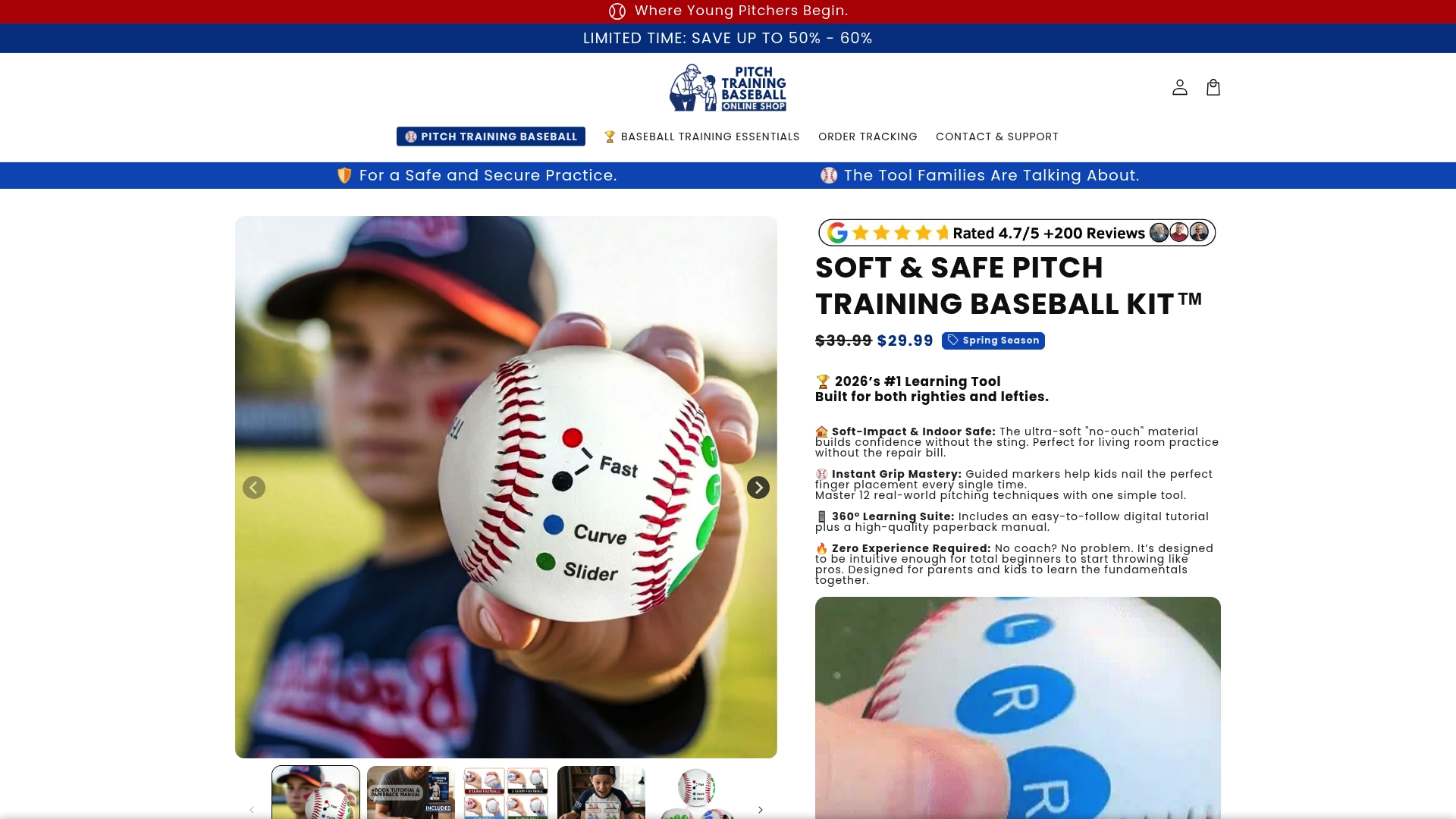
Pitchtrainingbaseball carries training aids designed specifically for youth pitchers, including the Pitching Target Net with Strike 9-Zone, which helps pitchers develop zone command through visual feedback during every bullpen session. For coaches managing daily pitching habits and workload across a full roster, consistent practice tools reduce the gap between game-day performance and practice effort. Pitchtrainingbaseball also offers the Pitch Training Baseball for grip and control development, giving young pitchers the repetitions that build the command their rotation role demands.
FAQ
How many pitchers do you need for a youth tournament?
You need at least 4–5 viable arms for a 3-game tournament and 5–7 arms for tournaments of 5 or more games. Having fewer arms forces overuse and increases injury risk.
What is the best way to schedule pitchers across a tournament?
Plan rotations backward from the championship game so your top arms are fully rested for elimination rounds. Assign starters to key games first, then fill remaining innings with relievers.
What pitch count should youth pitchers target per game?
Set a target below the league maximum and leave a 10–15 pitch buffer for unexpected innings or extra frames. Targets protect pitchers better than maximums because they build in flexibility before the arm is at risk.
Can a catcher pitch in the same tournament?
A catcher who catches 4 or more innings in a day faces pitching eligibility restrictions under Little League rules. Track catcher innings alongside pitch counts to avoid losing a pitcher to an eligibility violation.
How do you handle a pitcher who gets injured mid-tournament?
Remove the pitcher from the rotation immediately and activate your emergency arm. Recalculate rest requirements for all remaining pitchers based on the updated schedule. Never push a young pitcher through pain to win a game.
Recommended
- Recommended Daily Pitching Habits for Youth Players – Pitch Training Baseball
- Top pitching workouts for youth baseball: build skill safely – Pitch Training Baseball
- Managing Practice Time for Pitchers: 2026 Youth Guide – Pitch Training Baseball
- What Is Pitch Selection? A Youth Baseball Guide – Pitch Training Baseball