


Mentally preparing to pitch is the process of training your focus, managing nerves, and executing every throw with intent. In baseball, the mental side of pitching is just as trainable as your fastball. Coaches like Adam Bernero, a professional mental performance coach, treat mental readiness for pitching as a structured skill set, not a personality trait. The core tools include box breathing, visualization, and pre-pitch routines that take 8 to 12 seconds from sign to delivery. Young pitchers who build these habits early develop composure that holds up in the tightest game situations.
What tools and techniques are essential for mentally preparing to pitch?
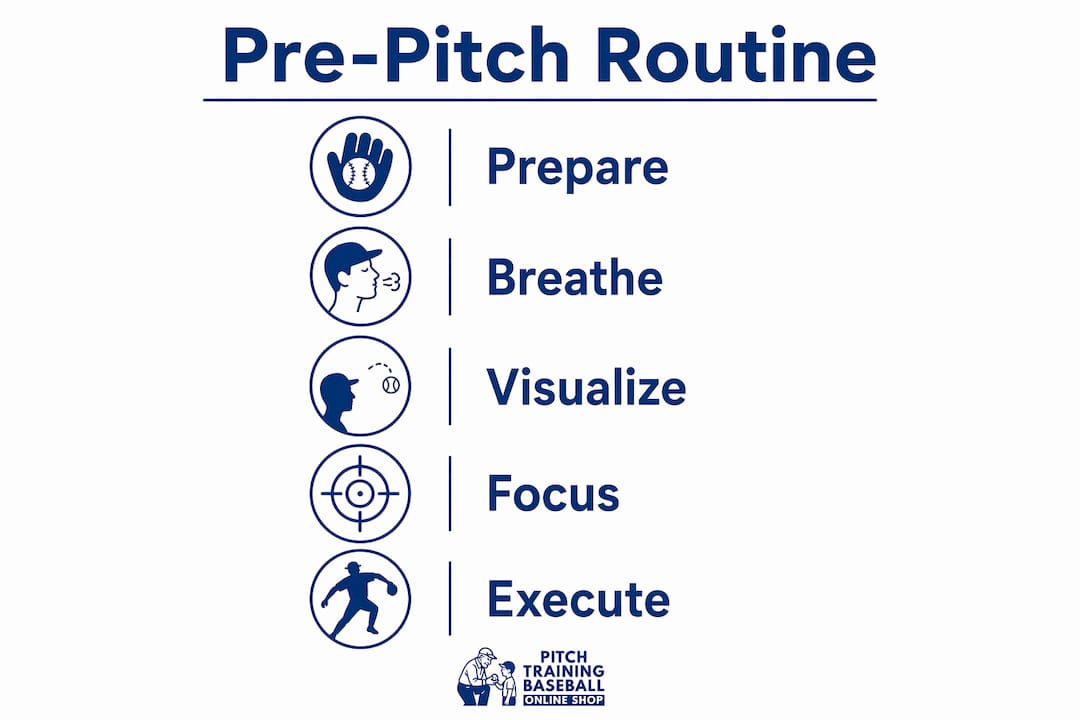
Mental readiness for pitching starts with a repeatable structure, not a feeling. The Mind & Muscle framework defines the pre-pitch routine as a three-part loop: receive the sign, take a centering breath while locking eyes on the catcher’s glove, then initiate delivery with full commitment. That loop, done consistently, trains your brain to narrow its focus and block out crowd noise, base runners, and scoreboard pressure.
Breathwork is the fastest tool a young pitcher can learn. Box breathing and cyclic sighing both activate the parasympathetic nervous system, which is the body’s natural calm-down switch. A study of 62 cadets showed that structured breathwork accelerated physiological recovery after intense exertion. For a pitcher, that means your heart rate drops faster between innings and your hands stay steadier in a full count.

Physical triggers are underrated anchors for mental focus. Touching the rosin bag, stepping off the rubber, or adjusting your cap are not nervous habits. When practiced deliberately, they become reset signals your brain recognizes. The trigger tells your nervous system: “New pitch. Clean slate.” Pair a physical trigger with one breath and a single focus cue, and you have a complete mental reset that takes under 15 seconds.
Here are the core components every young pitcher should include in their pre-pitch routine:
- Receive the sign clearly and commit to the pitch before stepping into your stance
- Physical trigger such as touching the rosin bag or adjusting your glove to signal a fresh start
- One centering breath while your eyes lock onto the catcher’s mitt
- Single focus cue such as “hit the mitt” to narrow attention to one controllable target
- Immediate delivery without hesitation once you enter your set position
Pro Tip: Practice your pre-pitch routine during every bullpen session, not just games. Repetition in low-pressure settings is what makes the routine automatic when the bases are loaded.
How do you build a consistent pre-pitch mental routine?
A consistent mental routine is built through deliberate design, not improvisation. The biggest mistake young pitchers make is waiting until game day to figure out their mental process. By then, adrenaline and crowd noise make clear thinking difficult. Build the routine in the bullpen first, where you can slow everything down and make conscious choices about each step.
Follow this sequence to design your own routine:
- Decide your pitch before the sign. Think through pitch selection while the catcher is setting up. When the sign comes, you confirm rather than decide. This eliminates hesitation, which disrupts timing and raises anxiety.
- Use one trigger phrase or physical cue. Pick something short and specific: “see it, throw it” or “hit the glove.” One cue is enough. Multiple cues create mental clutter.
- Take your centering breath while viewing the glove. Inhale through your nose for three counts, exhale through your mouth. Your eyes stay on the target the entire time.
- Start your delivery immediately after the breath. Do not pause, re-grip, or second-guess. Hesitation adds micro-routines that disrupt rhythm and increase anxiety.
- Evaluate only effort and location after the pitch. Not the outcome. Not the umpire’s call. Only what you controlled.
Pressure simulation drills make this routine stick. During practice, have a coach call out distractions, put runners on base, or create a fake two-strike count. Practicing pitch scenarios under simulated pressure trains your routine to hold up when real stakes arrive. The trigger-to-deliver loop only becomes automatic through repetition in conditions that feel uncomfortable.
Coaches and parents can reinforce this by timing the routine during bullpen sessions. If a pitcher consistently takes longer than 12 seconds from sign to delivery, that is a signal that hesitation or extra mental steps are creeping in. Keep it tight, keep it consistent.
Pro Tip: Film your bullpen sessions and watch your routine on video. You will spot hesitation, extra fidgeting, or inconsistent breathing patterns that you cannot feel in the moment.
What strategies help pitchers reset mentally after mistakes?
Every pitcher throws a bad pitch. The difference between a good pitcher and a great one is how quickly they move on. The process-only rule is the most effective mental reset strategy in youth baseball: judge every pitch by your effort and your location, not by whether it was a ball, a strike, or a hit. Separating outcomes from effort reduces the emotional swing that follows a mistake and keeps your confidence level steady across an entire outing.
Physical resets are the fastest way to interrupt a negative thought spiral. These work because your body and brain are connected. A physical action signals a mental shift.
- Turn away from the plate for two seconds after a bad pitch. Look at the outfield, the sky, or the dugout. This physically breaks the focus on the mistake.
- Take one slow exhale before stepping back on the rubber. This drops your heart rate and resets your arousal level.
- Use the flush protocol in practice: intentionally throw one pitch with bad mechanics, then immediately throw your best pitch. This trains your brain to move forward rather than dwell.
- Reframe the situation. A walk or a hit puts a runner on base. It does not change your job. Your job is still to execute the next pitch with intent. Treat every new batter as a fresh at-bat with no history.
“Mental training is about managing pressure and uncertainty, not just increasing motivation. The goal is to let athletes express their skills freely.” — Mariners mental performance staff, via NBC Sports
The flush protocol deserves more attention in youth coaching. Most coaches focus on fixing the mechanical cause of a bad pitch, which is correct. But they skip the mental recovery step. Teaching a young pitcher to consciously “flush” a mistake and then execute a quality pitch in the same session builds the short memory that separates confident pitchers from anxious ones. You can find more on fixing common mistakes to pair physical corrections with mental resets.
How do mental imagery and breathwork improve pitching performance?
Pitching-specific motor imagery is not the same as generic positive thinking. Research shows that motor imagery increases corticospinal excitability in the exact muscles used for throwing. This means your nervous system fires the same pathways during vivid mental rehearsal as it does during an actual pitch. The effect is specific to the sport being imagined, so visualizing a baseball pitch produces stronger neural activation than imagining a tennis swing or a golf stroke.
Parents and coaches often teach imagery incorrectly. Generic visualization, such as imagining yourself feeling confident or winning the game, produces weaker results than first-person, execution-focused imagery. The correct approach is to see the pitch from your own eyes: feel the grip, watch your arm path, and see the ball leave your fingertips toward the catcher’s glove. That specificity is what activates the motor cortex and builds real neuromuscular benefit.
Here is a direct comparison of imagery approaches and breathwork techniques:
| Technique | What it involves | Primary benefit |
|---|---|---|
| Generic visualization | Imagining success or confidence | Mild motivation boost only |
| First-person motor imagery | Seeing pitch release from your own perspective | Increases neural excitability in throwing muscles |
| Box breathing | Inhale 4 counts, hold 4, exhale 4, hold 4 | Activates parasympathetic system, lowers heart rate |
| Cyclic sighing | Double inhale through nose, long exhale through mouth | Fastest known breath technique for calming the nervous system |
| Coherent breathing | Slow, rhythmic breathing at 5 to 6 breaths per minute | Improves autonomic balance and sleep quality |
Breathwork timing matters as much as the technique itself. Timed breathwork integrated into the pitching clock works like this: one quick reset breath when you step behind the rubber, then one top-up inhale as you come set. This two-breath sequence balances your arousal level without slowing your rhythm or drawing attention. Practiced consistently, it becomes invisible to batters and umpires while giving you a measurable physiological advantage. For a deeper look at pitching visualization techniques specific to youth players, Pitchtrainingbaseball has a dedicated resource worth bookmarking.
Coherent breathing also improves sleep quality and reduces inflammatory markers in athletes under sustained physical stress. For a young pitcher throwing multiple games per week during tournament season, better sleep means faster physical recovery and sharper mental focus the next day. Breathwork is not just a game-day tool. It is a daily habit that compounds over a full season.
Key takeaways
Mental preparation for pitching requires a structured, repeatable routine built on breathwork, first-person imagery, and process-focused thinking that must be practiced in the bullpen before it can hold up in a game.
| Point | Details |
|---|---|
| Pre-pitch routine timing | Keep your sign-to-delivery loop to 8 to 12 seconds to prevent hesitation and anxiety. |
| Breathwork is a trained skill | Box breathing and cyclic sighing must be practiced regularly to work automatically under pressure. |
| Use first-person imagery | Visualize from your own eyes, focusing on ball release and the catcher’s glove, not generic success. |
| Process-only evaluation | Judge every pitch by effort and location, not outcome, to maintain confidence across a full outing. |
| Physical resets work | Turning away from the plate or taking one slow exhale interrupts negative thought spirals between pitches. |
What I’ve learned coaching mental routines on the mound
I have watched hundreds of young pitchers walk to the mound with great mechanics and fall apart in the third inning. Almost every time, the breakdown was mental, not physical. The arm was fine. The grip was fine. What failed was the routine, or more accurately, the absence of one.
The mistake I see coaches make most often is treating mental preparation as something that happens naturally with experience. It does not. A 12-year-old pitcher does not develop composure by accident. Composure is built the same way a curveball is built: through deliberate, repeated practice with feedback. When I started treating the pre-pitch routine as a teachable skill with specific steps and measurable timing, the results changed immediately.
Parents play a bigger role than they realize. A parent who stays calm in the stands, who does not shout mechanics cues from the bleachers, and who asks “how did your routine feel?” instead of “why did you walk that kid?” is actively building their child’s mental resilience. The emotional environment around a young pitcher shapes how they handle pressure on the mound.
One thing I tell every pitcher I work with: start simple. One breath. One cue. One target. You can add complexity as the athlete matures and the routine becomes automatic. A 10-year-old does not need a five-step mental protocol. They need one anchor they trust. Build from there, and the mental game becomes a genuine competitive advantage by the time they reach high school.
— Albert
Build your mental game with the right training tools
Mental preparation and physical practice reinforce each other. When a young pitcher has a consistent target to throw at during every bullpen session, the routine becomes easier to practice because the environment feels game-like.
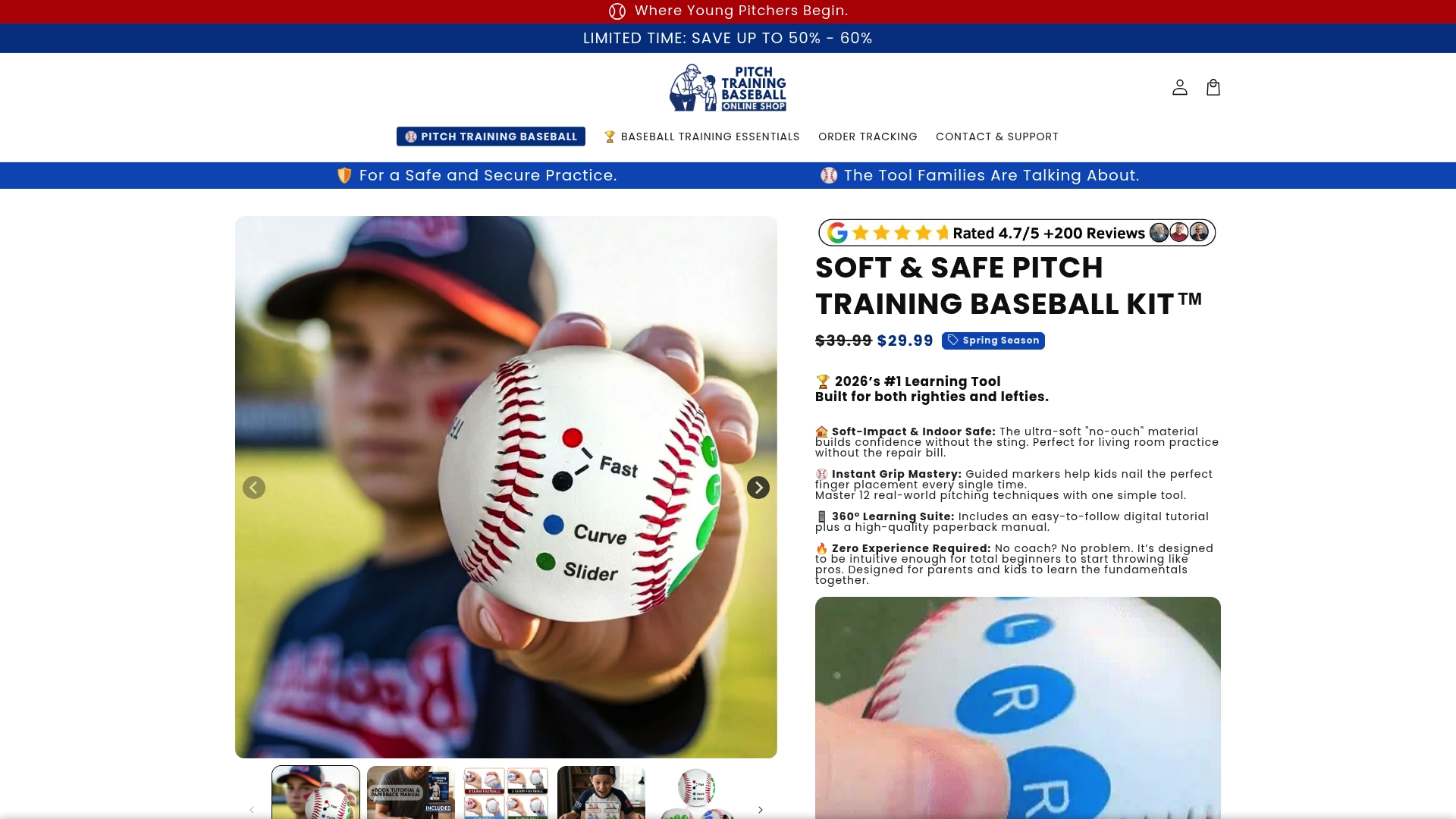
Pitchtrainingbaseball offers training tools designed to make every rep count. The Pitching Target Net with Strike 9-Zone gives pitchers a specific visual target to lock onto during their centering breath, which directly reinforces the focus cue in their pre-pitch routine. For pitchers working on control and feel, the pitch training baseball package supports the kind of high-repetition, game-like practice that makes mental routines automatic. Pair the right equipment with the mental strategies in this guide and your practice sessions become significantly more effective.
FAQ
What does mentally preparing to pitch actually mean?
Mentally preparing to pitch means training your focus, controlling your nerves through breathwork, and executing a repeatable pre-pitch routine before every throw. It is a structured skill set, not a personality trait, and it can be taught and practiced like any physical technique.
How long should a pre-pitch routine take?
A pre-pitch routine should last 8 to 12 seconds from receiving the sign to initiating delivery. Routines that run longer often include hesitation or extra mental steps that increase anxiety and disrupt timing.
What is the best breathing technique for pitchers?
Box breathing and cyclic sighing are the two most effective techniques for pitchers. Both activate the parasympathetic nervous system, which lowers heart rate and reduces anxiety. Structured breathwork must be practiced regularly to become automatic under game pressure.
How should a young pitcher recover mentally after a bad pitch?
The process-only rule is the most effective recovery method: evaluate the pitch by effort and location, not outcome. Follow it with a physical reset such as turning away from the plate or taking one slow exhale, then step back into your routine as if the previous pitch never happened.
Does visualization actually help pitching performance?
Yes, but only when done correctly. Pitching-specific motor imagery increases neural excitability in the muscles used for throwing. The imagery must be first-person and execution-focused, meaning you see the ball leaving your hand toward the catcher’s glove, not a generic image of yourself succeeding.
Recommended
- What Is Pitch Selection? A Youth Baseball Guide – Pitch Training Baseball
- Arm Strength Tips for Baseball: Youth Player Guide – Pitch Training Baseball
- Baseball Pitching Visualization Techniques for Youth Players – Pitch Training Baseball
- Managing Practice Time for Pitchers: 2026 Youth Guide – Pitch Training Baseball