


Multiplayer pitching drills are structured group exercises that let several young pitchers practice simultaneously, multiplying active reps while building command, mechanics, and team chemistry in a single session. Most youth coaches run pitchers one at a time and wonder why progress stalls. The answer is idle time. When you organize practice around station rotations, partner work, and coach-directed command challenges, every player stays engaged and every minute counts. This multiplayer pitching drill guide covers the setup, the drills, the tracking methods, and the common mistakes coaches make so you can run a tighter, more productive practice starting this week.
What a multiplayer pitching drill guide actually covers
Multiplayer pitching drills go by several names in coaching circles: group pitching exercises, rotational station drills, and partner throwing circuits. The industry standard term is station-based pitching practice, and it refers to any format where pitchers rotate through timed work blocks rather than waiting in a single line. The core benefit is density of quality repetitions. A pitcher who throws 15 pitches in a 30-minute session is not developing. A pitcher who completes three five-minute stations and throws 20 pitches per station is.
The structure typically includes three components: timed stations with one or two pitchers per coach, partner drills that develop mechanics without a mound, and command challenges where coaches call locations and score accuracy. Named programs like Coach Marissa Young’s 6-Spot Challenge at Duke University, the Vernon Hills Community Baseball balance drill, and the Veo youth pitching guide all use variations of this format. Each one proves the same point: organized group practice outperforms unstructured individual work for youth development.
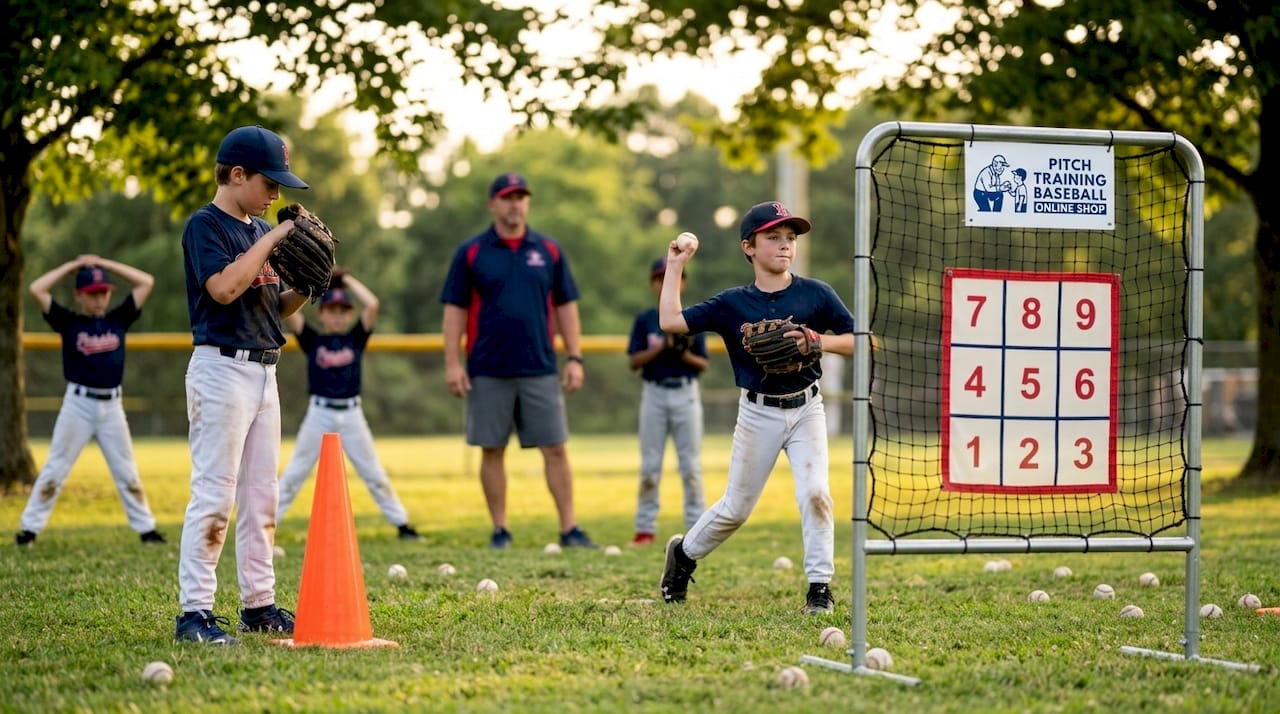
What equipment and setup do you need for group pitching drills?
Running effective team pitching drills does not require a full stadium setup. The right equipment is simple, portable, and affordable for most youth programs.
Core equipment list:
- Baseballs or training balls (at least 6 per station to reduce retrieval interruptions)
- Gloves for all pitchers and catchers
- Pitching targets or nets with marked strike zones for accuracy work
- Flat ground or access to a mound (flat ground works for most mechanics drills)
- Catchers or catcher stand-ins for each active station
- A stopwatch or phone timer for station blocks
- Cones or markers to define station boundaries
For spacing, place stations at least 40 feet apart to prevent interference between groups. Younger players at ages 8 to 10 can work at 30 to 35 feet. Each station should hold two to three players maximum: one pitcher, one catcher, and one observer who watches for mechanical cues. This 1-to-2 athlete-per-coach ratio keeps feedback specific and prevents the vague group corrections that young players tune out.
Target nets with a marked nine-zone strike zone are particularly effective for command drills. They give pitchers a visual reference for every pitch location and let coaches score accuracy without a catcher needing to frame every ball. The Strike 9-Zone target net from Pitchtrainingbaseball is built for exactly this kind of station work.
Pro Tip: Set a five-minute timer for every station block. Research on timed station rotations from Vernon Hills Community Baseball shows that short, structured blocks keep young pitchers engaged and maintain high-quality repetitions throughout practice.
How to run multiplayer pitching drills for accuracy and command
Command is the skill that separates a pitcher who throws hard from one who wins games. These drills build it through repetition, feedback, and game-like decision pressure.
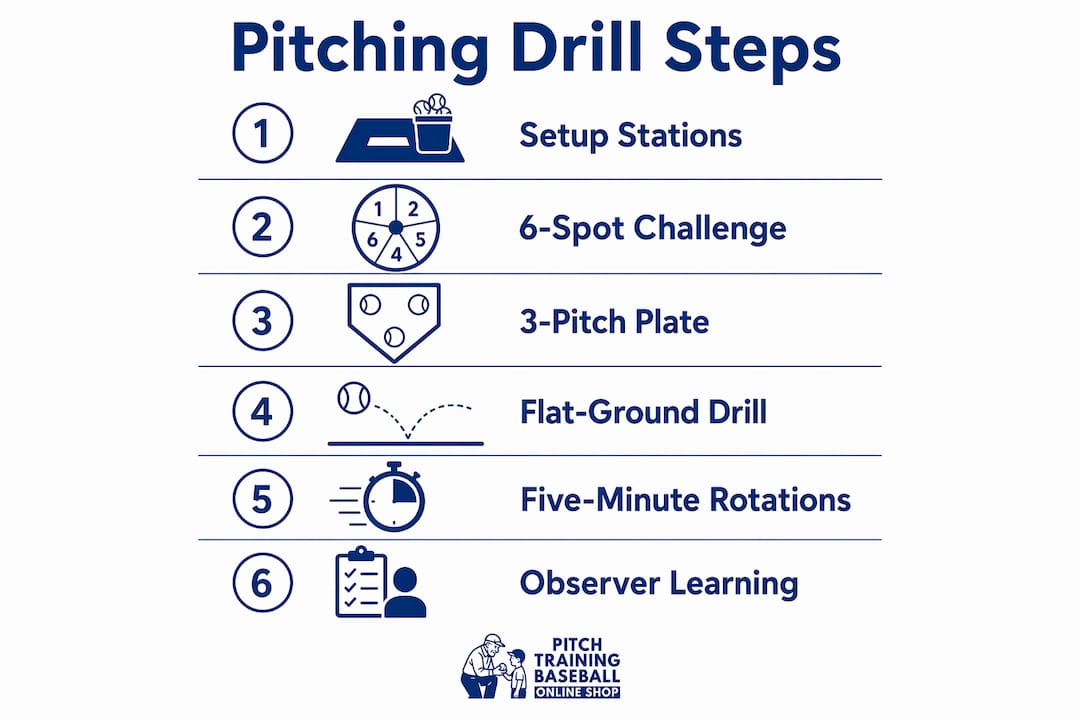
Step 1: Set up three to four stations before players arrive. Label each station with a cone and assign roles before the first pitch is thrown. Confusion at the start of a drill kills momentum and eats into rep time.
Step 2: Run the 6-Spot Challenge. Developed by Coach Marissa Young, this drill requires a pitcher to throw six consecutive pitches to the same target location. The goal is to identify which locations the pitcher commands consistently and which ones need work. Coaches track makes and misses for each spot and use that data to guide pitch calling decisions. In a multiplayer format, each pitcher completes one spot before rotating, and the group compares results at the end of the block.
Step 3: Add the 3-Pitch Plate Drill. This drill, also from Coach Marissa Young’s Duke University program, requires pitchers to throw three different pitches in rapid sequence to both inner and outer plate locations. The catcher resets the target quickly between pitches, simulating the pace of a real at-bat. Treating pitcher training as a decision-and-command sequence like this simulates game-like mental demands and improves sustained attention across a full practice.
Step 4: Run a flat-ground command drill. Remove the mound entirely for one station. Removing mound stress by using flat ground helps pitchers focus on repeating their delivery, improving mechanical consistency without the physical demands of elevated pitching. The coach calls a location, the pitcher throws, and the coach records a make or miss. Over 20 called pitches, you get a clear accuracy percentage that you can track week over week.
Step 5: Rotate every five minutes. Short station blocks keep cues fresh in pitchers’ short-term memory. When a pitcher has just heard a correction, they need immediate repetitions to lock it in. Waiting 10 minutes between turns erases that window.
Step 6: Use observers as learners. The pitcher waiting for their turn should watch the active pitcher and identify one mechanical cue the coach gives. Ask them to report it before they step in. This keeps observers mentally engaged and doubles the learning value of every correction.
Pro Tip: Standardize your pitch call vocabulary before practice starts. Using consistent terms like “up and in,” “down and away,” and “outer corner” across all stations lets the whole group function as a shared evaluation panel, which increases feedback quality for every pitcher in the rotation.
What partner drills build pitching mechanics and arm strength?
Partner-based multiplayer sports drills develop the physical foundation that command drills depend on. Mechanics work best when it is low-pressure, high-repetition, and paired with immediate feedback from a partner.
Balance Drill. Vernon Hills Community Baseball uses this drill as a staple of its youth pitching program. The pitcher stands on one leg, holds the balance point of their delivery for a three-count, then completes the throw. The partner watches the knee height and hip alignment and gives a thumbs up or thumbs down before the next rep. This builds controlled delivery mechanics and teaches young pitchers to feel their own balance point rather than rush through it. For a deeper look at how balance connects to power and control, Pitchtrainingbaseball covers this directly in their pitching balance guide.
Towel Drill. The pitcher holds a small towel in their throwing hand and goes through their full delivery without releasing a ball. The towel snaps at the release point, giving the pitcher audio and tactile feedback on arm path. Partners watch for a clean snap versus a dragging motion. This drill produces safe, high-volume repetitions with zero arm stress, making it ideal for the end of a practice when pitch counts are already high.
Over Under Drill. Pairs stand about 15 feet apart and alternate between overhand and underhand throws. Role switches happen every 10 throws, and coaches can add team scoring to create light competition. This drill builds versatility in arm angles, encourages eye contact and communication between teammates, and develops the kind of loose, confident throwing motion that transfers directly to the mound.
Stride Direction Drill. One partner places a glove on the ground at the target landing spot for the pitcher’s stride foot. The pitcher’s job is to land on or within two inches of the glove on every rep. The partner tracks hits and misses. Consistent stride direction is one of the most overlooked mechanics factors in youth pitching, and this drill makes it measurable.
| Drill | Focus area | Partner role | Rep structure |
|---|---|---|---|
| Balance Drill | Leg lift and hip alignment | Visual feedback on balance point | 10 reps per pitcher |
| Towel Drill | Arm path and release point | Listen for towel snap quality | 15 reps per pitcher |
| Over Under Drill | Arm angle versatility | Track overhand vs. underhand accuracy | 10 throws each style |
| Stride Direction Drill | Foot landing consistency | Mark target, count hits and misses | 12 reps per pitcher |
Pro Tip: For the Balance Drill, have the observing partner count the three-second hold out loud. Young pitchers rush the balance point when no one is counting. Audible accountability from a peer is more effective than a coach reminder from across the field.
How do you track progress and fix common problems in team pitching drills?
Tracking turns practice into development. Without measurement, coaches repeat the same drills without knowing whether they are working.
Measuring command accuracy. The flat-ground command drill described earlier gives you a direct accuracy percentage: pitches made divided by total pitches called. Track this number for each pitcher across four to six sessions. A pitcher who improves from 40% to 65% accuracy over three weeks is developing command. One who stays flat needs a mechanics adjustment, not more reps of the same drill.
| Common problem | Likely cause | Correction |
|---|---|---|
| Rushing the delivery | Skipping the balance point | Return to Balance Drill, add three-count hold |
| Inconsistent release point | Poor arm path habit | Towel Drill for 15 reps before live throwing |
| Pitches consistently missing one side | Stride direction error | Stride Direction Drill with glove target |
| Loss of focus mid-station | Station blocks too long | Shorten to four minutes, increase rotation speed |
| Catcher confusion on pitch calls | Non-standardized vocabulary | Pre-practice call sheet with defined locations |
Standardizing pitch calls. Using pre-defined locations like “up and in,” “down and away,” and “outer corner” across all stations reduces confusion and enables group feedback. When every pitcher and catcher uses the same vocabulary, the whole group can evaluate a pitch together. This turns your team into a coaching resource, not just a collection of individuals waiting for their turn.
Using video and peer observation. A phone mounted on a tripod at the side of the mound captures arm path and stride direction in a single frame. Review clips with pitchers between station rotations. Young players respond to seeing their own mechanics far more than hearing a verbal description. Peer observation, where the waiting pitcher identifies one cue from the active pitcher’s delivery, reinforces this learning without adding coach workload.
Addressing arm health. The best pitching practice tips always include volume limits. For players aged 9 to 12, USA Baseball recommends pitch count limits that vary by age. Multiplayer station formats help here because they distribute throwing volume across more players rather than loading one arm. If a pitcher’s mechanics deteriorate noticeably in the final station, that is a fatigue signal. End their session and substitute the observer. For a structured approach to assessing pitching performance in youth players, Pitchtrainingbaseball offers a step-by-step framework coaches can use alongside these drills.
What I’ve learned from running multiplayer pitching drills with youth teams
I have watched coaches run pitching practice the same way for years: one pitcher, one catcher, everyone else standing around. The pitchers who improve fastest are almost never the ones with the most natural talent. They are the ones whose coaches figured out how to give them more quality reps in less time.
The five-minute station block is the single most underused tool in youth baseball. Coaches worry that it feels rushed. In practice, it does the opposite. When a young pitcher knows they have five minutes and then they rotate, they focus. They do not drift. They do not start goofing around with the catcher. Short blocks with clear goals create a practice environment where attention stays high from the first station to the last.
The 3-Pitch Plate Drill from Coach Marissa Young changed how I think about command training. Most drills ask a pitcher to throw the same pitch repeatedly until they get it right. That drill asks them to change pitch type and location every throw, which is exactly what a game demands. Young pitchers who train that way stop thinking about mechanics mid-delivery and start thinking about execution. That mental shift is where real development happens.
I am also direct about arm health in multiplayer formats. More stations mean more reps, and more reps mean more arm stress if you are not tracking volume. The station format actually helps with this because you can pull a tired pitcher out of rotation without stopping practice. The observer steps in, the tired pitcher watches, and the session continues. That flexibility is one of the strongest arguments for running team pitching drills in a rotational format rather than a single-line format.
One more thing: peer competition inside drills works. When two pitchers are tracking their accuracy percentages side by side, both of them try harder. Keep it constructive, keep it light, and use it deliberately. A little friendly competition in the right drill at the right moment accelerates development faster than any correction I can give from the sideline.
— Albert
How Pitchtrainingbaseball supports your multiplayer pitching sessions
Running effective group pitching exercises is easier when your equipment matches your drill design.
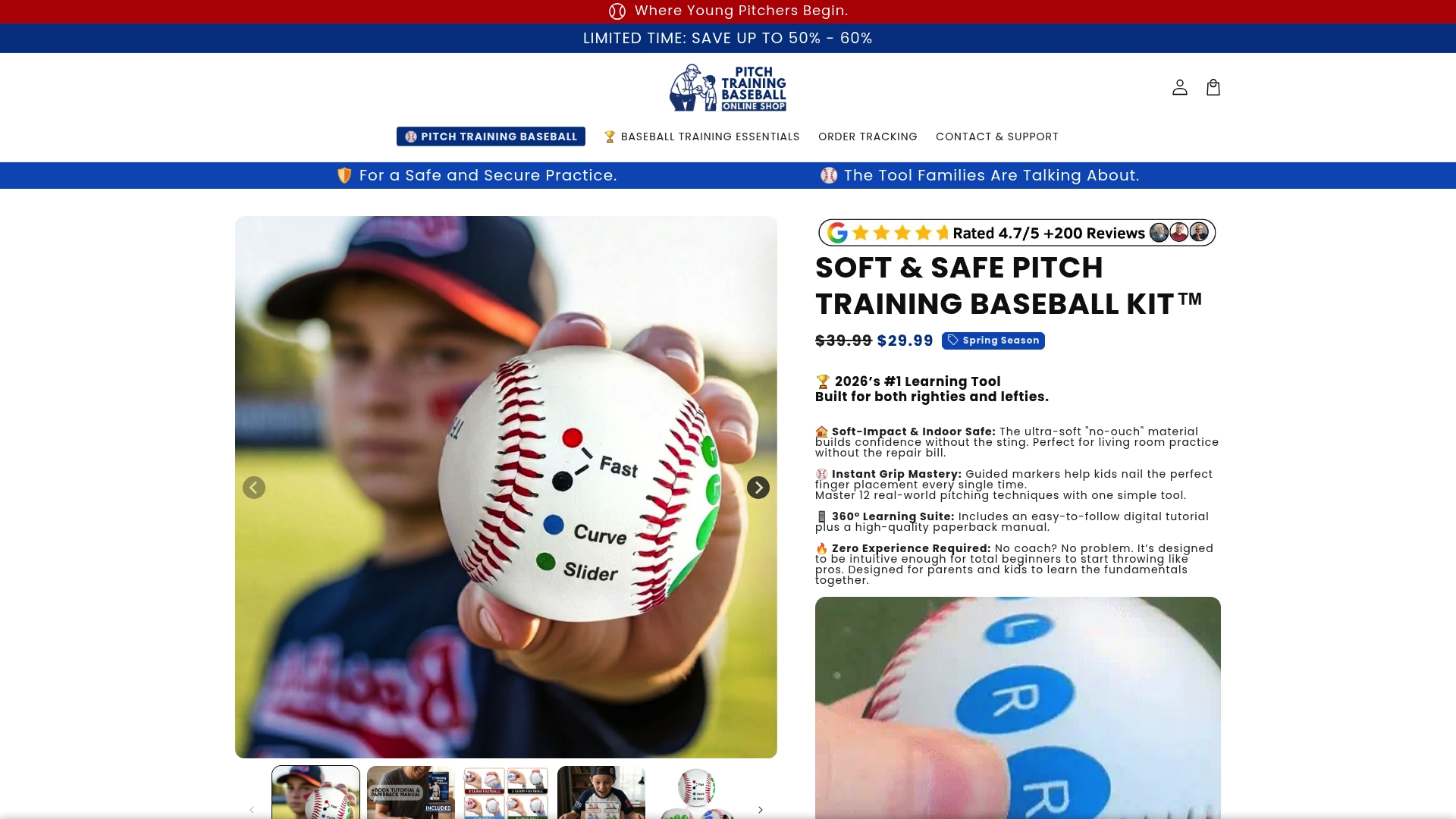
Pitchtrainingbaseball builds training tools specifically for youth pitching development in team settings. The Pitching Target Net with Strike 9-Zone gives every station a clear visual target for command drills, so pitchers get instant feedback on location without needing a catcher to frame every pitch. The Pitch Training Baseball package supports the kind of high-volume, low-stress repetition that station-based practice demands. For coaches who want to increase safe throwing volume, the Package Protection gear keeps young pitchers protected through every rotation. Browse the full lineup at Pitchtrainingbaseball and find the tools that fit your practice format.
FAQ
What are multiplayer pitching drills?
Multiplayer pitching drills are structured group exercises where several pitchers rotate through timed stations simultaneously, maximizing active reps and reducing idle time during practice. They include partner mechanics drills, command challenges, and coach-directed accuracy tracking.
How long should each station block last in team pitching drills?
Station blocks of five minutes each keep young pitchers focused and maintain high-quality repetitions throughout practice. Research from Vernon Hills Community Baseball confirms that timed rotations averaging five minutes produce better engagement than longer, open-ended sessions.
What is the best pitching drill for building command in a group setting?
The 6-Spot Challenge by Coach Marissa Young is one of the most effective group pitching exercises for command development. Pitchers throw six consecutive pitches to the same target location, which identifies their strongest and weakest spots and gives coaches clear data for pitch calling decisions.
How do you track progress during multiplayer pitching practice?
Track accuracy as a percentage: record makes and misses over 20 called pitches per session and compare results week over week. Standardizing pitch call vocabulary across all stations lets the entire group evaluate each pitch and improves the quality of feedback for every pitcher.
Can you run multiplayer pitching drills without a mound?
Flat-ground command drills are fully effective for mechanics and accuracy work and remove the physical demands of elevated pitching. Pitchers can focus entirely on repeating their delivery, which improves mechanical consistency and makes flat-ground work a preferred option for most station-based practice formats.
Key takeaways
Multiplayer pitching drills built around five-minute station rotations, standardized pitch calls, and partner mechanics work produce more quality reps and faster development than any single-pitcher practice format.
| Point | Details |
|---|---|
| Use timed station blocks | Five-minute rotations keep focus high and maximize throwing reps for every pitcher in the group. |
| Standardize pitch call vocabulary | Pre-defined location terms like “up and in” and “down and away” enable group feedback and reduce confusion. |
| Include mechanics partner drills | Balance, Towel, and Over Under drills build physical foundation without mound stress or high pitch counts. |
| Track command accuracy weekly | Recording makes and misses over 20 pitches per session reveals real progress and guides drill selection. |
| Use observers as active learners | Waiting pitchers who identify coaching cues stay mentally engaged and absorb corrections faster. |
Recommended
- Game-like pitching practice: Raise youth baseball skills fast – Pitch Training Baseball
- Top pitching workouts for youth baseball: build skill safely – Pitch Training Baseball
- How to assess youth pitching performance step by step – Pitch Training Baseball
- How to throw a baseball: proven youth coaching tips – Pitch Training Baseball