


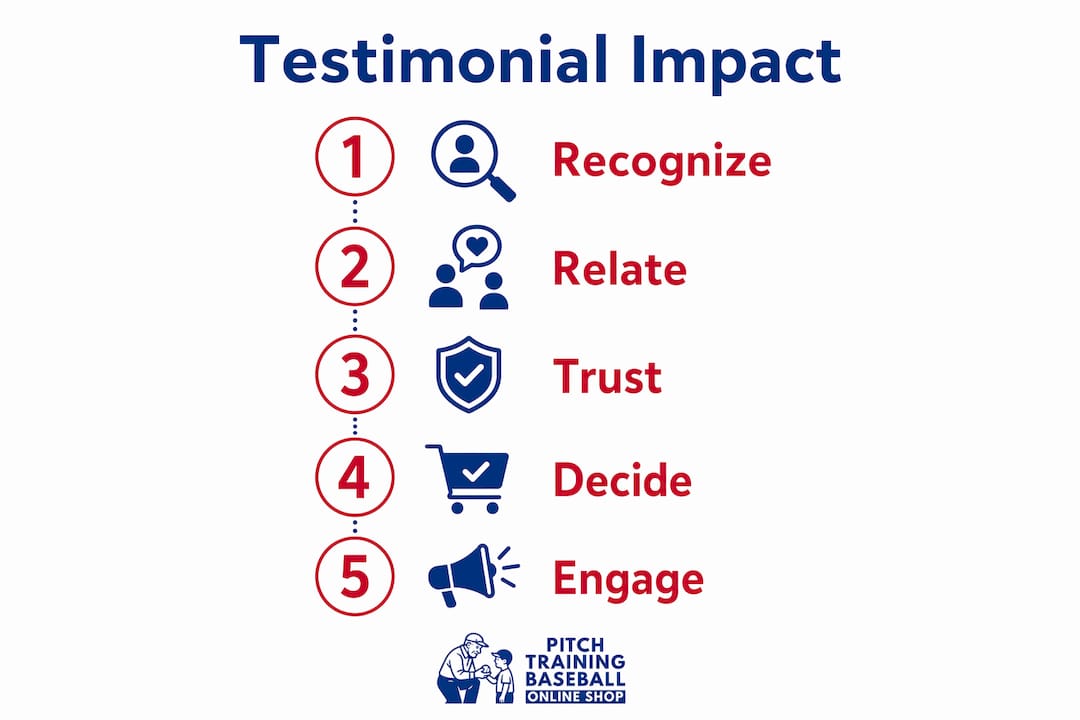
Testimonials in sports training are first-hand accounts that translate coaching promises into concrete evidence. They tell a prospective athlete or parent exactly what they need to know: did this program actually work for someone like me? As social proof, testimonials reduce the uncertainty that comes with choosing a training program, a coach, or a piece of equipment. They carry weight because they come from real people who had real results, not from the program itself.
The role of testimonials in sports training goes well beyond marketing copy. They communicate multidimensional development: physical gains, yes, but also mental toughness, confidence, and the kind of quiet growth that shows up in how a young athlete carries themselves after a tough loss. Athletes speak to skill progression. Parents speak to environment, safety, and emotional support. Together, those two voices answer the questions that matter most to anyone evaluating a youth sports program.
Here is what testimonials actually do for athletes and parents:
- Reduce perceived risk by making abstract coaching claims concrete and relatable
- Build trust in a coach’s style, communication, and ability to personalize training
- Signal that a program delivers on its promises, especially for higher-stakes or higher-cost commitments
- Convey emotional and social development outcomes alongside physical ones
- Help parents assess whether a program’s environment fits their child’s personality and needs
- Motivate prospective athletes by showing them what progress looks like at a specific program
How the role of testimonials in sports training shows up across competitive levels
Athlete testimonials carry different weight depending on where the athlete sits in their career. A high school pitcher describing how his arm strength improved after twelve weeks of targeted practice speaks directly to the parent of a 14-year-old. A college-level athlete explaining how mental preparation coaching changed the way she handles pressure in big games speaks to a different audience entirely. The specificity of the competitive context is what makes the testimonial land.
Across levels, the most credible athlete testimonials share a few consistent qualities. They name a starting point, describe a coaching intervention, and show a measurable or observable change. Vague praise like “the coach was great” does almost nothing. A testimonial that says “I was throwing 58 mph with no consistency; after eight weeks of working on hip rotation and follow-through, I was hitting 67 mph and placing pitches in the zone” gives a prospective athlete something to hold onto.
Common themes that emerge from athlete testimonials at every competitive level:
- Skill development: Specific mechanics improvements, velocity gains, or accuracy milestones
- Mental confidence: Reduced performance anxiety, better focus under pressure, stronger self-belief
- Coaching personalization: Feeling seen as an individual, not just a player on a roster
- Milestone moments: First time making a varsity squad, first shutout inning, first scholarship offer
- Mental toughness: Learning to reset after errors, staying composed in high-leverage situations
- Long-term retention: Choosing to stay with a program because of consistent, visible progress
Research on psychosocial development in youth sport confirms that stakeholders, including athletes themselves, perceive outcomes far beyond physical performance. Emotional well-being, social skills, and cognitive growth all show up in what athletes say about their training experiences. A testimonial that captures those layers tells a richer story than one focused solely on stats. For youth baseball specifically, that kind of depth matters because parents are evaluating the whole child, not just the pitcher.
Pro Tip: Ask athletes to describe a specific moment when they noticed a change, not just a general feeling. “The first time I threw a curveball that actually broke” is far more persuasive than “my pitching got better.”
What parent testimonials reveal about youth athlete motivation
Parents are not passive observers in youth sports. A systematic review of 29 studies covering more than 9,000 young athlete participants found that autonomy-supportive parenting styles and moderate parental involvement are among the strongest predictors of sustained motivation in young athletes. That research shapes what makes a parent testimonial credible and what makes it ring false.

The most resonant parent testimonials describe a coaching environment that gave their child room to grow without constant pressure. They talk about a coach who communicated directly with the athlete, not just with the parent. They mention how their child started asking to go to practice instead of being reminded. Those details signal something real about the program’s culture.
Phenomenological research on coach-athlete-parent relationships shows that young athletes value nonintrusive parental encouragement and post-competition dialogue. When a parent testimonial reflects that kind of involvement, it resonates with other parents who are trying to find the same balance. A testimonial from a parent who says “I learned to cheer without coaching from the sideline, and my son’s confidence went through the roof” speaks to a universal tension in youth sports.
Key motivators parents describe in their testimonials:
- Emotional safety: Coaches who respond to mistakes with guidance, not criticism
- Visible progress: Concrete improvements they can observe from the stands or during practice
- Autonomy for the athlete: Programs that let kids develop ownership of their own game
- Clear communication: Coaches who explain what they are working on and why
- Peer environment: Teammates who push each other without tearing each other down
- Logistical support: Programs that respect family schedules and communicate changes clearly
Parents who had their own athletic background often bring a particular lens to their testimonials, as explained in Athletic Career Longevity Factors Parents Control Most. Research shows their children appreciate skill-focused guidance delivered without pressure, and parent testimonials that reflect that tone, supportive rather than demanding, tend to carry more credibility with other parents evaluating a program. For more on how parental involvement shapes youth baseball development, Pitchtrainingbaseball’s guide on parental roles in baseball covers the subject in depth.
How testimonials build trust and drive decisions in sports training
The psychology behind testimonial effectiveness is well documented. Robert Cialdini’s social proof principle holds that people look to others’ experiences when they are uncertain about a decision. In sports training, that uncertainty is real: parents cannot observe a coach’s methods before signing up, and athletes cannot know whether a program will actually address their specific weaknesses. Testimonials fill that gap.
A mock e-commerce study found that sites with testimonials produced higher trust and greater purchase readiness than those without, with the effect most pronounced for higher-priced products. Youth sports training programs are exactly that kind of purchase: meaningful financial commitment, hard to evaluate in advance, and high-stakes for the child involved. Testimonials do not just help people feel better about a decision. They actively reduce the information asymmetry between a program and a prospective family.
Testimonials also influence long-term retention. When a family joins a program partly because of a compelling testimonial, they arrive with a mental model of what success looks like. That expectation, when the program delivers on it, reinforces their commitment. When it does not, the gap between the testimonial and the reality becomes a trust problem.
Authenticity is where testimonials either earn their keep or fall apart. The factors that determine whether a testimonial is believed:
- Source similarity: Testimonials from athletes or parents in comparable situations carry more weight
- Specific detail: Named coaching methods, timelines, and measurable outcomes signal authenticity
- Emotional honesty: Testimonials that acknowledge struggle before describing progress feel more real
- Believability of the claim: Extraordinary results without context raise skepticism
- Format: Video testimonials tend to feel more credible than polished written quotes
Testimonials also have real limitations. Selection bias is the most obvious one: programs feature their best stories, not their average ones. A parent or athlete evaluating a program should look for patterns across multiple testimonials rather than treating any single account as definitive. Mixed or negative testimonials, when a program addresses them honestly, can actually strengthen credibility by signaling transparency. Ignoring them entirely signals the opposite.
Pro Tip: When evaluating a program’s testimonials, look for specifics about the coaching process, not just the outcome. A testimonial that describes how a coach adjusted training based on an athlete’s mechanics tells you far more than one that simply says “my son improved a lot.”
Practical guidance on using testimonials effectively in youth baseball training
Effective testimonials in youth baseball training are built around the coaching process, not just the results. A parent reading about a program wants to know what a session actually looks like: how feedback is delivered, how progress is tracked, and how a coach responds when an athlete struggles. Testimonials that answer those questions do the work that a program description cannot.
Placement matters as much as content. Website conversion research shows that positioning testimonials near program descriptions and call-to-action points leverages social proof most effectively. A testimonial placed directly above a registration button, or alongside a description of a specific training package, catches a prospective family at exactly the moment they are deciding. Testimonials buried on a separate “reviews” page get far less traction.
The most effective testimonial formats for youth baseball programs:
- Short video clips: A parent or athlete speaking directly to camera, describing a specific moment of progress
- Before-and-after narratives: Written accounts that establish a starting point, describe the coaching intervention, and show the outcome
- Photo-paired quotes: A game or practice photo alongside a brief, specific quote from the athlete or parent
- Case study format: A longer written account that walks through a full training arc, from first session to milestone achievement
- Social media reposts: Real posts from athletes or parents, shared with permission, that feel unscripted
Testimonials that describe multi-faceted development outcomes resonate most with parents because they reflect what parents actually care about. A testimonial that says “my daughter became a better pitcher and a more confident person” speaks to both the athletic and the human side of the program. That dual framing is what separates a testimonial that converts from one that gets scrolled past.
For programs like those supported by Pitchtrainingbaseball, the most credible testimonials connect specific training tools to specific outcomes. A parent describing how a pitching target net gave their child a concrete target to aim for during solo practice, and how that structure translated to better zone command in games, tells a story that is both believable and useful to another parent considering the same purchase. The detail about the tool grounds the testimonial in something tangible.
Collecting testimonials at the right moment is as important as the format. The best time to ask is immediately after a visible success: a first strikeout, a velocity milestone, a spot on a travel roster. At that moment, the athlete and parent are emotionally engaged and the experience is fresh. A testimonial collected six months later tends to be more generic, because the specific details that made the moment meaningful have faded.
One underused approach in youth baseball: asking athletes to describe what changed in their mental approach, not just their mechanics. A young pitcher who can articulate how he learned to reset after a walk, or how he stopped overthrowing when runners were on base, gives prospective athletes a window into the mental side of development that most program descriptions never address. That kind of testimonial answers the question that many parents are quietly asking: will this program help my kid handle pressure?
For coaches and programs building a testimonial library, Pitchtrainingbaseball’s content on coaching youth baseball players offers a grounded look at what effective coaching actually involves, which is exactly the kind of process detail that makes testimonials credible when athletes and parents reference it.
Put the right tools behind the testimonials
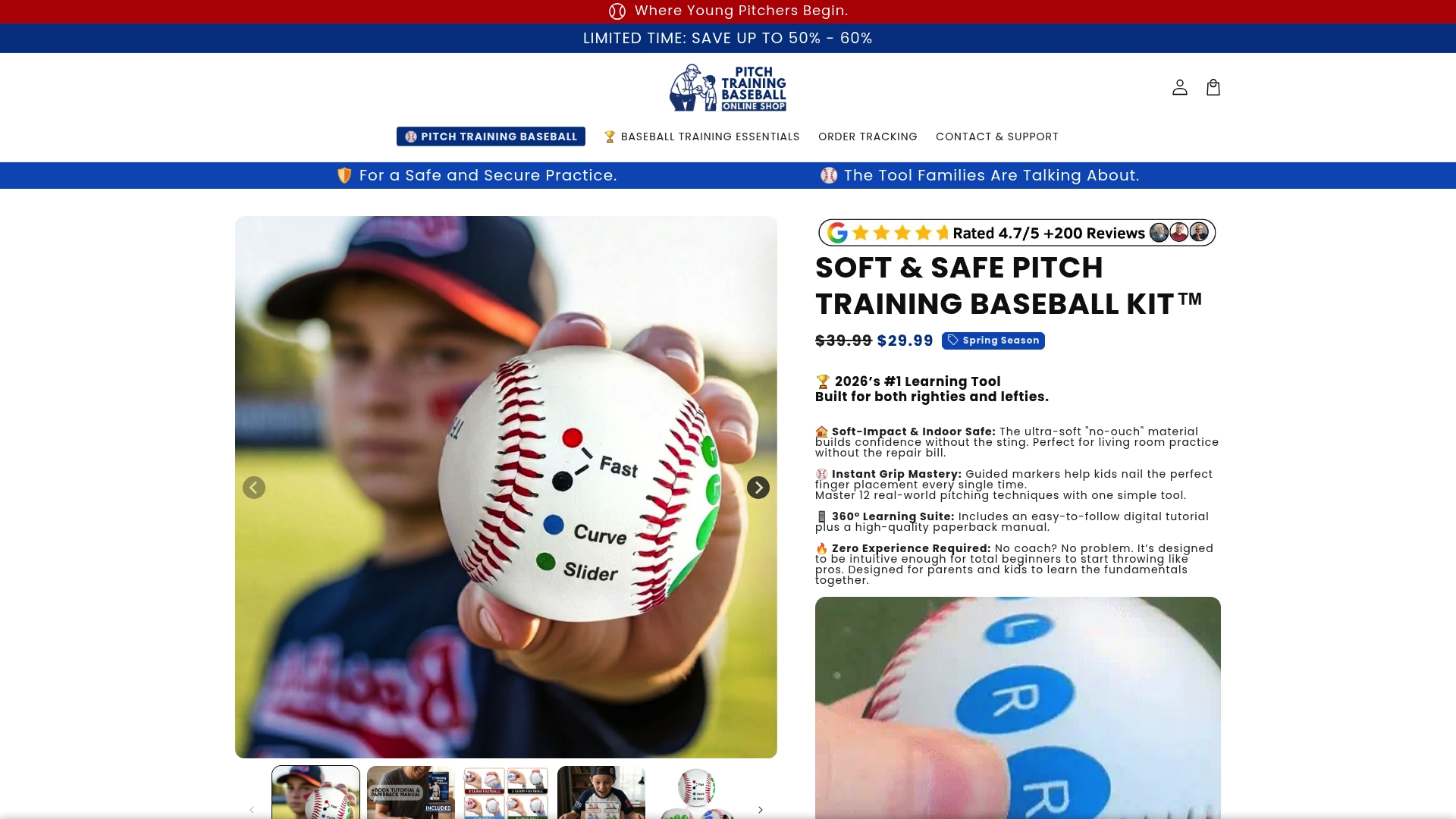
The testimonials that resonate most in youth baseball training are the ones tied to specific, repeatable practice. Pitchtrainingbaseball’s pitching training baseball gives young pitchers the structured repetition that produces the kind of progress worth talking about. When athletes practice with purpose-built tools, the results show up in games, and that is exactly what makes a testimonial worth reading.
Key Takeaways
Testimonials in sports training work because they translate coaching promises into specific, relatable experiences that reduce uncertainty for athletes and parents making high-stakes decisions.
| Point | Details |
|---|---|
| Social proof drives decisions | Testimonials reduce uncertainty by showing prospective families what real progress looks like in a specific program. |
| Specificity determines credibility | Testimonials naming coaching methods, timelines, and concrete outcomes are far more persuasive than generic praise. |
| Parent involvement style matters | Testimonials reflecting autonomy-supportive parenting resonate more with other parents than those signaling pressure or over-coaching. |
| Placement amplifies impact | Positioning testimonials near program descriptions and sign-up points leverages social proof at the moment of decision. |
| Multi-dimensional outcomes convert | Testimonials capturing mental, emotional, and social growth alongside physical gains answer the full range of what parents are evaluating. |
Recommended
- The Role of Feedback in Baseball Training for Coaches – Pitch Training Baseball
- The Role of Coaches in Training Youth Baseball Players – Pitch Training Baseball
- Training Aids in Youth Sports: A 2026 Parent and Coach Guide – Pitch Training Baseball
- The Role of Training Balls in Youth Baseball Pitching – Pitch Training Baseball