


Choosing the right pitching tools for a young athlete is harder than most parents and coaches expect. The stakes aren’t just performance — they’re long-term arm health. With youth baseball participation growing and overuse injuries becoming alarmingly common in players as young as 8, finding examples of safe pitching tools isn’t a nice-to-have; it’s non-negotiable. This guide covers the specific criteria your tools must meet, the apps and physical aids worth using, and how to build a training setup that develops skill without putting young arms at risk.
Table of Contents
- Key criteria for safe pitching tools
- Apps and technology for tracking and communication
- Physical training and arm care tools supporting injury prevention
- Comparison of safe pitching tools versus risky alternatives
- How to choose and combine safe pitching tools effectively
- Why embedding safety culture beats chasing quick fixes in pitching tools
- Boost safe pitching skills with trusted training tools
- Frequently asked questions
Key Takeaways
| Point | Details |
|---|---|
| Follow pitch count limits | Strict pitch count and rest day guidelines reduce injury risk significantly in youth pitchers. |
| Use tracking apps | Logging pitch counts and soreness helps monitor workload and prevent overuse injuries. |
| Prioritize arm care | Daily arm care exercises for the rotator cuff and scapula support healthy pitching mechanics. |
| Avoid weighted balls | Weighted baseballs increase stress on young arms and should generally be avoided. |
| Embed safety culture | Building a team culture with warm-ups, cooldowns, and rest protocols is key to injury prevention. |
Key criteria for safe pitching tools
Before you buy anything or download any app, you need to know what separates a genuinely safe pitching tool from one that just looks the part. The difference often comes down to whether the tool respects how young arms actually work.
The most important starting point is pitch count adherence. Little League max pitch counts and mandatory rest guidelines exist because young pitching arms aren’t physically mature enough to handle repeated high-stress throws without breaking down. Any tool or system you use must support, not undermine, those limits.
Beyond raw pitch counts, tracking total throwing workload matters just as much. A player who throws 60 pitches in a game and then runs 40 more during practice the same day has thrown 100 high-effort throws on the same arm. Safe tools account for this full picture. They help coaches and parents see the whole load, not just game performance.
Here’s what any safe pitching tool must do:
- Reinforce proper mechanics. Tools that reward bad habits to generate velocity create injury risk over time.
- Reduce cumulative fatigue, not add to it. Avoid anything that increases throwing volume without a clear developmental reason.
- Invite adult oversight. The best tools are designed so coaches and parents stay involved, not replaced by the tool itself.
- Exclude high-stress implements for young players. Weighted balls and heavy resistance throws without professional supervision are a hard no for most age groups.
- Fit into an arm care routine. Warm-up, cool-down, and recovery aren’t extras. They’re part of what makes a training tool safe.
You can dig deeper into how proper technique ties directly into safe tool use by reviewing baseball throwing techniques and tools that align mechanics with arm protection.
With these criteria established, let’s explore specific examples of safe pitching tools aligned with these principles.
Apps and technology for tracking and communication
Digital tools have genuinely changed what’s possible for youth pitching safety. Done well, they give coaches and parents real data to make smarter decisions about rest and workload. Done poorly, they add noise and distraction.
The first category worth knowing is pitch counting apps. Apps like Pitchers Tracker and PitchSafe allow coaches to log every pitch thrown in games and practice, track soreness after sessions, and flag when a player is approaching their rest threshold. That’s the kind of data that used to require a clipboard, a stopwatch, and serious organizational discipline.
Soreness and readiness logs are underrated. A player who rates arm soreness at a 4 out of 10 before practice is giving you critical information. Ignoring that number and running a full bullpen session is exactly how small problems become structural injuries.
Electronic pitch-calling systems are a newer addition to what are pitching aids for team-level use. The Headset App improves focus with one-way communication between coaches and catchers, reducing the mental load on young players who might otherwise spend more energy decoding signals than executing pitches. Less cognitive noise means better mechanics and less fatigue.
Key things to do well with digital tools:
- Introduce them before the season starts. Players and coaches need practice with any new system before game pressure kicks in.
- Avoid over-checking. A player constantly glancing at an app or device mid-game gets distracted. Data is for coaches and parents between sessions.
- Combine digital tracking with traditional signals as a backup. Technology fails; hand signals don’t.
Pro Tip: Train catchers to glance only once at pitch-calling signals before setting up. Multiple glances slow the game and break pitcher rhythm, which itself increases mechanical errors and stress on the arm.
If you want a fuller picture of how to assess your young pitcher’s performance using both digital and observational methods, this guide on assessing youth pitching performance is worth your time.
Physical training and arm care tools supporting injury prevention
This is where most parents and coaches focus too little attention. The apps track what’s happening. The physical tools determine what the arm can actually handle.
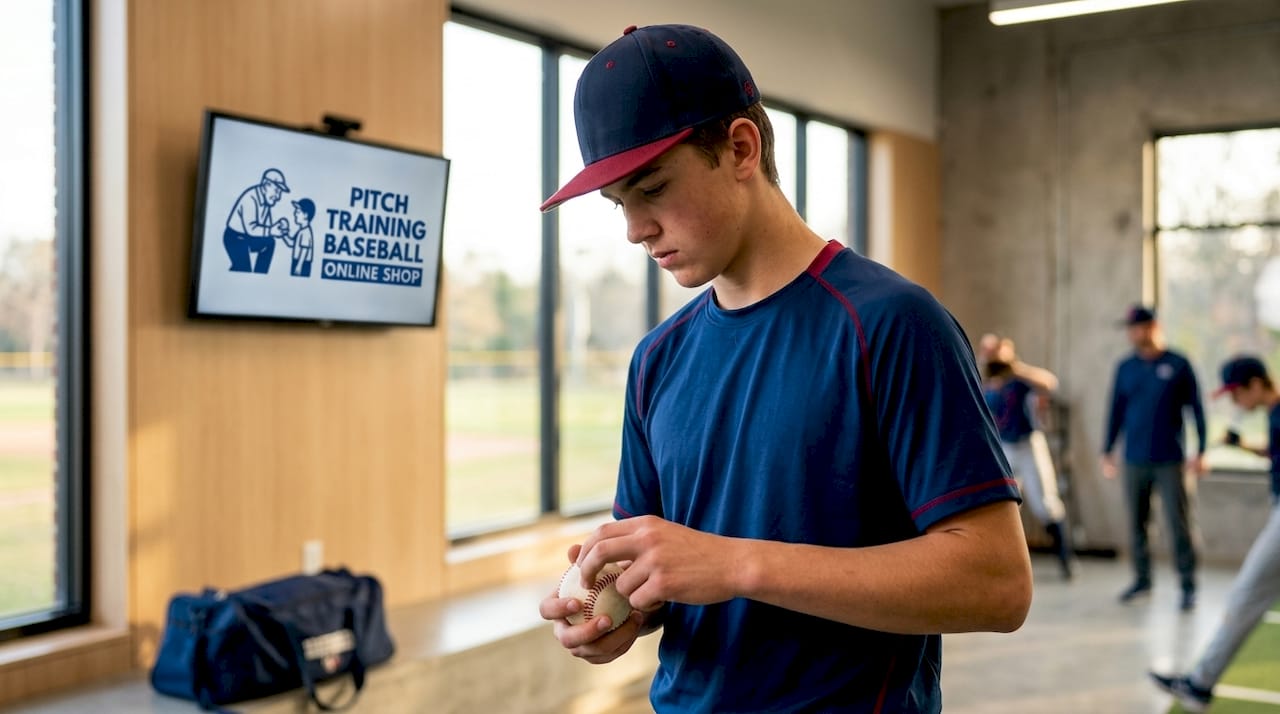
Arm care with bands, light dumbbells, and mobility routines is the daily foundation of a healthy pitching program. The goal isn’t just arm strength in isolation. It’s building a throwing system from the ground up, legs, core, shoulder, and elbow, that distributes stress appropriately.
Here’s a practical, ordered approach to physical arm care tools:
- Warm-up phase: Light cardio to raise core temperature, followed by dynamic stretching of hips, shoulders, and thoracic spine. Never start throwing cold.
- Progressive long toss: Begin at short distance with controlled throws and gradually work back to build arm strength without shocking the shoulder.
- Resistance band work: External shoulder rotation, scapular pull-aparts, and prone Y-T-W raises target the exact muscles most at risk in youth pitchers.
- Core and lower body training: Single-leg stability exercises and rotational core work reduce how much strain the arm has to absorb by improving power transfer from the legs.
- Cool-down routine: Light jogging and gentle shoulder and forearm stretching after every session promotes circulation and speeds up recovery.
- Ice application: Post-pitching ice for 15-20 minutes on the elbow and shoulder helps manage inflammation, especially after high pitch count outings.
Strengthening the posterior shoulder, rotator cuff, and scapular stabilizers is the specific target of most quality arm care programs. These muscles don’t get stronger from pitching alone. They need dedicated, direct work outside of throwing sessions.
Pro Tip: Consistency beats intensity. A 10-minute arm care routine done daily is worth more than a 45-minute session once a week. Young athletes who establish the habit early maintain healthier arms throughout their careers.
For more on how to coach these physical habits into young pitchers’ routines, the youth pitching coaching tips resource walks through the fundamentals clearly.
Comparison of safe pitching tools versus risky alternatives
Knowing what safe pitching gear looks like is only useful if you can also recognize what isn’t safe. Here’s a direct comparison of common approaches.
| Tool or approach | Safe option | Risky alternative | Key caution |
|---|---|---|---|
| Ball type | Age-appropriate standard baseball | Weighted baseballs | Weighted baseballs increase stress on developing joints significantly |
| Workload tracking | Pitch count app plus soreness log | No tracking, gut feeling only | Untracked volume leads to overuse injuries |
| Arm conditioning | Daily bands and mobility work | Sporadic heavy lifting sessions | Irregular loading creates imbalances |
| Pitch signaling | Electronic system plus hand signal backup | Sole reliance on electronic systems | Technology fails at worst moments |
| Season structure | Structured rest periods, 2-4 months off annually | Year-round pitching without breaks | High innings and year-round pitching dramatically raise surgery risk |
A few things are worth calling out directly from this comparison:
- Weighted balls are genuinely risky for younger athletes. This isn’t overcaution. The biomechanical stress they create is measurable and documented. Save that discussion for older teens working with a professional.
- Sporadic arm care is almost worse than none because it creates a false sense of protection without building real resilience.
- Year-round pitching is the single most controllable risk factor most families and coaches overlook. Kids who specialize early and pitch through every season face dramatically elevated injury rates.
For more on developing the specific grip mechanics that reduce strain during pitching, pitching grip skills covers the fundamentals in detail.
How to choose and combine safe pitching tools effectively
The best pitching safety setup isn’t one product. It’s a system. Here’s how to build one from scratch.
Step-by-step implementation:
- Start in preseason. Introduce any new technology or training tool at least four weeks before the first game. Players shouldn’t be figuring out a new pitch-calling system mid-season.
- Set up your tracking system first. Download your pitch count app and establish daily soreness logging as a non-negotiable habit before you add anything else.
- Build the arm care routine into every practice. Treat it like fielding drills, not optional homework. Include bands and mobility work at the start and end of every session.
- Evaluate your ball selection. Use standard age-appropriate baseballs for all training. If weighted implements come up, consult a certified pitching coach or sports medicine professional before proceeding.
- Educate your players on pain signals. A young pitcher who understands that elbow pain means stop throwing today is a safer pitcher than one chasing through discomfort for a coach’s approval.
- Review your tracking data weekly. Pitch counts and soreness trends tell you when to ease up and when a player has room to push. Don’t wait for a problem to look at the data.
Daily and weekly safe pitching protocol at a glance:
- Each practice session begins with 5-10 minutes of dynamic warm-up before any throwing
- Pitch count and soreness are logged immediately after every session, game or practice
- Arm care exercises (bands, core, lower body) are completed post-throwing, not skipped
- Rest days are honored strictly based on pitch count thresholds
- At least one full rest day per week from all overhead throwing, regardless of count
Embedding arm care in team culture prevents injuries far more reliably than any individual tool. When rest days, warm-ups, and tracking are simply what your team does, not optional extras, players internalize the habit.
Pro Tip: Track your player’s acute-to-chronic workload ratio. Compare the current week’s throw volume to the average of the past four weeks. If it spikes above 1.3 times the average in a single week, back off. This ratio is how professional organizations catch overuse before the arm signals pain.
For practical ideas on building sessions that replicate game pressure without adding unnecessary load, game-like pitching practice is a solid starting point.
Why embedding safety culture beats chasing quick fixes in pitching tools
Here’s an uncomfortable truth most pitching content won’t say directly: the tool isn’t the problem or the solution. The culture around the tool is.
We’ve watched the youth baseball world cycle through products. Radar guns that pressure 10-year-olds to hit velocity milestones. Weighted balls marketed as velocity shortcuts. Recovery gadgets that cost hundreds of dollars while players skip their five-minute warm-up routine. None of those tools failed because they were poorly made. They failed because they were dropped into programs that had no safety culture underneath them.
The common misconception is that strength comes from adding load. It doesn’t. It comes from mechanics built on a foundation of recovery, consistent conditioning, and smart progression. A player with great mechanics and a solid arm care routine will outlast and eventually outperform a player who tried to shortcut the process every time.
“Arm care is not an individual responsibility, but a team-wide culture and routine.” — Dr. Christopher Houdek
That quote should be on the wall of every dugout. Because the real risk isn’t that parents and coaches choose the wrong app. It’s that they treat pitching safety as a personal project for the pitcher when it needs to be the default behavior of the entire program.
Technology should make things simpler, not more complicated. The best examples of pitching aids reduce cognitive load on players and give coaches better information. They don’t replace judgment; they support it. An app that logs pitch counts is only useful if someone reviews the data and acts on it.
The coaches who build the safest, most successful youth pitching programs share one thing: they talk about arm care like it’s as important as batting practice. Not a footnote. Not something the athletic trainer handles. A core part of what it means to play for their team. That culture shift is the only “tool” that works without conditions.
If you’re building that culture from the ground up, revisiting how improving baseball throwing techniques connects to safety gives you a practical starting framework.
Boost safe pitching skills with trusted training tools
If you’re ready to put these principles into practice, having the right physical training equipment makes a real difference. At Pitch Training Baseball, we focus specifically on tools built for safe, effective youth development.
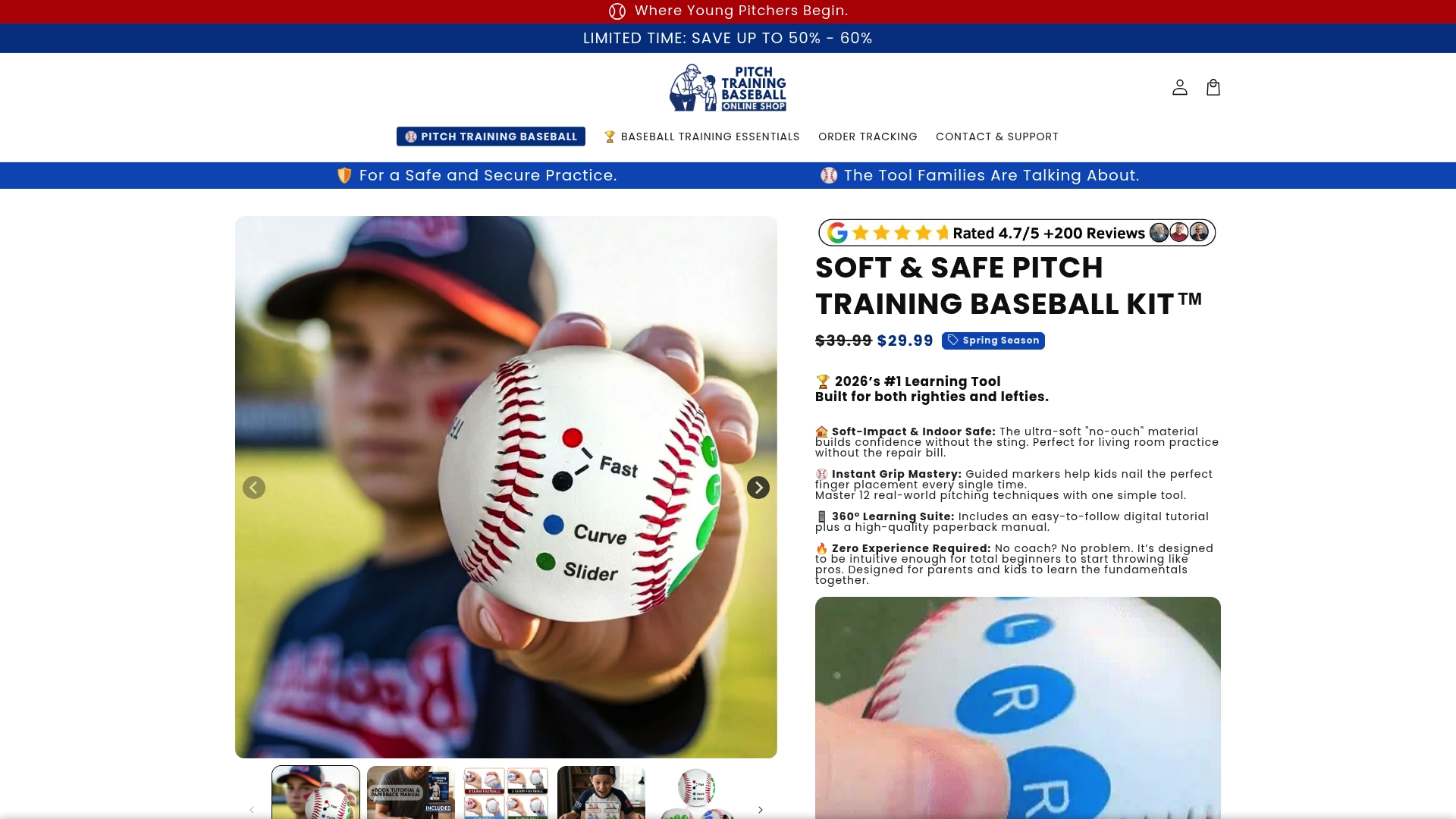
The pitch training softball is a great starting point for younger players building arm strength safely, with a design that supports proper mechanics without overloading developing joints. For accuracy training, the pitching target net with Strike 9 zone gives pitchers immediate visual feedback on location without adding throw volume. And for families who want complete coverage, package protection ensures your training investment is covered every step of the way. With these tools and your knowledge combined, you’re equipped to support safe and effective pitching development.
Frequently asked questions
What are the safe pitch count limits for youth baseball players?
Pitch Smart guidelines recommend age-based limits: ages 7-8 may throw a maximum of 50 pitches per game, ages 9-10 up to 75, with mandatory rest days required based on how many pitches were thrown.
Are weighted baseballs safe for youth pitchers?
Weighted baseballs increase biomechanical stress on developing joints and are generally not safe for youth pitchers unless introduced carefully under professional supervision for older teens only.
How can technology help reduce pitching injuries?
Apps like Pitchers Tracker log pitch counts and soreness, while electronic pitch-calling systems reduce mental fatigue, helping coaches monitor workload and prevent injury through better decision-making.
What arm care exercises are recommended for young pitchers?
Daily routines including resistance band exercises such as external rotations, scapular pull-aparts, prone Y-T-W raises, and core strengthening work consistently reduce injury risk for youth pitchers.
How important is rest for youth pitchers?
Rest is critical: youth pitchers should follow pitch count rest guidelines, avoid pitching on three consecutive days, and take 2-4 months off annually from overhead throwing to protect arm health long-term.
Recommended
- How to improve baseball throwing: techniques and tools – Pitch Training Baseball
- How to assess youth pitching performance step by step – Pitch Training Baseball
- How to throw a baseball: proven youth coaching tips – Pitch Training Baseball
- Game-like pitching practice: Raise youth baseball skills fast – Pitch Training Baseball