


Strength-trained, pain-free athletes aged 16 and older can benefit from weighted ball training. The single best first purchase for most baseball players is a small set of weighted baseballs spanning 4–7 oz, which covers both underload and overload work without jumping to weights that stress an underprepared arm. Youth players who are still growing, have not yet built a strength foundation, or have not been screened by a coach or physical therapist should hold off.
TL;DR
- Do: Use weighted balls as a supplement inside a structured program, not as a standalone velocity fix.
- Don’t: Hand a 12-year-old a 7 oz ball and tell him to throw as hard as he can.
- Safety caveat: A 6-week controlled trial found a 24% injury rate in the weighted-ball group versus 0% in the control group. Screening and dosage matter.
- Pro tip: Keep all high-intent weighted throws to net work at 6–15 feet. Never throw off a mound with an overweight ball.
Pro Tip: Start with a 5 oz ball if you’re a high school pitcher with at least one full season of strength training behind you. That single weight covers most introductory drills before you ever need to expand the set.
Table of Contents
- What types of weighted balls are there, and what does each one do?
- Which weight should you start with, and how do you progress safely?
- How do you implement weighted-ball work without getting hurt?
- What does the research actually say about benefits and risks?
- How do weighted balls compare to other arm-strength training tools?
- Should you consult a coach or physical therapist before starting?
- Key Takeaways
- The velocity chase is the real risk
- Pitchtrainingbaseball has the right tools to start safely
- Useful sources and research
What types of weighted balls are there, and what does each one do?
Not all weighted balls are the same tool. Buying the wrong type for your goal is one of the most common mistakes coaches and parents make.
Weighted baseballs (overweight and underweight) are regulation-sized or near-regulation-sized balls ranging roughly from 2 oz to 7 oz. A standard baseball is 5–5.25 oz. Overweight balls (6–7 oz) build deceleration strength and reinforce mechanics under load. Underweight balls (2–4 oz) train arm speed and fast-twitch recruitment. Both are used for short-range net throws, not long toss. The seam feel and size matter here: a ball that doesn’t feel like a baseball trains a different motor pattern, which is why baseball-specific construction is worth prioritizing for pitchers.
Plyo/soft weighted balls are foam or rubber-covered balls, often in the 100–450 gram range, designed for wall rebounds and partner throws. They absorb impact, which makes them safer for high-rep plyometric work and useful for deceleration training without the joint stress of a hard implement. They’re also the better choice for younger or less-experienced athletes who need arm-speed work without the injury exposure of a hard overweight ball.
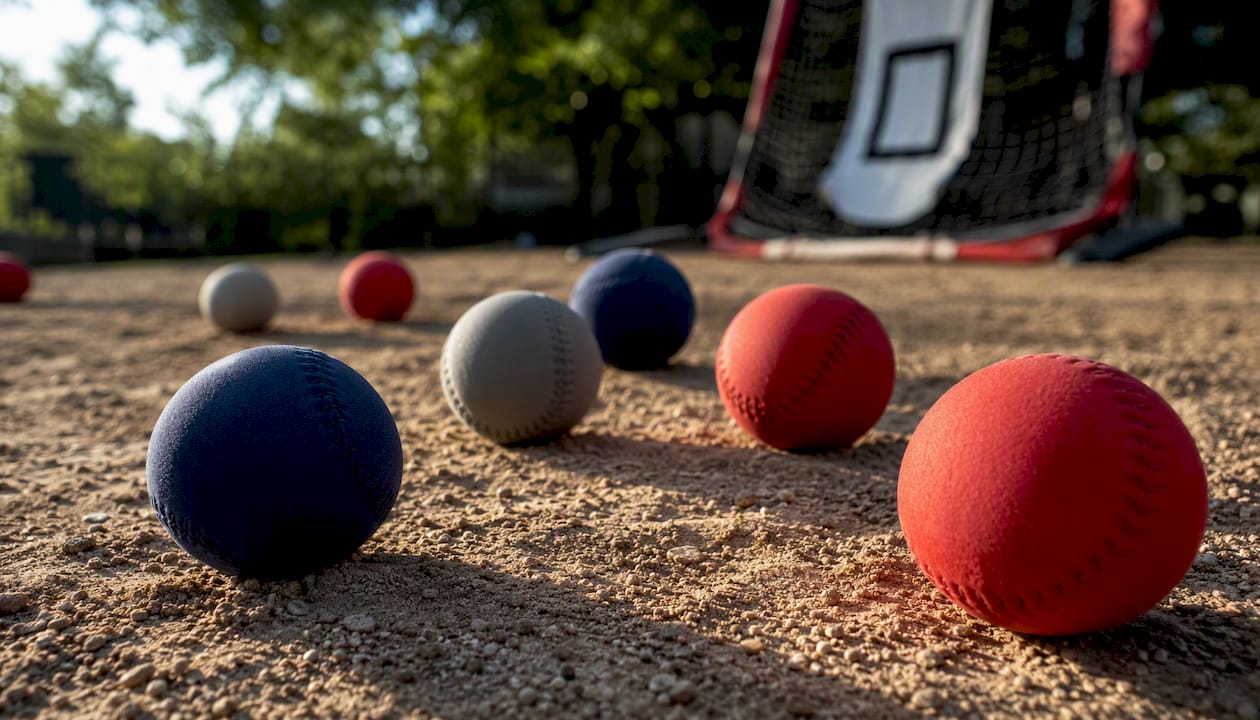
Medicine balls (with or without handles) serve a different purpose entirely: core power, rotational strength, and hip-to-shoulder sequencing. A 6–10 lb slam ball or rotational throw develops the kinetic chain that feeds velocity. They are not a substitute for baseball-specific weighted balls, and using a heavy medicine ball for pitching-pattern drills is a common mistake that trains the wrong movement at the wrong speed.
Common mistakes to avoid:
- Using a medicine ball for arm-speed drills that require baseball-specific feel
- Treating plyo balls as interchangeable with weighted baseballs for mechanics work
- Skipping underweight balls entirely and going straight to overload
- Assuming heavier always means better adaptation
The original intent behind weighted-ball work, as Dr. Mike Marshall’s early methods showed, was mechanical clarity and progressive loading with pronation safety. Modern velocity programs often strip that context out, leaving athletes with a heavy ball and no framework. That’s where injuries start.
Which weight should you start with, and how do you progress safely?
The answer depends on who the athlete is, not just how old they are.
Screening prerequisites
Before any weighted ball enters a training program, three conditions should be met. First, the athlete should be skeletally mature or close to it. Most reputable facilities, including guidance from the ABCA’s coaching resources, set a practical floor around age 16 with individual assessment. Second, the athlete needs a strength foundation: at minimum one full off-season of structured resistance training, not just playing catch year-round. Third, the athlete must be pain-free through a full throwing motion and clear a basic movement screen (shoulder mobility, scapular stability, hip rotation).
Safe progression protocol
- Establish a baseline: document shoulder ROM, strength benchmarks, and a pain-free throw count before starting.
- Begin with 2 sessions per week, 15–20 total weighted throws per session, at 75–80% intent.
- Add no more than 5 throws per session per week. Do not increase weight and volume simultaneously.
- Re-assess shoulder ROM and strength every 3–4 weeks. A sudden increase in passive external rotation is a warning sign, not a progress marker.
- Reduce weighted-ball volume during in-season. This is supplemental work, not the main program.
- Stop immediately if the athlete reports elbow or shoulder pain, not just soreness.
Injury rate signal: The Reinold et al. 6-week trial reported a 24% injury rate in the weighted-ball group and a 4.3° increase in shoulder external rotation PROM. A professional-level interim safety analysis found arm injury rates of 11.8 per 1,000 game exposures in weighted-ball pitchers versus 7.5 per 1,000 in non-users. Those numbers argue for conservative dosing, not avoidance, but they demand respect.
Total workload (weight multiplied by reps) drives adaptation more than ball weight alone. A systematic review of weighted-ball programs found that protocols vary widely in weight (4–32 oz) and structure, and that overall program volume is a key variable. Tracking throw counts matters as much as tracking which ball you’re using.
How do you implement weighted-ball work without getting hurt?
Structure is what separates a productive weighted-ball program from one that ends a season early. Here’s a session template that works.
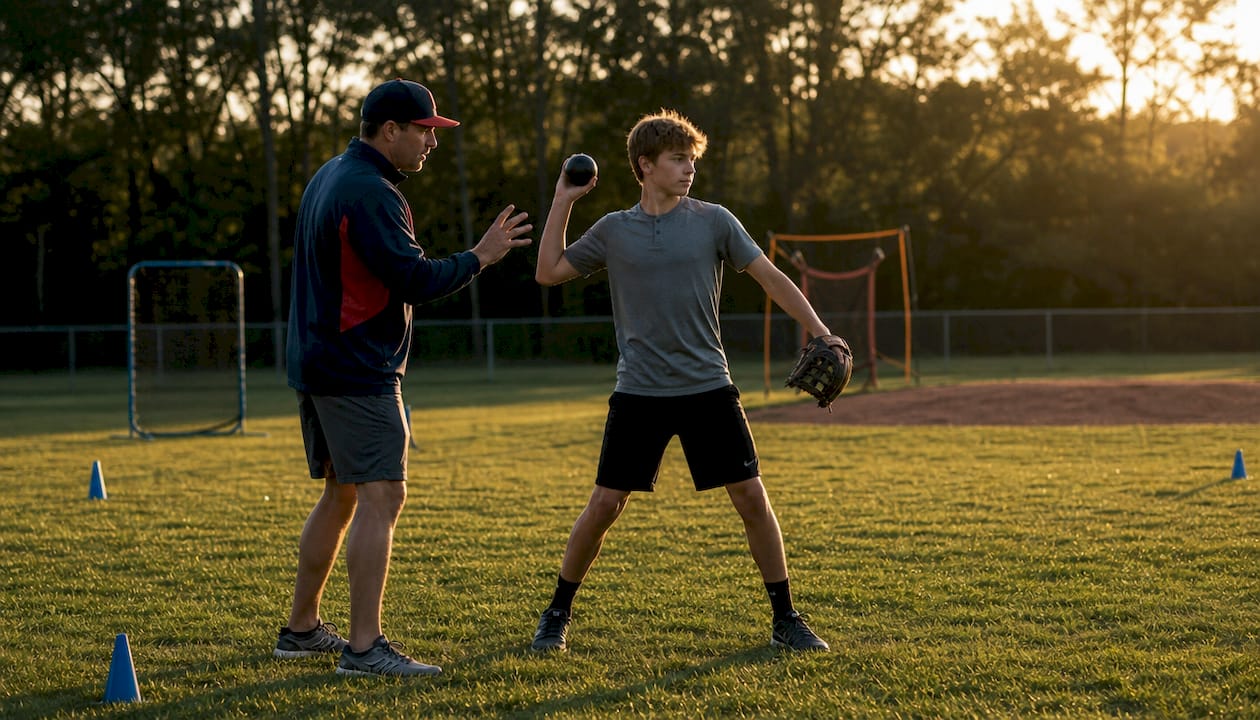
Integration with strength training
When weighted-ball volume increases, reduce heavy upper-body pressing and pulling volume by roughly 20–30%. The shoulder is accumulating stress from both directions. Off-season is the right time for higher weighted-ball volume; in-season, cut sessions to once per week at most and prioritize arm recovery.
Red flags that require stopping and reassessing:
- Any sharp or localized elbow or shoulder pain during or after throws
- A noticeable increase in passive external rotation (more than 5° from baseline)
- Decreased velocity or arm fatigue that persists more than 48 hours
- Mechanical breakdown: the arm dragging, early trunk rotation, or loss of hip-shoulder separation
Pro Tip: Film every weighted-ball session from the side and behind. Mechanical breakdown under load is often invisible to the naked eye but obvious on video. Catching it early prevents the compensation patterns that lead to injury.
What does the research actually say about benefits and risks?
The honest answer is: modest gains, real risks, and not enough long-term data to be certain about either.
The most-cited controlled trial, Reinold et al., found a 3.3% increase in pitch velocity after a 6-week weighted-ball program. That’s roughly 2–3 mph for a pitcher throwing 80 mph. The same study found a 24% injury rate in the weighted-ball group versus 0% in controls, and a 4.3° increase in shoulder external rotation PROM. The velocity gain is real. So is the injury signal.
A systematic review of weighted-ball velocity programs found that most studies do report velocity increases, but the evidence quality is low across the board. Protocols vary from 4 oz to 32 oz, session structures differ widely, and no study has tracked long-term outcomes past a single season. The review concluded that the evidence base is heterogeneous and that long-term safety remains unknown.
At the professional level, an interim MiLB safety analysis reported arm injury rates of 11.8 per 1,000 game exposures among weighted-ball pitchers compared to 7.5 per 1,000 for non-users. The weighted-ball group also carried a higher overall burden of time-loss injuries.
Key evidence points:
- Velocity gains are modest and consistent across studies, roughly 3.3% over 6 weeks as reported in the most-cited controlled trial.
- Increased shoulder external rotation PROM is a likely mechanism for both the velocity gain and the injury risk, as it raises tensile stress on the UCL and posterior capsule.
- The clinical safety review concludes that individualized programming and biomechanical monitoring are necessary, not optional.
- Many perceived gains in youth athletes may reflect natural growth and overall training volume rather than the weighted balls specifically.
Bottom line on evidence: The research supports cautious, supervised use for mature, strength-trained athletes. It does not support unsupervised youth programs or high-volume protocols without monitoring.
The WTOP velocity training explainer notes that MLB organizations have mixed reactions to weighted-ball programs precisely because the risk-benefit calculation changes depending on the athlete’s age, workload, and program structure. What works for a 22-year-old professional with a full-time strength staff is not automatically safe for a 15-year-old throwing twice a week in his backyard.
How do weighted balls compare to other arm-strength training tools?
Weighted balls occupy a specific niche. They’re not the only way to build arm strength, and for some athletes, they’re not the right starting point.
Resistance bands are the lowest-risk option for rotator cuff and scapular strengthening. They build the supporting musculature that protects the arm during throwing. Every weighted-ball program should include band work as a foundation, not a replacement. Bands don’t train throwing velocity directly, but they reduce the injury exposure that weighted balls create.
Long toss builds arm strength through progressive distance and effort. It’s lower-risk than overweight throwing because the ball weight stays constant and the athlete self-regulates effort. For younger athletes or those early in their development, a structured arm strength program built around long toss and band work is often the smarter first step before any weighted implement enters the picture.
Medicine balls train rotational power and hip-to-shoulder sequencing, which feeds velocity through the kinetic chain rather than directly through arm speed. A pitcher who adds 10 lbs to their rotational strength will often see velocity gains without any change in throwing implements. This is lower-risk and has broader athletic benefits.
Weighted balls specifically add value when an athlete has already built the foundation above and needs targeted arm-speed or deceleration work. They’re a finishing tool, not a starting point. The ballistic training principles that underpin weighted-ball use apply across throwing sports, but the implementation must match the sport’s specific demands.
For rehab contexts, plyo balls and light resistance work typically precede any return to weighted baseball throws. A physical therapist should clear the athlete before overweight implements re-enter the program.
Should you consult a coach or physical therapist before starting?
Yes, and not just as a formality.
A qualified coach or physical therapist brings three things that no article can replace: a movement screen, a baseline assessment, and the ability to monitor changes over time. The ABCA’s facility-level guidance recommends a formal assessment before starting any weighted-ball program and a re-assessment every four weeks during the program. That cadence exists because the early warning signs of overuse, a subtle ROM change or a slight drop in velocity, are easy to miss without a baseline to compare against.
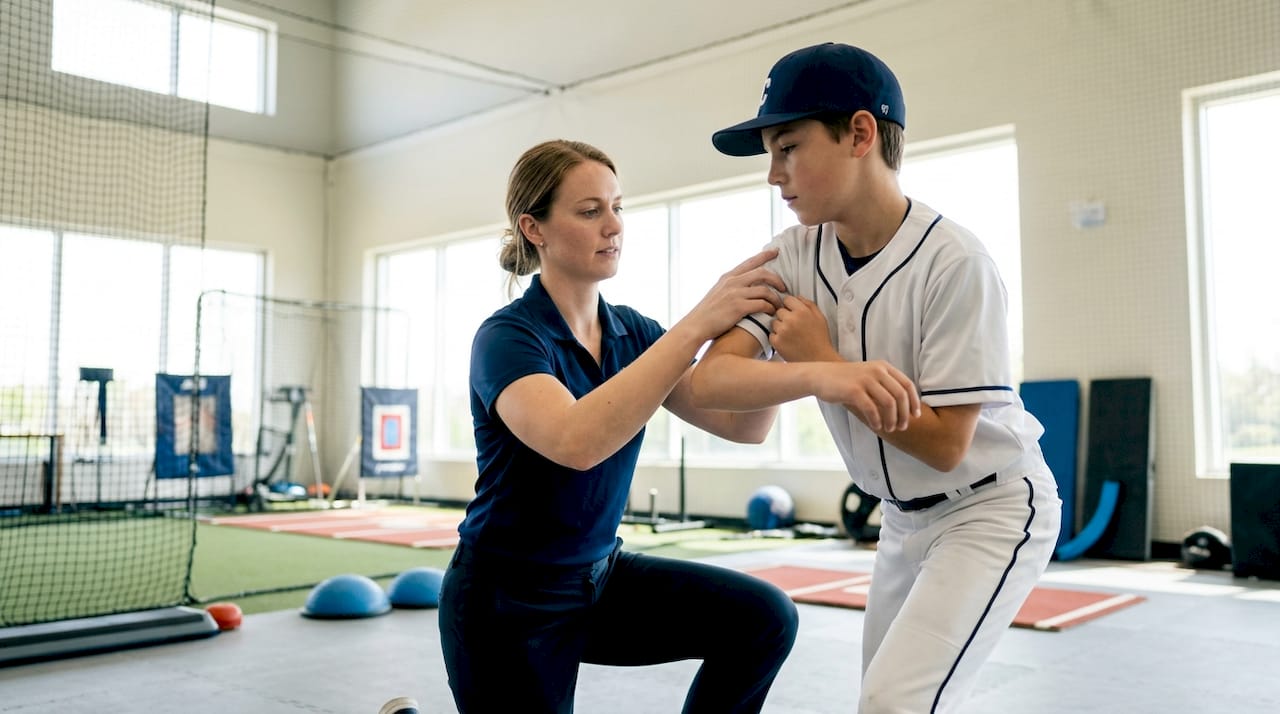
For parents buying weighted balls for a youth athlete, the practical step is a conversation with the team’s pitching coach or a sports physical therapist before the first throw. Ask specifically: Is this athlete ready for overweight implements? What’s the starting dosage? What do we watch for?
For coaches running a team program, injury prevention practices should be built into the program structure from day one, not added after someone gets hurt. That means documenting throw counts, tracking ROM at each re-assessment, and having a clear protocol for when an athlete reports pain.
The pressure to add velocity is real, especially at the high school level where radar guns appear at tryouts. But a pitcher who misses six weeks with an elbow injury loses far more than the 2–3 mph a weighted-ball program might have added. The consultation step is where that math gets done honestly.
Key Takeaways
Weighted balls produce modest, real velocity gains for mature, strength-trained athletes, but the injury data demands conservative dosing, mandatory screening, and ongoing monitoring before and throughout any program.
| Point | Details |
|---|---|
| Eligibility first | Athletes should be 16+, strength-trained, pain-free, and movement-screened before using overweight hard implements. |
| Start conservative | Begin at 5–6 oz for overload work, 15–20 throws per session, twice per week, at 75–80% intent. |
| Track total workload | Volume (weight × reps) drives adaptation; never increase weight and throw count at the same time. |
| Re-assess every 3–4 weeks | Monitor shoulder external rotation ROM and strength; a sudden ROM increase is a warning sign, not progress. |
| Pitchtrainingbaseball starting point | Pitchtrainingbaseball offers sport-specific training balls and target nets that fit the short-range net work protocol this guide recommends. |
The velocity chase is the real risk
The research on weighted balls is honest about what it shows: a few mph of gain, a real injury signal, and not enough long-term data to say the trade-off is clean. What the research can’t capture is the cultural pressure that surrounds this tool, especially at the youth level.
Weighted balls got commercialized fast. Once pro pitchers started posting velocity gains, training facilities built programs around them, and parents started buying sets for 13-year-olds who hadn’t yet done a single pull-up. The tool didn’t change. The context around it did.
The practitioners who use weighted balls well, the coaches who follow the kind of framework Eric Cressey describes, treat them as a late-stage supplement inside a program that already includes strength training, long toss, and arm care. They don’t introduce weighted implements until the athlete has earned them through a foundation phase. That sequencing is what the injury data argues for, even if it’s not what the marketing says.
For youth athletes specifically, the honest coaching advice is this: the velocity gains from a weighted-ball program at age 14 are smaller than the gains from getting stronger, throwing more consistently, and staying healthy through a full season. Build the foundation first. The weighted balls will still be there at 17.
Pitchtrainingbaseball has the right tools to start safely
If you’ve read this far and you’re ready to build a weighted-ball program the right way, the place to start is short-range net work with sport-specific training balls, not a mound session with the heaviest ball you can find.
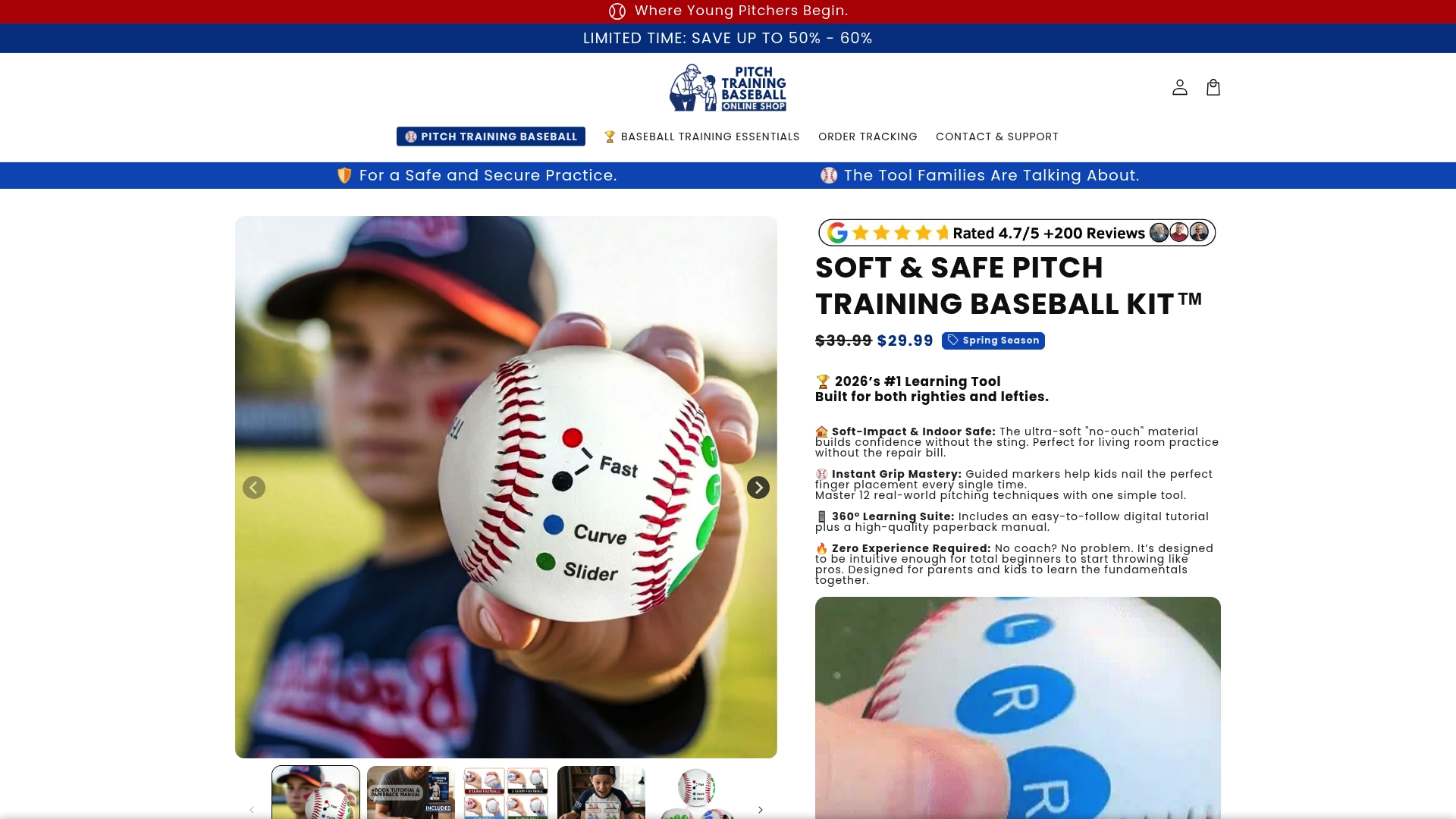
Pitchtrainingbaseball carries training balls and the Pitching Target Net with 9-Zone Strike Zone that pairs directly with the net-work protocol in this guide. The 9-zone target gives pitchers immediate feedback on location during weighted throws, which turns a pure velocity drill into a mechanics drill at the same time. For parents buying for a youth athlete, the 5 Pickeballs starter set is a lower-impact entry point that fits the plyo-first recommendation for athletes under 16. If you’re uncertain which product fits your athlete’s current level, Pitchtrainingbaseball’s customer support can help you match the right tool to the right stage of development before you buy.
Useful sources and research
Peer-reviewed studies
- The Safety and Efficacy of Weighted Baseballs
- Effect of a 6-Week Weighted Baseball Throwing Program on Pitch Velocity, Pitching Arm Biomechanics, Passive Range of Motion, and Injury Rates
- Weighted-Ball Velocity Enhancement Programs for Baseball Pitchers: A Systematic Review
- Weighted Baseballs: Safe and Effective, or Stupid and Dangerous? — EricCressey.com
- What is velocity training? How pitchers use weighted baseballs to throw harder
- The Hot Corner: Weighted Ball Training — 7 considerations (ABCA)
Systematic reviews
Practitioner guidance
Applied coaching resources
Recommended
- Youth Sports Safety: A Practical Guide for Parents & Coaches – Pitch Training Baseball
- Safe pitching tools for youth baseball players – Pitch Training Baseball
- How to Introduce Breaking Balls Safely to Young Pitchers – Pitch Training Baseball
- The Role of Training Balls in Youth Baseball Pitching – Pitch Training Baseball