


Skill development is the single most reliable investment you can make in your career. Workers who actively build new abilities earn wage premiums of 9.4%–12% annually, and 92% of employees say essential skills are crucial for career success and mobility. The job market in 2026 is not waiting for anyone to catch up. Technical skills now have a half-life of just 2.5 years, which means what got you hired three years ago may already be outdated.
Here is why focusing on skill development matters right now:
- Career mobility: Workers with strong skill sets tend to hold longer job tenures and move into new roles faster.
- Financial upside: Upskilling yields a measurable annual wage premium, not just a vague sense of progress.
- Job security: Essential skills reduce the odds of unemployment by 25%.
- Retention: Over half of employees say they would change jobs for better skill-building opportunities.
- Adaptability: Continuous learning keeps you relevant as industries shift and technology reshapes roles.
What skill development actually means
Skill development is the ongoing process of acquiring, improving, and applying abilities that help you perform better at work and grow as a person. It covers a broad range of skills, including technical know-how, interpersonal abilities, and adaptive capacities.
What skill development is not is the same as earning a credential or completing a certification. A certificate proves you sat through a course. Skill development proves you can do something differently afterward. The CIPD distinguishes skills from broader competency frameworks precisely because skills are specific, measurable, and directly tied to task performance, while competencies describe a blend of behaviors, knowledge, and attitudes that are harder to track and improve quickly.
Skill development also applies at every career stage. A new hire building foundational technical knowledge, a mid-career professional learning to lead teams, and a senior executive adapting to AI-driven workflows are all engaged in the same core process. The methods differ; the principle does not.
Why skill development is critical in 2026
The organizational cost of missing skills is rising fast. The CIPD’s Learning at Work 2023 report found that skills shortages ranked in the top four organizational development priorities for learning practitioners, trailing only growth, cost reduction, and productivity. That ranking jumped from 15% of respondents flagging it in 2021 to 21% in 2023, a clear signal that the gap between what workers know and what organizations need is widening.
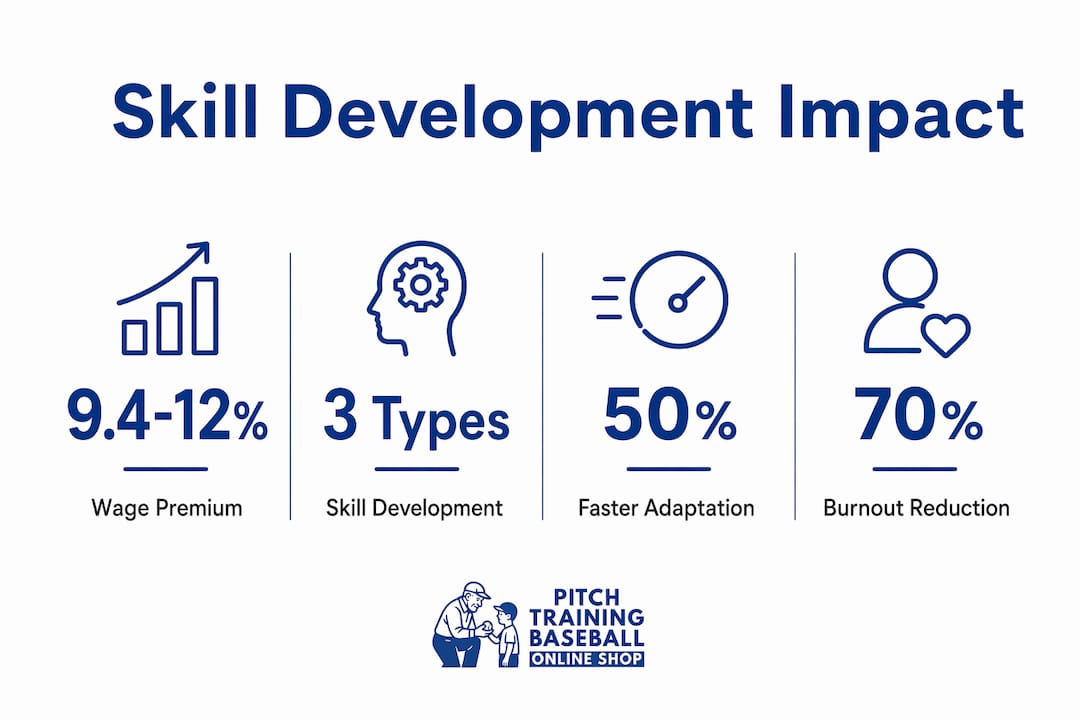
For individuals, the stakes are just as concrete. Skill-focused employees adapt faster to new roles, attract better opportunities, and build the kind of professional reputation that survives organizational restructuring. Research consistently shows that professional training links to lower risk of leaving current employment, with job satisfaction and organizational commitment acting as the bridge between learning and retention.
The organizations that get this right build workforces that bend without breaking. Those that ignore it face compounding hiring costs, disengaged teams, and a talent pipeline that dries up faster than they expect.
What drives the growing focus on skills:
- The substantial organizational cost of unfilled skill gaps
- Leaders now expecting employees to upskill on the job, not just during onboarding
- Skills-based hiring proving more predictive of performance than education or experience alone
- Graduates increasingly requiring significant upskilling before contributing at full capacity
- Rapid technology change making static knowledge bases obsolete within years
The three main types of skill development you need to know
Not all skill-building looks the same. The type you pursue depends on where you are in your career and where the market is heading.
-
Upskilling means deepening your existing abilities. A software developer learning advanced machine learning techniques, or a coach refining their pitching instruction methods, is upskilling. The goal is to become more capable in your current lane. Just as focused pitching practice sharpens a young athlete’s accuracy over time, targeted professional upskilling produces compounding performance gains.
-
Reskilling means learning an entirely new set of abilities, usually to move into a different role or field. A retail manager transitioning into supply chain logistics, or a journalist pivoting to content strategy, is reskilling. It requires more time and deliberate effort than upskilling, but it opens doors that staying in one lane never will.
-
Cross-skilling means broadening your capabilities across adjacent roles without abandoning your core function. A marketing professional who learns basic data analytics, or a pitcher who also trains as an outfielder, becomes more versatile and harder to replace. Cross-skilling is especially valuable in smaller organizations where people wear multiple hats.
Each approach serves a different purpose, and the most resilient professionals use all three at different points in their careers.
The real benefits of building your skills
The data on skill development’s impact is consistent across industries. Companies that invest in targeted employee training see a 17% increase in productivity and a 21% boost in profitability. Those are not marginal gains.
Key stat: Organizations with strong skills-focused learning cultures achieve 2.1× higher employee engagement and 1.6× better retention than peers without that culture.
For individuals, the benefits stack up across multiple dimensions:
- Wage growth: Upskilling produces an annual wage premium of 9.4%–12%, compounding over a career.
- Job security: Essential skills reduce unemployment risk by 25%, a buffer that matters most during economic downturns.
- Engagement: Continuous learning reduces burnout and keeps people genuinely interested in their work.
- Hiring advantage: 86% of organizations now prioritize skills-based hiring, resulting in 90% fewer hiring mistakes compared to credential-based approaches.
- Performance: 87% of learners immediately apply newly acquired skills to their jobs, and 91% report deeper subject-area understanding after focused training.
- Internal mobility: Workers with documented skill growth move into new roles faster, reducing the need for external hiring.
The connection between skill investment and business outcomes is not theoretical. Training programs tied to business metrics like productivity, revenue, and retention demonstrate clear ROI and justify ongoing investment. Organizations that measure skill development against real outcomes, not just course completion rates, see the clearest returns.
How to start focusing on skill development today
Starting is simpler than most people make it. The barrier is usually not access to learning resources. It is the absence of a clear plan.
-
Assess your current skills honestly. List what you do well, what you do adequately, and what you avoid because you are not confident. Be specific. “I communicate well” is not useful. “I can run a client presentation but struggle with written reports” gives you something to work with.
-
Set concrete development goals. Vague goals produce vague results. “Get better at data analysis” is a wish. “Complete a SQL fundamentals course and apply it to one work project within 60 days” is a goal. Specific, time-bound targets create accountability.
-
Identify your skill gaps. Compare where you are against where you want to be, or against what your industry demands. Job postings in your target role are one of the most underused tools for this. They tell you exactly what skills employers are paying for right now.
-
Prioritize by impact. You cannot build every skill at once. Focus first on the abilities that will produce the most immediate performance improvement or open the most doors. Transferable skills like communication, data literacy, and project management tend to pay off across multiple roles.
-
Choose learning methods that fit your life. Online courses through platforms like Coursera or LinkedIn Learning, mentorship, job shadowing, peer collaboration, and on-the-job stretch assignments all build skills. The best method is the one you will actually use consistently. Coaches play a critical role in accelerating skill acquisition, whether in sports or professional settings.
-
Build in reflection time. Skill development without reflection produces surface-level progress. After completing a course or project, ask yourself what you did differently, what worked, and what you would change. That loop is where real learning happens.
-
Track your progress against measurable outcomes. Did your presentation scores improve? Did you complete the project faster? Did you get the promotion? Connecting skill growth to concrete results keeps you motivated and helps you make the case for continued development.
Pro Tip: Rachel Kerrigan, HBS Online’s associate director of Strategic Alliances, puts it plainly: “Companies need to make learning feasible: provide time, reduce friction, and embed development into the flow of work.” If you are doing this on your own, apply the same logic. Schedule learning like a meeting, not a vague intention.
Building career resilience through skill investment
The professionals who weather organizational change best are not the ones with the longest resumes. They are the ones with the most portable skills. Viewing your career as a diversified skill portfolio, rather than a ladder tied to one company or title, changes how you make decisions about what to learn and when.

Transferable skills protect you against restructuring, market shifts, and industry disruption in ways that job titles and credentials simply cannot. A project manager who also understands financial modeling and stakeholder communication can move across industries. A pitcher who understands the mechanics of portable training can practice and improve anywhere, not just on a regulation field. The principle is identical: skills travel with you.
Research supports the burnout angle too. Skill development integrated with genuine reflection helps people identify their signature strengths, the abilities they perform with both competence and energy. Working from those strengths produces engagement and flow states that routine task completion rarely generates. That is not a soft benefit. It is the difference between a career that drains you and one that sustains you over decades. Neuroplasticity research confirms that the brain continues adapting through deliberate skill practice at any age, which means the window for meaningful growth never closes.

The practical takeaway: do not optimize only for your current job requirements. Build skills that will matter in three roles from now, not just the next performance review.
Key Takeaways
Skill development is the most direct path to career resilience, higher earnings, and sustained engagement, with measurable benefits for both individuals and the organizations that invest in it.
| Point | Details |
|---|---|
| Wage premium from upskilling | Upskilling yields an annual wage premium of 9.4%–12%, compounding over a career. |
| Engagement and retention gains | Organizations with strong learning cultures achieve 2.1× higher employee engagement and 1.6× better retention than peers without that culture. |
| Productivity and profitability | Targeted training produces a 17% productivity increase and a 21% profitability boost. |
| Transferable skills protect careers | Portable skills shield workers from restructuring and market volatility better than credentials alone. |
| Start with a concrete plan | Assess gaps, set time-bound goals, and reflect after each learning cycle to convert training into real performance gains. |
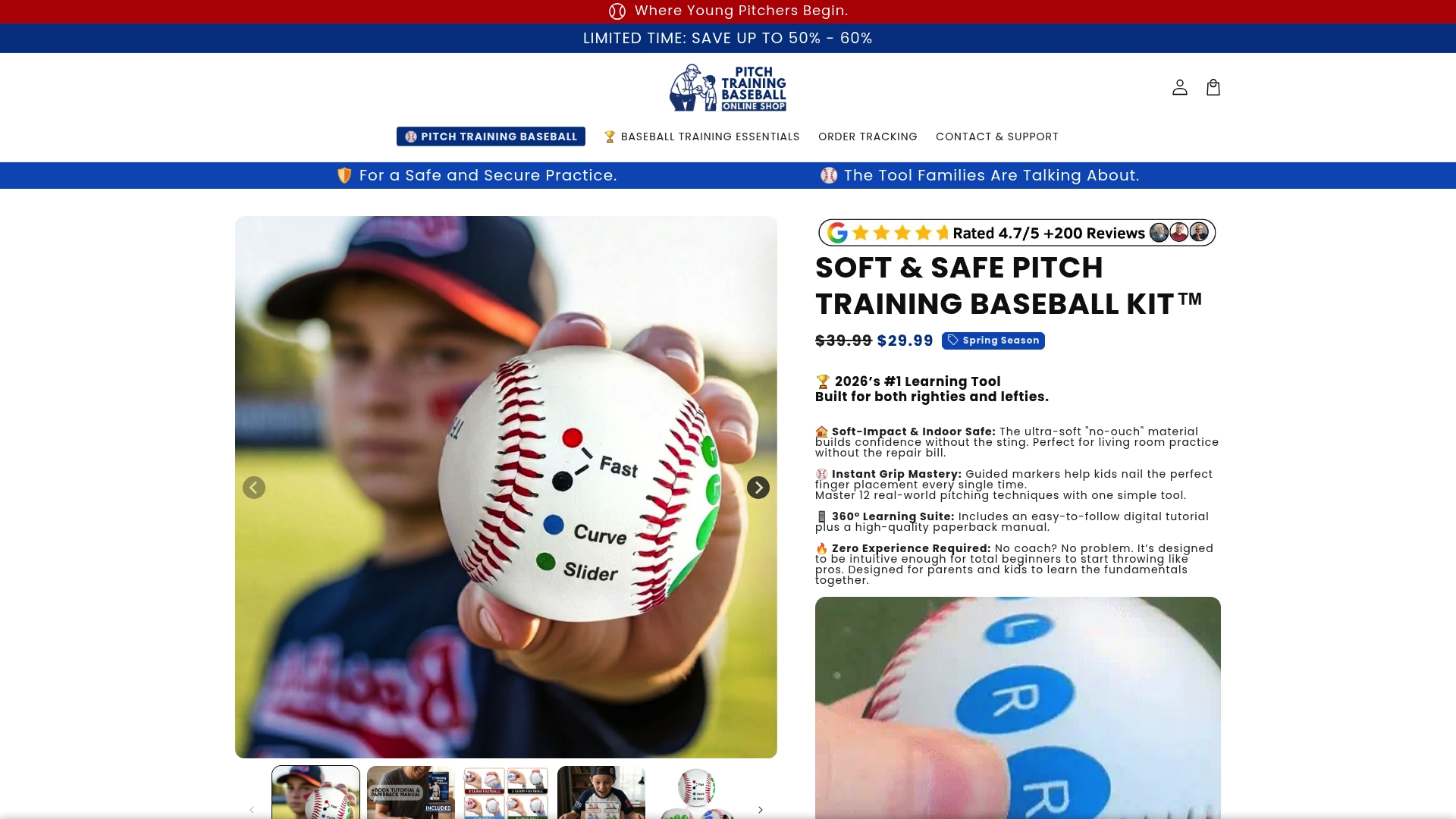
Skill development applies on the field just as much as in the office. At Pitchtrainingbaseball, the same principles that drive professional growth, deliberate practice, measurable feedback, and consistent repetition, power every training tool we build for young athletes. Whether your player is working on accuracy with a pitching target net or building arm strength with a pitch training baseball kit, the goal is the same: turn focused practice into lasting skill. Browse the full lineup at Pitchtrainingbaseball and give your athlete the tools to grow.
Recommended
- The Role of Focus in Baseball: A Player’s Guide – Pitch Training Baseball
- The Role of Coaches in Training Youth Baseball Players – Pitch Training Baseball
- Why Focus on Repetition in Pitching: a Coach’s Guide – Pitch Training Baseball
- Fix youth pitching mistakes for better performance – Pitch Training Baseball