


Mental focus in baseball is defined as the intentional control of attention that determines whether a player executes or collapses under pressure. Unlike soccer or basketball, baseball demands a unique cognitive pattern: long stretches of low activity broken by 5-second bursts of maximum concentration. Without structured mental training, the human mind wanders 47% of the time, meaning nearly half of every pitch and play happens while a player is mentally somewhere else. That number explains more losses than bad mechanics ever will. Pitchtrainingbaseball addresses this gap directly, treating mental concentration in baseball as a trainable skill, not a personality trait.
What is the role of focus in baseball?
Focus in baseball is not a single mental state. It is a dynamic system that shifts constantly between two modes: broad, relaxed awareness and narrow, intense attention. Sports psychology uses the term attentional control to describe this ability, and it is the standard framework coaches and researchers apply to baseball performance.
Baseball’s intermittent structure makes attentional control harder than in most sports. A shortstop might field two balls in a seven-inning game. An outfielder might stand in left field for 40 pitches without a ball coming near them. The brain naturally drifts during low-stimulation periods, a phenomenon called vigilance decrement. When the ball finally arrives, a player who has mentally drifted cannot snap back to full attention in time.

The dimmer switch model describes how elite players handle this. Instead of trying to stay at maximum focus for three hours, they cycle attention up and down deliberately. Between pitches, they relax their mental grip. As the pitcher winds up, they dial intensity back to full. This cycling prevents burnout and keeps peak attention available when it matters.
Constant maximum focus is neither achievable nor useful. Trying to maintain it leads to mental fatigue, anxiety, and slower reaction times by the third inning. The goal is to spend mental energy wisely, not to spend it all at once.
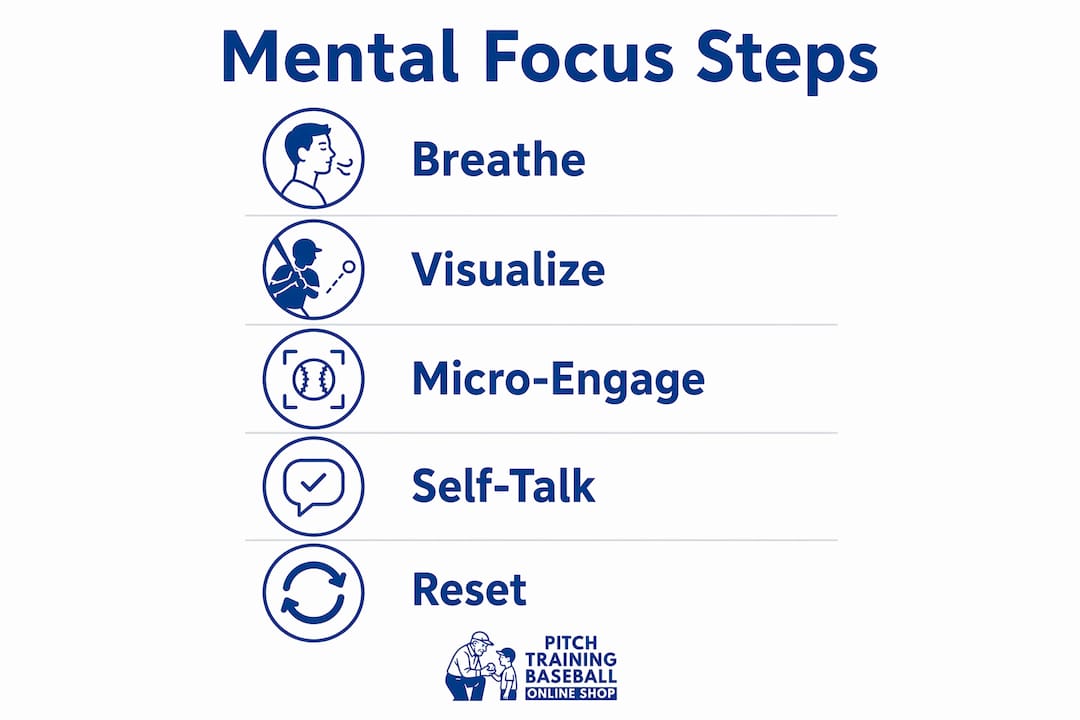
Pro Tip: Before each pitch, use a 3-second micro-engagement ritual: take one breath, pick a focal point (the pitcher’s release point or the batter’s hands), and commit fully for the next 5 seconds. Then release.
How does focus affect baseball performance scientifically?
The research on this is clear and specific. Psychological factors show a moderate positive correlation with athletic performance (r=0.329), and attention control alone carries an effect size of d=0.210 for decision-making under pressure. That effect size is meaningful in a sport where the margin between a hit and an out is measured in milliseconds.
Batting average data makes the case even more directly. Batters using process-focused self-talk outperform those using outcome-focused self-talk by more than 30 points in batting average across extended samples. Thirty points is the difference between a starter and a bench player at most levels. The mechanism is straightforward: outcome-focused thinking (“I need a hit here”) triggers anxiety, which narrows attention inward and away from the ball.
Sustained attention and visual search abilities differentiate elite athletes from developing ones. Elite players maintain sharper reactivity over long game periods because they have trained their attention systems, not just their muscles. This is why two players with identical physical tools can produce very different results.
The table below summarizes what the research shows across different baseball roles.
| Baseball role | Primary focus demand | Key research finding |
|---|---|---|
| Pitcher | Narrow pitch-by-pitch attention | Process cues outperform outcome cues by 30+ batting average points |
| Batter | Attentional switching under anxiety | Premature inward focus reduces contact rate |
| Outfielder | Sustained attention over low-action periods | Vigilance decrement requires micro-engagement resets |
| Infielder | Rapid broad-to-narrow transitions | Attentional control effect size d=0.210 for decision-making |
Focus is also trainable. Mental focus requires dedicated daily drills such as box breathing, visualization, and one-pitch focus exercises to build what researchers call neuro-muscular attention pathways. This means a player who commits to mental training for 10 minutes a day will measurably improve their attentional control over a season.
What are the best mental focus training techniques for baseball?
The most effective mental training programs for baseball players combine three categories of work: breathing regulation, visualization, and process-based self-talk. Each targets a different layer of attentional control.
Box breathing for focus regulation
Box breathing is a four-count breathing pattern: inhale for 4 seconds, hold for 4 seconds, exhale for 4 seconds, hold for 4 seconds. It activates the parasympathetic nervous system, which lowers heart rate and reduces the anxiety that causes premature inward focus. Players use it between innings, in the on-deck circle, and on the mound after a bad pitch. It takes 16 seconds and resets the nervous system faster than any pep talk.
Visualization as a mental rehearsal tool
Visualization techniques for youth players work by activating the same neural pathways used during physical execution. A pitcher who mentally rehearses a clean 1-2-3 inning before taking the mound fires the same motor patterns they would use in the game. Research consistently shows that mental rehearsal improves both accuracy and composure under pressure. The key is specificity: visualize the exact pitch, the exact location, and the exact outcome in real time, not as a fast-forward highlight reel.
Process-based self-talk versus outcome-based self-talk
This distinction is the single most underused tool in youth baseball coaching. Process-oriented cues like “see it early” or “short and direct” keep attention external and on the task. Outcome cues like “don’t strike out” or “we need this run” pull attention inward and trigger the anxiety spiral that kills performance. Coaches who replace outcome language with process language in their dugout communication see measurable changes in player composure.
Here is a practical daily mental training sequence for players:
- Morning visualization (5 minutes): Sit quietly and mentally rehearse two or three game situations in real time. Include sensory details: the sound of the crowd, the weight of the bat, the grip of the glove.
- Box breathing before practice (2 minutes): Complete three full box breathing cycles before the first drill. This primes the nervous system for focused work.
- One-pitch focus drill during batting practice: After each swing, reset completely. Do not carry the last pitch into the next one. Use a physical reset cue, such as stepping out of the box and tapping the bat on the ground.
- Process cue card: Write three process cues on an index card and keep it in your equipment bag. Review it before games. Replace any outcome language you catch yourself using with a cue from the card.
- End-of-practice mental review (3 minutes): Identify one moment where your focus was sharp and one where it drifted. Name what caused the drift. This builds self-awareness faster than any external feedback.
Pro Tip: Coaches can build process-based attention into every drill by replacing result-based feedback (“good hit”) with process feedback (“you tracked that ball all the way in”). Players internalize the habit faster when the language is consistent.
How do you apply focus techniques in real game situations?
Training focus in practice is one thing. Applying it when the game is on the line is another. The gap between the two is where most players lose their mental edge.
The key principle is this: control what you can control. Breathing, your pre-pitch routine, your self-talk, and your focal point are all controllable. The umpire’s call, the weather, the crowd noise, and your last at-bat are not. Players who try to manage uncontrollables waste mental energy and arrive at the next pitch already depleted.
Here is how focus application breaks down by situation:
- Pitching: Use a consistent pre-pitch routine every single time. The routine signals the brain to shift from broad awareness to narrow execution mode. It should take 5–8 seconds and include a physical anchor (touching the rosin bag, stepping on the rubber) followed by a single process cue. Mentally preparing to pitch with a fixed routine reduces the cognitive load on the mound and frees attention for execution.
- Batting: In the on-deck circle, use box breathing and pick a single focal point for your at-bat, such as the pitcher’s release point. When anxiety rises, the ability to switch attention from broad awareness to narrow pitch tracking is what separates contact hitters from free-swingers. Anxiety that causes premature inward focus is the direct cause of most mechanical breakdowns at the plate.
- Fielding: Outfielders face the hardest attentional challenge in baseball. Micro-engagement rituals of 3 seconds before every pitch reset attention and prevent the mental drift that causes missed reads. The ritual can be as simple as shifting weight, taking one breath, and saying a process cue internally. Infielders use the same principle but with faster transitions.
- After an error: The worst thing a player can do after an error is replay it mentally. The best thing is a physical reset: turn away from the play, take one breath, and say a reset cue (“next pitch,” “clean slate”). Telling athletes to focus harder after an error backfires because it increases anxiety and narrows attention prematurely. The reset routine does the opposite.
- Between innings: Use the dugout as a mental recovery zone, not a replay booth. Coaches who keep post-inning conversations process-focused (“what’s your plan for the next hitter?”) rather than outcome-focused (“why did you throw that pitch?”) help players conserve mental energy for the next half-inning.
Managing anxiety is the thread connecting all of these situations. Anxiety causes premature narrowing of focus, which pulls attention away from the ball and toward internal worry. The antidote is not relaxation. It is redirection: a physical anchor, a breath, and a process cue that pulls attention back to the task.
Key Takeaways
Mental focus in baseball is a trainable attentional skill that directly determines performance outcomes, and players who build it through daily process-based routines gain a measurable competitive edge over those who rely on physical talent alone.
| Point | Details |
|---|---|
| Focus is attentional control | Baseball demands cycling between broad awareness and narrow pitch-tracking, not constant maximum intensity. |
| Mind-wandering is the default | Without training, the mind wanders 47% of the time, making structured mental routines non-negotiable. |
| Process cues outperform outcome cues | Batters using process-focused self-talk outperform outcome-focused peers by 30+ batting average points. |
| Micro-resets prevent attention fatigue | A 3-second engagement ritual before each pitch prevents vigilance decrement in low-action roles. |
| Focus is trainable daily | Box breathing, visualization, and one-pitch focus drills build attentional pathways over a full season. |
What I’ve learned coaching focus that most articles get wrong
The most common mistake I see coaches make is treating focus like a character trait. They tell a player he needs to “want it more” or “lock in,” as if focus is a switch that flips on with enough willpower. That framing does real damage. It makes players feel like their mental lapses are personal failures rather than skill gaps they can close.
Focus is a skill. It fluctuates. It fatigues. And it responds to training the same way a throwing arm does. The players I’ve seen make the biggest mental leaps are not the ones who tried harder. They are the ones who built a routine and stuck to it for a full season.
The second thing most articles miss is the energy conservation piece. Players burn mental energy trying to stay locked in for three hours straight. That is not focus. That is anxiety wearing a focus costume. The dimmer switch model changed how I think about player development entirely. When I started teaching players to release focus between pitches intentionally, their sharpness at critical moments went up, not down.
The third lesson is about language. Coaches shape player attention with every word they say. A dugout full of outcome language (“we need this,” “don’t mess up”) is a dugout full of anxious, inward-focused players. Switching to process language takes about two weeks of conscious effort for a coaching staff. The results show up faster than that.
If you coach youth baseball, start with one change: replace every outcome-based comment with a process cue for one week. Watch what happens to your players’ body language in the box and on the mound. The mental side of this game is not a soft skill. It is the skill that makes all the other skills work.
— Albert
Build sharper focus with Pitchtrainingbaseball
Mental focus training works best when it is built into physical practice, not treated as a separate activity. Pitchtrainingbaseball designs training tools that put players in game-like situations where attentional control is required on every rep.
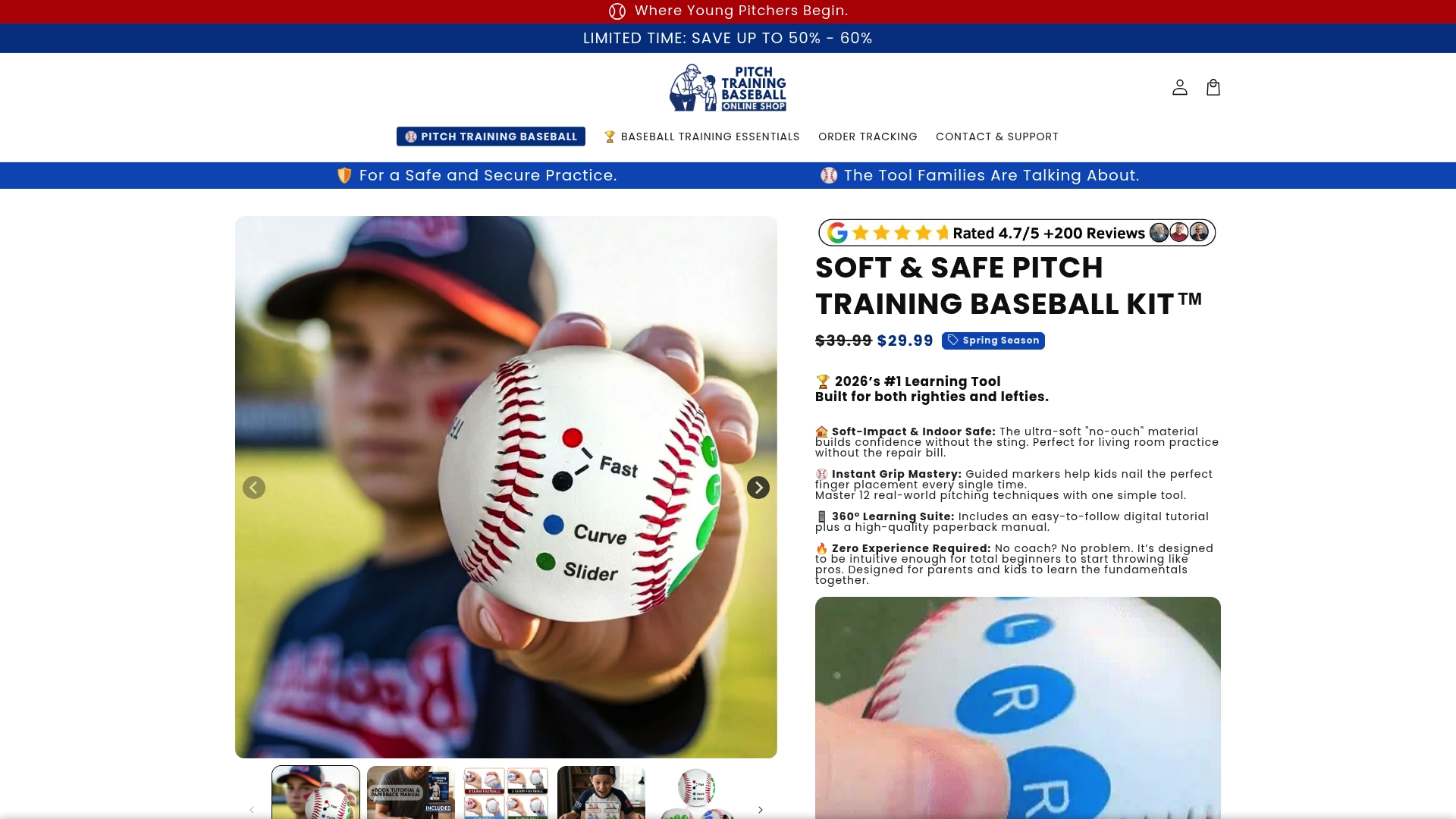
The pitching training kit gives pitchers a structured target system that demands process-focused execution on every throw. Pair it with the Pitching Target Net with Strike 9-Zone to build the kind of pitch-by-pitch mental engagement that carries directly into game performance. Every session becomes a mental training session when the equipment demands accuracy and attention simultaneously. Pitchtrainingbaseball makes that connection between physical reps and mental sharpness concrete and repeatable.
FAQ
What is the role of focus in baseball?
Focus in baseball is the intentional control of attention that allows players to shift between broad situational awareness and narrow pitch-tracking concentration. It directly determines execution quality during high-pressure moments.
How does mental focus affect batting average?
Batters using process-focused self-talk outperform those using outcome-focused self-talk by more than 30 batting average points across extended samples. Keeping attention external and task-based reduces anxiety and improves contact.
Can focus be trained, or is it natural talent?
Focus is a trainable skill. Daily drills including box breathing, visualization, and one-pitch focus exercises build attentional pathways over time, regardless of a player’s starting level of natural concentration ability.
How do outfielders maintain focus during low-action innings?
Outfielders use 3-second micro-engagement rituals before every pitch to reset attention and prevent vigilance decrement. The ritual involves a breath, a focal point, and a process cue delivered before the pitcher begins their windup.
What should a player do after making an error to reset focus?
The most effective reset after an error is a physical anchor combined with a breath and a process cue such as “next pitch.” Replaying the error mentally increases anxiety and narrows attention in the wrong direction.
Recommended
- The Role of Parents in Baseball Training: A 2026 Guide – Pitch Training Baseball
- Why Focus on Repetition in Pitching: a Coach’s Guide – Pitch Training Baseball
- What Is Pitch Selection? A Youth Baseball Guide – Pitch Training Baseball
- The Role of Training Balls in Youth Baseball Pitching – Pitch Training Baseball