


Monitoring pitch counts is the practice of tracking every pitch a young baseball player throws to prevent overuse injuries and protect long-term arm health. Youth pitchers face real anatomical risks that adult players do not, because their muscles, ligaments, and growth plates are still developing. Programs like Pitch Smart and Little League International have built official pitch count guidelines around this biological reality. Understanding why monitor pitch counts matters is the first step every parent and coach must take before a young pitcher ever takes the mound.
What are the official pitch count limits and rest requirements for youth baseball in 2026?
2026 Little League rules set strict daily pitch limits based on age. A 7 or 8-year-old pitcher is capped at 50 pitches per day. That number rises to 75 for ages 9–10, 85 for ages 11–12, 95 for ages 13–16, and 105 for ages 17–18. These limits are not suggestions. Leagues that ignore them face game forfeits and player ineligibility.
Rest requirements are just as binding as the pitch limits themselves. The rules operate on a calendar-day basis, not a 24-hour clock. A pitcher who throws 66 or more pitches in a single day must rest for 4 full calendar days before pitching again. That mandatory recovery window exists because young arms do not bounce back the way adult arms do.
The table below shows the full rest schedule for Little League-aged players.
| Pitches thrown in a day | Required rest days |
|---|---|
| 1–20 | 0 days |
| 21–35 | 1 day |
| 36–50 | 2 days |
| 51–65 | 3 days |
| 66 or more | 4 days |
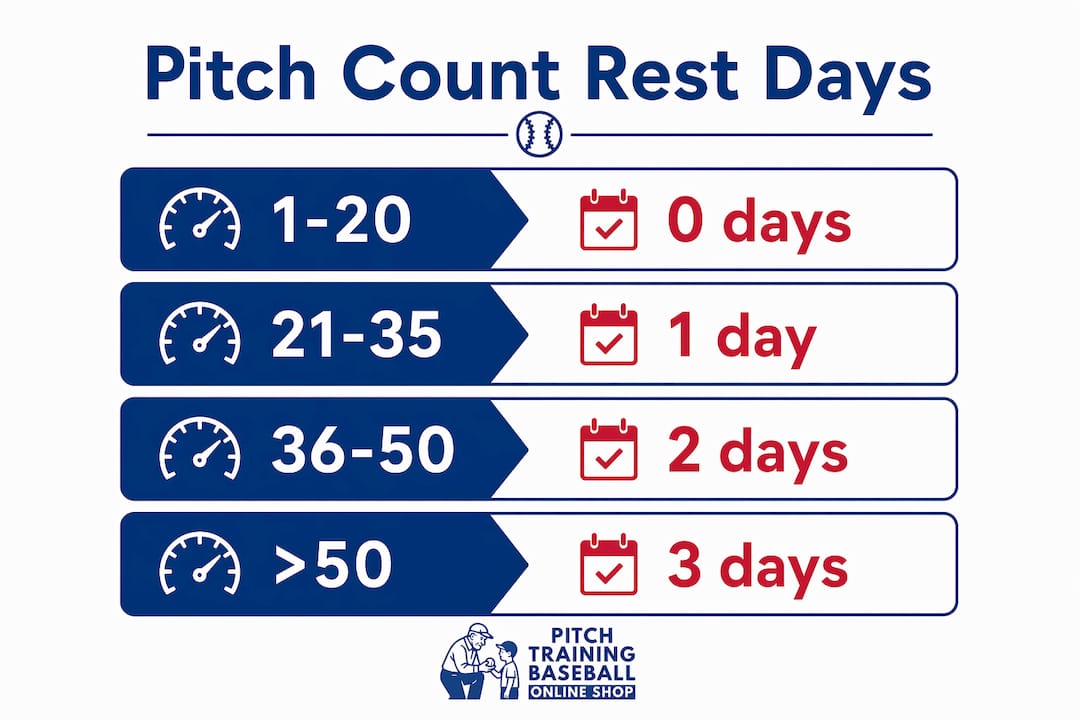
Coaches and parents should print this table and keep it in the dugout. Missing a rest day is the most common compliance error in youth baseball, and it is also the most preventable one.
Pro Tip: Assign one adult the sole job of tracking pitch counts during every game. When two people share the task, pitches get missed and rest-day calculations become unreliable.
Why is monitoring pitch counts critical to preventing arm injuries?
Youth arm injuries requiring Tommy John surgery have increased 9-fold over the past 20 years, driven almost entirely by overuse. That statistic reflects a generation of young pitchers who threw too much, too often, without adequate rest. Tommy John surgery reconstructs the ulnar collateral ligament in the elbow. Recovery takes 12–18 months and sometimes ends a young player’s career before it starts.
The anatomy of a young pitcher explains why the risk is so high. Growing arms contain open growth plates, which are softer and more vulnerable than mature bone. Ligaments in a 10-year-old are not the same as ligaments in a 25-year-old. Carilion Clinic describes the developing arm as similar to cold rubber bands that snap under stress when they have not been properly warmed up or when they are pushed past their limit. That analogy is not an exaggeration. It describes exactly what happens at a cellular level when a fatigued young arm keeps throwing.
“Pitch counts are not designed to overly restrict but to protect developing anatomy vulnerable to stress when cold and fatigued.” — Carilion Clinic
Common overuse injuries in youth pitchers include Little League elbow, which is a stress injury to the medial epicondyle growth plate, and rotator cuff strain, which affects the shoulder’s stabilizing muscles. Both conditions are painful, both require extended rest, and both are largely preventable with proper pitch count management. The damage often builds silently over weeks before a pitcher feels sharp pain.
Fatigue compounds every injury risk. As a pitcher tires, mechanics break down. The arm drops, the stride shortens, and the body stops rotating properly. Those mechanical changes place abnormal stress on the elbow and shoulder. A pitcher throwing their 80th pitch with poor mechanics is far more dangerous than a fresh pitcher throwing their 80th pitch with clean form. Monitoring pitch counts forces coaches to remove pitchers before fatigue reaches that breaking point.
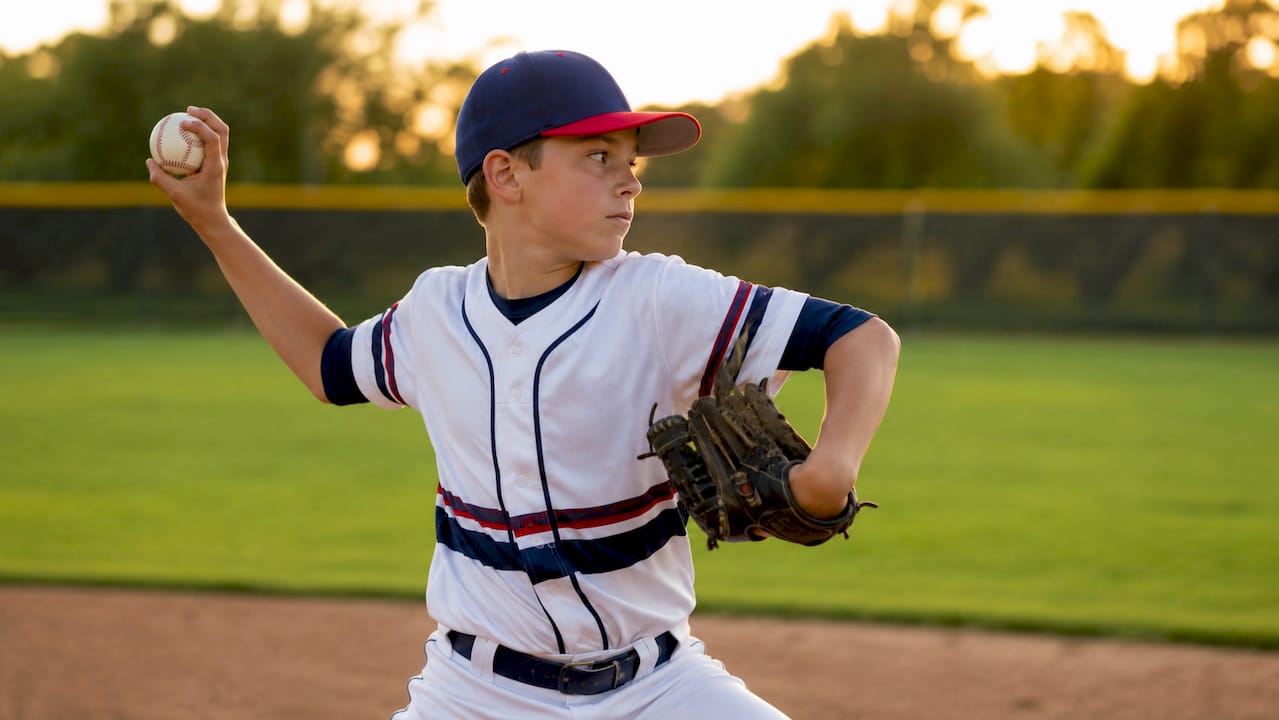
Pitching more than 100 innings per year increases injury risk by 3.5 times. Playing more than 8 months per year increases surgery risk by 5 times. Those numbers show that the danger is not just about one bad outing. It is about cumulative load across an entire season and year.
What are common misconceptions about pitch count monitoring?
The biggest misconception is that official pitch counts capture everything a young pitcher throws. They do not. Game pitches are only part of the total workload. Warm-ups, bullpen sessions, and between-inning throws can add 30–50% more pitching volume on top of the official count. A pitcher who throws 60 game pitches may have actually thrown 85–90 total pitches that day. That gap matters enormously for a developing arm.
Bullpen sessions carry a specific risk that most coaches underestimate. Bullpen throws can stress the arm as much as game pitches or more, because the adrenaline that supports a pitcher during live competition is absent in practice. The arm works just as hard without the physiological boost. Coaches who run long bullpen sessions the day before a start are stacking risk without realizing it.
Multi-team participation creates another hidden danger. A young pitcher who plays for a travel team and a recreational league simultaneously may stay within each league’s individual pitch limits while blowing past a safe total weekly workload. Playing on multiple teams without coordinating pitch counts across both rosters is one of the fastest paths to overuse injury. No single coach sees the full picture unless parents share the information.
Watch for these warning signs that indicate fatigue before pitch count limits are reached:
- Velocity drops noticeably from early innings to late innings
- Control deteriorates and the pitcher misses their usual spots
- Arm angle drops or mechanics change visibly
- The pitcher grimaces, rubs their arm, or shakes out their elbow
- Complaints of tiredness, tightness, or soreness during or after a game
Pitch counts are lagging fatigue indicators. Performance changes appear earlier than the numbers suggest. A pitcher showing two or more of the signs above should come out of the game regardless of where they stand in the count.
Pro Tip: Ask your pitcher directly after every outing, “Does your arm feel different than it did at the start?” Young athletes often hide soreness to stay in the game. A direct question opens the door for an honest answer.
How can parents and coaches manage pitch counts effectively?
Effective pitch count management starts with a clear system before the first pitch is thrown. Assign one dedicated adult to track pitches for every game and every bullpen session. That person should use a physical clicker, a notebook, or a dedicated app. Splitting the responsibility between two people or relying on memory produces errors.
Several apps make tracking easier and more reliable. Tools like GameChanger and iScore Baseball allow coaches to log pitches in real time and automatically calculate rest requirements based on league rules. Automated tracking software reduces human error and removes the guesswork from rest-day calculations. For leagues that do not use apps, a simple paper log kept in the team binder works well as long as someone fills it in consistently.
Follow these steps to build a complete pitch count management system:
- Set a pre-game pitch budget. Decide before the game how many pitches each pitcher will throw, based on their recent workload and rest days.
- Log all throwing, not just game pitches. Count warm-up tosses, bullpen pitches, and between-inning throws in the weekly total.
- Coordinate across teams. If a player pitches for two teams, share pitch logs between coaches so neither team operates with incomplete information.
- Apply warm-up and cool-down protocols. A proper warm-up reduces injury risk significantly. Light throwing before full-effort pitching prepares the arm for stress. A cool-down routine after pitching helps the arm recover faster.
- Create a culture where kids report pain. Tell players directly that telling a coach about arm soreness is a sign of maturity, not weakness. Young pitchers who hide pain are the ones who end up in surgery.
- Review the week’s total workload, not just the last game. A pitcher who threw 60 pitches on tuesday and 55 on saturday has thrown 115 pitches in one week. That total matters more than either individual number.
Tracking pitching stats consistently protects arms and reveals performance patterns over time. Coaches who review weekly pitch logs can spot trends before they become injuries. Parents who understand daily pitching habits can reinforce good practices at home between games.
Youth pitchers who follow pitch count rules consistently throw better, recover faster, and enjoy longer careers. That outcome is not accidental. It is the direct result of treating rest as part of training rather than as lost practice time.
Key takeaways
Monitoring pitch counts is the single most effective tool coaches and parents have to prevent overuse injuries and extend a young pitcher’s career.
| Point | Details |
|---|---|
| Official limits are mandatory | Little League 2026 caps range from 50 pitches for ages 7–8 up to 105 for ages 17–18. |
| Rest days are non-negotiable | Throwing 66 or more pitches requires 4 full calendar days of rest before pitching again. |
| Game counts miss total workload | Warm-ups and bullpen throws add 30–50% more volume beyond the official pitch count. |
| Fatigue shows before limits are reached | Velocity drops and mechanical changes signal arm stress earlier than pitch numbers do. |
| Consistent tracking builds long careers | Pitchers who follow rest rules recover faster and stay healthy across multiple seasons. |
What I’ve learned from years of watching coaches get this wrong
Coaches who resist pitch count rules almost always frame it as protecting the team. They say the kid is fine, that he wants to keep pitching, that it is a big game. I have heard every version of that argument. What I have never heard is one of those coaches say, two years later, that they were glad they pushed a 12-year-old past his limit.
The part that most coaches miss is the total workload problem. A parent comes to me and says their son threw only 55 pitches in Saturday’s game, well under the limit. What they do not mention is that he also threw 30 pitches in the bullpen before the game and 20 warm-up tosses between innings. That kid threw close to 105 pitches. The official count said 55. That gap is where careers end.
The mindset shift that actually works is treating rest as training. When you tell a young pitcher that his rest days are part of what makes him better, he stops resenting them. He starts protecting them. That reframe changes everything about how a team approaches pitch count management.
The hardest conversation is always with the parent who believes their child is the exception. Every parent thinks their kid has a special arm. The data on youth arm surgery rates does not recognize exceptions. The growth plates do not care how talented the kid is. They respond to load, and they fail under too much of it.
Start tracking everything. Count the bullpen pitches. Count the warm-ups. Talk to your pitcher after every outing. Build a system before you need it, because by the time you need it, it is already too late.
— Albert
Training tools that support safe pitching development
Building good mechanics reduces the stress each pitch places on a young arm. When a pitcher throws with proper form, the whole body shares the load instead of dumping it all on the elbow and shoulder.
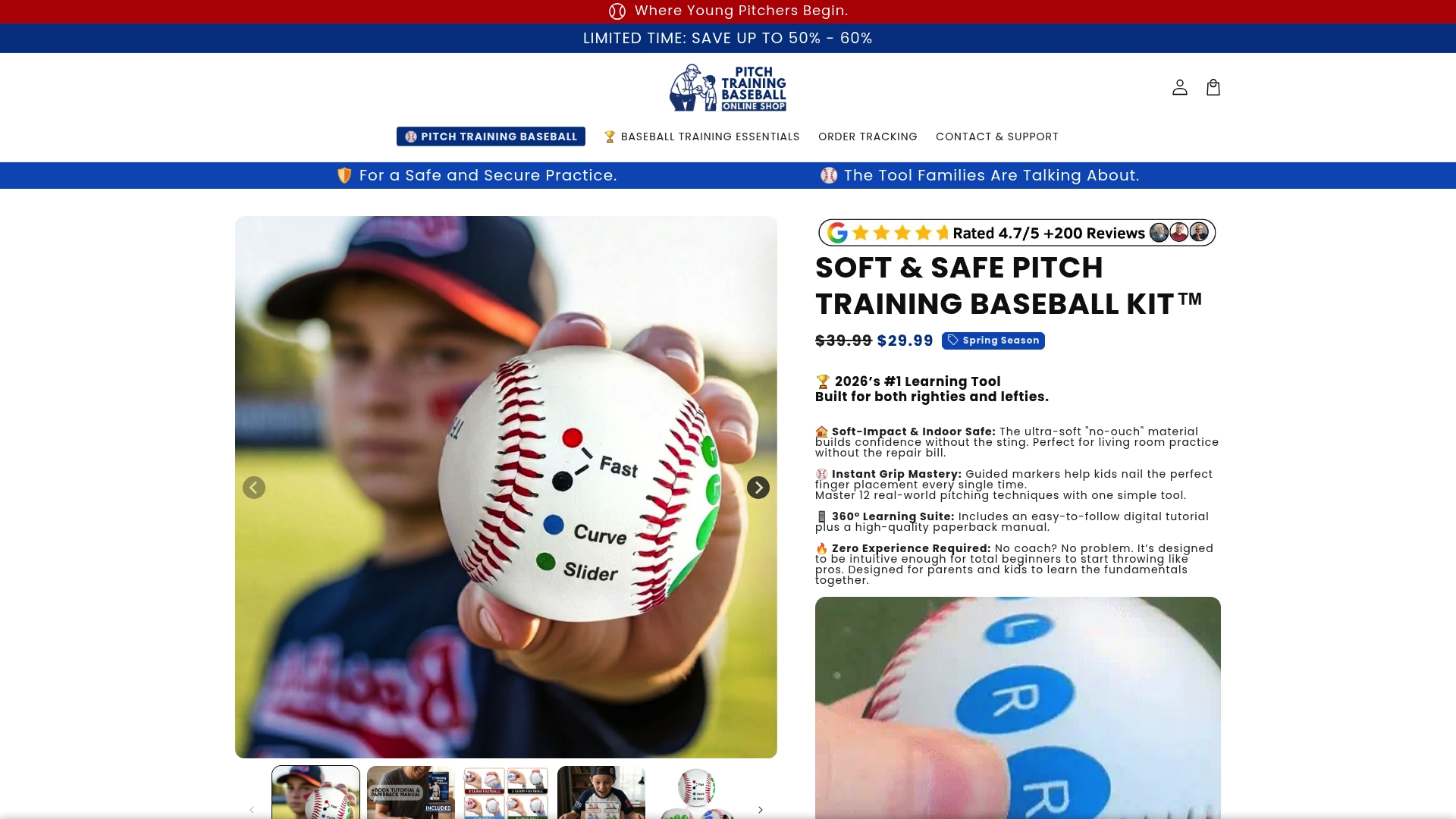
Pitchtrainingbaseball offers training equipment designed specifically for youth pitchers who want to build accuracy and arm strength without overloading their arms. The Pitching Target Net with Strike 9-Zone gives pitchers a clear visual target for focused, low-volume practice sessions that build command without racking up unnecessary throws. For players working on overall pitching development, the Pitch Training Baseball product line supports technique-first training that pairs directly with smart pitch count habits. Better mechanics mean fewer pitches wasted on poor form, and fewer pitches mean a healthier arm over a full season.
FAQ
What is the daily pitch limit for a 10-year-old in Little League?
A 10-year-old pitcher is limited to 75 pitches per day under 2026 Little League rules. Exceeding that limit triggers mandatory rest requirements and can result in player ineligibility.
Do warm-up pitches count toward the official pitch count?
Official pitch count rules typically track only game pitches, but warm-ups and bullpen throws still stress the arm. Total daily throwing volume, including warm-ups, can run 30–50% higher than the official count.
How do I know when to pull a pitcher before the limit is reached?
Watch for velocity drops, loss of control, or visible changes in mechanics. These signs of fatigue appear before pitch count limits are hit and signal that the arm needs rest regardless of the number.
Can a player pitch for two teams in the same week?
A player can pitch for two teams, but coaches on both teams must share pitch logs to avoid unsafe cumulative workload. Playing on multiple teams without coordinating counts is a leading cause of overuse injuries.
Why has Tommy John surgery increased so much in young pitchers?
Youth arm surgeries requiring Tommy John reconstruction have risen 9-fold over 20 years, driven by overuse from year-round play, multi-team participation, and insufficient rest between outings.
Recommended
- What Is Pitch Command? A Guide for Youth Baseball – Pitch Training Baseball
- Why Proper Pitching Technique Matters for Young Players – Pitch Training Baseball
- Track pitching stats to protect arms and boost performance – Pitch Training Baseball
- What Is Pitch Selection? A Youth Baseball Guide – Pitch Training Baseball