


The stretches that matter most for a pitcher’s elbow are the cross-body posterior shoulder stretch, an elbow-extension recovery stretch, and forearm flexor and extensor stretches, done daily and again in a short routine right after pitching. Daily posterior shoulder stretching alone is tied to a 36% drop in shoulder and elbow injuries in adolescent pitchers over a season, and youth programs that pair stretching with strengthening cut medial elbow injuries by roughly half in a randomized trial of 8 to 11 year olds.
Two safety rules come before anything else. Save static holds for after a dynamic warm-up or after the outing, never before cold pitching. And stop completely if there’s sharp elbow pain, swelling, or locking. That’s a signal for a physical therapist or physician, not a stretch.
- Cross-body/posterior shoulder stretch, daily
- Elbow-extension recovery stretch, post-pitch
- Forearm flexor and extensor stretches, daily and post-pitch
- Wrist flexor/extensor stretches, daily
- The “two-out” drill between innings, under a minute
Key Takeaways
Elbow health in young pitchers depends on daily posterior shoulder and forearm stretching, correctly timed static holds, and pairing mobility work with strength and load management.
| Point | Details |
|---|---|
| Prioritize posterior shoulder stretching | Daily cross-body or sleeper stretches are tied to a 36% drop in shoulder and elbow injuries. |
| Combine stretching with strengthening | Programs pairing both cut youth medial elbow injuries by roughly half in a controlled trial. |
| Time stretches correctly | Save static holds for after warm-up or after pitching, never before cold pitching. |
| Use the two-out drill | A sub-minute post-pitch routine between innings restores lost shoulder and elbow motion. |
| Practice with purpose | Pitchtrainingbaseball’s target nets support controlled, accurate practice reps that reduce risky high-effort throwing. |
This article is general information, not a substitute for advice from a qualified doctor. Consult a qualified healthcare professional about your own circumstances before acting on anything here.
Table of Contents
- Why Elbow Mobility Protects Young Pitching Arms
- How Do You Perform the Core Elbow Stretches?
- When Should Pitchers Stretch, and For How Long?
- Sample Stretching Routines You Can Use Today
- Why Strength and Rest Matter as Much as Stretching
- What Are the Warning Signs You Shouldn’t Ignore?
- What Does the Research Actually Say?
- A Coach’s Notes on Making These Routines Stick
- Building Better Mechanics Between Stretching Sessions
- Sources
Why Elbow Mobility Protects Young Pitching Arms
A pitcher’s elbow takes its worst beating not during the throw itself, but in the split second after ball release, when the arm decelerates from near maximum velocity in a fraction of a second. That eccentric braking load falls heavily on the elbow flexors and the medial ligament complex. When a pitcher loses range of motion, whether from tightness in the shoulder, tightness in the forearm, or both, the elbow absorbs more of that force with less cushion.
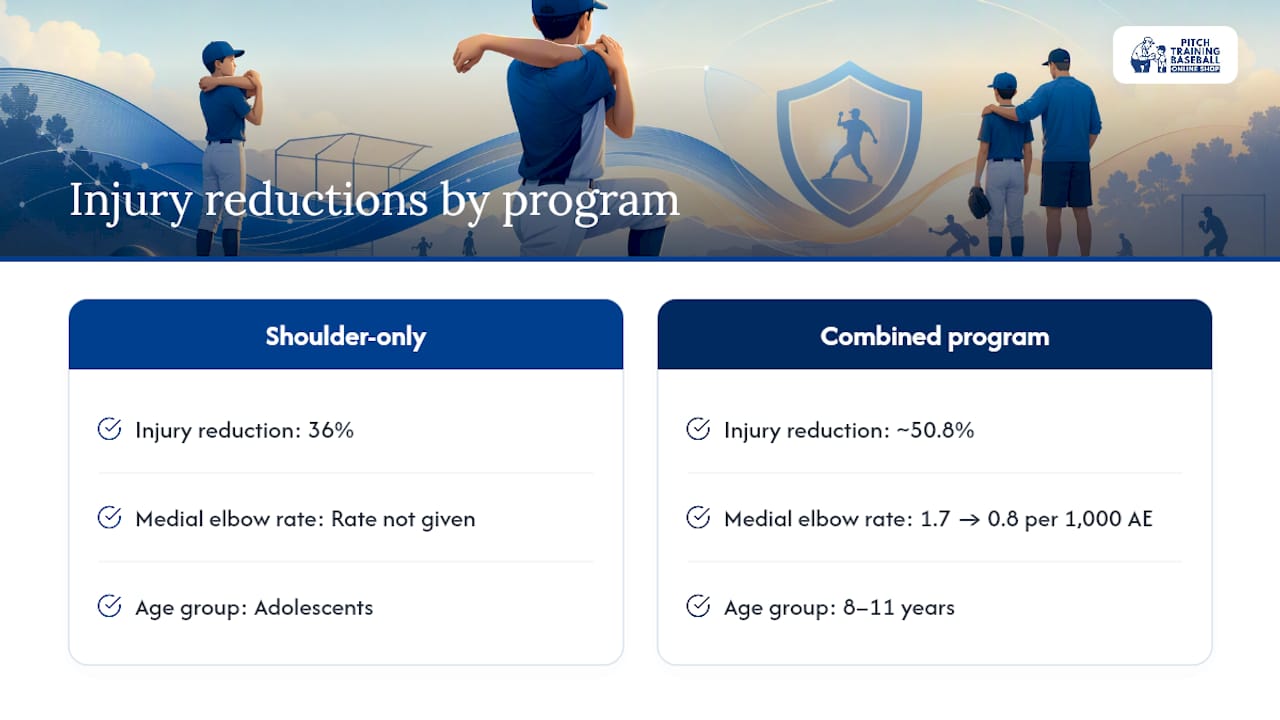
This is where the numbers get convincing. Adolescent pitchers who stretched the posterior shoulder daily saw a 36% reduction in shoulder and elbow injuries across a season. Youth pitchers in a structured program combining nine strengthening exercises with nine stretches saw medial elbow injuries drop from 1.7 to 0.8 per 1,000 athlete-exposures, about a 50.8% reduction, in a cluster randomized trial of 8 to 11 year olds.
Stretching the elbow in isolation helps, but it’s not the whole answer. Hip rotation, thoracic mobility, and scapular control drive much of the mechanics that load the elbow in the first place, which is exactly why the strongest programs pair mobility work with strength and, eventually, load management further down this guide.
How Do You Perform the Core Elbow Stretches?
Each of these stretches earns its spot because it targets a structure that tightens specifically from the pitching motion, not general athletic activity.
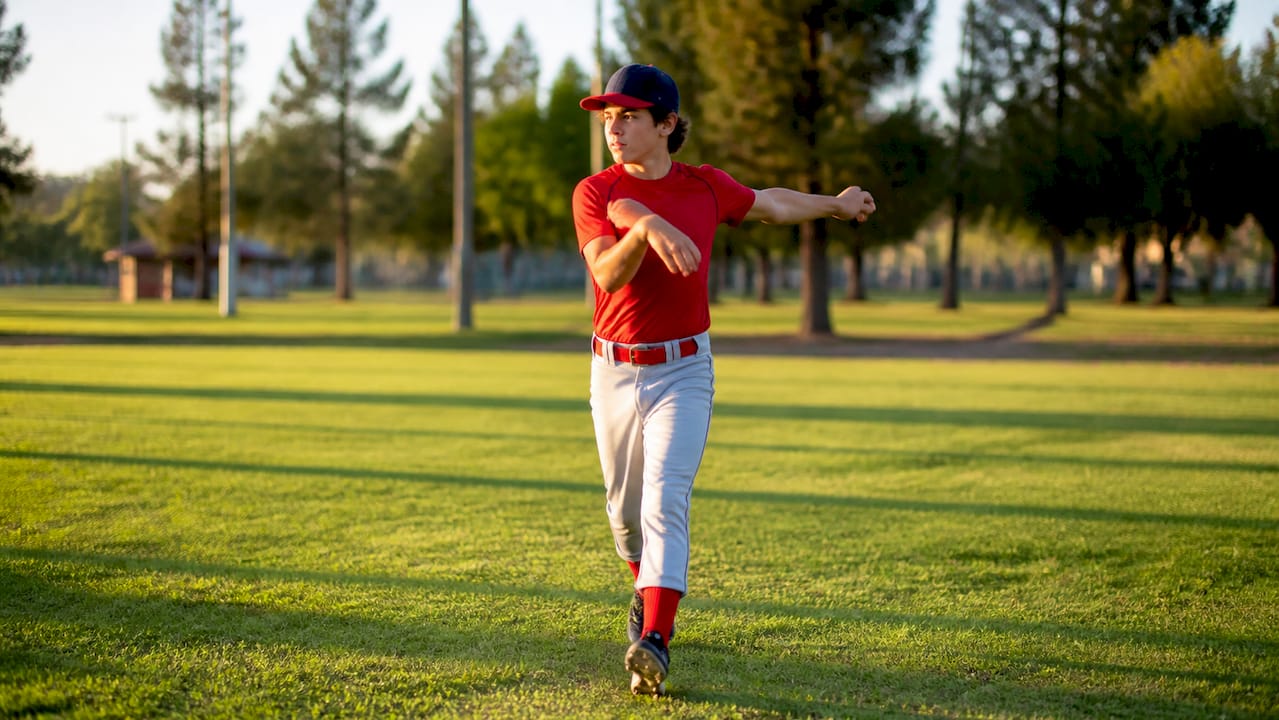
- Cross-body/posterior shoulder stretch. Stand or sit, bring the throwing arm straight across the chest at shoulder height, and use the opposite hand to gently pull the elbow further across. You should feel it in the back of the shoulder, not the front. Hold 30 seconds, repeat 2 to 3 times.
- Sleeper stretch (modified for younger players). Lie on the throwing side with that shoulder at 90 degrees. Use the other hand to gently press the forearm toward the table until you feel a stretch behind the shoulder. For players under 12, keep the pressure light and the angle closer to 60 to 70 degrees. Hold 20 to 30 seconds.
- Elbow-extension recovery stretch. Extend the throwing arm fully in front of the body, palm up, and use the opposite hand to gently add slight overpressure at the wrist while keeping the elbow straight. Pitchers often lose several degrees of extension after outings due to eccentric stress on the elbow flexors, and this stretch, paired with soft-tissue work, can help recover that motion. Hold 20 seconds, 2 to 3 reps.
- Forearm flexor stretch. Extend the arm, palm facing up, fingers pointing down, and use the other hand to pull the fingers gently toward the body. Feel it along the inside of the forearm. Hold 30 seconds.
- Forearm extensor stretch. Same setup, but palm faces down and you pull the fingers toward the body from the top. Feel it along the top of the forearm. Hold 30 seconds.
- Wrist flexor/extensor stretches. Isolate the wrist with the elbow slightly bent, pulling the hand back for the flexor stretch and down for the extensor stretch. Hold 15 to 20 seconds each direction.
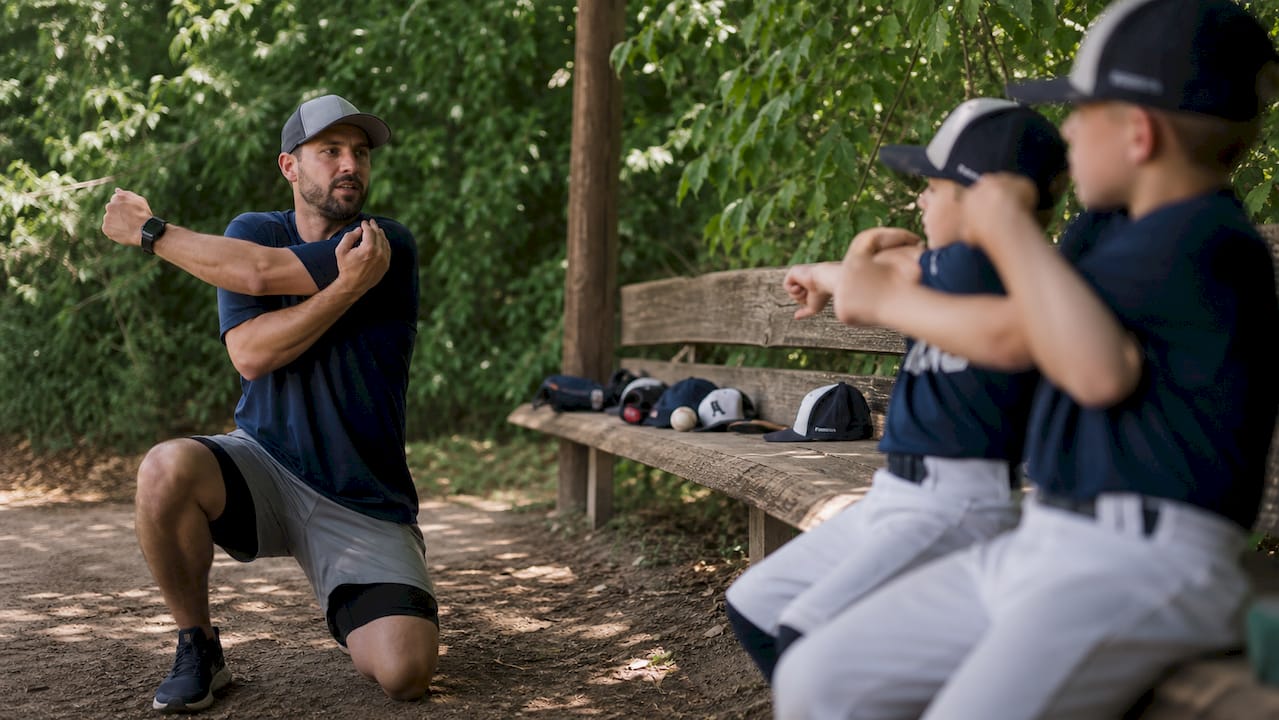
The “two-out” drill borrows its name from the between-innings window: as the third out is recorded, the pitcher runs through a fast sequence of the cross-body stretch, a light forearm stretch, and a few arm circles, all in under a minute. A study of professional pitchers found this kind of short post-pitch drill restored shoulder rotation to prepitching levels after a 40-pitch stretch. Tightness in the lats, pecs, biceps, and triceps can also choke off overhead motion and drive up elbow stress, so a full warm-up routine should touch the shoulder and thoracic spine too, not just the elbow.
Pro Tip: Never let a kid attempt a static hold with a cold arm. Five minutes of jogging, arm circles, and light throwing should come first, every single time, no exceptions for time pressure.
Pro Tip: If a stretch causes sharp pain rather than a mild pulling sensation, back off the range immediately. For a pitcher with suspected growth-plate irritation, shorten the hold, reduce the pressure by half, and check in with a physician before continuing the routine.
When Should Pitchers Stretch, and For How Long?
Timing matters as much as the stretch itself. Dynamic movement, think arm circles, leg swings, and light jogging, belongs before pitching. Static holds belong after warm-up tissue is already warm, or after the outing is done. Forcing a cold muscle into a deep static stretch before throwing can actually raise injury risk rather than lower it.
For dosage, most physical therapy protocols recommend 30-second holds done 2 to 3 times per stretch, performed 3 to 5 times a week for maintenance. The two-out drill runs on its own, faster clock, often restoring lost motion in about a minute.
- Dynamic warm-up: before every practice and every game, no exceptions
- Static holds: after warm-up or after pitching, 30 seconds, 2 to 3 sets
- Maintenance frequency: 3 to 5 times per week
- Between-innings drill: under a minute, every half-inning the pitcher sits
| Stretch Type | Timing | Hold/Duration |
|---|---|---|
| Dynamic warm-up | Pre-game, pre-practice | 5 to 10 minutes |
| Posterior shoulder/cross-body | Daily, post-pitch | 30 seconds, 2 to 3 sets |
| Forearm flexor/extensor | Daily, post-pitch | 30 seconds each |
| Two-out drill | Between innings | Under 1 minute |
Skeletally immature pitchers, or anyone recovering from a UCL sprain or elbow tendonitis, should shorten hold times and cut pressure noticeably. A stretch that produces real pain, rather than a mild pull, is a stretch that needs to stop for that day.
Sample Stretching Routines You Can Use Today
Three routines cover the full game day, each built for a different window.
Between innings (2 to 3 minutes):
- Cross-body posterior shoulder stretch, 20 seconds each side
- Light forearm flexor/extensor stretch, 15 seconds each
- Arm circles and shoulder shrugs, 30 seconds
Pre-game warm-up (8 to 10 minutes):
- Light jog or shuffle, 2 minutes
- Arm circles, leg swings, walking lunges with a twist, 3 minutes
- Band or resistance mobility drills for shoulder and hip, 3 minutes
- Progressive light throwing to build up arm speed gradually
Post-game recovery (10 to 15 minutes):
- Cross-body and sleeper stretch, 30 seconds each, 2 to 3 sets
- Forearm flexor and extensor stretches, 30 seconds each
- Elbow-extension recovery stretch, 20 seconds, 3 reps
- Optional soft-tissue work with a foam roller on the forearm and shoulder
After every outing, check for lingering soreness past 24 hours, any swelling around the elbow, or a noticeable drop in the next outing’s velocity or control. Any one of those is worth flagging to a coach or parent before the next start.
Why Strength and Rest Matter as Much as Stretching
Stretching restores motion, but motion alone doesn’t stop an elbow from breaking down if the rest of the kinetic chain is weak. Hip internal rotation, thoracic spine mobility, and scapular control absorb a large share of the force that would otherwise land on the elbow, and weakness in that chain tends to undercut even a perfect stretching routine.
Load management is the other half of the equation. Pitch counts, mandatory rest days between outings, and avoiding year-round pitching all reduce cumulative stress on a growing elbow. Most youth leagues publish age-based pitch count limits; treat those as a floor, not a target to hit every outing.
- Add hip and core strength work at least twice a week
- Follow league pitch-count limits and built-in rest days
- Take 3 to 6 months fully off throwing each year
- Watch for stretching that stops helping, a sign the arm needs more than mobility work
What Are the Warning Signs You Shouldn’t Ignore?
Certain symptoms mean stretching stops and medical evaluation starts. Persistent sharp pain, swelling around the joint, a locking or catching sensation, or a noticeable drop in throwing performance that doesn’t improve with rest and ice all belong in this category.
Youth pitchers face one extra concern: Little League elbow, an overuse injury to the medial growth plate that’s most common between ages 8 and 15 and tied directly to pitch counts and year-round throwing. Breaking pitches like curveballs are generally best delayed until the growth plates have matured, per most pediatric sports-medicine guidance.
- Sharp or persistent pain during or after throwing
- Swelling, warmth, or visible change around the elbow
- Locking, catching, or reduced extension that doesn’t resolve
- A drop in control or velocity that lingers across outings
- Confirm pain-free range of motion at rest
- Rebuild strength to match the uninjured arm
- Progress through a graduated throwing program before returning to full mound work
What Does the Research Actually Say?
The evidence behind these routines isn’t a single study repeated in marketing copy. It’s a small cluster of findings that keep pointing the same direction.
Daily posterior shoulder stretching cut shoulder and elbow injuries by 36% in adolescent pitchers tracked across a season. A combined stretch-and-strength program pushed that further, cutting medial elbow injury rates in 8 to 11 year olds from 1.7 to 0.8 per 1,000 athlete-exposures, roughly a 50% drop. Separately, a short post-pitch drill restored professional pitchers’ shoulder rotation to prepitching levels in under a minute.
Those three findings, the clinical review, the Sakata youth trial, and the two-out drill study, form the backbone of every routine in this article. None of them claim stretching alone eliminates injury risk. Together, they make a strong case that consistent, well-timed mobility work meaningfully lowers it.
A Coach’s Notes on Making These Routines Stick
Getting a 10-year-old to actually do a stretching routine, every time, without supervision, is harder than designing the routine itself. What works is pairing each stretch with a specific dugout moment, glove off means stretch time, so it becomes automatic rather than optional.
Watch form closely during the first few weeks. A rushed cross-body stretch that skips the hold does nothing. Keep the whole routine under three minutes between innings, or kids will skip it under game pressure. And for pitchers under 14 especially, command and control matter far more than max velocity. A stretching routine that keeps a kid healthy enough to throw strikes all season beats one extra mile an hour on the radar gun every time.
Building Better Mechanics Between Stretching Sessions
Stretching keeps the elbow moving freely, but reducing risky, high-effort throws outside of games matters just as much. A lot of elbow strain in youth pitchers comes from uncontrolled maximum-effort throwing during casual practice, when nobody’s tracking count or intent.
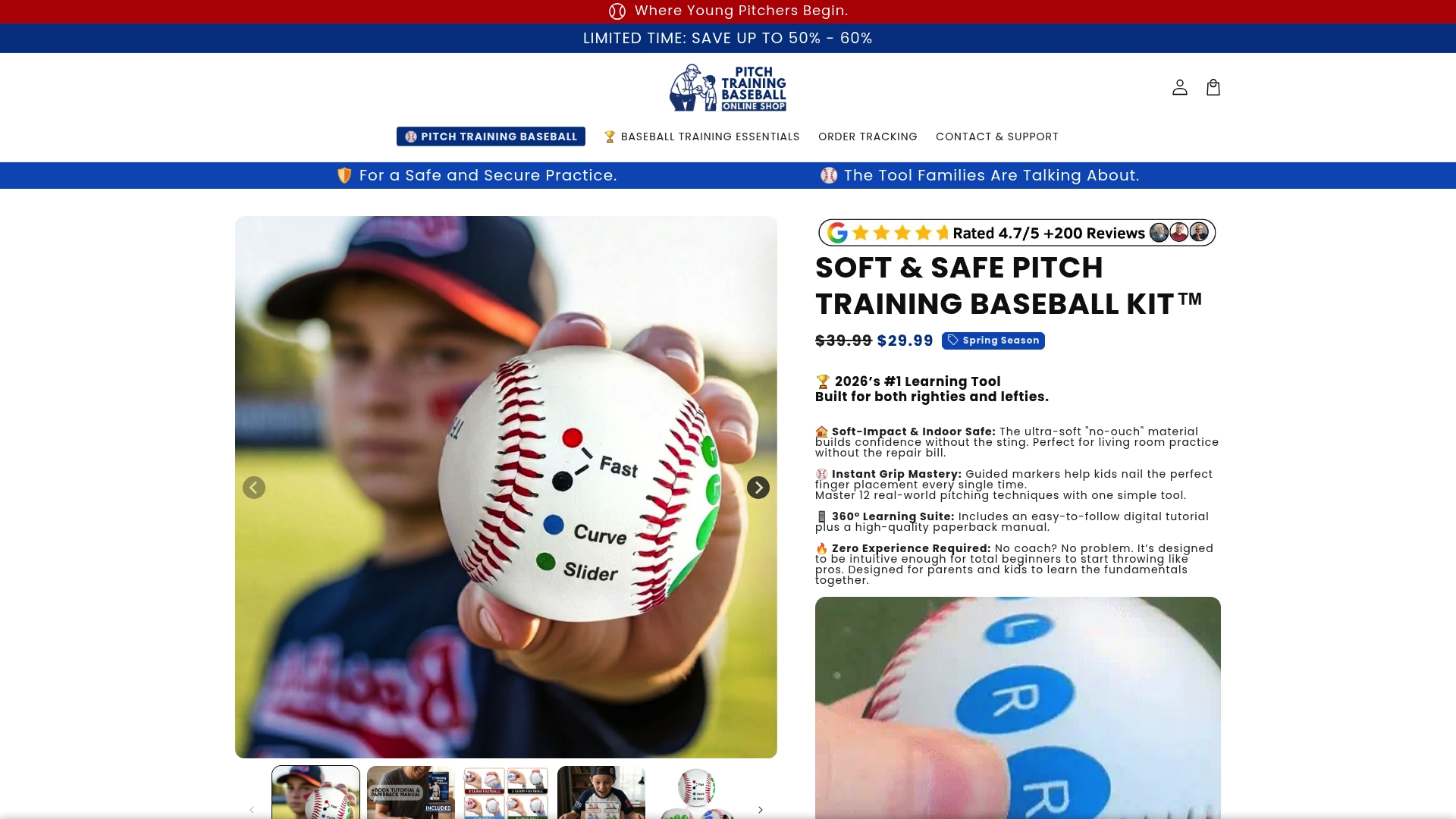
That’s where a dedicated target helps more than it might seem. Pitchtrainingbaseball’s Pitching Target Net with Colorful Strike 9-Zone gives a pitcher something specific to aim for, which naturally shifts practice from all-out throwing toward controlled, accurate reps. That’s the same command-over-velocity principle coaches lean on for younger arms, just built into the equipment itself. None of this replaces medical care. If pain shows up during or after throwing, a stretch or a target net isn’t the answer, a physical therapist or physician is. For practice sessions where the goal is sharper control without added strain, check the full lineup of pitching training gear and pick a setup that matches the age and skill level on your roster.
Sources
- Current Concepts in Arm Care Exercise Programs and Injury Risk Reduction in Adolescent Baseball Players: A Clinical Review - PMC
- Efficacy of a Prevention Program for Medial Elbow Injuries in Youth Baseball Players - Jun Sakata et al.
- Effects of a Short-Duration Stretching Drill After Pitching on Elbow and Shoulder Range of Motion in Professional Baseball Pitchers
- Little League elbow (AAP guidance)
Recommended
- Recommended Daily Pitching Habits for Youth Players – Pitch Training Baseball
- The Real Role of Warm Up Exercises for Youth Pitchers – Pitch Training Baseball
- Top pitching workouts for youth baseball: build skill safely – Pitch Training Baseball
- Arm Strength Tips for Baseball: Youth Player Guide – Pitch Training Baseball