


Recommended pitching rest strategies are structured programs that enforce age-appropriate pitch limits and mandatory rest periods to protect young pitchers’ arms from overuse injuries. These strategies are grounded in USA Baseball’s Pitch Smart guidelines, supported by the American Academy of Pediatrics, and backed by sports medicine research from organizations like the American Orthopaedic Society for Sports Medicine (AOSSM). Overuse injuries are the leading cause of arm problems in youth baseball, and the primary driver is inadequate recovery between outings. Following these guidelines is not a formality. It is the most direct path to long-term arm health and better performance on the mound.
1. What are the recommended pitching rest strategies by age and pitch count?
The foundation of all pitching rest guidelines is a simple rule: the more pitches a young arm throws, the more calendar days it needs to recover. Pitch Smart guidelines set a maximum of 95 pitches per day for ages 13–16, followed by a mandatory 4 calendar days of rest. That threshold exists because adolescent arms in this age range are still developing, and cumulative stress without recovery leads directly to structural damage.
For players 14 and under, the rest requirements scale with pitch count. Little League rest requirements specify the following mandatory rest periods:
| Pitches Thrown | Mandatory Rest Days |
|---|---|
| 1–20 | 0 days |
| 21–35 | 1 calendar day |
| 36–50 | 2 calendar days |
| 51–65 | 3 calendar days |
| 66+ | 4 calendar days |
These numbers are not suggestions. They are the minimum recovery windows that allow a young arm to rebuild before the next outing. Coaches and parents who treat them as flexible risk accelerating the exact injuries they are trying to prevent.
Pro Tip: Count rest by calendar days, not hours. A pitcher who throws on a Friday does not complete a 2-day rest period by Sunday morning. Saturday and Sunday are the two calendar days. Monday is the earliest return.
2. Why rest days must be true throwing shutdowns
A rest day only works if it is a real rest day. Rest days should involve no max-effort throwing, because even moderate throwing can reintroduce arm overload stress and cancel the recovery benefit. Light fielding, batting practice, or base running are generally acceptable. Bullpen sessions, long toss at full intensity, and competitive pitching are not.
This distinction matters more than most coaches realize. A player who “rests” by throwing 40 light pitches in the backyard is not recovering. The arm does not distinguish between a bullpen session and casual throwing at high effort. The stress accumulates either way.
Parents play a critical role here. A coach may enforce rest at practice, but a motivated kid will throw in the driveway without supervision. Clear communication between coaches, parents, and players about what rest actually means is a non-negotiable part of any effective recovery plan. The importance of pitcher recovery for young arms goes well beyond simply sitting out a game.
3. Why young arms are especially vulnerable to overuse
Youth pitchers face a physiological reality that adult pitchers do not. Open growth plates in youth athletes are biomechanically vulnerable to overload in ways that fully developed adult bone is not. Growth plates are the cartilaginous zones where bone elongates during development, and they are significantly weaker than the surrounding tissue. Repetitive stress from pitching targets these exact zones.
The most common overuse injuries in young pitchers are Little League elbow and Little League shoulder, both of which involve inflammation or separation at the apophysis, the growth plate attachment point. These injuries do not always announce themselves with sharp pain. They often develop gradually, which is why overuse injuries in youth occur when throwing volume outpaces the body’s ability to adapt.
“Rest is emphasized not simply for comfort but because open growth plates in youth athletes are biomechanically vulnerable to overload. Standardized pitch count and rest policies aim to reduce cumulative throwing stress, lowering the risk of shoulder and elbow injuries in young players.”
The window of highest vulnerability runs roughly from ages 8 through 15. During this period, the growth plates are active and the risk of apophyseal injury is at its peak. Respecting rest guidelines during these years is the single most effective way to keep a young pitcher healthy through their development.
4. How to structure rest throughout the season and the full year
Season-level rest planning requires more than following pitch count rules game by game. The American Academy of Pediatrics advises that youth athletes take 1–2 days off per week from throwing and a total of at least 3 months off annually from their sport, ideally in increments of one month or more. That annual break allows the arm to fully recover from the cumulative stress of a competitive season.
Coaches should build rest into the weekly schedule, not just after heavy outings. A pitcher who throws on Tuesday and Saturday still benefits from a full rest day mid-week. The body does not only recover after it hits a pitch count limit. It recovers continuously, and consistent weekly rest accelerates that process.
Here is a practical framework for year-round rest planning:
- Weekly rest: Schedule at least 1 full throwing rest day per week, regardless of pitch count that week.
- Post-outing rest: Apply mandatory calendar-day rest based on pitch count using the Pitch Smart table.
- Pre-season ramp-up: Begin a gradual throwing program 4–8 weeks before the season starts. Do not jump directly into competitive pitching.
- In-season monitoring: Track cumulative pitch counts across the week, not just per game. A pitcher who throws 40 pitches in a game and 30 in practice the next day has thrown 70 pitches in two days.
- Off-season break: Build in at least one full month of no competitive throwing. Two months is better.
- Multi-team warning: Avoid allowing a young pitcher to play on multiple teams simultaneously. Overlapping pitching duties are one of the fastest routes to overuse injury.
Pro Tip: Monitor arm pain as a separate signal from pitch count. If a player reports pain before hitting their pitch limit, stop immediately. Arm pain in youth pitchers is never a normal part of the game.
5. How to build a safe return-to-throw program after rest or injury
Returning to pitching after a rest period or injury is not the same as simply resuming where the player left off. Youth pitchers with prior arm issues need individualized assessment and a graded return-to-throw plan to reduce the risk of reinjury. A generic schedule does not account for the specific mechanics or structural vulnerabilities of each athlete.
A graded return-to-throw program typically progresses through these stages:
- Pain-free catch play at short distance, focusing on mechanics and arm path
- Progressive long toss with gradual distance increases over 1–2 weeks
- Flat-ground pitching at reduced intensity before returning to the mound
- Bullpen sessions at 50–75% effort before full competitive pitching
- Live pitching at reduced pitch counts with close monitoring for fatigue or discomfort
Immediate throwing cessation and medical evaluation are required when a youth pitcher shows persistent arm pain, swelling, numbness, or a sudden drop in velocity. Rest alone is often insufficient for these presentations. A sports medicine physician or physical therapist with experience in youth throwing athletes should assess the player before any return to pitching.
Recovery protocols must also address the kinetic chain, not just the arm. Weakness in the hips, core, or shoulder stabilizers often contributes to arm overload. A physical therapist can identify these deficits and correct them as part of the return program.
Pro Tip: A customized recovery plan built around a player’s specific mechanics reduces reinjury risk far more than a generic timeline. Ask a sports medicine professional for an individualized program, not a one-size-fits-all schedule.
6. How coaches and parents can track and enforce rest guidelines
Consistent enforcement of pitching rest guidelines requires a system, not just good intentions. The most common failure point is miscalculating rest by elapsed hours rather than calendar days, which leads to premature return and accumulated arm stress. A simple calendar or dedicated pitch-tracking app eliminates this error.
Here are the most practical tracking approaches:
- Paper pitch log: A printed sheet tracking date, pitch count, and return-to-pitch date. Low-tech but reliable when filled out consistently.
- Smartphone apps: Several free apps allow coaches to log pitch counts in real time and automatically calculate mandatory rest end dates by calendar day.
- Team calendar: A shared digital calendar (Google Calendar, for example) where coaches mark each pitcher’s next eligible pitching date after every outing.
The best approach depends on the team’s resources and the coach’s preference. What matters is consistency. A tracking method that gets used every game beats a sophisticated app that gets skipped when things get busy.
Communication between coaches and parents is equally important. Coaches control game-day decisions, but parents control what happens at home. A weekly check-in or a shared tracking sheet keeps everyone aligned. Coaches should also monitor pitch counts as a safety priority, not just a compliance task.
7. What pitching fatigue does to injury risk
Pitching with arm fatigue is not just uncomfortable. Fatigue dramatically raises injury risk, and rest is the primary tool for managing it. A fatigued arm loses the neuromuscular control that protects joints and tendons during the throwing motion. When control breaks down, stress shifts to passive structures like ligaments and growth plates.
Coaches often recognize fatigue by watching mechanics. A pitcher who drops their elbow, rushes their delivery, or loses velocity late in an outing is showing physical signs of arm fatigue. Pulling that pitcher immediately, regardless of pitch count, is the right call. Pitch count limits set the ceiling. Fatigue sets the real limit.
Parents can reinforce this at home by asking simple questions after games: Does your arm feel tired? Any soreness? Any stiffness the next morning? Morning-after stiffness that does not resolve within an hour is a signal worth taking seriously. Building this habit of checking in creates a feedback loop that catches problems early.
8. Cross-training and conditioning as part of pitcher recovery
Rest does not mean inactivity. Cross-training and neuromuscular control exercises complement rest by building the physical foundation that protects the arm during throwing. During rest days and off-season breaks, youth pitchers benefit from lower-body strength work, core stability exercises, and shoulder-stabilizer conditioning.
The kinetic chain concept is central here. A pitcher generates force from the ground up, through the legs, hips, core, and finally the arm. Weakness anywhere in that chain forces the arm to compensate, which increases stress on the elbow and shoulder. Strengthening the full chain during rest periods makes the arm more resilient when throwing resumes.
Specific exercises worth incorporating include hip hinges, single-leg stability work, rotator cuff strengthening with resistance bands, and scapular stability drills. None of these require a gym. A resistance band and a flat surface are enough for most of this work. Pitchtrainingbaseball recommends building these habits early, because a conditioned arm recovers faster and stays healthier across a full season. Coaches can find additional guidance on arm strength development for young players to complement these recovery habits.
Key Takeaways
The most effective recommended pitching rest strategies combine age-specific pitch count limits, strict calendar-day rest periods, and year-round recovery planning to protect young arms and sustain long-term performance.
| Point | Details |
|---|---|
| Follow Pitch Smart limits | Ages 13–16 max out at 95 pitches per day with 4 mandatory calendar days of rest. |
| Count rest by calendar days | Elapsed hours do not count; use actual calendar days to avoid premature return. |
| Rest days mean no max-effort throwing | Even casual high-effort throwing during rest days reintroduces arm overload stress. |
| Plan rest across the full year | Youth athletes need 1–2 rest days per week and at least 3 months off annually. |
| Return gradually after rest or injury | Graded return-to-throw programs reduce reinjury risk far more than rushing back. |
What I’ve learned watching coaches get rest strategies wrong
The most common mistake I see is not ignoring rest entirely. It is underestimating it. A coach counts 3 days of rest and sends a kid back out on day 4, not realizing that “4 calendar days” means the pitcher is eligible on day 5. That one-day miscalculation, repeated across a season, adds up to a significant amount of extra stress on a developing arm.
The second mistake is treating rest as a punishment or a setback. Players who are told “you can’t pitch this weekend” often feel like they are being held back. Coaches and parents who reframe rest as preparation, as the thing that makes the next outing better, get much better buy-in from their athletes. That shift in framing is not just motivational. It is accurate. A rested arm throws harder, with better mechanics, and with lower injury risk.
The third thing I have seen consistently is that coaches who focus only on pitch count miss the fatigue signals. A pitcher who throws 60 pitches in a hot, humid game in july may need more recovery than a pitcher who throws 70 pitches in a cool april evening game. Pitch count is a floor, not a ceiling. Fatigue, mechanics breakdown, and the player’s own feedback should always factor into the decision to pull a pitcher.
Rest is not the absence of development. It is a core part of it. The players who stay healthy through their youth years are the ones who build the pitch count and arm strength to compete at higher levels. Skipping rest does not accelerate development. It ends it.
— Albert
How Pitchtrainingbaseball supports healthy pitching development
Protecting a young arm starts with the right training habits, and the right tools make those habits easier to build.
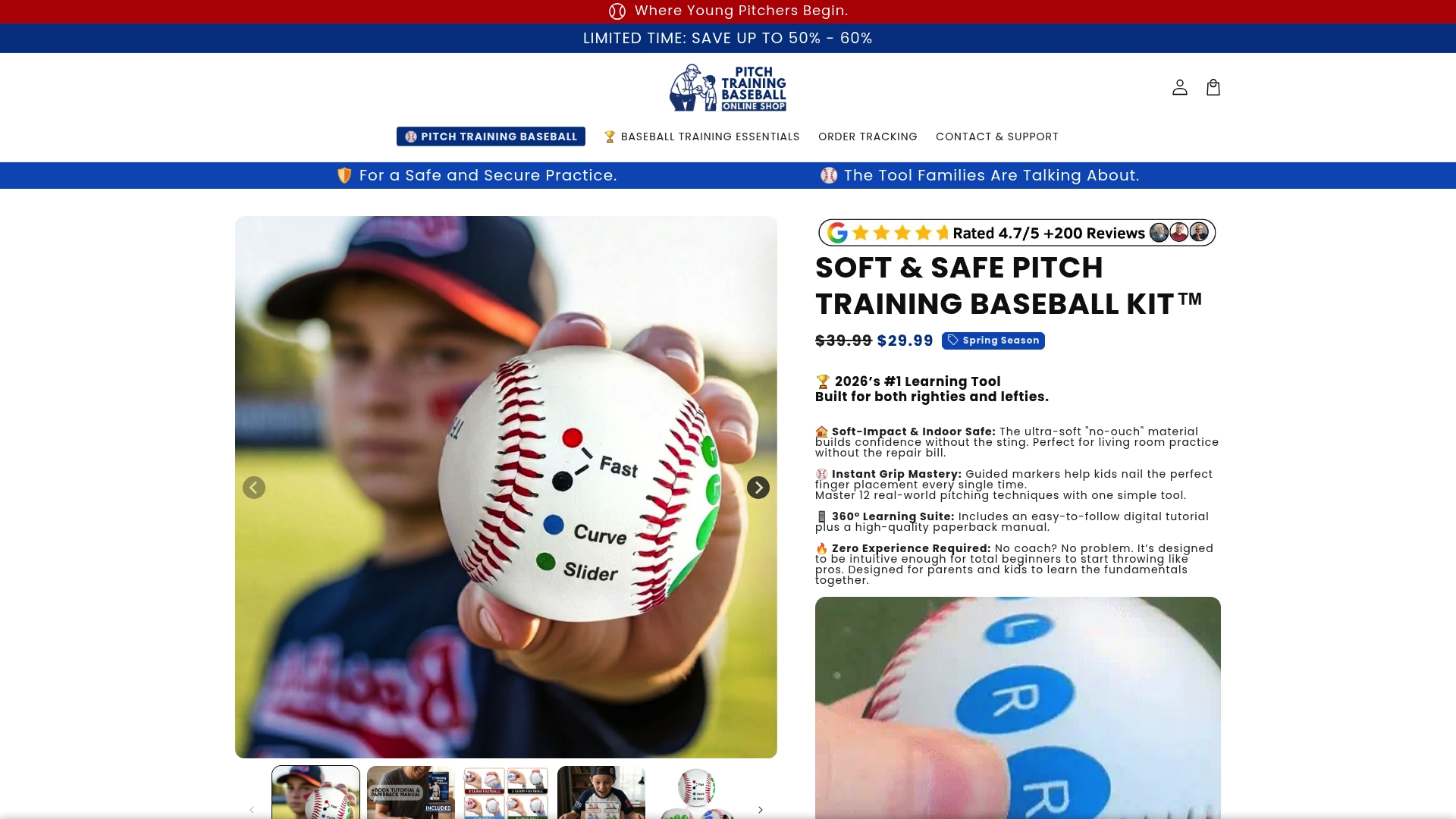
Pitchtrainingbaseball offers training aids designed specifically for youth players, including the Pitching Target Net with Strike 9-Zone, which lets pitchers work on accuracy and mechanics during lower-intensity sessions that fit within a rest-conscious training schedule. Structured, purposeful practice with the right equipment reduces the temptation to over-throw during recovery periods. Coaches and parents who want to build a complete arm health program can also explore the full range of youth pitching training tools at Pitchtrainingbaseball, designed to support skill development without overloading young arms.
FAQ
What is the maximum pitch count for a 14-year-old pitcher?
For players 14 and under, Pitch Smart and Little League rules require 4 calendar days of rest after 66 or more pitches in a day. The specific maximum pitch limit varies by league, but most youth organizations cap it at 85 pitches per day for this age group.
How do you count rest days correctly for youth pitchers?
Rest days are counted as calendar days, not hours. A pitcher who throws on a Monday and needs 2 days of rest is eligible to pitch again on Thursday, with Tuesday and Wednesday as the two calendar days of rest.
Can a youth pitcher throw lightly during a rest day?
Rest days should involve no max-effort throwing, including bullpen work or long toss at full intensity. Light activities like fielding or batting are generally acceptable, but any high-effort throwing negates the recovery benefit.
When should a youth pitcher see a doctor instead of just resting?
Persistent arm pain, swelling, numbness, or a sudden velocity drop require immediate medical evaluation. Rest alone is not sufficient for these symptoms, and returning to pitching without professional clearance increases the risk of serious structural injury.
How much total time off should a youth pitcher take each year?
The American Academy of Pediatrics recommends at least 3 months off from the sport annually, ideally in one-month increments. This full-year recovery window allows the arm and growth plates to recover from cumulative seasonal stress.
Recommended
- How to Plan Pitcher Rotations for Youth Baseball – Pitch Training Baseball
- Top pitching workouts for youth baseball: build skill safely – Pitch Training Baseball
- Managing Practice Time for Pitchers: 2026 Youth Guide – Pitch Training Baseball
- Step by Step Pitch Selection: Youth Baseball Guide – Pitch Training Baseball