


An overuse injury in baseball is defined as cumulative micro-trauma to bones, tendons, and ligaments that exceeds the body’s ability to repair itself between throwing sessions. Youth pitchers face this risk at a far higher rate than adults because their growth plates are structurally weaker than the surrounding soft tissue. Chronic overuse injuries account for 40%–57% of all baseball injuries at the high school level. That number tells you this is not a fringe problem. Pitch Smart guidelines and sports medicine consensus both identify repetitive throwing volume as the primary driver, making education through resources like Pitchtrainingbaseball a front-line defense for any youth program.
What is overuse injury in baseball, and why does it happen?
Overuse injury results from repetitive stress that accumulates faster than tissue can heal. Every throw places force on the elbow and shoulder. When a young pitcher throws too many pitches without adequate rest, that force creates tiny tears in muscle, tendon, and bone. The body needs time to repair those tears. When it does not get that time, damage compounds.
Youth athletes are uniquely vulnerable because of one biological fact: growth plates in youth are weaker than the ligaments and tendons attached to them. In adults, a hard throw might strain a ligament. In a 12-year-old, that same throw can fracture a growth plate. The growth plate is the zone of developing cartilage near the end of long bones, and it is the weakest link in a young arm.
Throwing mechanics also determine how much stress lands on the elbow and shoulder. Inefficient mechanics, such as a high arm slot combined with torso tilt, create significantly more stress on the UCL than velocity alone. A pitcher who throws 70 mph with poor mechanics can stress the elbow more than one throwing 80 mph with sound form. This is why mechanics training matters as much as pitch count management.
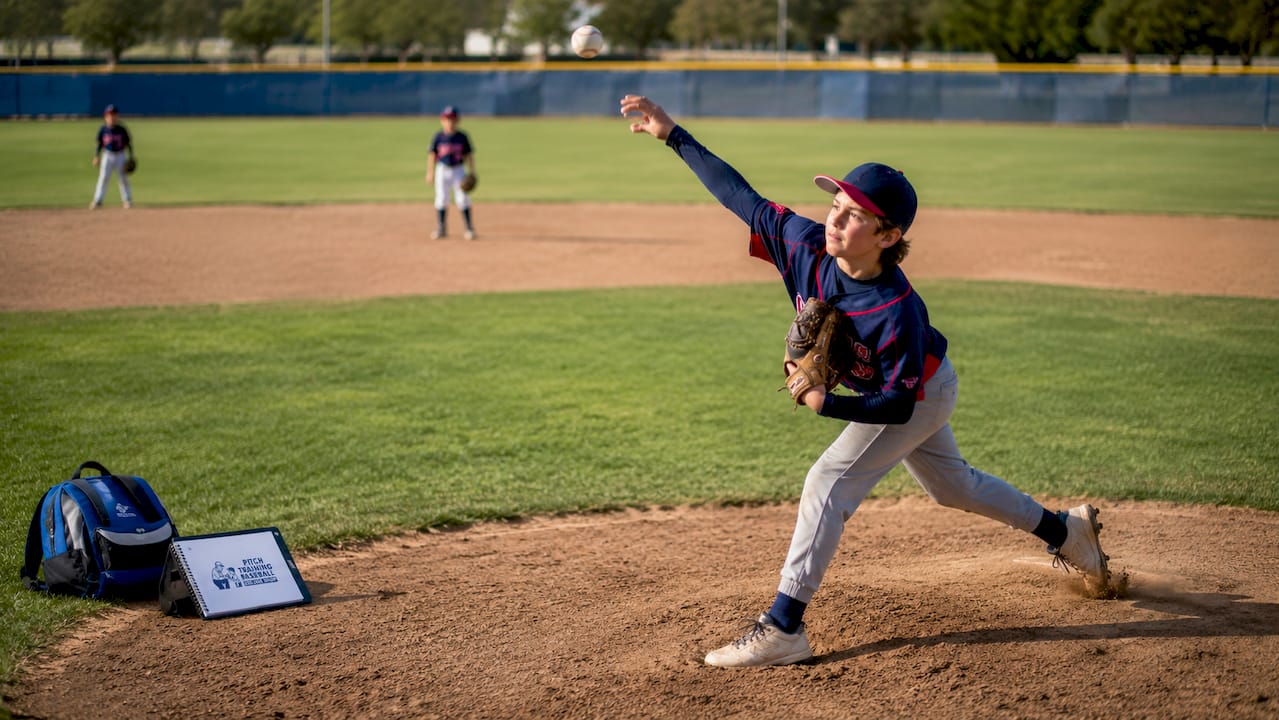
The kinetic chain connects every part of the body during a throw. Weakness in the lower body or torso forces the arm to overcompensate, driving up stress at the elbow and shoulder. A pitcher with weak hips or poor core stability transfers that deficit directly to the arm. Whole-body conditioning is not optional for youth pitchers. It is a direct injury prevention tool.
Key causes at a glance
- High throwing volume without adequate rest between outings
- Growth plate vulnerability unique to athletes still developing
- Poor throwing mechanics that concentrate force at the elbow and shoulder
- Kinetic chain deficits in the lower body and core
- Hidden workload from bullpen sessions, catch play, and multiple team rosters
Pro Tip: Track every throw your athlete makes, not just game pitches. Bullpen sessions, warm-up throws, and catch play all count toward total arm stress.
What are the common types and symptoms of overuse injuries in youth baseball?
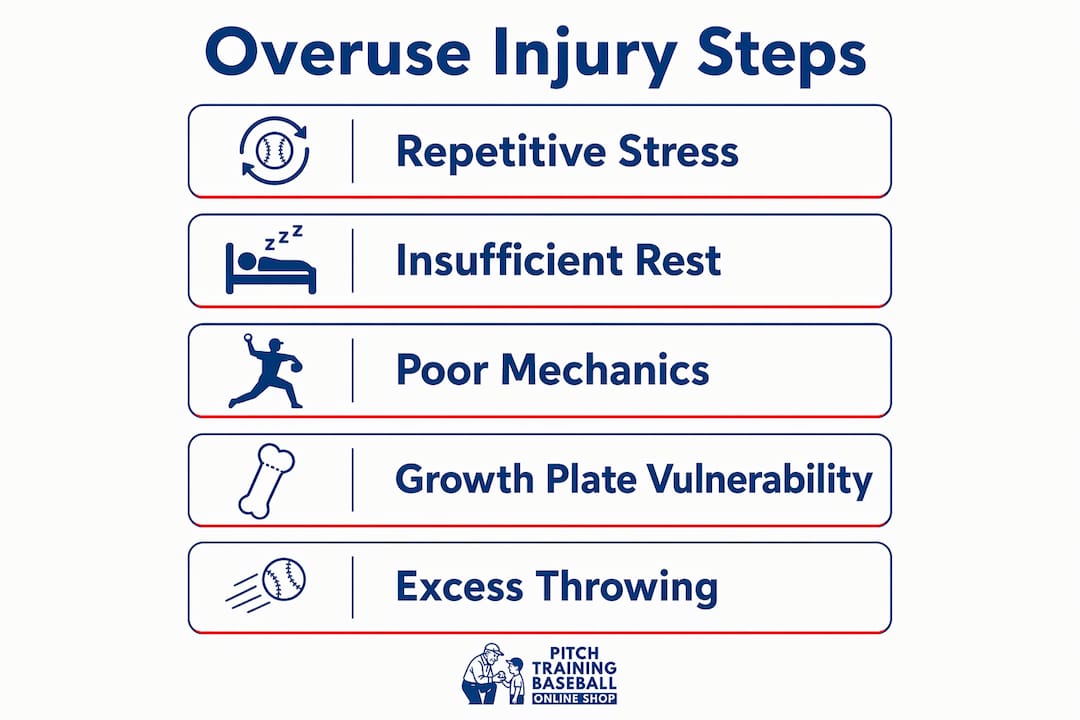
Recognizing the signs of a baseball arm injury early is the difference between a two-week rest and a two-year recovery. Symptoms almost always follow a predictable pattern: mild soreness during throwing, then pain that lingers after throwing, then pain during everyday activities. By the time a young athlete feels pain at rest, the injury has progressed significantly.
The most common overuse injuries in youth baseball follow a clear progression in severity.
-
Little League Elbow. This is the most recognized overuse condition in youth pitchers. It involves irritation or stress fracture of the medial epicondyle growth plate on the inside of the elbow. Symptoms include aching, sharp pain, and swelling that begin during pitching and worsen over time. Left untreated, it can cause permanent deformity.
-
UCL sprain or tear. The ulnar collateral ligament stabilizes the elbow during the throwing motion. Repeated stress causes microtears that accumulate into partial or complete tears. UCL injuries are increasingly common in players as young as 14.
-
Rotator cuff strain. The four muscles of the rotator cuff control shoulder rotation and stabilization. Overuse leads to inflammation and partial tears, producing deep shoulder aching and weakness during overhead motion.
-
Flexor tendon irritation. The flexor-pronator muscle group on the inner forearm attaches near the medial epicondyle. Overuse inflames these tendons, producing forearm tightness and elbow pain that mimics UCL issues.
-
Stress fractures. In severe cases, repeated loading causes actual fractures in the growth plate or nearby bone. These require complete rest and sometimes surgical intervention.
The severity spectrum runs from mild soreness that resolves overnight to growth plate fractures that require months of immobilization. The critical window for intervention is at the first sign of pain during throwing. Playing through soreness in a youth athlete is not toughness. It is a path to chronic damage that can affect the arm for life. Parents and coaches who understand the importance of early pain reporting protect their athletes from that outcome.
How are overuse injuries treated and managed in youth baseball players?
Treatment for a baseball overuse injury starts with one non-negotiable step: stop throwing. Complete rest from throwing is the foundation of every treatment protocol, regardless of injury severity. Continuing to throw through pain accelerates tissue damage and turns a manageable injury into a surgical case.
Non-operative treatment steps
- Complete throwing rest for a period determined by injury severity and physician guidance
- Physical therapy focused on restoring range of motion, strength, and biomechanical efficiency
- Biomechanical evaluation to identify and correct the mechanics that contributed to injury
- Gradual return-to-throwing program supervised by a sports medicine professional or athletic trainer
- Monitoring for symptom recurrence throughout the return process
Standard treatment prioritizes rest and biomechanics correction before any return to activity. Physical therapy addresses not just the injured tissue but the movement patterns that caused the injury. A pitcher who returns without fixing mechanics will reinjure the same structure.
Pro Tip: A formal return-to-throwing program, not just “feeling better,” should determine when a young pitcher resumes throwing. Tissue heals before pain disappears, but it also heals before it is ready for full throwing loads.
Surgery becomes necessary when non-operative treatment fails or when structural damage is too severe to heal on its own. UCL reconstruction, commonly called Tommy John surgery, is the most discussed procedure in baseball. UCL reconstruction carries an 80%–95% return-to-play rate, but recovery takes 12–18 months. That is a significant portion of a young athlete’s development window.
Recovery timeline by injury type
| Injury | Typical rest period | Return to pitching |
|---|---|---|
| Little League Elbow (mild) | 4–6 weeks | 6–12 weeks with therapy |
| UCL sprain (partial) | 6–12 weeks | 3–6 months with therapy |
| Rotator cuff strain | 4–8 weeks | 2–4 months with therapy |
| UCL tear (surgical) | 12–18 months | 18–24 months post-surgery |
The most important factor in recovery is compliance. Young athletes who follow their return-to-throwing program and resist the urge to rush back have significantly better outcomes. Parents and coaches play a direct role in enforcing that compliance.
What practical strategies can parents and coaches use to prevent overuse injuries?
Prevention of overuse injuries in youth baseball requires more than following a pitch count chart. It requires understanding the full picture of throwing volume, mechanics, and athlete communication.
Manage total throwing volume, not just game pitches
Pitch counts are a starting point, not a complete solution. Pitch counts alone fail to prevent injuries because hidden throwing volume from bullpen sessions, catch play, and participation on multiple teams often goes unrecorded. A pitcher who throws 60 game pitches but also threw 40 bullpen pitches and played catch for 20 minutes has thrown far more than the pitch count reflects. Coaches and parents need to monitor total throwing volume across all contexts.
The risk numbers are stark. Pitching more than 80 pitches per game increases injury risk by 380%. Pitching while fatigued raises that risk by 3,600%. Fatigue is not always visible. A pitcher who looks fine mechanically may be throwing on a fatigued arm. Teaching athletes to self-report fatigue honestly is as important as any pitch count rule.
Address the knowledge gap among adults
Over 50% of coaches may not comply with pitch count guidelines, making adult education the most direct lever for reducing injury rates. Parents and coaches are the gatekeepers of throwing volume. When they lack accurate information, athletes pay the price. Structured education programs and resources like those at Pitchtrainingbaseball help close that gap with practical, accessible guidance on safe training practices.
Prioritize mechanics over velocity
Teaching efficient throwing mechanics reduces arm stress more than simply capping pitch counts. Efficient force application through the kinetic chain reduces the load on the UCL and shoulder structures. Coaches who teach athletes to drive power from the legs and torso, rather than the arm alone, protect the arm by design. Velocity is a byproduct of good mechanics, not a goal to chase at the expense of form.
Prevention checklist for parents and coaches
- Follow Pitch Smart guidelines for age-appropriate pitch counts and required rest days
- Track all throwing, including bullpen, catch play, and multi-team participation
- Teach athletes that reporting pain is responsible, not weak
- Enforce rest days even when the athlete feels fine
- Evaluate pitching mechanics with a qualified coach at least once per season
- Avoid year-round baseball without structured off-season rest periods
- Use pitcher rotation planning to distribute workload across the roster
Pro Tip: If your athlete plays on two or more teams simultaneously, treat the combined pitch count as a single total. The arm does not reset between organizations.
Workload comparison: compliant vs. non-compliant programs
| Practice | Compliant program | Non-compliant program |
|---|---|---|
| Pitch count tracking | All contexts recorded | Game pitches only |
| Rest days | Enforced per Pitch Smart | Skipped during tournaments |
| Mechanics coaching | Regular evaluation | Velocity-focused only |
| Pain reporting | Encouraged and acted on | Discouraged or ignored |
| Multi-team awareness | Total volume managed | Each team tracked separately |
Key Takeaways
Overuse injury in baseball is a preventable condition, and the most effective protection combines pitch count compliance, mechanics coaching, and consistent adult education.
| Point | Details |
|---|---|
| Overuse injury definition | Repetitive micro-trauma that outpaces recovery, most dangerous at youth growth plates. |
| Hidden throwing volume | Bullpen, catch play, and multi-team throws must be counted alongside game pitches. |
| Early symptom recognition | Pain during throwing is the critical intervention window before chronic damage sets in. |
| Mechanics over velocity | Efficient kinetic chain mechanics reduce arm stress more than pitch count limits alone. |
| Adult education is the lever | Over 50% of coaches may not follow pitch count rules, making parent and coach education the top prevention tool. |
The cultural problem no pitch count can fix
The hardest part of preventing overuse injuries is not the science. The science is clear. The hard part is changing what happens in the dugout when a 13-year-old says his elbow hurts and his team is down by one in the sixth inning.
I have watched coaches and parents make the wrong call in that moment, not because they are bad people, but because they genuinely do not understand that a youth growth plate injury is categorically different from adult muscle soreness. An adult pitcher who is sore can often push through. A youth pitcher with growth plate irritation who pushes through risks permanent deformity. Those are not the same situation, and treating them the same way is a mistake with lasting consequences.
The “play through pain” mentality is deeply embedded in baseball culture. Breaking it requires replacing it with something concrete: a shared understanding that early rest produces better long-term athletes. A pitcher who rests for six weeks at 13 has a full career ahead. A pitcher who ignores symptoms and needs Tommy John surgery at 15 loses 18 months of development at the exact age when college scouts start paying attention.
What I have seen work is when parents and coaches get educated together, not separately. When a parent understands why the coach is pulling their kid after 70 pitches, they support the decision instead of questioning it. That alignment between adults is the real injury prevention tool. Biomechanics coaching and pitch count apps help. But a room full of informed adults who agree that the arm comes first is what actually changes outcomes.
— Albert
Training tools that support safe pitching development
Building sound mechanics from a young age is the most durable form of injury prevention. When athletes practice with tools that give immediate feedback on accuracy and arm path, they develop efficient habits before bad ones take hold.
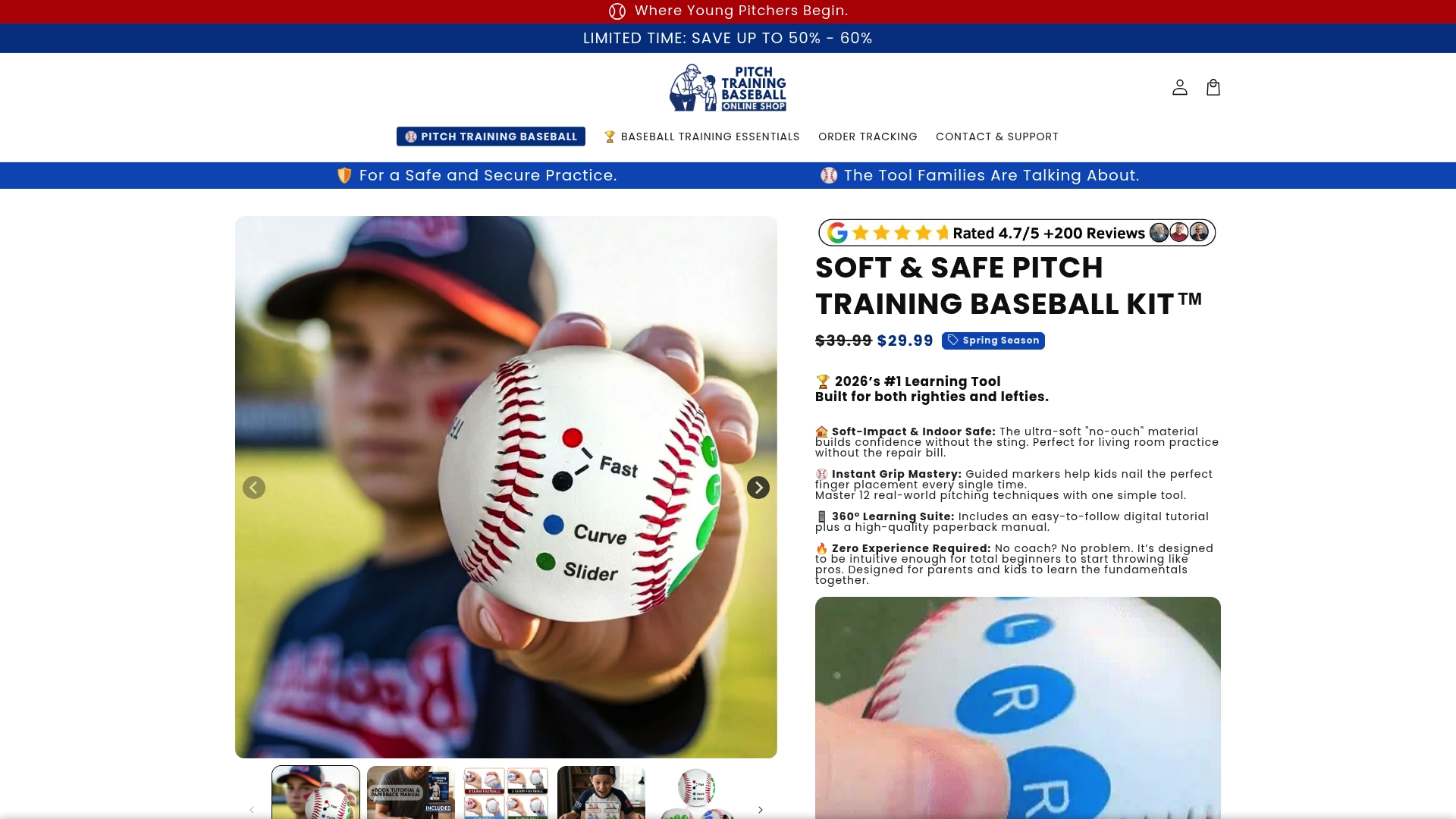
Pitchtrainingbaseball offers training aids designed specifically for youth pitchers, including the Pitching Target Net with Strike 9-Zone, which gives players and coaches instant visual feedback on pitch location and mechanics. Structured target practice builds the muscle memory for repeatable, low-stress throwing patterns. Paired with the educational content on the Pitchtrainingbaseball site, these tools give parents and coaches a practical way to reinforce good habits at every practice session. Browse the full range of pitch training products built for youth arm development.
FAQ
What is the most common overuse injury in youth baseball?
Little League Elbow is the most common overuse injury in youth baseball. It involves stress or fracture of the medial epicondyle growth plate and requires complete rest from throwing to heal properly.
How do I know if my child has an overuse injury?
The clearest early sign is pain during or after throwing that does not resolve with a night’s rest. If pain progresses to occur during everyday activities, the injury has advanced and requires medical evaluation.
Can overuse injuries in baseball be fully prevented?
Overuse injuries can be significantly reduced through pitch count compliance, mechanics coaching, and tracking total throwing volume across all contexts. No single measure eliminates risk entirely, but combining all three cuts it substantially.
When does a youth pitcher need Tommy John surgery?
Tommy John surgery is considered when UCL damage is severe enough that non-operative treatment cannot restore function. Recovery takes 12–18 months, and the procedure carries an 80%–95% return-to-play rate for athletes who complete rehabilitation fully.
How many pitches per game is safe for a youth pitcher?
Pitch Smart guidelines set age-specific limits, and pitching more than 80 pitches per game increases injury risk by 380%. Staying within age-appropriate limits and counting all throwing contexts is the standard of care.
Recommended
- Progressive Overload Baseball: A Youth Coach’s Guide – Pitch Training Baseball
- Baseball parents: safety, support, and pitching success – Pitch Training Baseball
- Top safe baseball training practices to prevent youth injuries – Pitch Training Baseball
- The Role of Parents in Baseball Training: A 2026 Guide – Pitch Training Baseball