


Pitch selection is the systematic process of choosing the best pitch based on the pitcher’s abilities, the game situation, and the batter’s tendencies. A step by step pitch selection approach gives young players a clear decision framework instead of guessing on the mound. The American Sports Medicine Institute and youth coaching standards both confirm that poor pitch choices, not just overuse, drive most youth arm injuries. Pitchtrainingbaseball supports coaches and parents with the tools and knowledge to build this process correctly from the start.
What is step by step pitch selection for youth pitchers?
Step by step pitch selection is a structured method for choosing pitches in sequence, one decision at a time. Rather than reacting to pressure or picking randomly, a pitcher works through a short checklist: game situation, count, batter tendencies, and personal command. This process is sometimes called pitch sequencing or pitch planning in coaching circles. Both terms describe the same goal: putting the right pitch in the right location at the right time.
The core insight is simple. Confidence and strike throwing outweigh elaborate pitch sequences for young pitchers. A 10-year-old who throws a fastball for strikes 60% of the time will outperform a 10-year-old who throws four pitches inconsistently. The stepwise approach keeps the decision tree short enough for young athletes to execute under pressure.

Youth baseball coaching standards in 2026 reinforce this philosophy. Coaches are encouraged to teach decision-making as a skill, not just mechanics. When a pitcher knows why they are throwing a specific pitch, they throw it with more conviction. That conviction shows up in better command and fewer walks.
What pitches should youth players learn and when?
Age-appropriate pitch introduction is the foundation of any pitch selection guide for youth baseball. Introducing pitches too early does not accelerate development. It increases injury risk and creates mechanical confusion.
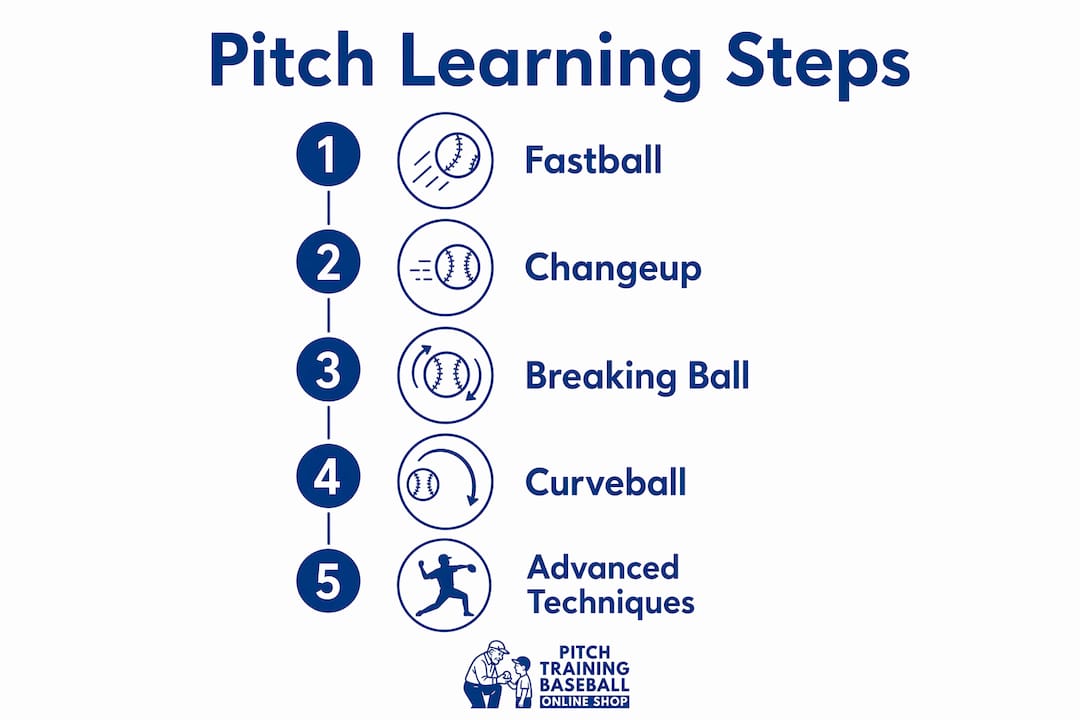
The research-backed framework breaks down like this:
- Ages 8–10: Fastball only. Focus entirely on mechanics and strike zone control. A young pitcher who can throw a fastball for strikes consistently has already mastered the hardest part of pitching.
- Ages 10–12: Introduce the changeup after the fastball shows consistent command. The changeup is the ideal first offspeed pitch because it uses the same arm speed as the fastball, creating less stress on the elbow and shoulder.
- Ages 13–14: Breaking balls like the curveball can be introduced once the pitcher shows mature mechanics and physical development. Arm speed must match the fastball delivery, with proper elbow height and follow-through.
Introducing breaking pitches before age 13 correlates with higher elbow and shoulder injury rates. Mechanical compensation, not the pitch type itself, is the primary cause of injury in young arms.
The changeup deserves special attention as a teaching tool. Because arm speed mirrors the fastball, hitters cannot read the pitch early. Coaches who skip the changeup and jump to curveballs are trading long-term arm health for short-term deception. That trade rarely pays off.
Parents sometimes push for breaking balls because they look impressive. The better question to ask is whether the pitcher can throw a fastball for a strike on demand. If the answer is no, no other pitch matters yet.
How do you assess pitcher readiness before adding pitches?
Readiness assessment is a step that many coaches skip, and it costs young pitchers their development arc. Before adding any pitch to a player’s repertoire, evaluate these four areas in order:
- Fastball strike percentage. Target 50% or higher across a full outing. 99% of young pitchers benefit from focusing on fastballs until they reach this threshold. Below 50% means the fastball needs more work, not a new pitch.
- Arm strength and mechanics maturity. Watch for consistent hip-to-shoulder separation, balanced follow-through, and repeatable arm path. A pitcher who looks different on pitch 40 than pitch 10 is not ready to add complexity.
- Pre-season conditioning. Coaches recommend starting throwing programs 4–8 weeks before the season with gradual volume increases. Jumping into full-effort throwing without a ramp-up period is a direct path to early-season injury.
- Video review and self-scouting. Record bullpen sessions from the side and behind the pitcher. Mechanical flaws that feel normal often become obvious on video. Parents can do this with a smartphone.
Pro Tip: Film your pitcher from the first base side during every bullpen session. Compare the arm path on pitch 10 versus pitch 40. Fatigue-related mechanical breakdown is the clearest sign that a pitcher is not ready to add pitches or increase volume.
Readiness is not a one-time check. Reassess at the start of each season and after any extended rest period. A pitcher who was ready for a changeup last fall may need to rebuild fastball command after a winter off. For a detailed framework, Pitchtrainingbaseball offers a step-by-step performance assessment guide built specifically for youth players.
How does in-game pitch sequencing work for young pitchers?
In-game pitch selection is where the stepwise framework becomes a real-time skill. The goal is not to confuse the hitter with complexity. The goal is to use what the pitcher commands well, in an order that makes each pitch harder to hit.
Work through these steps before every pitch:
- Read the count. Pitcher-friendly counts (0-0, 0-1, 1-2) allow more aggressive pitch choices. Hitter-friendly counts (2-0, 3-1) demand the pitcher’s most reliable pitch. A first-pitch strike at 14U can drop a hitter’s batting average by more than 100 points. Getting ahead in the count is the single highest-leverage move in youth pitching.
- Identify batter tendencies. Does the hitter chase high pitches? Does he struggle with anything off-speed? In youth baseball, this information often comes from watching the hitter’s first at-bat or from a coach’s notes.
- Choose the pitcher’s best command pitch. Prioritizing strikes over complexity increases confidence and reduces walks. If the fastball is working, use it. Do not abandon a working pitch to prove you have more options.
- Apply a simple sequence. Memorized 3-pitch sequences reduce anxiety and improve execution. A basic example: fastball inside, fastball outside, changeup away. The hitter sees two fastballs in different locations, then gets a changeup that looks identical until it drops.
- Use velocity separation and tunneling. Velocity separation of at least 8 mph between pitches disrupts hitter timing. Tunneling means two pitches start on the same path before breaking differently. These concepts work even at the youth level when the pitcher has solid command of two pitches.
Pro Tip: Give your pitcher 3–6 memorized sequences to use in games, not a long menu of options. Pitchers who carry a limited repertoire of dependable sequences make faster decisions and execute with more confidence under pressure.
The comparison below shows how pitch selection changes based on count leverage:
| Count | Situation | Recommended approach |
|---|---|---|
| 0-0 | Neutral | Throw best command pitch, attack the zone |
| 0-2 | Pitcher ahead | Expand the zone, use offspeed if commanded |
| 3-0 | Hitter ahead | Throw the most reliable fastball for a strike |
| 2-2 | Competitive | Mix location, use sequenced follow-up pitch |
| 3-2 | Full count | Trust the fastball, prioritize strike over deception |
The table reflects a core truth in youth pitching: the count tells you how much risk you can take. In pitcher-friendly counts, you have room to set up the next pitch. In hitter-friendly counts, you throw your best pitch and trust your mechanics.
What are the most common pitch selection mistakes in youth baseball?
Coaches and parents who understand the mistakes are better equipped to prevent them. These errors show up at every level of youth baseball and are almost always correctable.
- Rushing pitch introductions. Adding a curveball because a pitcher “looks ready” without checking mechanics or fastball command is the most common error. The result is usually a pitcher who throws three pitches poorly instead of two pitches well.
- Over-relying on breaking balls with poor mechanics. A curveball thrown with a dropped elbow or a short follow-through puts direct stress on the growth plates. High throwing volume and fatigue, combined with poor mechanics, are the primary drivers of youth pitching injuries.
- Ignoring strike consistency. A pitcher who walks two batters per inning does not need a new pitch. They need more fastball reps and a tighter strike zone focus. Walks destroy confidence faster than any other outcome.
- Abandoning sequences mid-at-bat. When a pitcher falls behind in the count, the instinct is to change the plan. This usually makes things worse. Stick to the sequence unless a clear mechanical issue appears.
- Skipping rest and pitch count limits. Strict adherence to pitch counts and adequate rest between outings are non-negotiable for arm longevity. Little League Baseball publishes pitch count limits by age group, and those limits exist for good reason.
The pitcher who throws 60 fastballs with sound mechanics will develop faster and stay healthier than the pitcher who throws 40 mixed pitches with compromised form. Simplicity protects arms and builds confidence at the same time.
Resetting between at-bats is a skill worth teaching explicitly. When a pitcher gives up a hit or a walk, the next batter is a clean slate. Coaches who help pitchers reset mentally, not just mechanically, see better results over a full season. Building daily pitching habits that include mental reset routines pays off in game situations.
Key Takeaways
A stepwise pitch selection process built on age-appropriate pitch introduction, count awareness, and consistent fastball command is the most effective framework for developing healthy, confident youth pitchers.
| Point | Details |
|---|---|
| Age-appropriate pitch order | Fastball first, changeup at 10–12, breaking balls at 13–14 with mature mechanics. |
| Fastball command threshold | Reach 50%+ strike rate before adding any new pitch to the repertoire. |
| Count leverage drives decisions | First-pitch strikes are the highest-leverage move; attack the zone in pitcher-friendly counts. |
| Memorized sequences reduce anxiety | Carry 3–6 set sequences to simplify decisions and improve execution under pressure. |
| Mechanics protect arms | Sound follow-through and arm action, not pitch type alone, determine injury risk. |
What I’ve learned coaching youth pitchers through this process
The hardest thing to convince parents and coaches of is that less is more. Every season, I watch young pitchers get introduced to curveballs at age 11 because they “have the arm for it.” What they actually have is the arm strength to throw it. They do not yet have the mechanics, the body maturity, or the command to throw it safely and effectively.
The pitchers who develop the fastest are almost always the ones who spent an extra year mastering the fastball. They arrive at age 13 with a pitch they trust completely. Adding a changeup or a breaking ball to that foundation takes weeks, not months. The pitchers who skipped steps spend those same weeks unlearning bad habits.
I also think coaches underestimate how much anxiety pitch selection creates for young players. A 12-year-old standing on the mound with a 2-2 count does not need five options. They need one pitch they believe in. Memorized pitch sequences solve this problem directly. When a pitcher has a pre-planned response to a 2-2 count, the decision is already made. They just execute.
The other thing I keep coming back to is mechanics monitoring. Parents often focus on results: did he get the out, did he throw strikes? The better question is: did his mechanics hold up in the sixth inning the same way they did in the first? Fatigue-driven mechanical breakdown is where most youth arm injuries begin. Watching for it consistently, not just after a bad outing, is what separates good coaching from reactive coaching. Pitchtrainingbaseball’s resources on arm strength and safety give coaches a practical framework for monitoring this over a full season.
— Albert
Tools from Pitchtrainingbaseball to support pitch development
Building pitch selection skills requires consistent, structured practice. Pitchtrainingbaseball offers training equipment designed to make that practice more effective for youth players at every stage.
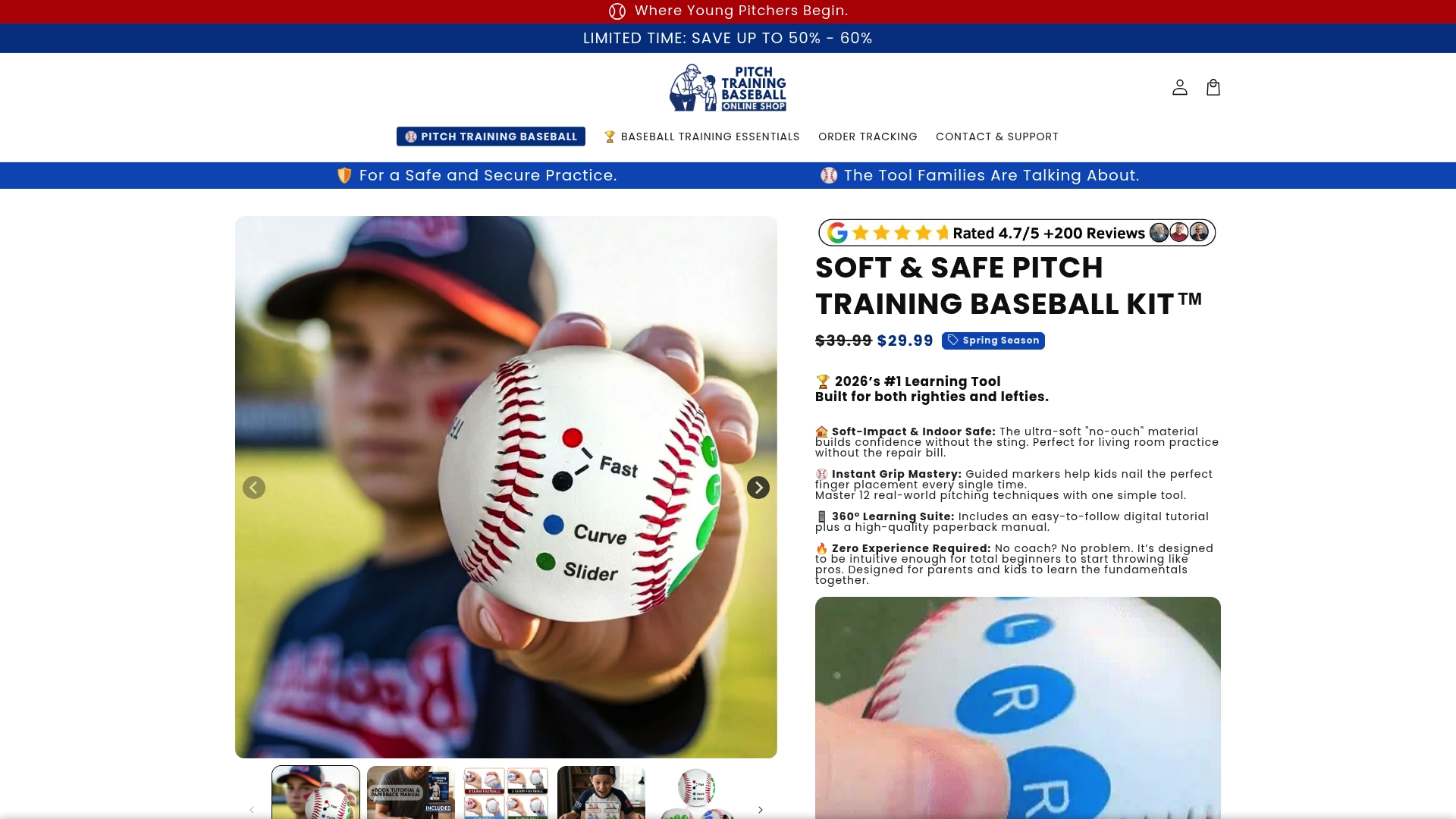
The Pitching Target Net with Strike 9-Zone gives pitchers immediate visual feedback on location, which is the fastest way to build fastball command. Coaches can use it to run sequencing drills that mirror real game counts. Pitchtrainingbaseball also carries pitch training products and specialized practice balls that support mechanics work at home or at the field. Every tool is built to be portable, adjustable, and easy for parents to set up without a full coaching staff present.
FAQ
What is pitch selection in youth baseball?
Pitch selection is the process of choosing which pitch to throw based on the count, batter tendencies, and the pitcher’s current command. For youth players, it starts with mastering the fastball before adding any offspeed pitches.
When should a young pitcher learn a curveball?
Breaking balls like the curveball should be introduced at ages 13–14, after the pitcher shows mature mechanics and consistent fastball command. Introducing them earlier correlates with higher elbow and shoulder injury rates.
How do I know if my pitcher is ready for a new pitch?
A pitcher is ready for a new pitch when they consistently throw their fastball for strikes at a 50% or higher rate and show repeatable mechanics through a full outing without mechanical breakdown from fatigue.
What is the best first offspeed pitch for youth players?
The changeup is the best first offspeed pitch because it uses the same arm speed as the fastball, creating less stress on the arm while still disrupting hitter timing effectively.
How many pitches should a youth pitcher use in a game?
Most youth pitchers perform best with two to three pitches they command well, supported by three to six memorized sequences. A limited, reliable repertoire produces better results than a wide variety of pitches thrown inconsistently.
Recommended
- What Is Pitch Selection? A Youth Baseball Guide – Pitch Training Baseball
- How to assess youth pitching performance step by step – Pitch Training Baseball
- Defining Youth Pitching Mechanics: A Coach’s Guide – Pitch Training Baseball
- How to Plan Pitcher Rotations for Youth Baseball – Pitch Training Baseball