


Prioritize a repeatable delivery, command of a lefty fastball, and an early changeup, then use targeted drills to lock them in. Start with small-target work like the bucket drill or 9-zone net sessions, before chasing velocity. Control wins games at every youth level. Just remember, safe reps beat max-effort reps every time, especially before age 13.
TL;DR:
- Control drills like the bucket and target net work build accuracy and command, with emphasis on consistent release points and tracking strike trends over multiple sessions.
- Mechanics fundamentals such as stride length, balance, and arm slot are critical; stride should be proportional to height, and proper balance predicts smoother delivery.
- Starting with fastball command at age 11 to 12 is essential, with changeups introduced later after establishing fastball control and arm speed consistency; breaking balls are for ages 13 and up.
- Proper pickoff moves like the 45-degree drill enhance deception on bases, with setup steps that include mirror leg-lift and live runner progressions to perfect timing.
- Youth pitchers should limit practice to two or three sessions weekly, prioritize rest for recovery, and watch for warning signs like pain or command loss to prevent injury.
Table of Contents
- Lefty Pitching Drills for Accuracy and Command
- Mechanics Fundamentals That Support a Repeatable Lefty Delivery
- Pitch Development Sequence for Left-Handed Pitchers
- Lefty Pickoff Moves and the 45-Degree Drill
- Age and Skill Progressions for Youth Lefty Pitchers
- Setting Up Training Gear for These Lefty Drills
- Sample Weekly Practice Plan for Lefty Pitchers
- Safety, Workload, and Warning Signs to Watch
- Field Positioning and Defense for Left-Handed Pitchers
- Warm-Up and Cooldown Routines for Left-Handed Pitchers
- A Coach’s Honest Take on Training Young Lefties
- Training Gear That Actually Supports These Drills
- Sources
- FAQ
Lefty Pitching Drills for Accuracy and Command
Command separates lefties who stick in a rotation from lefties who bounce between the bullpen and the bench. These drills build that command through repetition, not lecture.
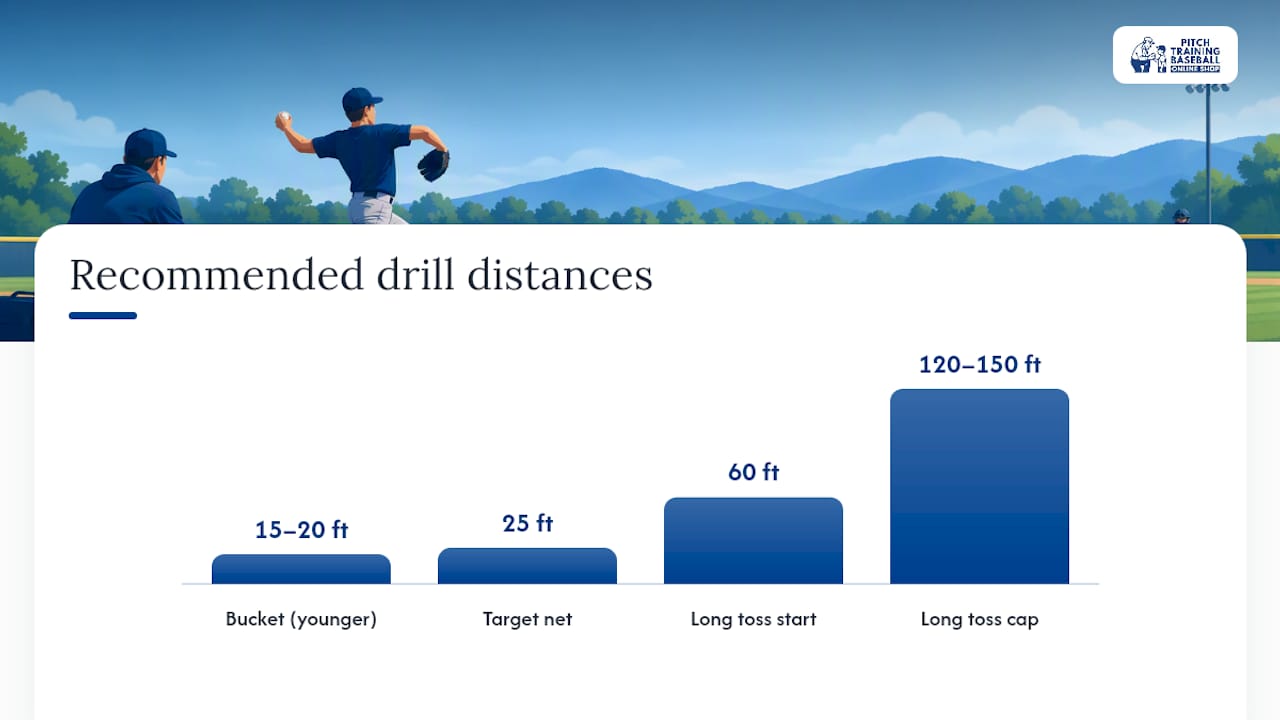
The bucket drill teaches release-point consistency using a simple visual target. Set a five-gallon bucket on its side, 15 to 20 feet away for younger throwers and up to 40 feet for advanced arms, and have the pitcher aim for the opening. Run 3 sets of 10 throws, focusing on one cue per set (front shoulder closed, glove tucked, follow-through toward the target). The bucket gives instant feedback: a ball that skips wide usually means the pitcher opened up too early, a classic lefty tendency worth watching.
Target net work takes that same accuracy concept and quantifies it. A 9-zone net lets you track strikes by quadrant instead of just counting makes and misses.
- Start at 25 feet with the whole zone open as the target.
- Shrink the target to the bottom two corners once the pitcher hits 70% strikes.
- Log makes per 10 throws across three sessions to spot real trends, not one lucky outing.
Long toss builds the arm strength that supports everything else, but it has to be programmed carefully. Begin at 60 feet, add 10 feet per week if arm action stays clean, and cap most youth arms around 120 to 150 feet. The moment mechanics break down (arm dragging, shoulder flying open) is the moment to pull the distance back, not push through it.
Belt or towel drills lock in the finish. Loop a towel through the pitcher’s back pocket or belt and have them complete their delivery until the towel snaps forward toward the target. This isolates the hip-to-shoulder separation that most young lefties rush.
The bring-it-in drill finishes the loop. Have a catcher hold the glove low and toward the pitcher’s glove side (since a lefty’s natural finish drifts that direction), then have the pitcher throw a short-distance fastball aimed at “bringing it in” to that spot. It trains the exact release-side habit that shows up in real at-bats.
Pro Tip: Count strikes, not just pitches. A pitcher who throws 20 pitches and hits the target 14 times is developing faster than one who throws 40 and hits it 18 times.
Mechanics Fundamentals That Support a Repeatable Lefty Delivery
Drills only work if the mechanics underneath them are sound. Three things drive repeatability for a young lefty: stride, balance, and arm slot.
Stride length should land in the 66% to 85% of the pitcher’s height range, according to a systematic review of youth pitching biomechanics. That range balances momentum transfer against joint stress. A stride that’s too short robs velocity and forces the arm to work harder to compensate. A stride that’s too long often causes the front leg to brace late, which is exactly when elbow torque spikes. The same research found elbow valgus torque reaches roughly 18 newton meters just before max shoulder rotation, a reminder that stride and arm health are connected, not separate issues. You can measure stride against height with basic video rather than guessing.
Balance point matters just as much. Watch three things: eyes level and on the target, glove hand set at the chest, and the lifted knee reaching hip height without wobble. A consistent balance position at the top of the leg lift predicts a cleaner tempo through the rest of the delivery.
Lefties often show a slightly lower arm slot and a mild closed landing compared to righties. That’s usually fine. Resist the urge to force a textbook three-quarter slot on every lefty; some of the best command comes from a slot that feels natural to the athlete.
Two faults show up constantly:
- Cross-body throw: the landing foot drifts toward the glove side, cutting off hip rotation. Fix with the bucket drill, aiming the landing foot at a line taped on the mound.
- Early trunk tilt: the pitcher’s upper body dips before foot strike. Fix with the belt drill, which forces the hips to lead instead of the shoulders.
Pitch Development Sequence for Left-Handed Pitchers
The order pitches get introduced matters more than most parents realize. Coaching consensus points to a clear sequence for southpaws:
- Fastball first. Command comes before anything else. Run two-sided location drills, working the pitcher to both the glove side and arm side of the plate in equal reps so he isn’t just comfortable throwing to one corner.
- Changeup second, usually around age 11 to 12. A circle-change grip works well for most lefty hands because it preserves arm speed while creating natural fade toward a right-handed hitter’s back foot. Drill it by having the pitcher throw fastball, changeup, fastball in the same bullpen set, checking that arm speed looks identical on video for both pitches. That fastball speed matching is what makes a lefty’s changeup so disruptive, since both pitches break toward the same side of the plate.
- Breaking balls third, generally not before age 13 to 14 and only after growth plates and arm maturity support the stress of spin. Introduce with slow-motion spin drills before any live-speed reps.
Pro Tip: If a pitcher can’t throw a changeup for a strike three times in a row at half speed, he’s not ready to add spin yet. Command first, movement second.
Lefty Pickoff Moves and the 45-Degree Drill
A lefty’s biggest edge on the bases isn’t arm strength, it’s deception. Facing first base naturally, a left-handed pitcher can hold runners closer than a righty ever could, and the southpaw advantage shows up as much in holding runners as it does in facing hitters.
The 45-degree pickoff works by aiming the pivot foot and front hip at a point roughly halfway between the mound and first base, rather than squaring fully toward the plate or fully toward the base. That angle lets the pitcher read the runner without tipping the move.
Build it with these steps:
- Mirror leg-lift drill: the pitcher practices an identical knee lift for both the pitch and the pickoff so a runner can’t read the difference.
- Step-and-turn reps: without a runner, repeat the pivot-and-throw motion to a first baseman until the footwork is automatic.
- Live runner progressions: add a runner at half speed first, then full game speed.
Before any live work, run this balk-avoidance checklist: consistent head and torso position at the start, back foot never leaving the rubber before the pivot, and a clear pause at the balance point every single time.
Age and Skill Progressions for Youth Lefty Pitchers
Development timelines matter more for lefties than raw talent does. Rushing pitch complexity ahead of physical readiness is the fastest way to stall progress or cause injury.
- Ages 8 to 10: Mechanics and fun come first. Stick to short bullpens (20 to 30 pitches), bucket drills, and target net work. No breaking balls, period. The goal is repeatable movement patterns, not swing-and-miss stuff.
- Ages 11 to 13: Introduce the changeup once the fastball shows consistent two-side command. Extend long toss gradually. Begin light breaking-ball feel work only after a coach or physical therapist confirms the athlete has the arm maturity for it.
- Ages 14 and up: Layer in progressive velocity work and longer, higher-intensity long toss. Curated breaking-ball training can expand here, but pitch counts and rest days still need active monitoring, not just a season-long assumption that the arm can handle it.
Across every age band, more rest days between outings beat more total pitches thrown. A young arm that gets one extra day off recovers mechanics faster than one pushed for one more inning.
Setting Up Training Gear for These Lefty Drills
The right equipment turns these drills from occasional practice into daily reps, which is where real improvement happens.
- Set a pitching net with the strike-zone cutout flipped or oriented so the low glove-side corner sits where a left-handed delivery naturally finishes, usually a step toward the first-base side of center for a right-handed hitter’s stance.
- Place the net 40 to 46 feet away for ages 8 to 10, and out to regulation distance for older lefties.
- Use a 9-zone target net to turn every bullpen into a countable accuracy session instead of a vague “looked good today.”
- Reach for soft training balls during high-rep accuracy work. They cut down on impact stress for catchers and let a pitcher throw 30 or 40 reps without worrying about a stray liner.
Coaches and parents lean on defined pitching mechanics guides to keep drill cues consistent from one practice to the next, which matters more than any single piece of gear.
Sample Weekly Practice Plan for Lefty Pitchers
A young arm doesn’t need daily bullpens to improve. It needs focused, well-spaced sessions.
- Session 1 (Monday): 10-minute dynamic warm-up, then 5 sets of 10 bucket-drill throws at a small target, followed by a 10-minute light cooldown throw.
- Session 2 (Wednesday): Long toss progression (start at current max distance minus 10 feet, build back up), then 20 changeup reps at game-speed arm action, checking fastball-changeup arm speed on video.
- Session 3 (Saturday): Full bullpen simulation of 20 to 30 pitches mixing fastball locations and changeups, plus 10 pickoff reps if the pitcher is old enough to hold runners.
Alternate a hard session with a light one. If Wednesday’s long toss pushes distance and intensity, keep Saturday’s bullpen at a moderate pitch count rather than stacking two demanding days back to back. Full workout progressions built around this kind of alternating structure protect the arm while still building strength.
Safety, Workload, and Warning Signs to Watch
Pitch counts exist for a reason, and the reason is measurable. Elbow valgus torque climbs to roughly 18 newton meters right before maximum shoulder rotation in youth pitchers, which is why stacking extra innings on a tired arm carries real risk rather than a vague one.
Keep practice sessions conservative: most youth pitchers should throw no more than two to three focused sessions weekly, with at least one full rest day between any outing over 20 pitches.
Watch for these warning signs:
- Pain in the elbow or shoulder, especially during or right after throwing.
- A visible drop in release point or a suddenly wider arm slot.
- Command that falls apart late in a bullpen when it was sharp early.
- Complaints of stiffness that linger into the next day.
Any of these means back off immediately and get a proper evaluation before the next outing, not after it.
Field Positioning and Defense for Left-Handed Pitchers
A lefty’s follow-through naturally carries the body toward the third-base line, which changes how a coach should think about defensive setup. That momentum drift means a left-handed pitcher often needs an extra beat to square up for a comebacker hit up the middle or toward first base.
Coaches should drill fielding practice specifically from that landing angle, not from a generic mound position. Set up short-hop and bunt-coverage reps where the pitcher starts from the actual finish position of a real pitch, glove hand trailing toward third base, rather than starting square to the plate.
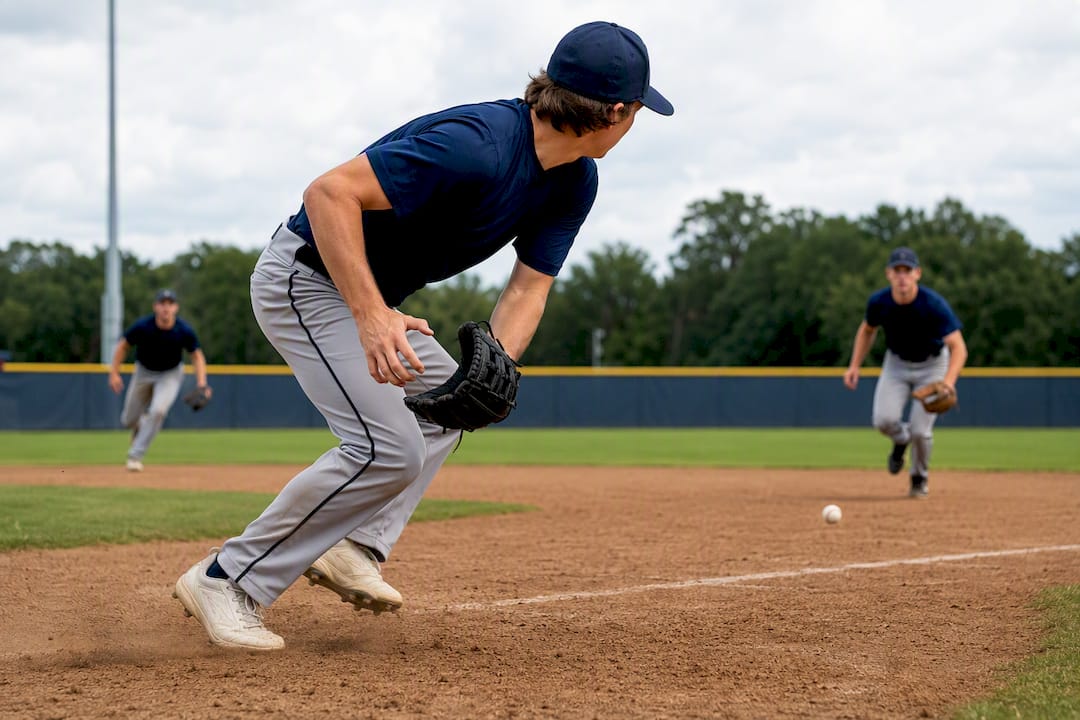
Bunt defense matters more for lefties than most youth coaches account for. Because the delivery finishes closed toward third, a lefty is often better positioned to cover a bunt down the first-base line if the first baseman is holding a runner. Practice this exact rotation: pitcher covers first, first baseman charges the bunt, shortstop covers second. Running it slow first, then at game speed, prevents the confusion that turns a routine bunt into an extra base.
Pickoff awareness also plays into positioning. A lefty who’s drilled the 45-degree move and step-and-turn reps should be comfortable varying hold times on a runner at first, which changes how the middle infielders time their own positioning for a potential steal.
Warm-Up and Cooldown Routines for Left-Handed Pitchers
A proper warm-up isn’t just jogging and a few stretches. It should mirror the specific demands of a lefty delivery.
Start with five minutes of light jogging or jump rope to raise heart rate, then move into dynamic stretches: arm circles, band pull-aparts, and hip openers that target the same rotational muscles used in the delivery. Follow with a short, deliberate throwing progression: 10 throws at 30 feet, 10 at 60 feet, building arm action gradually rather than jumping straight into full-effort bullpen throws.
This primes the specific rotational pattern the arm is about to repeat dozens of times.
Cooldown deserves just as much attention as warm-up, even though it usually gets skipped. A light 50 to 75 foot toss for five minutes after the session, followed by static stretching of the shoulder and forearm, helps flush out the muscle fatigue that builds during a bullpen or game outing. Skipping this step is one of the most common reasons youth arms feel stiff the next morning. A five-minute cooldown costs almost nothing and pays back in recovery time.
A Coach’s Honest Take on Training Young Lefties
The best lefty I ever watched develop wasn’t the hardest thrower on the team. He was the one who could hit a target the size of a dinner plate three times out of five, at age 11, because his coach cared more about repeatable mechanics than radar gun numbers. Chase command before velocity, protect the arm before the ego, and keep the reps fun. Everything else follows from that.
— Albert
Training Gear That Actually Supports These Drills
Some training kits combine these drills into a single package, so a parent or coach doesn’t have to piece together a bucket, a net, and a stack of balls separately. For younger lefties still building mechanics, the SOFT PITCH TRAINING BASEBALL KIT™ uses lower-impact balls that make high-rep bucket and target work safer for both the pitcher and whoever’s catching. Older youth ready for full bullpen sessions and long toss can step up to the PITCH TRAINING BASEBALL KIT™, which pairs standard training balls with the same accuracy-focused approach.
These kits are generally built around a safety-first, easy-setup philosophy geared toward practice at home or on the field. Pair either kit with the 9-zone target net to turn every session into a measurable strike count instead of a guess. Browse available collections to find a kit that matches your pitcher’s progression stage.
Sources
- Upper extremity biomechanics of youth baseball pitching: a systematic review
- The Southpaw Advantage | FanGraphs Baseball
- Why left-handed pitching matters in baseball
- Developing Lefty Pitchers: Add 4-8 mph With 5 Fixes
FAQ
Is It Harder to Hit a Lefty Pitcher?
Many hitters find lefties harder to read simply because they see them less often, especially at youth levels where southpaws are rarer. That unfamiliarity, combined with the different release angle and arm-side movement, contributes to the southpaw advantage even when velocity is unremarkable.
What Are the Best Pitches for a Lefty to Throw?
A well-located fastball paired with a changeup that mirrors its arm speed is the strongest combination for young lefties, since both pitches break toward the same side of the plate and disrupt timing. Breaking balls come later, once the fastball-changeup sequence is locked in and the pitcher’s arm has matured enough to handle spin safely.
What Makes Lefty Pitchers Better Than Righties?
Lefties aren’t inherently better pitchers. Their advantage comes from the unfamiliar look they present to mostly right-handed hitters and their natural positioning for holding runners at first base, both of which matter more at youth and amateur levels where reps against southpaws are limited.
Is Lefty-on-Lefty Better for the Batter or the Pitcher?
Lefty-on-lefty matchups generally favor the pitcher, since a left-handed hitter loses the platoon advantage he’d normally get seeing a right-handed arm. This dynamic, documented in MLB’s platoon-split analysis, is a big reason coaches at every level like bringing in a lefty specifically to face a tough left-handed hitter late in a game.
How Much Should a Young Lefty Practice Each Week?
Two to three focused sessions per week, mixing accuracy drills, long toss, and bullpen work, is enough for most youth pitchers to see steady improvement without overloading the arm. Rest days between sessions matter as much as the practice itself, particularly given the elbow stress documented in youth pitching biomechanics research.