


Pitching tunnel vision is defined as the technique of throwing multiple pitch types through the same visual corridor early in flight, making them indistinguishable to hitters until the moment they must commit to a swing. The industry term for this is pitch tunneling, and understanding it separates coaches who teach mechanics from coaches who teach deception. Pitch tunneling works because hitters have roughly 400 milliseconds to react to a pitch, with 150–200 milliseconds consumed just identifying pitch type before the swing decision locks in. That narrow window is exactly what tunneling exploits. For parents and coaches working with youth players, knowing what is pitching tunnel vision and how to train it gives your pitcher a real edge, even at the youth level.
What is pitching tunnel vision and how does it work?
Pitch tunneling is the science of making a fastball and a curveball look identical for the first 75% of their flight. Both pitches travel through the same visual corridor early in flight, converging at a point roughly 23–24 feet from home plate called the commit point. At the commit point, the hitter’s brain locks in a swing decision. After that point, the pitches separate. The fastball stays true while the curveball breaks. The hitter is already committed and cannot adjust.
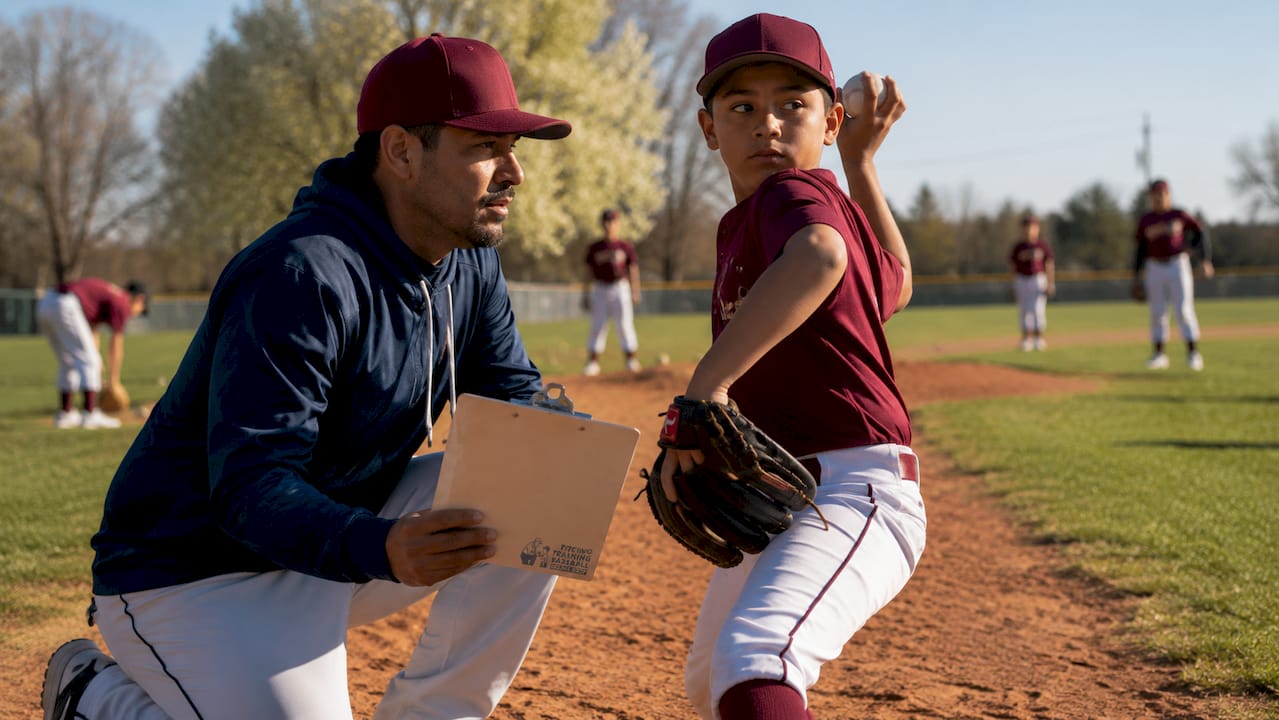
This separation after the commit point is called the deception gap. The deception gap creates weak contact, late swings, and strikeouts. The visual corridor both pitches share is called the visual tunnel. A pitcher who controls the visual tunnel controls the hitter’s perception, not just the ball’s path.
The numbers behind the deception gap
Effective tunneling requires release point consistency within 2 inches from pitch to pitch. Pitches converging within one baseball width, approximately 3 inches, at the commit point maximizes deception. Any wider and the hitter can distinguish pitch types early, eliminating the tunnel effect entirely.
The Trajectory Deception Ratio (TDR) is a metric that measures pitch separation before and after the decision point in three dimensions. A high TDR means pitches look similar early and diverge sharply late. That is the exact pattern that fools hitters. Youth coaches do not need to calculate TDR manually, but understanding what it measures helps you evaluate whether a pitcher’s tunnel pairs are actually working.
| Parameter | Effective tunnel | Weak tunnel |
|---|---|---|
| Release point variation | Less than 2 inches | More than 3 inches |
| Commit point convergence | Within 3 inches | More than 6 inches |
| Post-commit separation | Sharp, late break | Gradual, early break |
| Hitter reaction | Guessing, late swing | Early read, solid contact |
Pro Tip: Video your pitcher from the center field angle during bullpen sessions. If you can see a clear difference in arm slot between pitch types, hitters can too. Fix the slot before worrying about pitch movement.
What mental focus challenges affect tunnel vision in pitching?
Pitch tunneling is a physical skill built on a mental foundation. The psychological version of tunnel vision in pitching is the opposite problem: a pitcher who over-focuses on one variable, like velocity or spin, loses awareness of the full picture. That mental narrowing disrupts mechanics, sequencing, and release consistency.
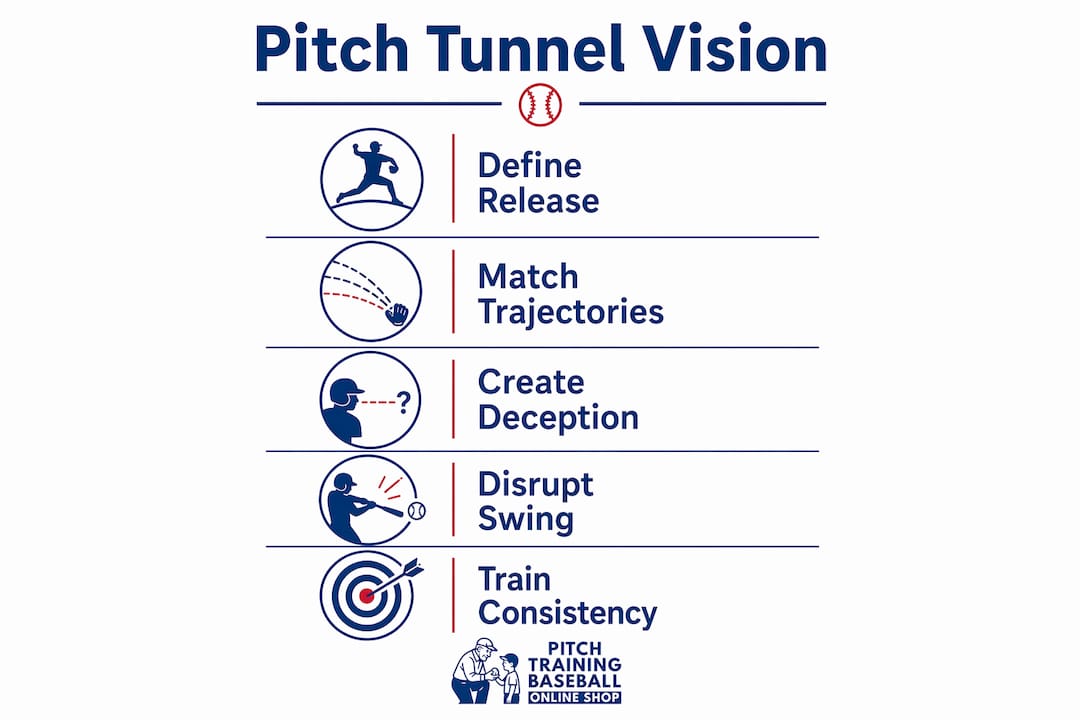
Coaches recommend focusing on one clear cue, such as “breathe out” or “finish the sentence,” to prevent mental clutter during delivery. Over-analyzing multiple variables simultaneously causes distraction and worsens performance. One cue anchors attention without overloading the brain. Think of it as giving your pitcher a single “yellow star” to aim at mentally, rather than a sky full of stars to sort through.
How elite pitchers manage their attention
Elite pitchers use focused attention bursts during a 5-second pitch cycle rather than maintaining constant high intensity throughout the game. This approach conserves mental energy and sharpens execution at the moments that matter most. A youth pitcher who tries to stay locked in at maximum focus for seven innings will fade. One who learns to switch focus on and off will stay sharp.
Parents and coaches play a direct role in reinforcing this habit. Reminding a young pitcher between innings to reset, breathe, and pick one cue is not coddling. It is mental coaching. The mental side of pitching is a trainable skill, not a personality trait.
Coaching tips to maintain mental clarity during games:
- Use one physical reset cue between pitches, such as stepping off the rubber and taking a breath.
- Limit post-pitch analysis to one thought maximum. “Stay tall” beats “stay tall, drive the knee, and follow through.”
- Rotate focus cues by inning, not by pitch. Switching cues too often creates the same clutter you are trying to avoid.
- Encourage pitchers to visualize pitch paths before stepping on the mound, not during delivery.
- Praise process over result. “Good release” reinforces mechanics. “Good pitch” reinforces luck.
Pro Tip: Before each inning, ask your pitcher one question: “What is your one cue today?” If they cannot answer in three words or fewer, the cue is too complicated.
Why does tunnel vision affect hitters differently?
Pitch tunneling is not a universal weapon. Tunnel vision is not universally effective because some hitters use the visual pattern of pitch flight to time their swings rather than identify pitch type. A perfectly executed tunnel can actually help those hitters by giving them a consistent visual reference point. That is a counterintuitive reality that most youth coaches never hear.
Hitters who rely on timing rather than pitch recognition benefit from predictable early flight paths. A tunnel that looks identical pitch after pitch gives a timing-based hitter exactly the rhythm they need. Coaches must observe individual hitters across multiple at-bats before concluding that a tunnel pair is working.
Adapting your tunnel strategy to hitter tendencies
Coaches must tailor pitch tunnels and sequencing to individual hitters because a perfect tunnel pair can aid some hitters’ timing instead of fooling them. The fix is not to abandon tunneling. The fix is to vary the tunnel itself. Changing arm angle slightly, adjusting pitch sequence order, or introducing a third pitch that breaks the pattern disrupts a timing-based hitter’s rhythm.
| Hitter type | How they process pitches | Best tunnel adjustment |
|---|---|---|
| Pitch-recognition hitter | Reads spin and trajectory early | Standard tunnel pairs work well |
| Timing-based hitter | Uses early flight path for rhythm | Vary tunnel entry or add a third pitch |
| Aggressive early-count hitter | Commits early regardless | Maximize post-commit separation |
| Patient hitter | Waits for late movement | Tighten the tunnel, reduce early cues |
Evaluating tunnel effectiveness requires game observation over multiple at-bats, not a single result. A hitter who fouls off three tunnel pitches before striking out is being fooled. A hitter who consistently makes hard contact on the same tunnel pair is reading it. Adjust accordingly.
How can youth pitchers train to develop effective pitch tunneling?
Building effective pitch tunneling in a youth pitcher starts with one non-negotiable: consistent release point mechanics matter more than pitch movement or results in bullpen sessions. A pitcher who releases a fastball from one slot and a curveball from a different slot has no tunnel. Movement is irrelevant if the early flight paths diverge at the hand.
Delivery-based bullpen training improves tunneling mastery in youth players by shifting the focus from “where did it go” to “how did I release it.” Parents watching bullpen sessions should listen for coaches who ask about release point, not just strike percentage. Strike percentage measures results. Release consistency builds tunnels.
Step-by-step training exercises for tunnel development
-
Shadow delivery drill. Have the pitcher throw two pitch types in slow motion without a ball, focusing solely on keeping the arm slot identical through the release point. Film from behind the mound. Compare arm positions frame by frame.
-
Same-slot bullpen pairs. Throw fastball and changeup in alternating pairs, 10 reps each. The goal is not movement. The goal is matching the first 10 feet of flight path. A pitching target net with a defined strike zone helps pitchers track location consistency across both pitch types.
-
Tunnel point check. Set up a visual marker at 23 feet from the release point. Ask a coach or parent to stand at that distance and report whether the two pitches look different at that point. If they do, the tunnel is broken.
-
Sequencing awareness rounds. Throw three-pitch sequences (fastball, curveball, changeup) with the intent of making the first two pitches look identical. The third pitch is the separator. This trains the pitcher to think in tunnel pairs, not individual pitches.
-
Focus cue integration. Combine one mental cue with each delivery. “Breathe out” on the fastball. Same cue on the curveball. Consistent mental routine reinforces consistent physical mechanics.
-
Video review sessions. Review footage from the center field angle after each bullpen. Mark the frame where the two pitch types first look different. The later that frame appears, the better the tunnel.
Parents can support this process by building consistent daily habits around short, focused practice sessions rather than long, unfocused throwing. Twenty minutes of deliberate tunnel work beats an hour of aimless bullpen throwing every time.
Pro Tip: Never correct a youth pitcher’s tunnel during a game. Note what you see, then address it in the next bullpen session. In-game corrections break focus and rarely stick.
Key Takeaways
Pitching tunnel vision, properly called pitch tunneling, is the most underused deception skill in youth baseball, and it starts with release point consistency, not pitch movement.
| Point | Details |
|---|---|
| Pitch tunneling defined | Multiple pitches share the same visual path early in flight to delay hitter recognition until after the commit point. |
| Release point is the foundation | Variation of more than 2 inches between pitch types breaks the tunnel before it starts. |
| Mental focus shapes mechanics | One clear cue per delivery reduces mental clutter and keeps release mechanics consistent under pressure. |
| Tunneling is not universal | Some hitters use early flight patterns for timing, so coaches must observe and adapt tunnel strategy per hitter. |
| Training beats talent | Delivery-based bullpen sessions focused on release consistency build tunneling skills faster than chasing movement. |
What coaching youth pitchers through tunnel vision taught me
The biggest mistake I see coaches make with youth pitchers is teaching pitch tunneling as a movement concept instead of a release concept. They spend entire practices on curveball grip and spin rate while the kid is releasing the ball from a completely different arm slot on every pitch. The tunnel never forms because the foundation was never built.
The second mistake is expecting youth pitchers to manage tunnel vision mentally without any training for it. Telling a 12-year-old to “stay focused” is not coaching. Teaching them to use one physical reset cue between pitches and one mental anchor during delivery is coaching. The role of focus in baseball is concrete and trainable, not abstract.
Parents have more influence here than they realize. A parent who asks “did you keep your arm slot consistent?” after a bullpen session reinforces the right habit. A parent who asks “how many strikes did you throw?” reinforces the wrong one. The questions you ask after practice shape what your pitcher pays attention to during practice.
Patience matters more than any drill. Tunnel development in youth players takes months of consistent work, not weeks. I have seen pitchers go from zero tunnel awareness to genuinely fooling hitters in a single season, but only when coaches and parents stayed committed to the process without chasing shortcuts. The pitchers who develop the fastest are the ones whose support system asks better questions, not the ones with the most natural talent.
— Albert
Training tools that support pitching tunnel development
Developing pitch tunneling requires repetition with purpose. Pitchtrainingbaseball offers training equipment built specifically for youth pitchers who need to sharpen release consistency and location control, the two physical pillars of effective tunneling.
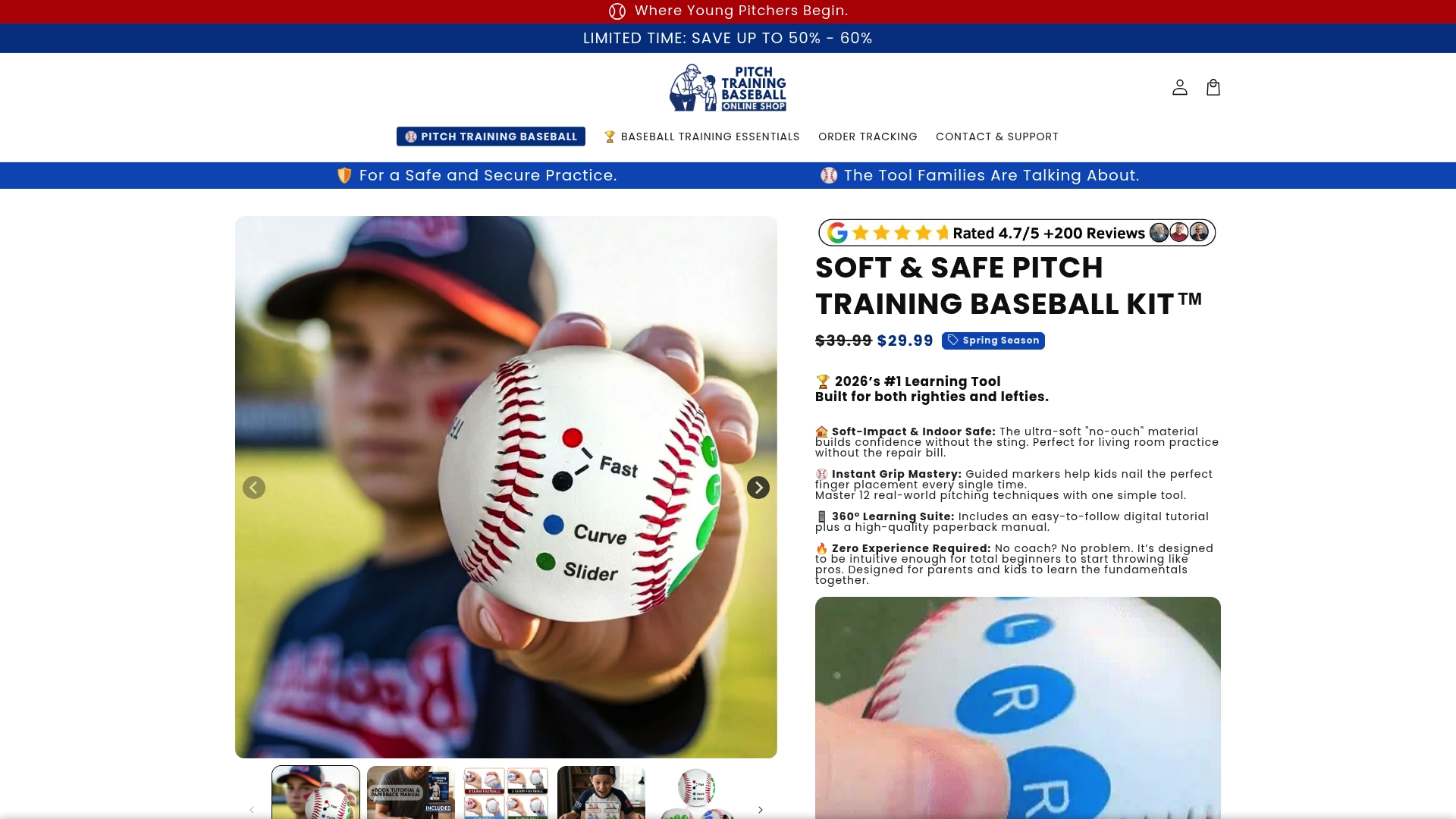
The Pitching Target Net with Strike 9-Zone gives pitchers a defined visual reference for every delivery, making it easy to track whether fastball and off-speed pitches land in the same zone from the same release point. Consistent zone targeting across pitch types is the clearest on-field signal that a tunnel is forming. Pitchtrainingbaseball’s tools are portable, adjustable, and designed for the kind of focused, short-session practice that actually builds tunneling skills over a full season.
FAQ
What is pitching tunnel vision in baseball?
Pitching tunnel vision, formally called pitch tunneling, is the technique of throwing multiple pitch types through the same visual corridor early in flight. Hitters cannot distinguish the pitches until after the commit point, roughly 23–24 feet from home plate, when it is too late to adjust.
How does the commit point affect a hitter’s swing decision?
The commit point is the moment when a hitter’s swing decision locks in, with no ability to change course. Hitters have approximately 400 milliseconds to react to a pitch, and 150–200 milliseconds of that window is spent identifying pitch type before the commit point arrives.
What causes tunnel vision to break down in youth pitchers?
Release point inconsistency is the primary cause. When a pitcher releases a fastball and a curveball from different arm slots, the pitches diverge early in flight and the hitter can read them before the commit point. Variation greater than 2 inches between pitch types eliminates the tunnel effect.
How can coaches help pitchers overcome mental focus issues during games?
Coaches should teach one physical reset cue between pitches and limit post-pitch analysis to a single thought. Focused attention during a 5-second pitch cycle, rather than constant intensity, keeps mental energy available for the moments that matter most.
Is pitch tunneling appropriate for youth baseball players?
Pitch tunneling is appropriate at any level where pitchers throw more than one pitch type. Youth players benefit most from learning release point consistency first, since that foundation makes every future pitch combination more effective as their repertoire grows.
Recommended
- Mentally Preparing to Pitch: Youth Baseball Guide – Pitch Training Baseball
- Game-like pitching practice: Raise youth baseball skills fast – Pitch Training Baseball
- Recommended Daily Pitching Habits for Youth Players – Pitch Training Baseball
- Pitching zone knowledge: Boost your young player’s skills – Pitch Training Baseball