


Use a tee or short net loaded with foam or limited-flight balls, run towel drills for pitching mechanics, and lean on mirror or phone-video feedback instead of live, full-speed swings in tight rooms. That combination covers hitting, throwing, and fielding without waking the house or cracking drywall.
Here’s what to do in the next five minutes:
- Pick a safe space. A garage, basement, or spare room with 8 feet of ceiling clearance and no glass in the swing path.
- Grab a foam or limited-flight ball. Leave the hard practice balls in the bag until you’re outside.
- Set up a tee and net, or start with towel mechanics. Either gets a player working immediately.
Two drills you can run right now, no setup required: dry swings in front of a mirror to check bat path, and glove-to-hand transfers to build soft hands and quick exchanges.
TL;DR:
- Use foam or limited-flight balls to prevent damage and focus on mechanics during indoor practice, reserving hard balls for outdoor use.
- Confirm at least 8 feet of ceiling clearance and a clear full-range swing space, scaling down or shifting to mechanics work if space is tight.
- Prioritize pitching, hitting, and catching drills following the 80/20 rule, with slow, controlled reps before increasing speed or difficulty.
- Incorporate simple, purpose-built gear like pickleballs and soft target nets to support safe, effective training in small spaces.
- Conduct quick room checks before every session to identify and remove hazards like fragile fixtures, ceiling obstructions, and household clutter.
Table of Contents
- How to Assess Your Space for Quiet Baseball Practice
- Skill-by-Skill Quiet Drills for Hitting, Fielding, Pitching, and Catching
- Session Templates and the 80/20 Practice Rule
- Safety Checklist and Noise Mitigation for Indoor Practice
- What Makes These Quiet Drills Actually Work
- Warm-Up and Cool-Down Routines That Stay Quiet
- Keeping Young Players Motivated Through Quiet Sessions
- Building Confidence Through Consistent Quiet Reps
- Where to Find Safe Gear for Quiet Baseball Practice
- Key Takeaways
- Sources
How to Assess Your Space for Quiet Baseball Practice
Before any bat comes out, walk the room like an inspector. Stand where the hitter or thrower will stand, then trace the full range of motion, bat path, arm circle, follow through, and check what’s in it. Ceiling fixtures, hanging lights, and low beams are the first things to rule out.
For basic tee work, plan on roughly 10 feet of depth and 8 feet of width, with at least 8 feet of ceiling clearance, according to the setup guidelines from WIN Reality. That’s enough room for a full tee swing without clipping a wall or a ceiling fan. If your space comes up short on any dimension, that’s your signal to shift from full swings to isolated mechanics work instead.
Floor protection matters more than most parents expect. A cheap rubber gym mat or a folded moving blanket under the tee catches foam balls that skip off the bat and protects hardwood or laminate from scuff marks. Sightlines count too: a player needs to see the target net or wall marker clearly, without a couch or storage bin cutting the line.
When to swap the ball, not the drill:
- Full ceiling clearance and no fragile items nearby: limited-flight balls off a tee are fine.
- Tight ceiling or a room full of breakables: switch to soft foam balls or pickleballs for wall-rebound and glove work.
- No real backstop or net available: skip live contact entirely and run dry swings or towel drills instead.
Recommended gear for most home setups includes a tee and 7x7 net, a small rebounder for solo fielding reps, a bucket of soft practice balls, a phone tripod or mirror for form checks, and interlocking foam floor tiles if you’re working over hard flooring. Indoor practice guidance from Baseball Scouter is blunt about the tradeoff: apartment and small-space training works best when you commit to two or three realistic skills instead of trying to recreate a full field session.
DIY solutions can fill gaps without a shopping trip. A rolled towel stands in for a bat during mechanics work. A taped square on the wall becomes a strike zone target for soft-toss framing. A laundry basket makes a passable fielding target for slow-roller transfers.
There are also clear “do not swing” red flags: low popcorn ceilings, glass cabinet doors within the swing arc, exposed pipes, or a floor cluttered with furniture legs. If two or more of those apply, that room is for dry work and towel drills only, not live contact.
Pro Tip: Test your setup before the player ever picks up a bat. Stand in their spot, take a slow practice swing with an empty hand, and watch where your fists travel. If they’d clip a lamp or shelf at full speed, move the tee or shrink the drill.
Skill-by-Skill Quiet Drills for Hitting, Fielding, Pitching, and Catching
Quiet practice doesn’t mean lower quality. Indoor reps are often better for isolating mechanics because you can slow everything down and actually see what’s breaking, according to indoor training research from Veo. Here’s how to structure each skill.
Hitting drills
- Dry swings in front of a mirror. No ball, no bat contact noise. Focus on hip rotation, hand path, and finish. Ten to fifteen reps, watching for consistency rep to rep.
- Tee to net with foam or limited-flight balls. Set the net 6 to 8 feet away, load the tee, and focus on solid contact rather than exit velocity. Fifteen to twenty swings per round.
- Short-handle contact drills. Choke up significantly and focus purely on barrel control against a soft-toss ball. This isolates hand path without generating real bat speed or noise.
Fielding drills
- On-knees soft-hand progressions. Have the player kneel and field short rolls with two hands, building the habit of getting the glove down early. Fielding progressions that start here, before adding footwork, produce more consistent transfer to live reps, based on coaching methodology from BattingLeadoff.
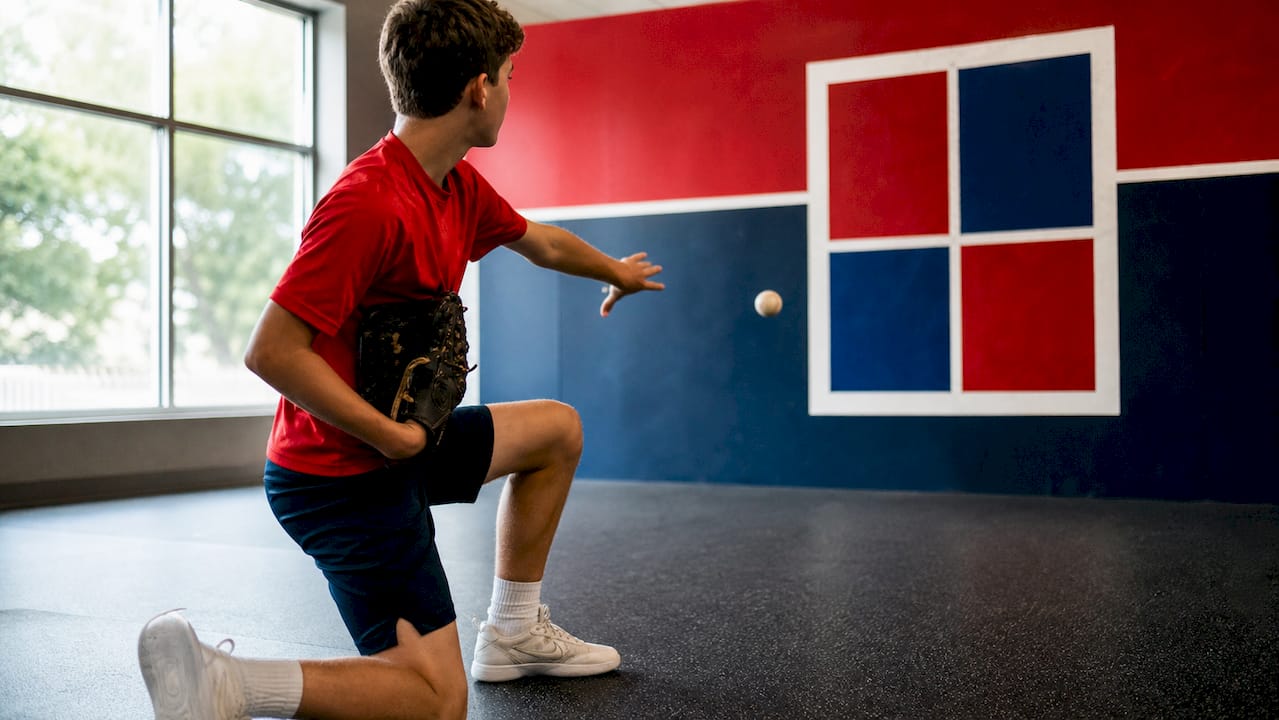
- Wall ball with a foam or tennis ball. A soft underhand toss against a wall, catch on the return. Great for reaction time without any bat noise at all.
- Slow funnel transfers. Roll a ball gently, have the player field it, funnel it to the chest, and make a quiet exchange to the throwing hand. No actual throw needed indoors.
Pitching drills
- Towel drill. Replace the ball with a small hand towel and walk through the full arm path and release point. This is the single best low-noise way to groove mechanics.
- Short-box balance reps. From a seated or short-stride position, focus purely on balance and weight transfer without a throw.
- Wrist snap and arm path, slow motion. Walk through the arm circle at half speed or slower, checking elbow height and release angle in a mirror.
Skip live, full-velocity long toss indoors entirely. There’s no safe ceiling height or wall padding that makes that a good idea in a house.
Catching drills
- Knee framing reps. Set up in a catcher’s crouch on the knees and practice receiving soft-tossed balls, focusing on quiet hands and a stable glove.
- Target-receive-transfer. Have a partner soft-toss to a target zone, then practice a smooth transfer to the throwing hand without an actual throw.
Footwork and athletic drills
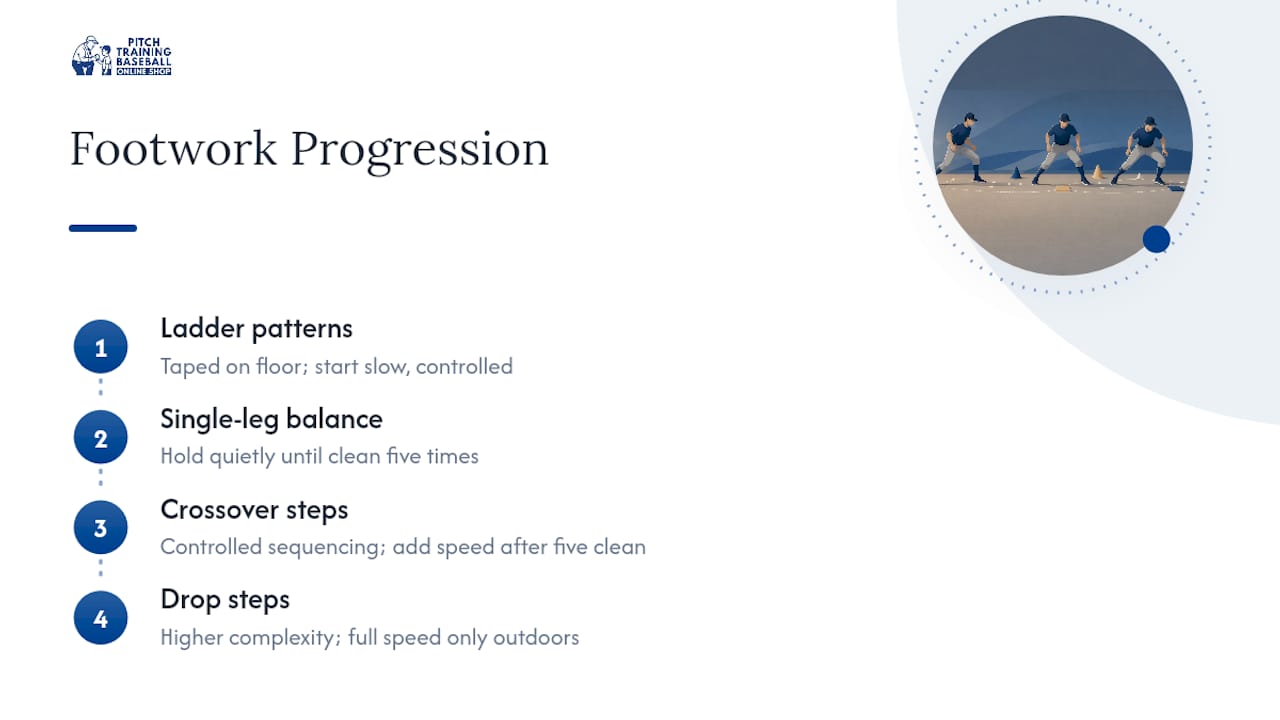
Ladder patterns taped to the floor, single-leg balance holds, and controlled step sequencing (crossover steps, drop steps) all build the athleticism baseball demands, and none of them need a ball at all.
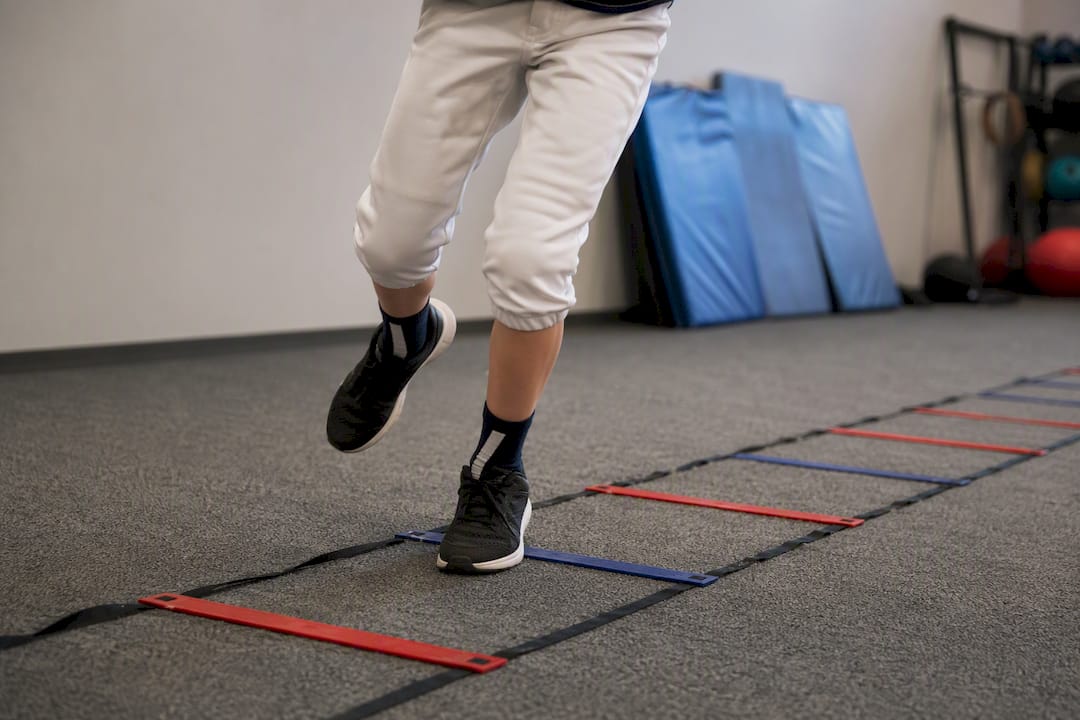
Progression matters more than volume. Start every skill at the slowest, quietest version. Add speed only once the movement pattern looks clean five times in a row. Full-speed, live reps stay reserved for outdoor or field practice, where there’s room for the ball to actually travel.
Session Templates and the 80/20 Practice Rule
Not every skill deserves equal time. The 80/20 principle for youth baseball holds that roughly 80% of game outcomes trace back to about 20% of practiced skills, mainly pitching, hitting, and catcher work, according to Youth Baseball Edge. That means your quiet indoor sessions should default to those three pillars first, with fielding and conditioning filled in around them rather than competing for the same block of time.
Here are three templates you can run today:
- The 10-minute quick session. Five minutes of dry swings and tee work with foam balls, five minutes of towel drill pitching reps. No wasted transitions.
- The 20-minute focused session. Eight minutes hitting (tee to net), seven minutes pitching (towel drill plus short-box balance), five minutes catching (knee framing with soft toss).
- The 45-minute small-group session. Fifteen minutes hitting, fifteen minutes pitching, ten minutes catching, five minutes fielding transfers. Rotate players through stations if you’ve got more than one kid.
Log focus points, not just time. Write down one mechanical cue per skill (“hands inside the ball,” “front foot lands closed”) and count quality reps against that cue rather than total swings taken. Ten clean reps beat thirty sloppy ones every time.
Pro tip for coaches and parents: keep feedback short. “Good, front side stayed closed” takes two seconds and reinforces the cue without turning a quiet session into a lecture. Save the longer breakdowns for video review afterward using the footage from your phone tripod.
Cadence between dry and live reps should lean heavily dry indoors, save the live, full-speed work for outdoor sessions or the field. If you’re managing a pitcher’s overall workload across the week, pairing these quiet indoor blocks with a structured practice time plan keeps arm care and mechanics work from colliding.
Safety Checklist and Noise Mitigation for Indoor Practice
Run this room check before every session, not just the first one:
- Confirm no glass, mirrors, or picture frames sit inside the swing or throw path.
- Check ceiling clearance is still clear (fans, light fixtures, hanging plants move more often than you’d think).
- Sweep for pets or younger siblings who might wander through mid-drill.
- Note the household’s flow, if someone’s on a work call downstairs, that’s not the hour for tee work.
Noise mitigation comes down to a few repeatable habits. Foam balls and limited-flight balls absorb impact instead of cracking against a wall. A folded moving blanket behind the net muffles any ball that gets past it. Time your loudest drills (tee contact, wall ball) for hours when neighbors or family members won’t be bothered, early evening usually works better than late night in shared housing.
If a setup fails the checklist, don’t force it. Drop back to dry swings, towel drills, or glove-to-hand transfers until you find a safer room or add padding.
Pro Tip: Keep a rolled towel or moving blanket permanently staged near your practice area. It takes ten seconds to line a wall and turns a marginal space into a workable one.
What Makes These Quiet Drills Actually Work
Slow, quiet reps aren’t a consolation prize for players stuck without field access, they’re often the better teaching tool. Indoor practice strips away the noise (literal and figurative) of full-speed contact and lets a player or coach actually see what the mechanics are doing. Video and mirror feedback catch flaws that are invisible at game speed, which is exactly why indoor drill research points to slow-motion review as one of the most underused tools in youth training.
At Pitchtrainingbaseball, the entire product line, from soft training balls to adjustable target nets, exists because pitching and hitting mechanics improve fastest through repetition players can actually control. A young pitcher grooving a release point through fifty towel-drill reps builds a more reliable arm path than one rushing through ten live throws with bad form.
Quality reps beat loud reps. A player who slows down enough to feel the correct movement pattern will keep that pattern once the volume comes back up on the field.
A few reasons this approach holds up:
- Isolating one mechanical cue at a time reduces the chance of reinforcing a bad habit at speed.
- Small-space training forces a coach to prioritize, which usually means better drill selection, not worse.
- Progression from dry to live work mirrors how pitchers should be building arm strength anyway. Our guide on daily pitching habits covers how these small daily reps compound over a season.
— Albert
Warm-Up and Cool-Down Routines That Stay Quiet
A proper warm-up doesn’t need jumping jacks that shake the floor below you. Start with band work or bodyweight movements: arm circles, leg swings, and hip openers done standing in place. These raise core temperature and loosen joints without a single loud footstep.
Dynamic stretching works better here than static holds. Walking knee hugs, quiet ankle rolls, and slow torso twists take two or three minutes and prepare the shoulder and hip for the drills ahead. For pitchers specifically, a slow-motion arm circle progression, starting small and gradually opening up, warms the throwing shoulder without any actual throwing.
Cool-downs matter just as much and are naturally quiet by nature. Static stretching (hamstrings, shoulders, forearms) held for 20 to 30 seconds each brings the heart rate down and reduces next-day soreness. A few minutes of controlled breathing, in for four counts, out for six, closes the session and helps a young player mentally reset.
Keep both routines under five minutes each. The goal isn’t a workout, it’s preparing the body to move well and then letting it recover before the next session. Skipping either one to save time is a common mistake that shows up as stiffness or sloppy mechanics two days later.
Keeping Young Players Motivated Through Quiet Sessions
Quiet practice can feel repetitive fast, especially for a kid used to the crack of a bat and the cheer of a dugout. The fix isn’t more noise, it’s more structure and visible progress.
Track quality reps, not time spent. A whiteboard or notebook with a simple tally, “18 clean towel-drill reps today”, gives a young player something concrete to beat next session. Kids respond to numbers they can see improving week over week far more than vague encouragement.
Mix in short competitive elements even in a quiet setting. A five-swing contact challenge against yesterday’s count, or a framing drill scored on “sticks it” versus “misses it,” keeps the session from feeling like a chore. None of that requires added volume.
Rotate drills every seven to ten minutes rather than grinding one movement for a full session. Attention spans in youth players drop fast, and a fresh drill (even a quieter one) resets focus better than pushing through fatigue on the same rep.
Finally, connect the quiet work to the loud payoff. Remind a player that the towel drill they’re running tonight is the same arm path they’ll use on the mound this weekend. That link between quiet reps now and real results later tends to matter more to a ten-year-old than any pep talk.
Building Confidence Through Consistent Quiet Reps
Parents and coaches ask me the same question in different words: does slow, quiet practice actually translate to the field? It does, but only when the sessions stay short and the cues stay simple. A ten-minute towel drill session with one clear focus point beats a rushed thirty-minute session where nobody remembers what they were working on.
Keep expectations realistic for the space you’ve got. A basement with 8 feet of clearance isn’t going to replicate a batting cage, and it shouldn’t try to. What it can do is build the kind of mechanical consistency that shows up once a player steps onto real grass. That’s the whole point of measured, low-noise reps.
Every recommendation in this guide comes from practical coaching experience layered with the same drill logic that shows up across indoor training resources, isolate the skill, slow it down, and let repetition do the work.
— Albert
Where to Find Safe Gear for Quiet Baseball Practice
Once you’ve mapped your space, the right gear makes the difference between a frustrating setup and a session that actually runs smoothly. Pitchtrainingbaseball builds its equipment specifically around the small-space, safety-first approach covered throughout this guide, not repurposed field gear that happens to work indoors.
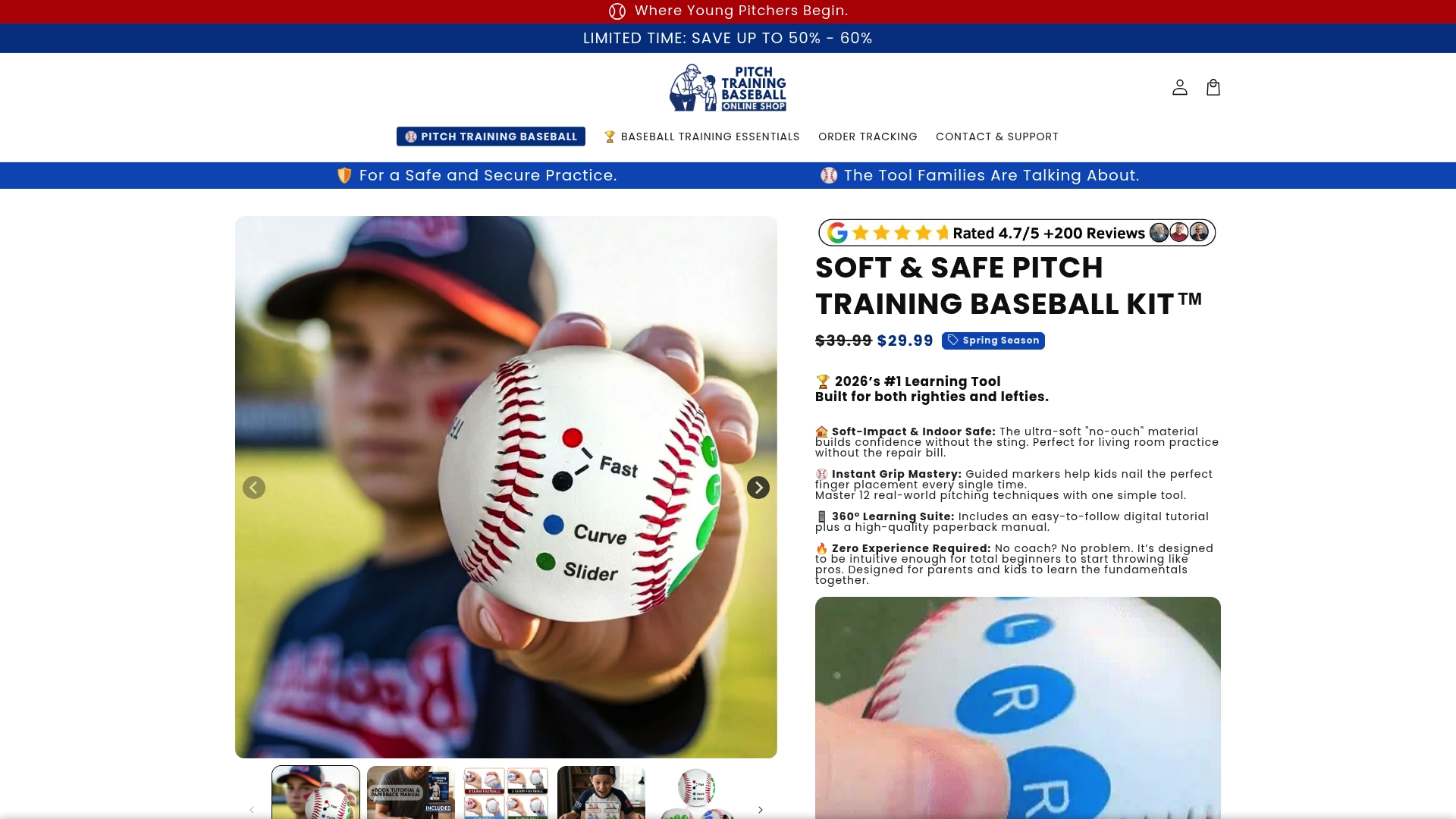
For apartments or rooms with limited clearance, the 5 Pickeballs set is a smart starting point. They’re light, low-impact, and forgiving on walls and floors, ideal for glove work, wall-rebound drills, and short-toss framing without denting drywall.
If you’ve got a garage or basement with real depth to work with, pair the Pitching Target Net with Colorful Strike 9-Zone with soft Pitch Training Softball balls for tee work and short-distance target practice. The 9-zone layout gives a young pitcher or hitter a visible target to aim at, turning repetitive drills into something they can actually track progress against.
Younger players or first-time setups usually do best starting with the softer ball options before adding a full net and tee combination. Whichever combination fits your space, get it set up once and reuse the same layout every session, consistency in the setup builds consistency in the swing.
Key Takeaways
Quiet baseball practice works because isolating one skill at a time, using soft or limited-flight balls, and reviewing form through video or mirrors builds mechanics faster than loud, full-speed reps in a cramped space.
| Point | Details |
|---|---|
| Start with a space check | Confirm 8 feet of ceiling clearance and clear the swing path before any drill begins. |
| Match ball to room | Use foam or limited-flight balls indoors and save hard balls for outdoor sessions. |
| Follow the 80/20 rule | Prioritize pitching, hitting, and catching in short sessions before adding fielding work. |
| Progress slow to fast | Run dry swings and towel drills first, adding speed only once form stays consistent. |
| Equip with purpose-built gear | Pitchtrainingbaseball’s pickleballs, soft practice balls, and target net support each drill in this guide. |
Sources
- Indoor Youth Baseball Drills: Practice in Any Space — Veo
- Indoor Baseball Practice Guide for Players and Coaches — Baseball Scouter
- How to build a baseball training setup at home on any budget — WIN Reality
Recommended
- Baseball Coaching Methods: Examples for Youth Coaches – Pitch Training Baseball
- Fielding Drills for Pitchers: The Complete Youth List – Pitch Training Baseball
- Medicine Ball Workouts for Pitchers: 10 Drills That Work – Pitch Training Baseball
- Game-like pitching practice: Raise youth baseball skills fast – Pitch Training Baseball