


E-commerce now functions as an education-first training channel for youth baseball, bundling product discovery, performance data, and ongoing coaching into one accessible pipeline. Parents can buy a strike-zone target net at midnight, watch a drill video on the product page, and download a weekly throwing schedule before the package ships. That is a fundamentally different experience from walking into a sporting goods store. The role of e-commerce in sports training has moved well past convenience: it is now the primary way families access pro-grade pitching tools that were once limited to travel-ball programs and elite academies.
Three actions to take right now:
- Search for products that include demo videos and drill guides, not just specs.
- Check whether the seller offers a return window of at least 30 days before you commit.
- Download one free video-analysis app (such as Coach’s Eye or Hudl Technique) before your first purchase so you have a baseline to compare against.
Pro Tip: Before buying any training device, search the product name plus “youth review” on YouTube. Real parents and coaches post unboxing and drill videos that reveal fit, durability, and actual use-case far better than any product description.
Table of Contents
- How e-commerce shifted from a storefront to a training ecosystem
- What parents, coaches, and players actually gain from buying online
- What types of pitching gear are available online and what each one does
- How to check before you click buy: a practical checklist
- How to build a weekly practice plan around online-bought gear
- How to evaluate device claims and use performance data well
- Youth safety: throw counts, progression, and when to call a professional
- How e-commerce is closing the access gap in underserved communities
- Key Takeaways
- Why education-first e-commerce matters more than the gear itself
- Pitchtrainingbaseball’s approach to gear that actually gets used
- Useful sources and further reading
How e-commerce shifted from a storefront to a training ecosystem
The old model was simple: browse, add to cart, wait for the box. What industry analysts describe now is a bundled journey where product discovery leads into demo content, which leads into data tools and coaching subscriptions. A parent shopping for a pitching net today encounters embedded how-to videos, community Q&A threads, and post-purchase email sequences with drill progressions. The product is almost secondary to the ecosystem around it.
Mobile-first experiences are driving this shift hard. Direct-to-consumer (DTC) platforms let brands cut out the middleman and invest those margins into content, app integrations, and subscription coaching bundles. Augmented reality configurators now appear on DTC pages, letting buyers visualize equipment placement at home before purchasing, which lowers return rates and improves fit for younger players.
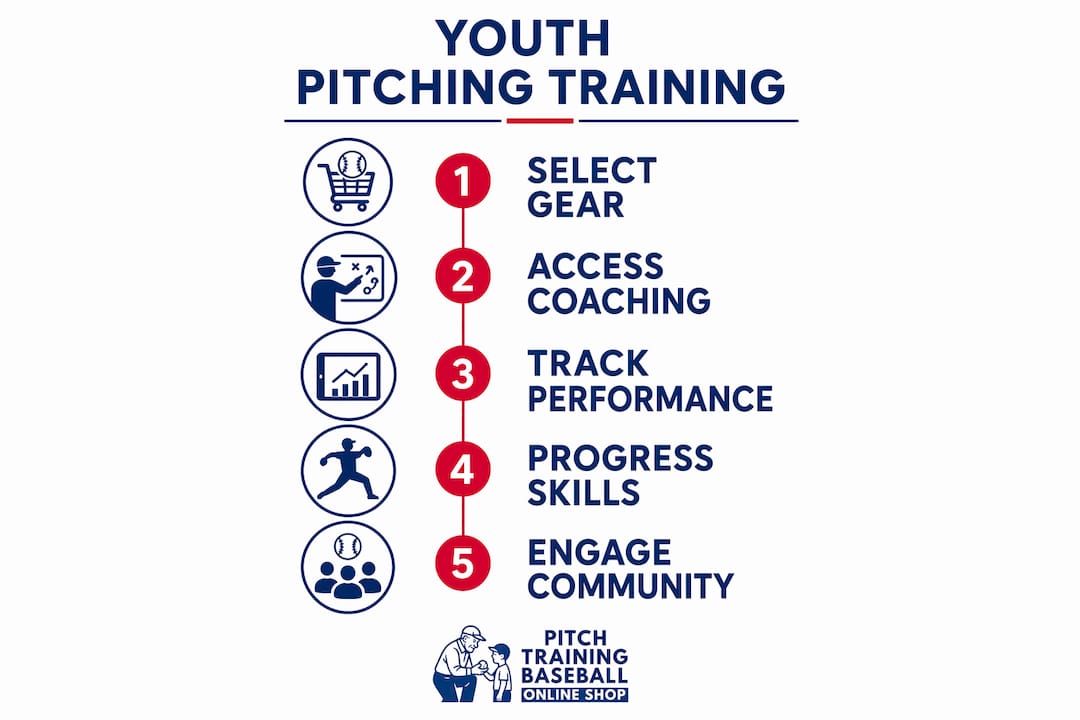
| Signal | What it means for buyers |
|---|---|
| ~56% of sporting goods e-commerce via mobile | Product pages must work on a phone; demo videos are table stakes |
| Equipment segment at ~18.2% of sporting goods e-commerce | Strong supply and competition keeps prices competitive |
| Wearables growing at ~15% CAGR | Sensor-linked training tools are becoming mainstream, not niche |
| Subscription + hardware bundles rising | Long-term coaching value often exceeds the one-time product cost |
What parents, coaches, and players actually gain from buying online
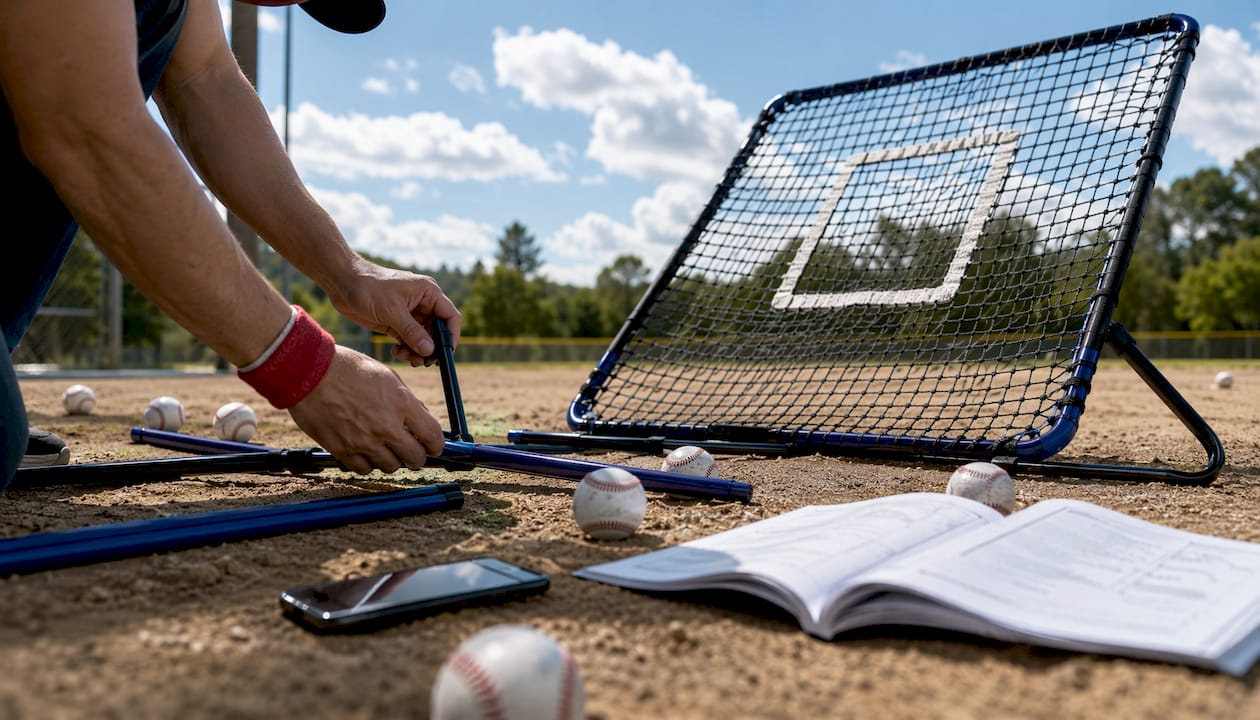
Owning your own pitching gear at home changes the training math. Spontaneous, consistent practice outside organized settings is one of the strongest drivers of skill acquisition in young players. A kid who throws 50 accurate reps on a Tuesday afternoon, with no coach present, builds more muscle memory than one who only throws at Saturday practice.
Beyond reps, here is what online purchasing delivers that a local store cannot:
- Access: DTC platforms carry product lines that never reach regional sporting goods chains, including sensor-linked training balls and zone-specific target nets.
- Affordability: Price transparency online makes it easy to compare, and off-season clearance cycles can cut costs significantly on quality gear.
- Educational value: User-generated content — customer photos and drill videos — increases purchase confidence and often teaches buyers how to use the product correctly before it arrives.
- Personalization: DTC analytics let platforms surface relevant accessories and progressions based on what you already own, functioning like a low-cost coaching assistant.
For a realistic budget, expect to spend a moderate amount on a quality target net, a pack of training balls, and entry-level velocity or sensor tools, with prices varying by product features and quality. Skill gains with consistent use typically become measurable within a few weeks to a couple of months.
What types of pitching gear are available online and what each one does
The e-commerce benefits for athletes include access to a far wider product catalog than any physical store stocks. Here is how each category fits into a youth pitcher’s development:
- Target nets and strike-zone nets: Build accuracy and zone awareness. Color-coded zones give immediate visual feedback without a catcher. Best starting point for any age.
- Weighted and medicine balls: Develop arm strength and scapular stability. Use only under a structured program; not appropriate for players under 12 without coach supervision.
- Training balls (Pickeballs and reduced-impact balls): Allow high-rep throwing indoors or in tight spaces. Training balls are ideal for mechanics work because they reduce arm fatigue and injury risk during volume sessions.
- Radar and velocity tools: Entry-level radar sleeves and pocket radars give real velocity feedback. Useful from age 12 up when mechanics are stable enough that velocity is a meaningful metric.
- Mobile video analysis apps: Coach’s Eye, Hudl Technique, and similar apps use slow-motion capture to reveal release point, hip-shoulder separation, and stride length. Free or low-cost, and often more instructive than a sensor alone.
- Mounted cameras and tripods: A $25 phone mount and a fixed camera angle beats a shaky parent-held video every time. Consistency of angle is what makes session-to-session comparison valid.
- Resistance bands and throwing accessories: J-bands and similar tools build rotator cuff endurance. They are best used as warm-up and recovery tools, not primary training.
- Wearable sensors and smart baseballs: Connected training devices track spin rate, release point, and extension. Growing at roughly 15% CAGR, these are becoming accessible to youth programs, not just pros.
Pro Tip: Add one category at a time. A target net plus a pack of training balls is a complete starter setup. Add velocity tools only after your player has consistent mechanics — measuring speed before mechanics are groomed just reinforces bad habits.
How to check before you click buy: a practical checklist
Buying pitching gear online without a checklist is how families end up with a $90 device that collects dust. Run through these before purchasing:
- Watch the demo video. If the product page has no video showing real use, that is a red flag. Look for third-party YouTube reviews, not just brand-produced content.
- Read third-party reviews. Filter for reviews that mention age and skill level similar to your player. A tool rated highly by adult players may be too advanced or too large for a 10-year-old.
- Check age and size guidance. Reputable sellers list recommended age ranges and weight/height considerations. If that information is missing, contact support before buying.
- Verify the return policy. A minimum 30-day return window is standard for quality gear. Anything shorter, or a restocking fee above 15%, is a warning sign.
- Look for performance data validation. Vague claims like “improves velocity fast” with no third-party testing cited are marketing, not evidence. Prefer products that cite specific testing protocols or partner with recognized coaching organizations.
- Check shipping speed and handling. Priority processing options matter when you are prepping for a season that starts in three weeks.
- Review subscription terms carefully. Subscription bundles that pair hardware with coaching content can be excellent value, but auto-renewal terms and cancellation policies vary widely.
Pro Tip: When in doubt, message the seller’s support chat with one specific question: “Is this appropriate for a 10-year-old throwing 45 mph?” A seller who knows their product will answer specifically. A vague response tells you everything.
How to build a weekly practice plan around online-bought gear
Gear without a plan is just clutter. Here is a sample weekly structure for a youth pitcher using a target net, training balls, and a video app:
Monday (Skill Session, 30 min)
- 5-minute J-band warm-up
- 3 sets of 15 accuracy throws at the target net, focusing on one zone per set
- Record one set on video for mechanics review
Wednesday (Volume + Mechanics, 25 min)
- 5-minute light toss with training balls
- 30 Pickleball throws at reduced effort, focusing on hip rotation
- Review Monday’s video and note one correction
Friday (Velocity Prep, 20 min)
- J-band warm-up
- 10 throws at 80% effort with radar feedback (if available)
- Cool-down stretching
Measurement cadence: Record video every Monday. Compare clips every two weeks, not every session. Daily comparison creates noise; biweekly comparison reveals real trends. Track velocity or zone accuracy monthly, not weekly.
- Rest at least two full days per week with no throwing.
- Never add a new drill and a new implement in the same week.
- Portable training setups let you run this schedule in a backyard, garage, or park with no facility access required.
How to evaluate device claims and use performance data well
Not every metric a device reports is equally trustworthy. For youth pitching, the metrics that genuinely matter are velocity, release-point consistency, strike-zone mapping, and standard deviation of release across a session. Spin rate is meaningful context for older players but largely irrelevant for players under 14 whose spin is still mechanically unstable.
Mobile phone camera analysis offers affordable, scalable feedback but carries real trade-offs versus radar-based hardware. Frame rate, lighting, and camera angle all affect accuracy. A phone app is a coaching aid, not a certified measurement instrument.
- Baseline first: Record three sessions before drawing any conclusions from a new device.
- Look for third-party validation: Does the manufacturer cite independent testing? A peer-reviewed study or a named coaching organization carries weight; a brand’s own internal data does not.
- Pair numbers with video: A velocity spike means nothing without the video frame showing whether mechanics improved or the player just muscled through.
- Know sample-rate specs: Radar sleeves that sample at lower frequencies miss peak velocity. Check the spec sheet before trusting the number.
Youth safety: throw counts, progression, and when to call a professional
Young arms are not small adult arms. Growth plates in the elbow and shoulder are vulnerable to overuse injury in ways that do not show up until the damage is done.
- Follow USA Baseball and Little League pitch-count guidelines by age. These are the authoritative standards, not suggestions.
- Never use weighted implements with players under 12 without direct coach supervision and a structured program.
- Gradual overload is the rule: increase weekly throwing volume by no more than 10% per week.
- Build two full rest days into every week, and a full rest week every 6–8 weeks during the season.
Signs to stop and seek professional guidance:
- Elbow or shoulder pain during or after throwing
- Persistent fatigue in the arm that does not resolve with 48 hours of rest
- Visible changes in mechanics that the player cannot explain or correct
Pro Tip: Before starting any new training program with online-purchased gear, share the plan with your player’s coach or a sports medicine professional. A 15-minute conversation can prevent a 6-month recovery.
How e-commerce is closing the access gap in underserved communities
One of the most significant impacts of online shopping on sports is geographic and economic. A family in a rural county with no specialty baseball retailer within 50 miles now has the same product access as a family near a flagship sporting goods store. DTC shipping and competitive pricing have removed the proximity advantage that once made advanced training tools exclusive to well-resourced programs.
Data-enabled equipment purchased online has democratized exposure to metrics once limited to elite facilities. A coach running a rec-league program in an underserved community can now equip players with a $35 target net and a free video app and deliver a training experience that mirrors what travel-ball programs charge hundreds of dollars for.
The risk, though, is real. Subscription-based coaching bundles and sensor platforms create a new divide between families who can afford ongoing digital access and those who cannot. The most equitable approach is to prioritize one-time-purchase gear (target nets, training balls, resistance bands) that delivers lasting value without a recurring cost, and to use free or low-cost apps for the data layer.
Key Takeaways
E-commerce now functions as a complete training ecosystem for youth pitchers, combining gear access, performance data, and coaching content in one channel.
| Point | Details |
|---|---|
| Start with a target net and training balls | These two categories cover accuracy, mechanics, and volume without requiring a subscription or advanced tech. |
| Verify before you buy | Check for demo videos, age guidance, and a 30-day return policy on every product page before purchasing. |
| Build a weekly plan first | Gear without a structured schedule produces inconsistent results; map out drill days and rest days before the box arrives. |
| Use data as a coaching aid, not a verdict | Pair velocity or zone-accuracy numbers with video to make corrections meaningful rather than just numerical. |
| Pitchtrainingbaseball combines gear and education | The site pairs products like the Pitching Target Net with drill content and coaching guidance, making it a practical starting point for parents building a home training setup. |
Why education-first e-commerce matters more than the gear itself
The conventional wisdom in youth sports is that better equipment produces better players. That framing gets the causality backwards. Equipment gives a player more opportunities to practice correctly, but only if the purchase comes with a plan, a progression, and honest data. What separates a useful online purchase from an expensive garage ornament is whether the seller treats the transaction as the beginning of a coaching relationship or the end of one.
The brands and platforms that are actually moving the needle in youth baseball are the ones that bundle coaching content directly into the product experience. A target net that ships with a six-week accuracy drill program is worth three times a net that ships alone, even if the price is identical. Parents and coaches should hold every online seller to that standard: what happens after the box opens?
The access argument is real and worth taking seriously. A family that could not previously afford a pitching coach or a facility membership can now build a credible home training setup for under $100. That is a genuine shift in who gets to develop elite-level skills. But the digital divide risk is equally real: if the most valuable tools require ongoing subscriptions, the access gap just moves from geography to income. The answer is to build the foundation with one-time-purchase gear and layer in subscription tools only when the player’s development justifies the cost.
Pitchtrainingbaseball’s approach to gear that actually gets used
Most training gear sits unused within 60 days of purchase. The reason is almost never the product. It is the absence of a clear next step after the box opens. Pitchtrainingbaseball addresses that directly by pairing every product with educational content, drill guides, and coaching context so parents and coaches know exactly how to put the gear to work from day one.
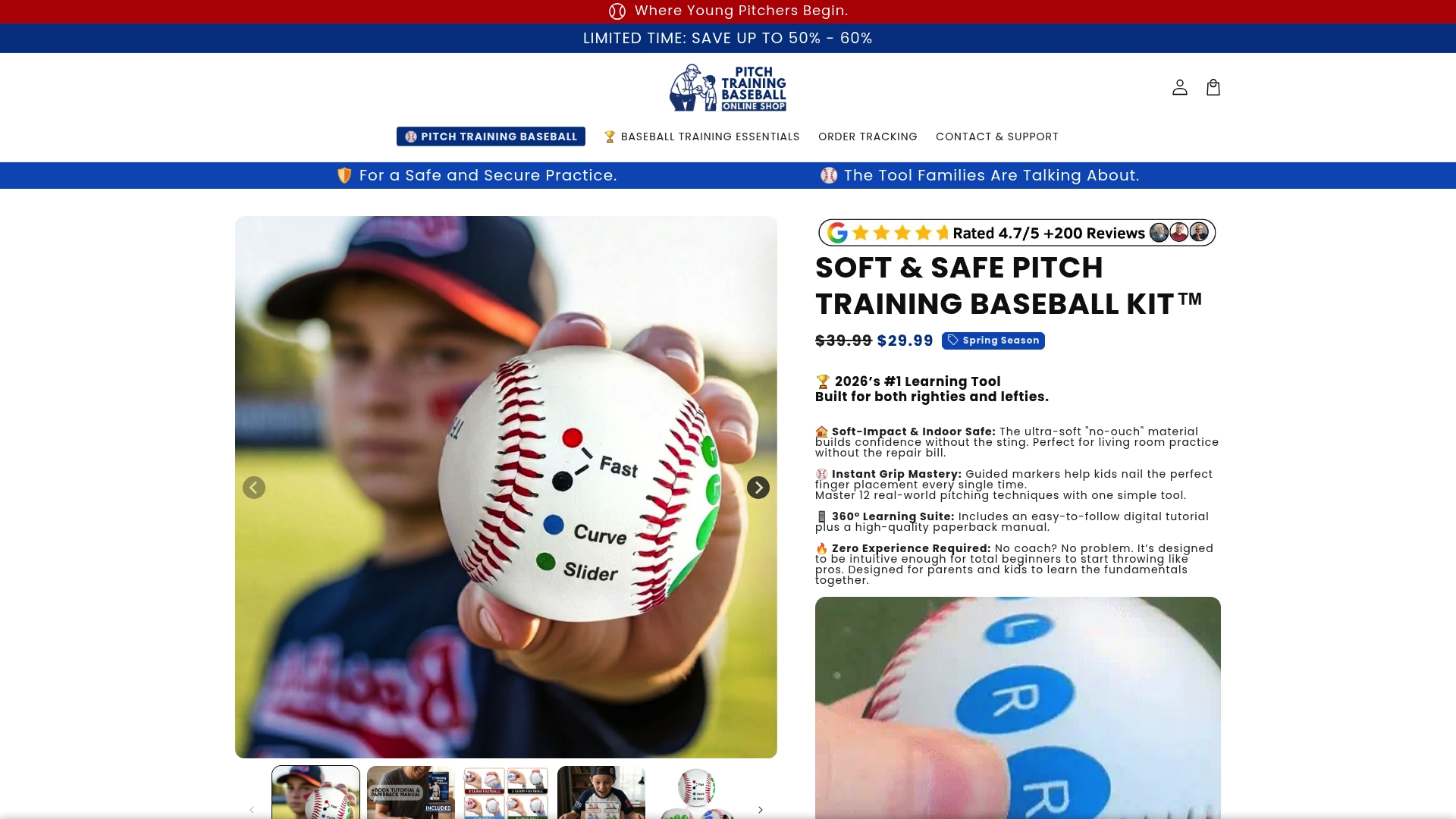
The Pitching Target Net with Colorful Strike 9-Zone is the clearest example of this approach. Nine color-coded zones give a young pitcher immediate visual feedback on every throw, making accuracy drills self-correcting without a catcher or a coach standing behind the mound. It sets up in minutes, works in a backyard or garage, and pairs directly with the drill progressions on the site. For families building a home setup from scratch, it is the right first purchase. Add a pack of 5 Pickeballs for indoor mechanics work, and you have a complete starter kit for under $80. Visit Pitchtrainingbaseball.com to see the full product lineup and the package protection options that cover your order from purchase to delivery.
Useful sources and further reading
These sources back the claims in this article and are worth bookmarking for deeper research:
- GIIR Training Baseball Market Report: Market-level analysis of the shift toward education-first e-commerce in training gear. Supports the landscape and product catalog sections.
- Sporting Goods eCommerce Market Research (MarketIntelo): Source for mobile transaction share (~56%), equipment market share (~18.2%), and wearables CAGR (~15%). Supports the landscape data table.
- Baseball Equipment Market Report (Strategic Market Research): Covers DTC trends, AR configurators, and sensor-linked product growth. Supports product catalog and evidence sections.
- Shopify Sporting Goods Ecommerce Guide: Analysis of UGC conversion impact and subscription bundle models. Supports the how-to-choose and benefits sections.
- Braves’ New Pitch: Mobile Tech in Youth Baseball (BriefGlance): Case study on mobile analytics trade-offs and the digital divide risk. Supports evidence and accessibility sections.
- Benefits of Buying Your Own Sports Equipment (Mom in the Bleachers): Parent-focused analysis on spontaneous practice and skill acquisition. Supports the benefits section.
- How to Choose Sports Equipment for Young Athletes (Up Next in Sports): Practical checklist for parents evaluating gear quality, fit, and return policies. Supports the how-to-choose section.
- Why Invest in Youth Sports Equipment (Pitchtrainingbaseball): Pitchtrainingbaseball’s own guide pairing product purchases with coaching content and safe progression advice.
- Rate of Force Development Guide (HTK Training): Training science resource explaining strength development principles relevant to pitching conditioning programs.
- Why Youth Athletes Need Durable Gear (RNK Apparel Co.): Partner resource on gear durability standards for youth athletes, useful when evaluating build quality on product pages.
Recommended
- Game-like pitching practice: Raise youth baseball skills fast – Pitch Training Baseball
- Defining Youth Pitching Mechanics: A Coach’s Guide – Pitch Training Baseball
- Educational eBook:“12 Pitching Grips Tutorial” (Value: $20) – Pitch Training Baseball
- The Role of Educational Baseball Content in Player Growth – Pitch Training Baseball