


A slider is a breaking pitch thrown with fastball arm speed that dives late and glove-side, driven by a tight, football-like spin rather than the big overhand snap of a curveball. It’s fast, it’s deceptive, and it’s also the pitch most closely tied to elbow pain in pitchers under 14. This guide covers the grip and release, how a slider differs from a curveball, cutter, sweeper, and slurve, safe age progression, common mechanical errors, drills that build feel without frying an arm, and when a slider actually belongs in a game plan.
- Grip, release, and the spin mechanics that make a slider break late
- How it compares to other breaking pitches, with rough velocity ranges by level
- The safety research every parent and coach should read before the first bullpen
- Drills, warm-ups, and game situations, plus a few training tools that make practice safer
A safety note up front: research tracking youth pitchers found sliders linked to an 86% jump in elbow pain risk in the 9 to 14 age range. Hold off on regular slider work until a pitcher has a reliable fastball and change-up and has hit some physical maturity markers, covered in detail below.
Key Takeaways
A slider is a fastball-speed breaking pitch that relies on gyroscopic spin and late glove-side movement, and youth pitchers should delay it until their fastball, change-up, and physical maturity are all in place.
| Point | Details |
|---|---|
| Grip and release | Middle-finger pressure and a fastball arm slot create spin; wrist snap causes hangers and strain. |
| Injury risk is real | Youth slider use links to an 86% higher elbow pain risk in pitchers aged 9 to 14. |
| Master fastball first | Command of the four-seam, two-seam, and change-up should come before regular slider work. |
| Train in layers | Towel drills, spin-only tosses, and 50 percent intent flat-ground reps build feel with minimal joint load. |
| Practice with the right gear | Pitch Training Baseball’s target net and reduced-velocity softballs support safer release-window practice. |
Table of Contents
- Slider Ball Grip and Release Mechanics
- How Slider Movement Differs From Other Breaking Balls
- Is a Slider Ball Safe for Young Pitchers?
- Common Slider Mistakes That Cause Hangers and Arm Strain
- Drills to Build Slider Feel Without Overloading the Arm
- When Should You Throw a Slider in a Game?
- What Does a Good Slider Look Like on Video?
- A Coach’s Take on Learning the Slider the Right Way
- Training Tools That Support Safe Slider Practice
- Frequently Asked Questions
- Sources
Slider Ball Grip and Release Mechanics
The grip starts almost like a four-seam fastball, then shifts just enough to load side spin instead of backspin. Get this part right and the rest of the pitch mostly takes care of itself.
- Set your middle and index fingers together, slightly off-center, running along or just inside one seam rather than across the horseshoe.
- Press with your middle finger more than your index. That finger is doing most of the work at release.
- Let the thumb ride underneath, roughly opposite the middle finger, for balance rather than pressure.
- Keep the ball a touch deeper in the hand than a fastball grip, not choked out toward the fingertips.
- Throw it from your normal fastball arm slot. A dropped elbow or slowed arm is the first thing hitters and radar guns both notice.
- At release, pull down and through the side of the ball with your fingers, almost like turning a doorknob, instead of snapping your wrist.
The Wikipedia entry on the slider) describes the resulting action well: a gyroscopic spin, faster and flatter than a curveball, that produces a short, late horizontal dart rather than a big 12 to 6 drop.
Pro Tip: Think middle-finger pressure, not wrist action. If you can, film your release at 240 frames per second on a smartphone slow-motion setting. You’re looking for the seams rolling in a tight, bullet-like spiral rather than tumbling. A coach or parent standing behind home plate, filming the release from a low angle, will catch elbow drop and wrist snap far better than watching live speed.
If you have access to a coach who can sketch it out, ask for a simple diagram showing seam orientation at release next to a fastball grip for comparison. Seeing the two side by side clears up more confusion than a paragraph of description ever will.
How Slider Movement Differs From Other Breaking Balls
A slider’s signature is late, short, glove-side movement, and that’s exactly what separates it from its breaking-ball cousins.
- Slider vs. curveball: curveballs use a top-spin axis and a slower speed, producing a bigger, earlier, downward break. Sliders spin more like a gyroscope and arrive several miles per hour faster with a shorter, later bite.
- Slider vs. cutter: a cutter is basically a fastball with a whisper of late glove-side movement, thrown at near-fastball velocity. A slider breaks more and later, and usually sits several ticks slower.
- Slider vs. sweeper: the sweeper trades depth for width, arcing hard across the plate with more horizontal distance and less true “break,” while a true slider bites late and tighter.
- Slider vs. slurve: a slurve is a hybrid, mixing curveball depth with slider-style spin. If a pitcher’s slider suddenly drops more than it darts, they’ve probably drifted into slurve territory.
Coaching reports suggest upper-amateur and professional sliders often show something like 6 to 10 inches of horizontal movement, sitting roughly 6 to 10 mph below a pitcher’s four-seam fastball, though ranges vary widely by arm slot and level. Youth sliders tend to show far less separation, since velocity and spin efficiency both take years to develop. A “hanger,” the flat, spinless slider that sits belt-high, almost always comes from a mismatch: too little velocity relative to the intended spin, or a pitcher tipping the pitch by slowing the arm right before release.
Is a Slider Ball Safe for Young Pitchers?
Here’s the finding every parent and coach should sit with before saying yes to slider work: a long-running study of youth pitchers found the slider tied to an 86% increase in elbow pain risk, and a substantial portion of the young pitchers tracked reported elbow or shoulder pain at some point during the season. A broader review of pitching mechanics and injury data points to Little League Baseball’s own recommendation to delay curveballs and sliders until around age 14, and it flags a strong association between slider use and elbow pain specifically during the adolescent growth spurt.

Not every researcher agrees on exactly why breaking balls stress the elbow more, and some sports-medicine reviews note the biomechanical evidence is genuinely mixed. But the clinical consensus lands in the same place regardless: limit breaking-pitch volume in growing arms and wait for physical maturity.
Before a pitcher touches a slider, they should check these boxes:
- Command of a four-seam fastball, a two-seam fastball, and a change-up. MLB’s own coaching guidance ties a well-developed change-up to lower elbow and shoulder pain risk.
- Consistent, repeatable arm slot and mechanics across all existing pitches.
- Real strength and conditioning markers, not just age on a birth certificate.
- A green light from a coach or sports-medicine professional if there’s any doubt.
Physical maturation, not the calendar, is the better gauge. Growth-spurt signs like a voice change or the start of shaving tend to predict readiness better than chronological age alone. Combine that with a hard limit on pitch counts, mandatory rest days, and a refusal to let one arm carry both a travel team and a school team through the same season. Our pitch selection guide by age breaks this progression down pitch by pitch.
Common Slider Mistakes That Cause Hangers and Arm Strain
Most bad sliders, and most sore elbows, trace back to a short list of repeatable errors.
- Dropping the elbow below shoulder height. Fix: cue “elbow up” before every rep, and check it on video.
- Yanking the shoulder open early. Fix: slow the front side down and finish square to the target.
- Twisting the wrist instead of pulling through the seam. Fix: rebuild the grip drill below at half speed until the pull-down feel is automatic.
- Slowing the arm right before release. Fix: throw sliders with fastball-level arm speed, even at reduced overall intent.
- Tipping the pitch through a slower or different arm path. Fix: mirror fastball tempo exactly; only the grip changes, not the delivery.
Pro Tip: During the learning phase, throw sliders with full fastball intent but reduced overall velocity, something like 50 to 75 percent effort. You’re training the arm path and finger pressure, not chasing bite. Full-speed sliders come later, once the mechanics hold up on video every single time.
Drills to Build Slider Feel Without Overloading the Arm
Build the pitch in layers instead of throwing full-effort sliders on day one.
- Towel drill: Simulate the arm path and release with a hand towel, no ball, focusing purely on the pull-through feel. Ten to fifteen reps, no arm fatigue involved at all.
- Spin-only tosses: From five to ten feet, toss the ball to a partner focusing only on finger pressure and spin direction. Twenty reps, essentially zero joint load.
- Flat-ground feel sliders: Move to flat ground at roughly 50 percent intent, checking seam rotation on slow-motion video. Cap sets at 10 to 15 reps with a full rest between sets.
- X-drill for release window: Mark an X on a net or wall at the intended release point and work to hit it consistently before adding a mound.
- Long toss for shoulder prep: Build scapular and rotator cuff readiness with a structured long-toss progression before adding breaking-ball volume, as outlined in our arm strength guide for youth players.
Pro Tip: Use a softball or a reduced-velocity training ball for early feel work. The extra size and reduced compression cut joint load while the hand and forearm are still learning the movement.
When Should You Throw a Slider in a Game?
A slider does its best work when it plays off a fastball a hitter has already seen and respects.
- Use it in two-strike counts as a put-away pitch after establishing the fastball early.
- Sequence it behind a change-up to stack two different types of deception in the same at-bat.
- Save it for ahead-in-the-count situations rather than leaning on it from pitch one.
- Expect its biggest edge against same-handed hitters, since the glove-side break tends to induce chase swings out of the zone.
Pro Tip: Resist the urge to lead with the slider. Establish the fastball first, then use the slider to steal a strike or generate weak contact once the hitter is sitting on velocity.
What Does a Good Slider Look Like on Video?
Watching well-thrown sliders on video teaches movement and tunnel, not mechanics to copy outright, especially for a growing arm.
- Watch for how long the pitch looks like a fastball before it darts, that’s the tunnel effect at work.
- Notice seam presentation at release; a tight, consistent spiral usually means better spin efficiency.
- Look for late, short horizontal bite rather than an early, looping break, the signature of a well-thrown slider versus a hanging one.
- Film at 240 frames per second when possible to actually see the spin axis and release point, not just the outcome.
Study the movement pattern, not the arm strength or workload behind it. Adult pitching mechanics belong to adult bodies.
A Coach’s Take on Learning the Slider the Right Way
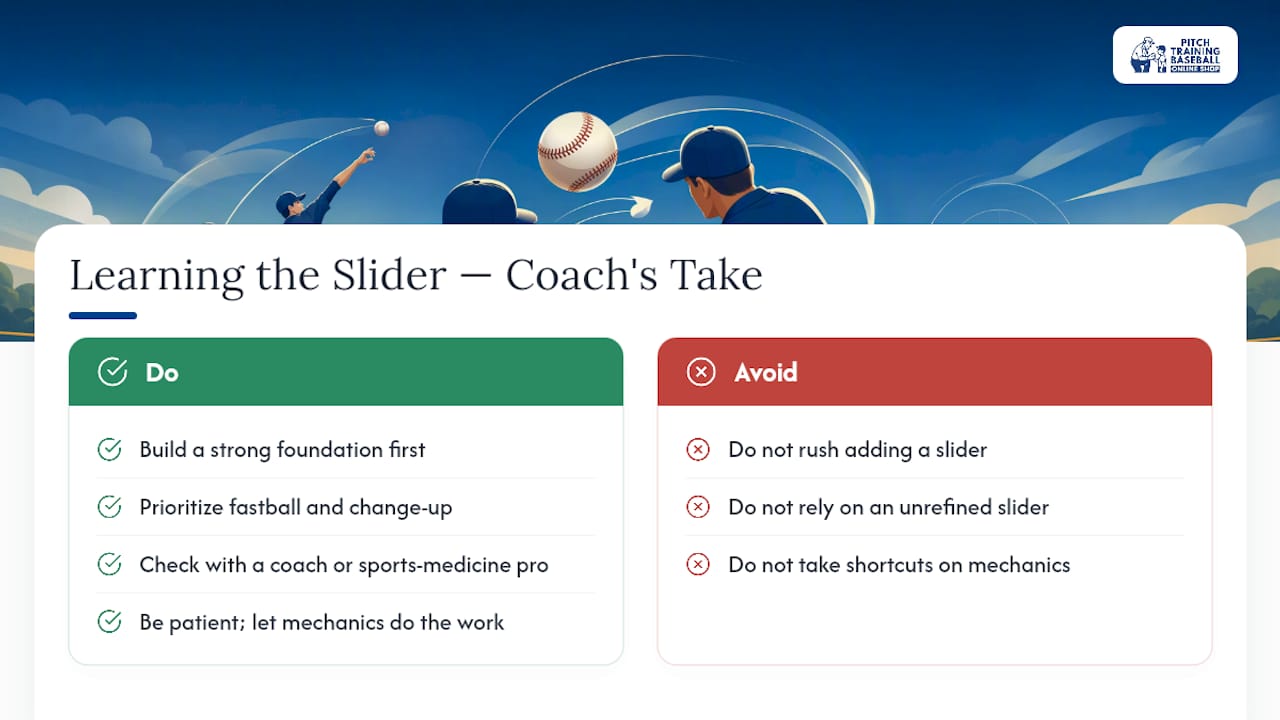
Every young pitcher wants the pitch that gets swings and misses. Almost none of them need it as badly as they think. A dominant fastball and a well-located change-up will win more youth and high school games than an unrefined slider ever will, and they carry a fraction of the elbow risk. Build the foundation first. Check in regularly with a qualified coach or sports-medicine professional as the slider gets added, and let patience with mechanics do the work that shortcuts can’t.
Training Tools That Support Safe Slider Practice
Good mechanics need a target to aim at and a ball built for the drill, not just reps thrown into open space. A pitching target net with a nine-zone strike layout gives a young pitcher an actual release-window target during flat-ground and X-drill work, which turns “feel” practice into something measurable session to session.
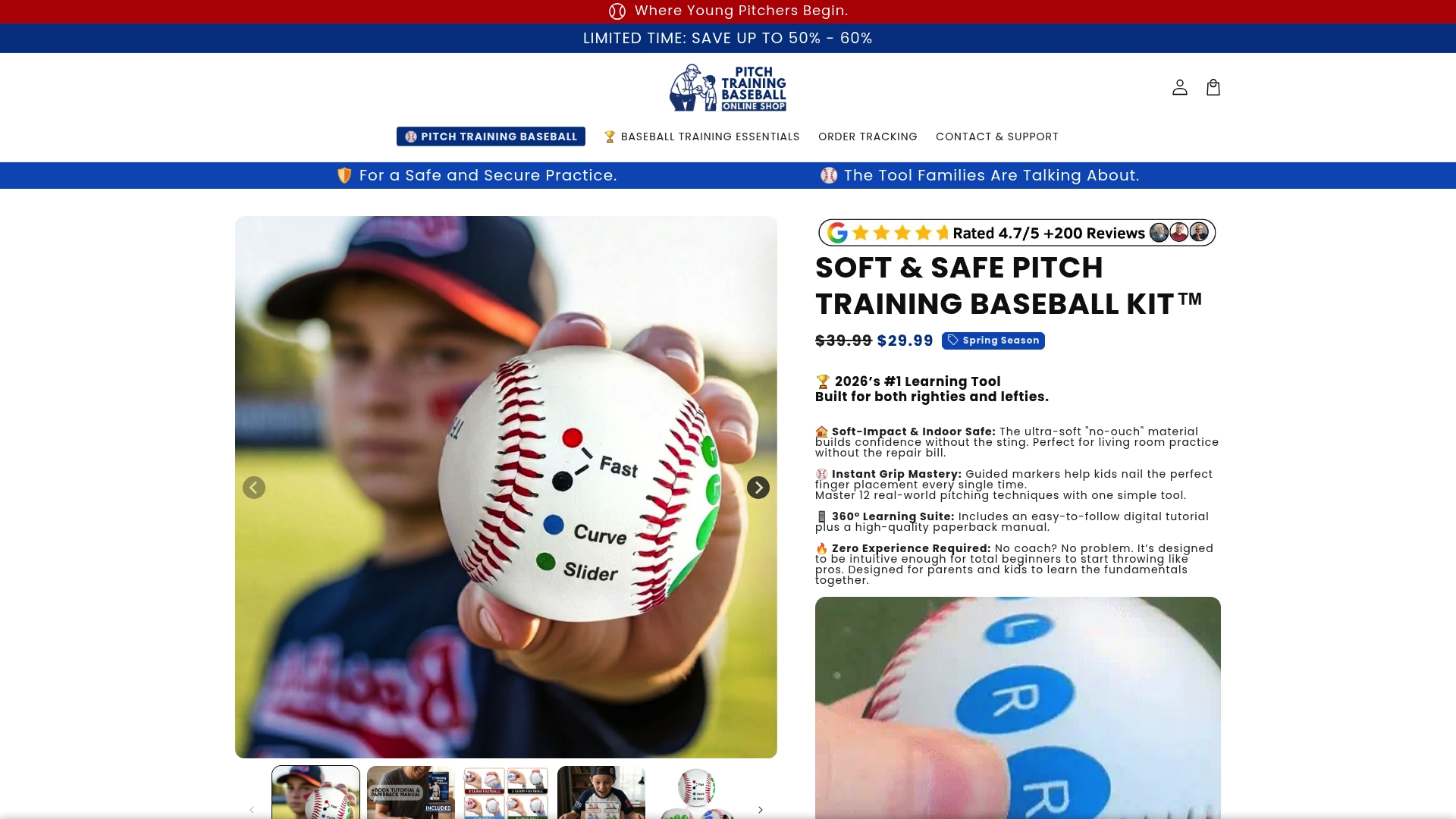
For the reduced-velocity feel work covered above, a softer training softball cuts joint load while a pitcher is still building spin and finger pressure, and a five-pack of practice baseballs makes high-rep bullpen sessions easier to run without constant retrieval breaks. None of this replaces a coach’s eye or a doctor’s clearance. These are practice aids, not medical guidance, and they work best alongside the progression checklist above, not instead of it. If your family is also managing sun and heat exposure at long outdoor practice sessions, BANZ Carewear’s youth baseball safety tips are worth a quick read too. Ready to build a safer bullpen routine? Check out the pitching target net and get started on release-point work this week.
Frequently Asked Questions
What is a slider ball in baseball? A slider is a breaking pitch thrown with fastball arm speed and a gyroscopic spin that produces a short, late break toward the glove side, typically a few miles per hour slower than a pitcher’s fastball.
At what age should a pitcher start throwing a slider? Most sports-medicine guidance and Little League recommendations point to around age 14, and physical maturity markers matter more than the exact birthday. Command of the fastball and change-up should come first.
What’s the difference between a slider and a curveball? A curveball uses top-spin and a slower velocity for a bigger, earlier drop. A slider spins more like a bullet and breaks later, shorter, and faster.
Why does my slider keep hanging? Hangers usually come from slowing the arm at release, dropping the elbow, or a velocity and spin mismatch that leaves the pitch flat and easy to see out of the hand.
Can throwing a slider hurt a young pitcher’s arm? Research on youth pitchers found a meaningfully higher rate of elbow pain tied to slider use, which is why delaying it until mechanics and maturity catch up matters so much.
This article is general information, not a substitute for advice from a qualified doctor. Consult a qualified healthcare professional about your own circumstances before acting on anything here.
Sources
Recommended
- The Slider Baseball Pitch: Mechanics, Drills, and Safety – Pitch Training Baseball
- Baseball Slider for Pitchers: Mechanics, Drills, and Safety – Pitch Training Baseball
- Slider Movement: What Players and Coaches Must Know – Pitch Training Baseball
- Slider Pitch Movement: Physics, Grips, and Safe Drills – Pitch Training Baseball