


Muscle memory in pitching is the brain’s process of encoding complex throwing motions into automatic neural pathways through repetition, so your body executes the pitch without conscious thought. The role of muscle memory in pitching goes far beyond simple habit. It is the foundation of every consistent, accurate throw a pitcher makes under pressure. Neural pathways automate actions through repetition, meaning the brain, not the muscles themselves, stores the movement. Once those pathways are built, your arm, hips, and legs work together automatically, freeing your mind to focus on the batter, the count, and your next move.
What is the role of muscle memory in pitching?
Muscle memory is not stored in your muscles. The correct term from sports science is procedural memory, a type of long-term memory that lives in the brain’s motor regions. When you hear coaches say “muscle memory,” they mean the brain has automated a movement so thoroughly that you no longer need to think through each step.
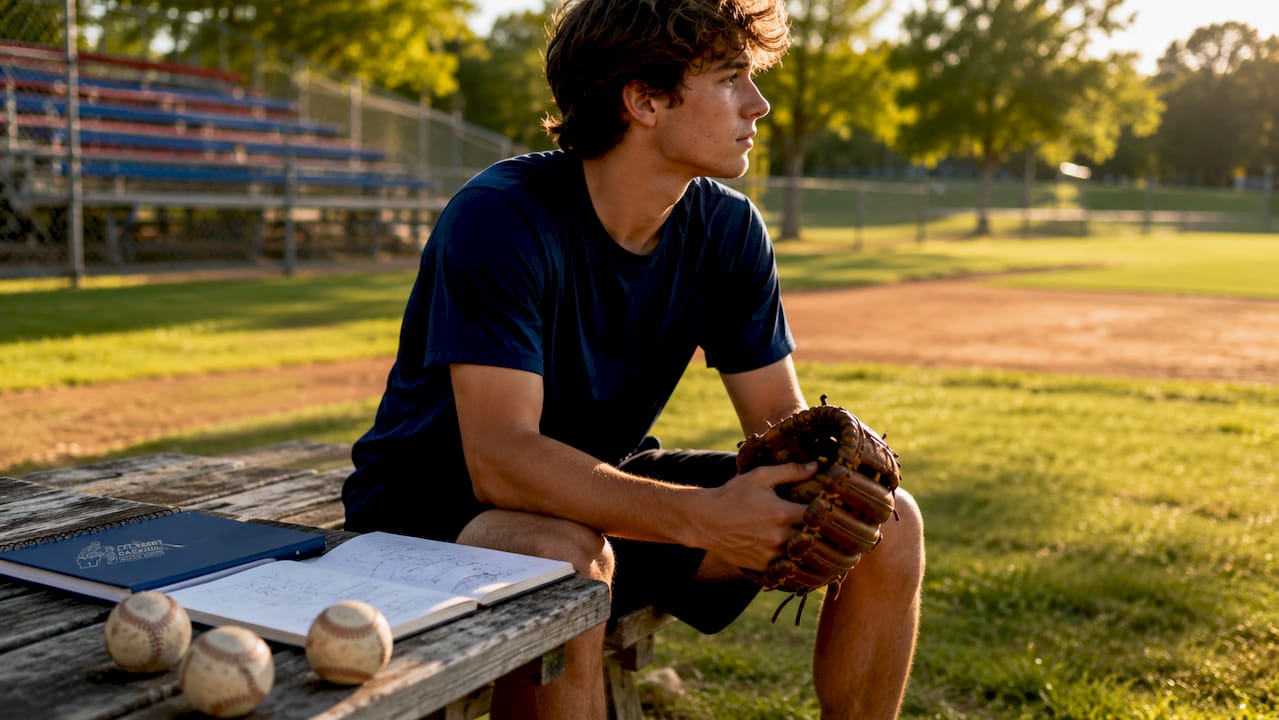
Procedural memory shifts control from the conscious frontal regions of the brain to the sensorimotor circuits responsible for smooth, fast movement. This shift is what separates a pitcher who thinks about every step of his windup from one who just throws. The second pitcher is faster, more consistent, and far less likely to fall apart under pressure.
For young pitchers, this matters immediately. Every time you practice your mechanics correctly, you strengthen those neural pathways. Every quality repetition is a deposit into a motor skill bank you will draw on for years.
How does muscle memory develop from a scientific perspective?
Two biological systems work together to build pitching muscle memory: the nervous system and the muscle tissue itself.
Neural pathway formation
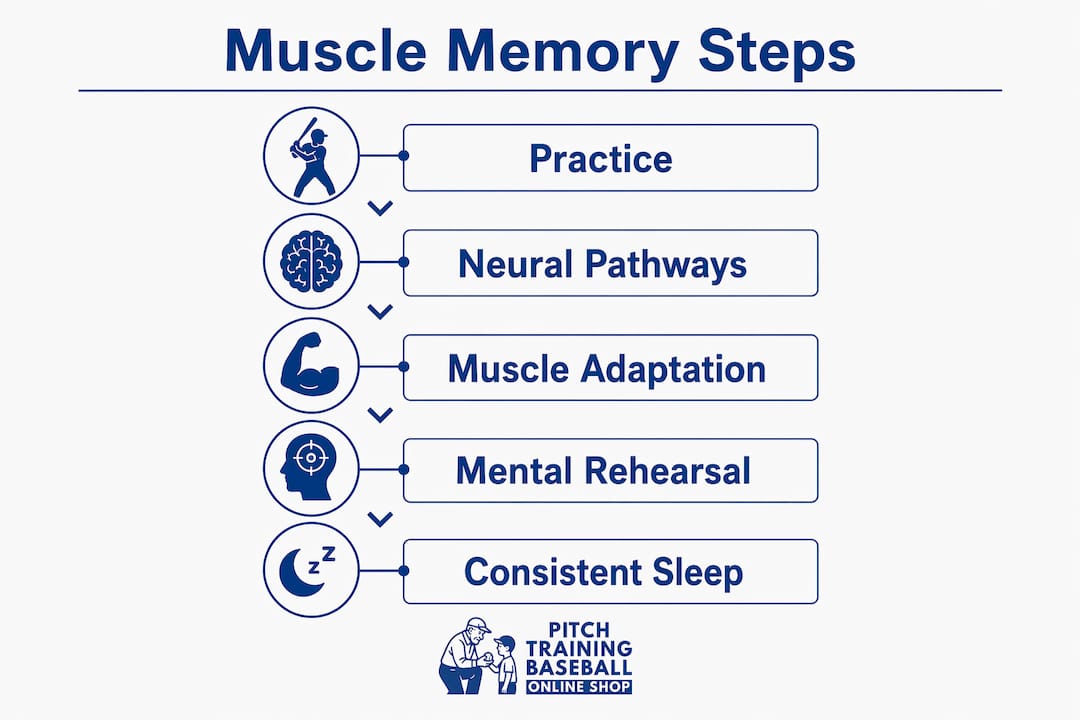
The brain creates and strengthens neural pathways each time you repeat a movement. Early in learning, your frontal lobe manages every detail of the motion consciously. With enough quality repetitions, control transfers to the cerebellum and basal ganglia, the brain regions built for automatic, fast motor output. This is why a pitch that once required full concentration eventually feels effortless.
Muscle fiber adaptation
At the cellular level, muscle fibers gain extra nuclei called myonuclei when you train. These myonuclei do not disappear when you stop training. Previously trained muscle rebuilds up to 3 times faster than it built initially because those myonuclei remain. For a young pitcher returning after a winter break, this means your arm strength and mechanics come back faster than you might expect.
Motor memory adaptations can persist for approximately 15 years. That means the mechanics you build at age 12 or 13 stay encoded in your nervous system for a long time. Getting them right early pays off for your entire career.
The role of mental rehearsal
Physical reps are not the only way to build these pathways. Motor imagery specific to pitching increases excitability in the upper-limb muscles critical for throwing, including the flexor carpi radialis and the abductor pollicis brevis. In plain terms, vividly imagining a pitch activates the same neural circuits as actually throwing one. Mental rehearsal is not a replacement for physical practice, but it accelerates learning when combined with it.
Pro Tip: Before your next bullpen session, spend five minutes sitting quietly and visualizing every step of your delivery. Picture the grip, the windup, the release point, and the ball hitting the target. This primes your motor circuits before you throw a single pitch.
Here is a summary of the key biological processes at work:
- Neural pathway strengthening: Repetition transfers motor control from conscious thought to automatic motor regions.
- Myonuclei retention: Muscle cells keep extra nuclei after training, enabling faster rebuilding after rest.
- Procedural memory encoding: The brain stores movement sequences as automatic programs over time.
- Motor imagery activation: Mental rehearsal fires the same neural circuits as physical throwing.
- Sleep consolidation: The brain replays and strengthens motor patterns during deep sleep.
You can learn more about applying pitching visualization techniques specifically designed for youth players to get the most from mental rehearsal.
Why is muscle memory essential for consistent pitching performance?
Automatic movement is faster and more reliable than conscious movement. A pitcher who has to think about hip rotation, arm angle, and follow-through on every pitch will slow down, tire out, and make errors under pressure. A pitcher with strong procedural memory executes all of those steps without burning mental energy.
Muscle memory improves performance under pressure by freeing conscious thought for strategic focus. That means you can read the batter, adjust your pitch selection, and stay calm in a full-count situation, all while your body handles the mechanics automatically. This is the real competitive edge.
Building a library of motor solutions
One of the most misunderstood facts about elite pitching is that great pitchers do not repeat their mechanics exactly the same way every time. Elite pitchers develop multiple motor solutions that allow them to adapt to varying conditions without losing consistent outcomes. A mound that is slightly different, a batter who crowds the plate, or fatigue in the seventh inning all require small adjustments. A pitcher with a rigid, single-pattern motor program breaks down in those moments. A pitcher with a flexible library of motor patterns adapts and still throws strikes.
This is why drilling the same pitch the exact same way, thousands of times with zero variation, is not the goal. The goal is building a strong movement foundation with enough variety to stay effective when conditions change.
Pro Tip: Mix up your practice targets and distances occasionally. Throwing to different zones and from slightly varied positions builds motor flexibility, not just motor repetition.
The key performance benefits of strong pitching muscle memory include:
- Faster pitch execution with less conscious effort
- Higher accuracy because the motor program runs cleanly
- Lower mental fatigue over long outings
- Quicker recovery of mechanics after a bad pitch
- Better adaptability to different batters and game situations
How can young pitchers effectively build and improve muscle memory?
Building strong pitching muscle memory requires more than just throwing a lot of pitches. Quality, structure, and recovery all shape how fast and how well those neural pathways form.
1. Practice with purpose, not just volume
Purposeful, spaced practice combined with sleep enhances procedural memory encoding far more than mindless repetition. Every rep should have a clear focus: a specific target, a specific grip, or a specific part of your mechanics. Throwing 50 focused pitches beats throwing 200 distracted ones every time.
2. Add mental rehearsal to your routine
Combine physical reps with visualization sessions. Mental imagery combined with physical practice and sleep accelerates neural encoding faster than physical practice alone. Spend time before and after practice mentally running through your delivery. This is not optional for serious pitchers. It is a training tool backed by sports science.
You can build a structured mental practice habit using this youth baseball mental preparation guide from Pitchtrainingbaseball.
3. Prioritize sleep between sessions
Sleep is when the brain consolidates motor memories. Skipping sleep after a hard practice session means you lose some of the neural encoding your body worked to build. Aim for 8–9 hours on nights after pitching practice.
4. Train the whole kinetic chain, not just your arm
Poor ankle mobility degrades force transfer and disrupts the neural programming of the pitch. Your lower body drives the pitch. If your hips, knees, and ankles are not stable and mobile, your arm mechanics will compensate in ways that create inconsistent movement patterns. Strength and mobility work for your legs and core is pitching training, not just conditioning.
5. Use game-like variability in drills
Drills that simulate real game conditions build resilient motor patterns. Throw to specific zones. Vary your pitch types. Practice from the stretch and the windup. The more varied your practice conditions, the more adaptable your motor library becomes. Check out this step-by-step bullpen routine built specifically for young pitchers to structure your sessions.
6. Lock in correct mechanics from the start
Bad mechanics practiced repeatedly become deeply encoded bad habits. Overwriting an ingrained wrong pattern requires significant conscious effort and takes much longer than building the right pattern from scratch. Get coaching early. Fix mechanical errors before they become automatic.
Here is a quick checklist for productive muscle memory training sessions:
- Set a specific mechanical focus for each session
- Keep reps quality-controlled, not just high-volume
- Visualize your delivery before and after throwing
- Include lower body mobility and stability work
- Sleep 8–9 hours after practice
- Vary targets and conditions to build motor flexibility
What are common challenges young pitchers face with muscle memory?
Building pitching muscle memory is not always smooth. Several obstacles slow the process or create problems that are harder to fix later.
Ingrained bad habits are the biggest challenge. Once a flawed movement pattern is encoded, the brain treats it as the default. Fixing it requires conscious, deliberate practice over many sessions. Simply throwing more pitches will not fix a bad habit. It will deepen it. You need focused drills that specifically target the error and replace it with the correct movement.
Overly rigid mechanics create a different problem. A pitcher who drills one exact movement pattern with no variation builds a fragile motor program. When conditions change, that program breaks down. The solution is to practice with intentional variety, as described in the previous section.
Physical limitations directly disrupt muscle memory quality. Instability in lower limbs negatively impacts neural programming in pitching. If your ankle mobility is limited or your hip stability is weak, your delivery will vary in ways you cannot consciously control. Address physical limitations through targeted mobility and strength work before they become mechanical problems.
Mental blocks under pressure can override automatic execution. A pitcher who overthinks mechanics during a game is pulling control back to the conscious frontal brain, the slow, error-prone system. The fix is exposure. Practice in conditions that simulate pressure: pitch counts, game scenarios, and competitive drills that train your brain to trust the automatic system.
Breaks from throwing feel more damaging than they are. Because neural pathways and retained myonuclei allow rapid skill reacquisition, a pitcher returning after weeks or months off will rebuild mechanics and arm strength faster than when they first learned them. Patience and structured return-to-throwing programs are the right approach, not panic.
Key Takeaways
Muscle memory in pitching is a brain-based skill built through purposeful repetition, mental rehearsal, and whole-body training, and it is the single most reliable path to consistent pitching performance.
| Point | Details |
|---|---|
| Muscle memory lives in the brain | Neural pathways, not muscles, store pitching mechanics through procedural memory. |
| Motor adaptations last up to 15 years | Early mechanical training encodes durable patterns that persist through your career. |
| Mental rehearsal accelerates learning | Visualization activates pitching-specific neural circuits and speeds up motor encoding. |
| Whole-body training is non-negotiable | Lower body stability and mobility directly affect the quality of neural programming in pitching. |
| Variability builds resilient mechanics | Practicing with varied conditions creates a flexible motor library, not just a rigid single pattern. |
Why most young pitchers misunderstand muscle memory
Young pitchers almost always think muscle memory means repeating the same motion perfectly, thousands of times, until it is locked in forever. I understand why. That is what most coaches say, and it sounds logical. But it is only half the story, and the missing half is what separates pitchers who plateau from pitchers who keep improving.
What I have seen consistently is that the pitchers who develop the fastest are not the ones who throw the most. They are the ones who practice with attention, sleep well, and spend time mentally rehearsing their delivery. The sports science on motor imagery and corticospinal excitability confirms what good coaches have observed for decades. Your brain does not care whether you are physically throwing or vividly imagining throwing. Both build the circuit.
The other thing young pitchers miss is the whole-body piece. They obsess over arm mechanics and ignore their legs. A stiff ankle or a weak hip will sabotage your delivery no matter how many reps you put in. The kinetic chain is not a coaching cliché. It is biology.
My honest advice: slow down, focus each rep, visualize daily, sleep like it is part of your training, and work on your lower body as hard as you work on your arm. The motor memory you build that way will last far longer and hold up far better under pressure than anything built through mindless volume.
— Albert
Build pitching muscle memory with the right tools
Consistent, quality repetitions are the engine of muscle memory development. Having the right training tools makes it easier to get those reps in with proper focus and feedback.
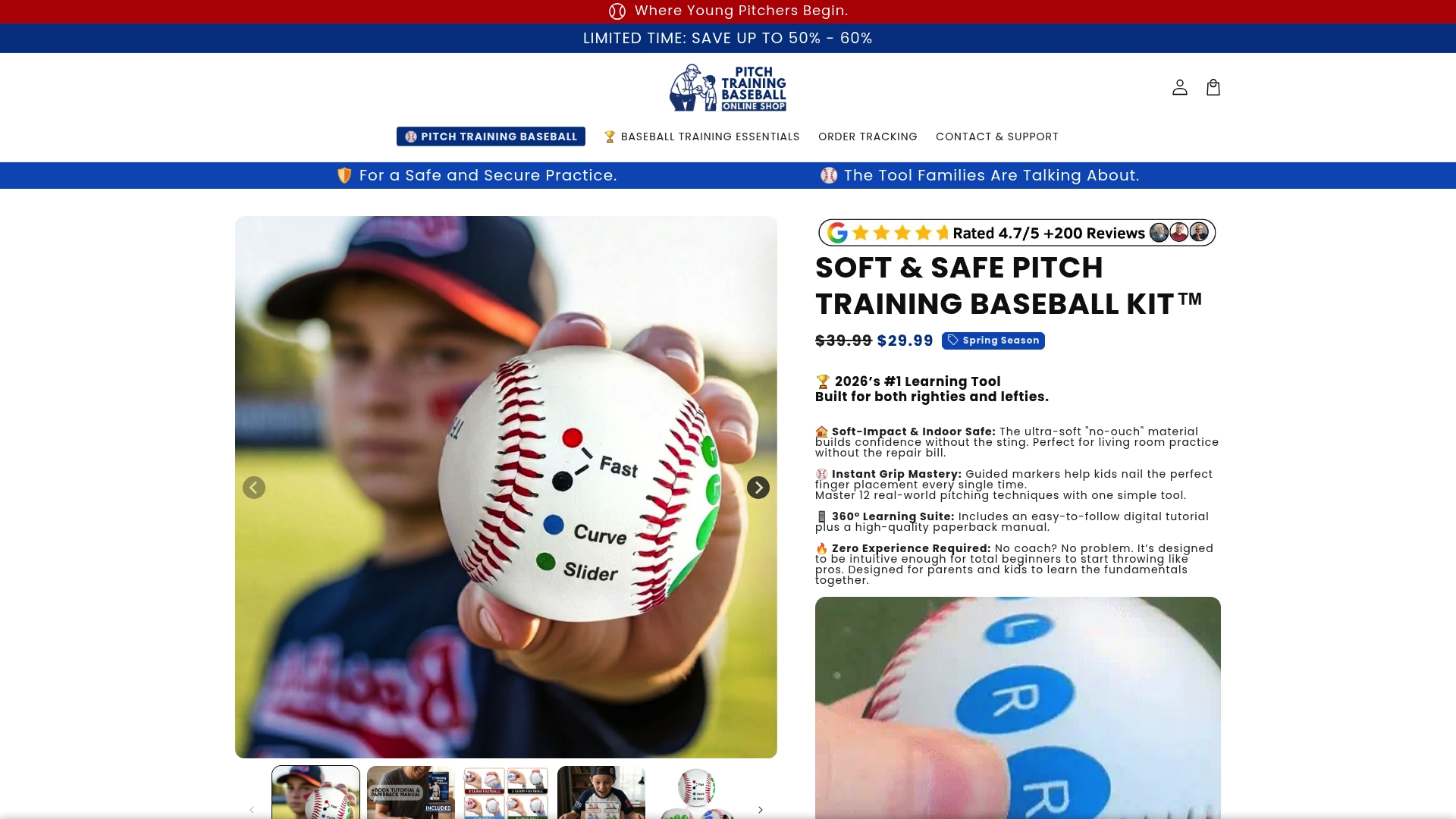
Pitchtrainingbaseball offers training equipment built specifically for young pitchers working on accuracy, mechanics, and repetition. The Pitching Target Net with Strike 9-Zone gives you a clear visual target for every rep, so each throw has a purpose. Pair it with the Pitch Training Baseball to build the feel and mechanics your motor system needs to encode. These tools are designed to make purposeful practice easy, whether you are training in the backyard or at the field.
FAQ
What is muscle memory in pitching?
Muscle memory in pitching is the brain’s ability to automate throwing mechanics through repeated practice, storing the movement as procedural memory in motor regions of the brain. Once encoded, the motion runs automatically without conscious thought.
How long does pitching muscle memory last?
Motor memory adaptations can persist for approximately 15 years at the cellular level. Neural pathways formed during training also remain durable, allowing pitchers to reacquire mechanics quickly after breaks.
Does mental rehearsal actually help build muscle memory?
Yes. Motor imagery specific to pitching increases excitability in the upper-limb muscles used for throwing. Combining visualization with physical practice and sleep accelerates neural encoding faster than physical practice alone.
How can young pitchers avoid ingraining bad habits?
Focus on correct mechanics from the start and use purposeful, coached repetitions rather than high-volume mindless throwing. Fixing an encoded bad habit requires deliberate, targeted practice over many sessions to overwrite the existing neural pattern.
Why does lower body training matter for pitching muscle memory?
Poor ankle mobility and lower body instability degrade force transfer through the kinetic chain and disrupt the neural programming of the pitch. Stable, mobile lower limbs are a prerequisite for consistent, high-quality motor encoding of pitching mechanics.
Recommended
- Why Focus on Repetition in Pitching: a Coach’s Guide – Pitch Training Baseball
- Defining Youth Pitching Mechanics: A Coach’s Guide – Pitch Training Baseball
- Baseball Pitching Visualization Techniques for Youth Players – Pitch Training Baseball
- Fix youth pitching mistakes for better performance – Pitch Training Baseball