


The strike zone is the exact two-dimensional rectangle above home plate where a pitch must pass to be called a strike. In 2026, Major League Baseball’s Automated Ball-Strike (ABS) Challenge System redefined this zone with fixed mathematical precision, replacing decades of subjective umpire interpretation. Every player, parent, and coach working on pitching or hitting skills needs to understand this new standard. The old rulebook definition no longer reflects what happens on the field, and training that ignores the ABS zone is training for a game that no longer exists.
What is a strike zone under the 2026 ABS rules?
The ABS-defined strike zone is exactly 17 inches wide and spans vertically between 53.5% and 27% of the batter’s height. That 17-inch width matches the physical width of home plate, which has been the standard since baseball’s earliest rules. The vertical boundaries, however, are now calculated from the batter’s actual measured height, not from their stance or posture during an at-bat. This is the most significant change in how the strike zone is defined in modern baseball history.
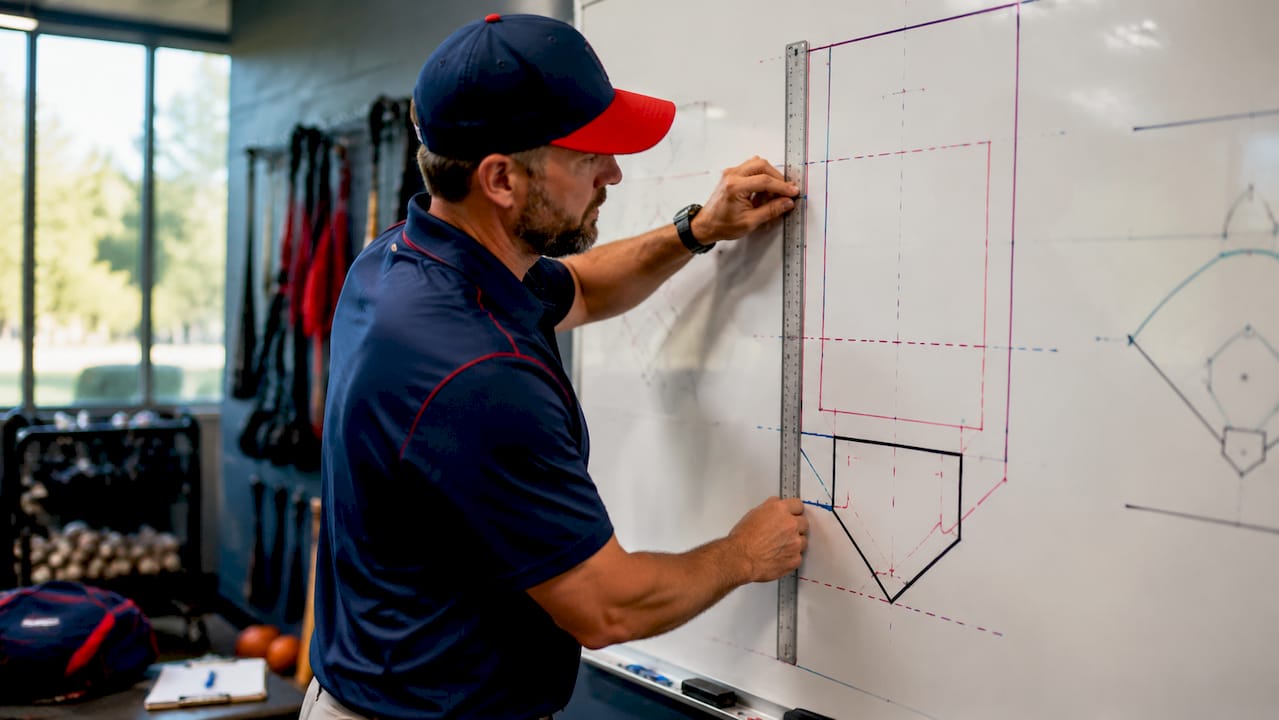
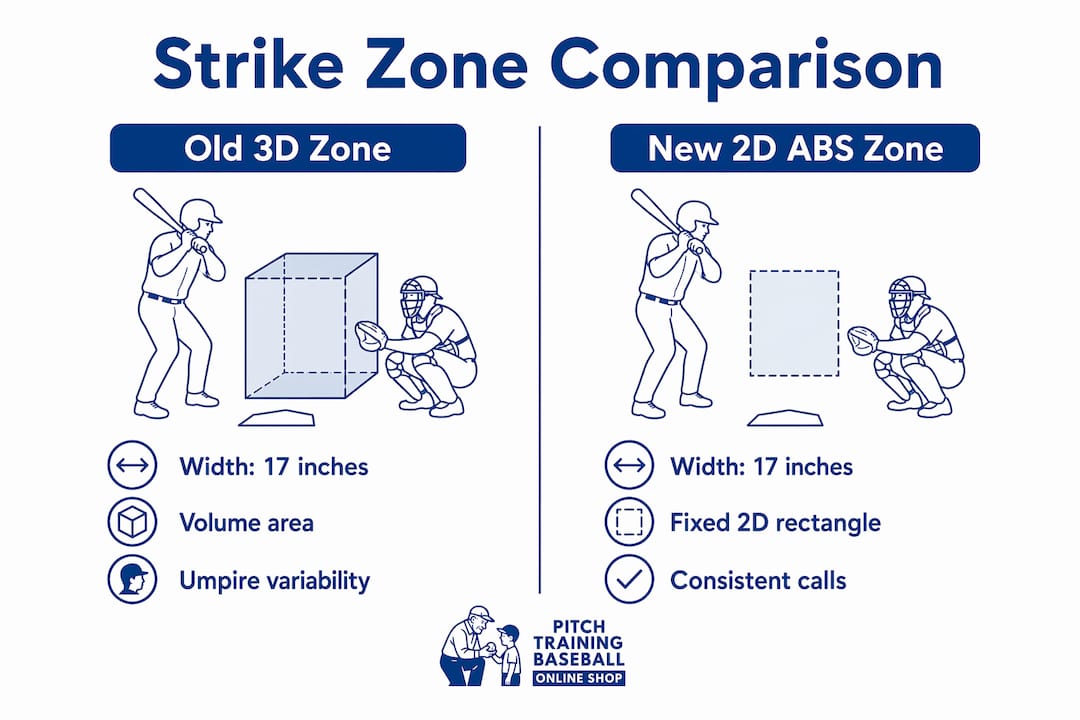
The zone is also strictly two-dimensional. Previous rulebook language described a three-dimensional volume, meaning a pitch that clipped the front or back corner of the plate could still be called a strike. The ABS system eliminates that entirely. A pitch either crosses the 2D rectangle or it does not. There is no gray area, no “nicking the corner,” and no benefit of the doubt for a pitch that barely grazes the edge.
The ABS zone measures 443 square inches, compared to the roughly 449 square inches that umpires historically called. That six-square-inch difference sounds minor, but it eliminates the borderline pitches that pitchers and catchers spent years trying to steal. For youth coaches, this means the mental model you have been teaching about “expanding the zone” is no longer accurate at the highest levels of play.
| Feature | Old 3D Rulebook Zone | New 2D ABS Zone |
|---|---|---|
| Width | 17 inches (home plate) | 17 inches (fixed) |
| Top boundary | Midpoint between shoulders and top of pants | 53.5% of batter’s height |
| Bottom boundary | Hollow beneath the kneecap | 27% of batter’s height |
| Depth | 3D volume (front to back of plate) | 2D rectangle (no depth) |
| Stance influence | Yes, based on natural batting stance | No, based on measured height only |
| Edge calls | Borderline pitches often called strikes | Strict rectangle, no edge benefit |
Pro Tip: When training young pitchers, print or draw the ABS zone dimensions scaled to each player’s height. A pitcher who is 5 feet tall has a top boundary at roughly 32 inches and a bottom boundary at about 16 inches. Making it visual removes the guesswork.
How does a batter’s stance affect the strike zone now?
Under the new ABS system, batter posture no longer affects the strike zone boundaries at all. The zone is calculated from the player’s actual physical height, measured before the game. A batter who crouches dramatically at the plate does not shrink their strike zone by a single inch. This is a direct reversal of how the traditional rulebook worked, where the zone was defined relative to the batter’s natural stance.
The traditional rulebook defined the zone as the area from the midpoint between the batter’s shoulders and the top of their pants down to the hollow beneath the kneecap, based on their natural stance. Savvy batters and coaches exploited this for decades. Players like Jeff Bagwell and Tony Gwynn used exaggerated crouches to compress their strike zones. Under ABS, that tactic is completely obsolete.
For coaches working with youth players, this changes several teaching priorities:
- Stop teaching players to crouch or widen their stance to manipulate the zone. The ABS system ignores it, and building habits around a tactic that no longer works wastes practice time.
- Focus stance coaching on balance, weight transfer, and bat path instead. These fundamentals produce results regardless of how the zone is enforced.
- Teach players their personal zone dimensions based on their height. A player who knows their top boundary sits at 53.5% of their height can make faster, more confident decisions at the plate.
- Remind players that training for the height-based zone is now the only approach that prepares them for competitive play at higher levels.
The practical effect on batting strategy is significant. Batters can no longer game the system through physical manipulation. The zone is fixed, predictable, and the same for every at-bat. That predictability actually benefits disciplined hitters who study pitch location and make decisions based on where the ball is going, not where they hope the umpire draws the line.
What are the implications of the ABS zone for pitchers and batters?
Pitchers face the sharpest adjustment under the 2026 rules. The 3D zone previously allowed edge pitches to be called strikes when they clipped the front or side corners of the plate. The ABS 2D rectangle eliminates those calls entirely. Backdoor breaking balls, which curve across the back corner of the plate, no longer catch the edge of the zone. If the ball does not cross the 2D rectangle, it is a ball, full stop.
This forces pitchers to recalibrate their entire approach to working the edges. The transition from 3D to 2D specifically reshapes which pitch types are effective. Pitchers who relied heavily on late-breaking sliders painting the back corner of the plate will see those pitches called balls far more often. The premium now sits on pitches that attack the vertical boundaries of the zone, particularly the top and bottom edges of the 2D rectangle, where movement still creates genuine difficulty for batters.
For batters, the predictability of the ABS zone creates a real advantage for disciplined hitters. When the zone is fixed and objective, a batter who studies their personal zone dimensions can make faster, more accurate decisions. The mental load of guessing whether a borderline pitch will be called a strike by a particular umpire disappears. What replaces it is pure pitch recognition.
- Map your pitch arsenal to the 2D zone. Every pitcher should chart which of their pitches consistently land inside the rectangle and which ones were previously “edge” pitches that no longer qualify as strikes.
- Develop vertical movement. Pitches with sharp downward break that drop out of the zone at the last moment become more valuable when horizontal edge calls disappear.
- Practice with zone-marked targets. Using a pitching target net with clearly marked zones builds the muscle memory to hit the 2D rectangle consistently.
- Batters should memorize their personal zone. Knowing that your top boundary sits at a specific height in inches gives you a concrete reference point during at-bats.
- Coaches should film pitch location data. Video review against the ABS rectangle reveals patterns in where pitches land and where adjustments are needed.
The ABS system removes umpire inconsistency entirely from strike zone enforcement. Research from the 2025 minor league ABS trials showed that umpire-called zones varied by as much as several inches from game to game and umpire to umpire. That variability is gone. Every pitcher and batter now operates under identical, objective conditions, which rewards preparation and punishes guesswork.
How does the ABS Challenge System work during a game?
The ABS Challenge System operates as a real-time adjudication tool built into the game’s flow. Players, pitchers, or catchers may immediately challenge a ball or strike call after any pitch. The challenge is resolved using the ABS technology, which tracks the pitch’s path and determines whether it crossed the defined 2D rectangle. The result is delivered within seconds, keeping the game moving without extended delays.
The rules around challenges are specific and worth understanding clearly:
- Only the pitcher, batter, or catcher may initiate a challenge. Managers and other players cannot trigger a review.
- The challenge must be made immediately after the pitch. There is no window to wait and see how the at-bat develops before deciding to challenge.
- Each team receives a limited number of challenges per game, similar to the replay challenge system used for other calls.
- If the challenge succeeds and the call is overturned, the team retains their challenge. A failed challenge costs the team one of their allotted reviews.
The benefit over traditional human-only umpiring is not just accuracy. It is consistency. An umpire’s called zone shifts based on fatigue, game situation, and individual tendencies. The ABS system applies the same 17-inch-wide, height-percentage-based rectangle to every single pitch in every single game. For youth coaches teaching pitching zone knowledge, this consistency means the lessons you teach today will hold up at every level of play where ABS is implemented.
The challenge system also changes catcher behavior. Catchers who previously focused on framing pitches to influence umpire perception now have a different role. Framing is irrelevant under ABS. The catcher’s value shifts toward pitch calling, game management, and communication with the pitcher about which locations inside the 2D rectangle are most effective against specific batters.
Key takeaways
The strike zone in 2026 is a fixed 2D rectangle, 17 inches wide, spanning from 27% to 53.5% of the batter’s height, enforced objectively by the ABS Challenge System with no influence from stance or umpire interpretation.
| Point | Details |
|---|---|
| Fixed dimensions | The zone is 17 inches wide and set at 53.5% to 27% of each batter’s height. |
| 2D rectangle only | No edge or corner calls; the pitch must cross the flat rectangle to be a strike. |
| Stance is irrelevant | Crouching or adjusting posture no longer changes the strike zone under ABS. |
| Pitching strategy shifts | Backdoor breaking balls and edge pitches lose effectiveness; vertical movement gains value. |
| Challenges are immediate | Only the pitcher, batter, or catcher can challenge a call, and it must happen right after the pitch. |
Why the ABS zone is the best thing to happen to youth baseball
I have spent years watching young players and their coaches build habits around a strike zone that was never consistent to begin with. The umpire-called zone was a moving target. Some umpires gave pitchers six inches off the outside corner. Others squeezed the zone so tight that a pitch splitting the plate got called a ball. Teaching players to “work the umpire” or “expand the zone” was always a workaround for a broken system, not a genuine skill.
The ABS zone changes that completely. For the first time, the definition of strike zone baseball rules is the same in every game, at every level where ABS is used. That is genuinely good for player development. When the zone is fixed, players learn to make decisions based on real pitch location, not on reading a particular umpire’s tendencies. That is a transferable skill. Reading an umpire is not.
My recommendation to coaches is direct: stop teaching stance manipulation and start teaching zone awareness based on height. Print the ABS dimensions for each player on your roster. Post them in the dugout. Make the numbers concrete. A 12-year-old who knows their top boundary is at 32 inches and their bottom is at 16 inches has a mental model they can actually use. Vague advice about “the knees to the letters” does not give them that.
For parents, the most useful thing you can do is reinforce the concept at home. When your child is practicing, talk about the zone in terms of their height, not in terms of body parts that shift with their stance. The coaching methods for youth baseball that work now are the ones built around the ABS rectangle, not the old rulebook language. The official rules still do not fully reflect the ABS zone, which means the gap between what the rulebook says and what actually happens in games is real. Train for the game being played, not the one described in an outdated document.
— Albert
Train smarter with tools built for the 2026 strike zone
Understanding the ABS zone is only half the work. Putting it into practice requires repetition against a target that reflects the actual rectangle your pitcher needs to hit.
Pitchtrainingbaseball offers the Pitching Target Net with Strike 9-Zone, a training net divided into nine color-coded zones that map directly to the ABS strike zone dimensions. Pitchers develop the accuracy and location awareness the 2D zone demands, and coaches get immediate visual feedback on where each pitch lands. Pair it with pitch training baseballs designed to build control and arm strength, and you have a complete practice setup that prepares players for the game as it is actually called in 2026.
FAQ
What is the official definition of the strike zone?
The strike zone is the two-dimensional rectangle above home plate where a pitch must pass to be called a strike. Under the 2026 ABS system, it is exactly 17 inches wide and spans from 27% to 53.5% of the batter’s measured height.
How wide is the strike zone in baseball?
The strike zone is 17 inches wide, matching the width of home plate. This measurement has remained constant across rulebook versions and is unchanged under the 2026 ABS system.
Does crouching at the plate change the strike zone?
No. Under the ABS Challenge System, the strike zone is calculated from the batter’s actual physical height, not their stance. Crouching or adjusting posture during an at-bat has no effect on the zone boundaries.
How do players challenge a ball or strike call under ABS?
Only the pitcher, batter, or catcher can challenge a call, and the challenge must be made immediately after the pitch. The ABS technology reviews the pitch path against the defined 2D rectangle and delivers a ruling within seconds.
Why does the 2026 strike zone matter for youth baseball training?
The ABS zone is fixed, objective, and consistent across every game where it is enforced. Training based on the height-percentage boundaries prepares players for competitive play at higher levels and builds real pitch recognition skills rather than umpire-reading habits.
Recommended
- What Is Pitch Selection? A Youth Baseball Guide – Pitch Training Baseball
- Defining Youth Pitching Mechanics: A Coach’s Guide – Pitch Training Baseball
- What Is Pitching Arm Slot? A Guide for Players – Pitch Training Baseball
- The Role of Parents in Baseball Training: A 2026 Guide – Pitch Training Baseball