


Mastering pitching grips is defined as a young pitcher’s ability to find, hold, and throw from the correct grip consistently, with enough control to hit their target. Knowing how to help kids master pitching grips is the single most important skill a parent or coach can develop, because grip is where every pitch begins. The four-seam fastball grip is the recognized starting point in current youth coaching standards, and grip mastery builds the muscle memory that carries young pitchers through every level of the game. Pitchtrainingbaseball supports this approach with training tools and resources designed specifically for young athletes building these foundational skills.
What are the fundamental pitching grips every young player should learn first?
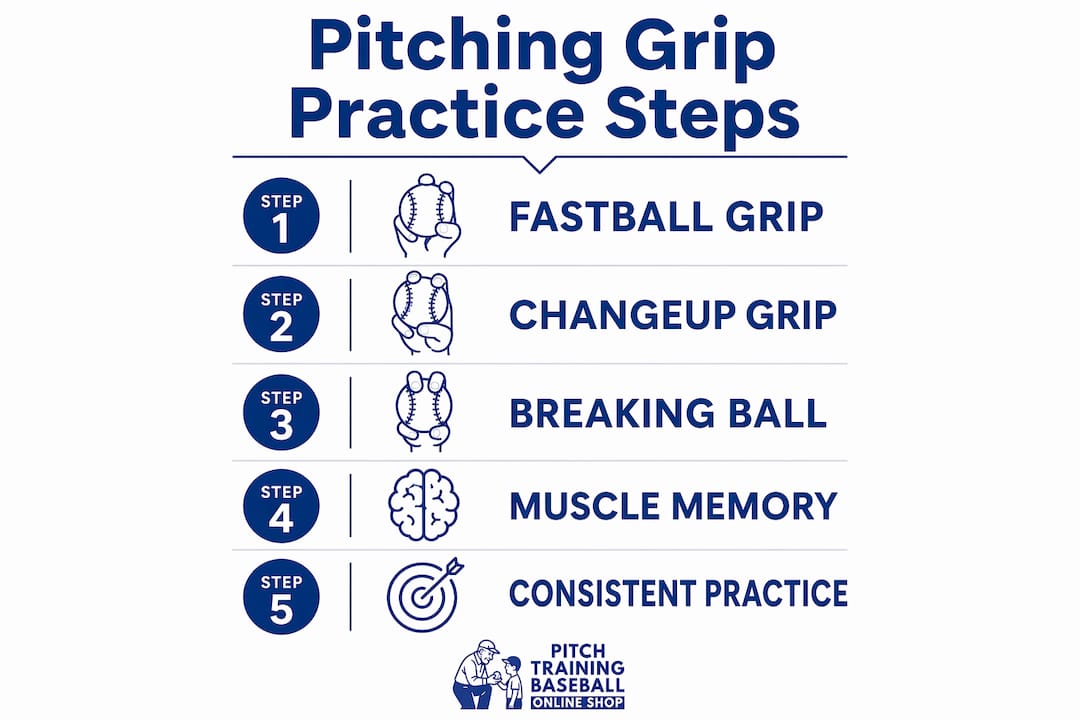
The four-seam fastball grip is the correct first grip for every young pitcher, without exception. Place the index and middle fingers across the widest part of the horseshoe seam, with the thumb resting directly underneath the ball on the smooth leather. The ring and pinky fingers rest lightly on the side. This placement gives the pitcher maximum backspin, which produces a straight, true flight path and makes the pitch easiest to control.
Coaches and parents should start with fastball command before introducing any other grip. The reason is simple: a pitcher who cannot consistently throw a four-seam fastball for strikes has no foundation to build on. Adding a changeup or breaking ball before that foundation exists creates confusion and raises injury risk.
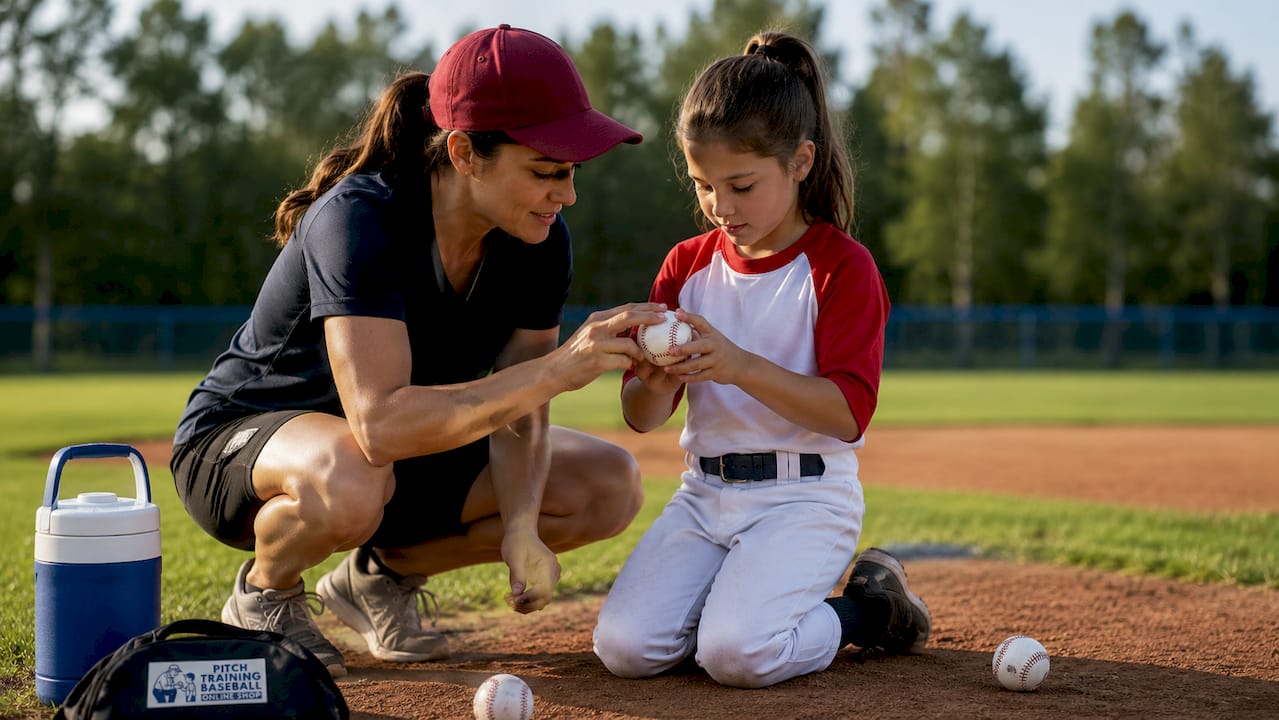
The changeup is the appropriate second grip to introduce, but only after a young pitcher shows consistent fastball command. The most common changeup taught to youth pitchers is the circle change, where the index finger and thumb form a circle on the side of the ball while the remaining three fingers grip across the top. The key teaching point is that the arm speed stays identical to the fastball. That arm speed match is what creates the speed difference and fools hitters.
Breaking pitches like the curveball and slider should be deferred until physical maturity. Here is why that matters:
- Four-seam fastball: The safest grip for young arms. Teaches command, backspin, and release point without stressing the elbow or shoulder.
- Changeup: Introduced after consistent fastball command. Arm speed stays the same as the fastball, protecting the arm while adding deception.
- Curveball: Breaking balls should be deferred until the player is physically mature. Wrist snap and forearm pronation on immature growth plates cause real damage.
- Slider: The highest-risk pitch for young arms. No youth pitcher needs a slider. Period.
The progression from fastball to changeup to breaking ball is not arbitrary. It follows the arm’s natural development and the pitcher’s ability to command each pitch type before adding complexity.
Which drills and practice routines build grip strength and muscle memory efficiently?
Grip-finding speed is a distinct mechanical skill, separate from throwing mechanics, and it can be trained on its own. Practicing grip-specific drills 3 to 5 times per week builds the muscle memory needed for quick, automatic grip transitions. That frequency matters because the nervous system needs repeated exposure to lock in a motor pattern.
The most effective drills for youth pitchers follow a clear progression:
- Seam-finding drill: The pitcher holds the ball in their glove, closes their eyes, and finds the correct four-seam grip by feel alone. They repeat this 20 times per session. This trains the fingers to locate seams without looking, which is exactly what happens in a game.
- Grip-flip drill: A partner tosses the ball randomly so the pitcher catches it in different orientations each time. The pitcher then adjusts to the correct grip as fast as possible before throwing. Elite pitchers transition between grips in under one second. This drill builds that speed.
- Tennis ball squeeze: The pitcher squeezes a tennis ball for 3 sets of 20 repetitions, three times per week. This builds finger endurance and grip strength without stressing the elbow or shoulder.
- Wrist curl and reverse wrist curl: Using a light resistance band or a small dumbbell, the pitcher performs controlled wrist curls and reverse curls. This strengthens the forearm muscles that support grip pressure and release.
- Wall target drill: The pitcher stands 10 feet from a wall target and throws at a specific spot using only the four-seam grip. The goal is accuracy, not speed. Repetitions at low intensity build command faster than high-effort throws.
Pro Tip: Structure each practice session around one or two coaching points only. A young pitcher who works on seam-finding and grip pressure in the same session will retain both. A pitcher who works on five things retains none.
Grip transition speed under one second is the benchmark for game-ready grip switching. Coaches can time this with a stopwatch during the grip-flip drill to track progress over weeks. Seeing the number drop from three seconds to under one second is motivating for kids and confirms the drills are working.
Building arm strength and endurance alongside grip drills creates a complete foundation. Grip strength without arm endurance leads to fatigue-related grip errors late in a game.
How do you coach kids effectively without overwhelming them with too much technical detail?
Simple, focused coaching produces better results than detailed mechanical breakdowns. Limiting coaching points to one or two per practice is not a shortcut. It is the method that actually works with young athletes. The brain consolidates motor skills during rest, not during instruction. Overloading a session with corrections prevents that consolidation.
Effective coaching strategies for teaching pitching grips include:
- One cue per session: Pick one thing to work on, such as thumb placement or finger pressure, and repeat it throughout the session. Consistency in feedback builds faster than variety.
- Encourage natural grip variations: Individual grip experimentation produces better control and comfort than forcing a textbook grip. If a kid naturally spaces their fingers slightly wider, and it produces a good pitch, leave it alone.
- Use video feedback: Recording a pitcher’s grip and release on a phone takes 30 seconds. Watching it back immediately gives the pitcher a visual reference that verbal coaching cannot match. Mirrors and video analysis confirm whether the grip is producing the intended spin and flight path.
- Celebrate grip transitions, not just results: When a pitcher finds the correct grip quickly and throws a strike, acknowledge both. Reinforcing the process builds the habit.
Pro Tip: Ask the pitcher to describe their grip out loud before each throw during early learning sessions. Verbalizing the grip placement activates a second learning channel and speeds up retention.
Patience is not optional in youth pitching development. A young pitcher who feels rushed or criticized for grip errors will tighten up, which creates the exact grip pressure problems coaches are trying to fix. Fixing youth pitching mistakes starts with creating a practice environment where errors are expected and corrected calmly.
What common mistakes should parents and coaches avoid when helping kids master pitching grips?
The most damaging mistake in youth pitching coaching is introducing multiple grips before the fastball is under control. A pitcher who cannot command the four-seam fastball has no business learning a changeup. Adding grips prematurely creates mechanical confusion, increases arm stress, and slows overall development.
Four mistakes consistently harm young pitchers:
- Introducing grips too early: Stick to the four-seam fastball until the pitcher hits their target consistently in practice. That is the only signal that they are ready for the next grip.
- Death gripping: Holding the ball too tightly kills velocity and spin. The correct grip pressure follows the raw egg analogy: firm enough to hold, but not hard enough to crush. Tight grip pressure also causes forearm fatigue much faster.
- Chasing velocity over mechanics: Prioritizing mechanics over speed protects the arm and builds sustainable development. A pitcher with clean mechanics at 50 mph will throw 75 mph in three years. A pitcher who strains for velocity at 10 years old risks injury that ends their career before it starts.
- Ignoring pitch count limits: Age-appropriate pitch counts are not suggestions. The recommended maximums are 50 pitches for ages 7–8, 75 pitches for ages 9–10, and 85 pitches for ages 11–12. Exceeding these limits causes overuse injuries to growth plates that can require surgery.
“The arm is not a machine. It is a developing structure that needs load management, rest, and progressive challenge. Coaches who ignore pitch counts are not developing pitchers. They are burning them out.”
Recognizing youth pitching myths is part of coaching well. Many parents believe that throwing more always leads to improvement. The research says the opposite: rest and recovery are when adaptation happens.
How do you monitor progress and adapt coaching as kids advance their pitching grips?
Tracking progress in grip mastery requires specific, measurable markers. Gut feeling is not enough. Coaches and parents who track concrete data make better decisions about when to advance a pitcher to the next grip.
| Milestone | What to measure | Ready signal |
|---|---|---|
| Fastball command | Strike percentage in practice | 60% or more strikes consistently |
| Grip transition speed | Time from catch to correct grip | Under 1 second on grip-flip drill |
| Grip pressure | Velocity and spin consistency | No velocity drop from tight grip |
| Changeup readiness | Arm speed match to fastball | Identical arm action, 10+ mph speed difference |
| Breaking ball readiness | Physical maturity and fastball command | Confirmed by a qualified pitching coach |
Video analysis is the most underused tool in youth pitching development. Recording the ball’s spin axis from behind the pitcher confirms whether the grip is producing the intended effect. A four-seam fastball should show tight backspin. A changeup should show tumbling spin. If the spin does not match the grip, the grip needs adjustment, not the arm action. Spin axis confirmation takes the guesswork out of grip coaching.
Communication with the pitcher is non-negotiable. Ask them directly: does this grip feel comfortable? Does it feel natural? A grip that produces good results in practice but feels wrong to the pitcher will break down under game pressure. Comfort and confidence in the grip are performance variables, not soft concerns.
Daily pitching habits that include short grip-finding sessions between full throwing days maintain muscle memory without adding arm stress. Five minutes of seam-finding drills on a rest day costs nothing and keeps the skill sharp.
Introducing new grips follows a clear rule: the current grip must be automatic before the next one is introduced. Automatic means the pitcher finds it without thinking, throws it for strikes under mild pressure, and transitions to it in under one second. When all three conditions are met, the pitcher is ready for the next step.
Key Takeaways
Teaching young pitchers to master their grips requires starting with the four-seam fastball, building grip strength through consistent targeted drills, and advancing to new pitches only when command is automatic.
| Point | Details |
|---|---|
| Start with four-seam fastball | Master this grip first before introducing any other pitch type. |
| Drill frequency matters | Practice grip-finding drills 3 to 5 times per week to build muscle memory. |
| Limit coaching points | Cover one or two teaching points per session to prevent overload and improve retention. |
| Avoid death gripping | Use the raw egg rule: firm but not crushing grip pressure to protect velocity and spin. |
| Respect pitch count limits | Follow age-appropriate maximums (50 for ages 7–8, 75 for ages 9–10, 85 for ages 11–12) to prevent injury. |
What I’ve learned coaching youth pitchers that most guides won’t tell you
The biggest gap I see between good coaching and average coaching is not knowledge. It is patience. Every parent and coach I have worked with knows the four-seam fastball comes first. But when a kid starts throwing well, the temptation to add a curveball or a slider is almost irresistible. That temptation is where most youth pitching development goes wrong.
The kids who develop the fastest are almost never the ones who learned the most pitches early. They are the ones who threw the four-seam fastball so many times that it became automatic. When the fastball is automatic, everything else comes faster. The changeup takes two weeks instead of two months. The mechanics clean up on their own because the pitcher is not thinking about grip.
The other thing I have noticed is that parents often underestimate how much grip experimentation matters. I have seen coaches correct a kid’s finger spacing three times in one session because it did not match the textbook. That kid’s grip was producing a good pitch. The correction made it worse. There is no universal grip. There is only the grip that works for that pitcher’s hand size, finger length, and arm action.
The mental side of grip coaching is real. A pitcher who trusts their grip throws with confidence. A pitcher who second-guesses their grip hesitates at release, which kills both velocity and accuracy. Build the grip, build the trust, and then get out of the way and let them throw.
— Albert
Pitchtrainingbaseball tools that support grip development
Consistent grip practice needs the right environment. The Pitching Target Net with Strike 9 Zone gives young pitchers a clear visual target for every throw, turning grip drills into command drills at the same time. When a pitcher can find their grip in under one second and hit a specific zone, they are ready for game situations.
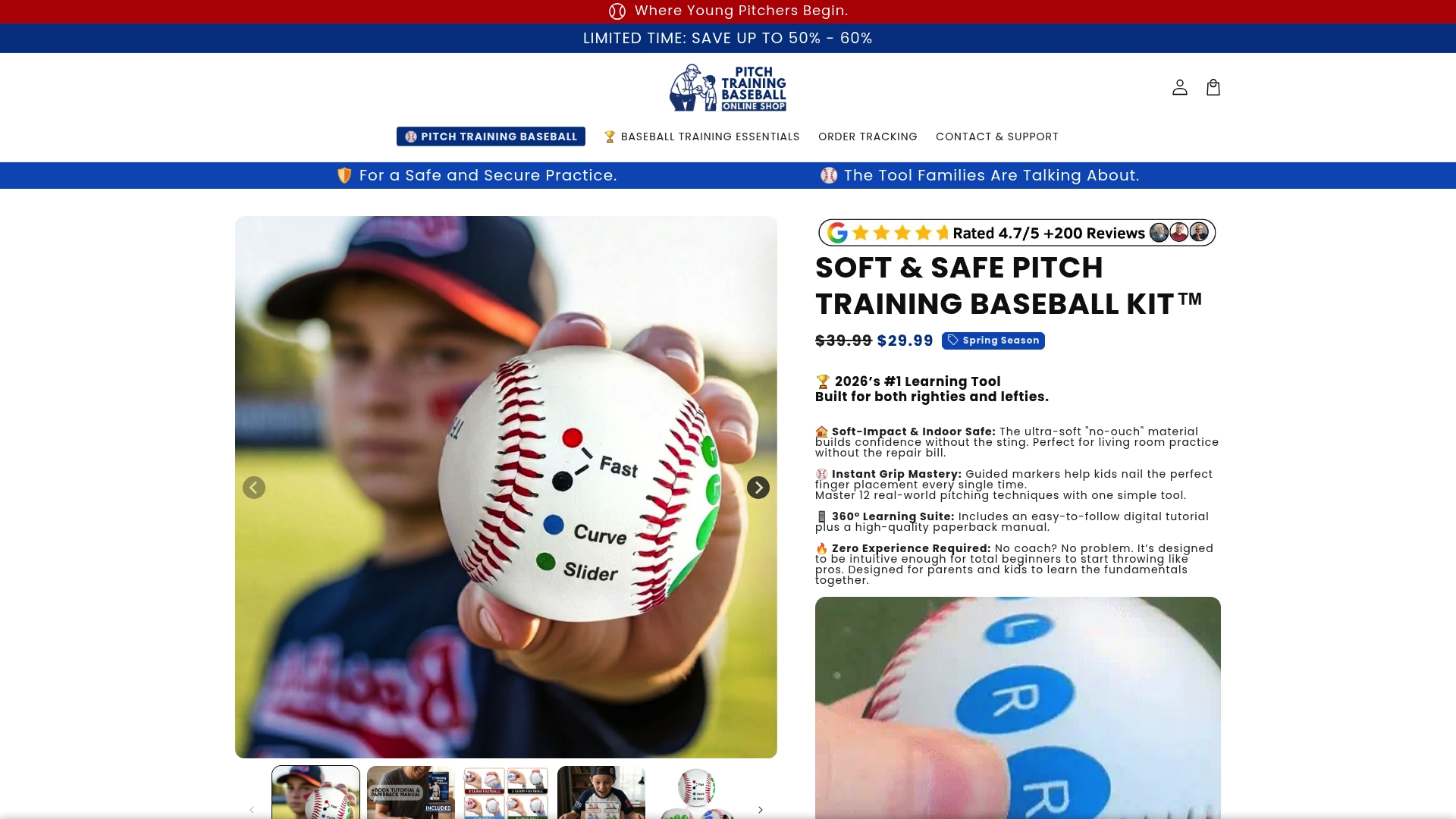
Pitchtrainingbaseball’s baseball training essentials collection includes training aids that complement the grip-finding and muscle memory drills covered in this guide. The equipment is portable, adjustable, and built for the backyard or the practice field. Parents and coaches who want to run focused, productive sessions will find everything they need in one place.
FAQ
What is the best first pitching grip for kids?
The four-seam fastball grip is the correct starting point for every young pitcher. It produces the most control, puts the least stress on the arm, and builds the command foundation needed before any other pitch is introduced.
How often should kids practice pitching grip drills?
Grip drills practiced 3 to 5 times per week build the muscle memory needed for automatic grip transitions. Short daily sessions of 5 to 10 minutes outperform long weekly sessions.
When is a young pitcher ready to learn a changeup?
A pitcher is ready for the changeup when they can hit their target with the four-seam fastball consistently in practice. Consistent command, not age alone, is the signal that the foundation is solid enough to add a second pitch.
What pitch count limits should youth coaches follow?
Age-appropriate pitch counts are 50 pitches maximum for ages 7–8, 75 for ages 9–10, and 85 for ages 11–12. These limits protect growth plates from overuse injuries that can require surgery.
How do you fix a young pitcher who grips the ball too tight?
Teach the raw egg rule: grip the ball firmly enough to hold it, but not hard enough to crush it. Tight grip pressure reduces velocity and spin, and causes forearm fatigue. Relaxed grip pressure produces better results every time.
Recommended
- Mastering proper pitching grip: boost youth baseball skills – Pitch Training Baseball
- Game-like pitching practice: Raise youth baseball skills fast – Pitch Training Baseball
- Educational eBook:“12 Pitching Grips Tutorial” (Value: $20) – Pitch Training Baseball
- Managing Practice Time for Pitchers: 2026 Youth Guide – Pitch Training Baseball