


Proper pitching posture is defined as the full-body alignment a pitcher maintains from the rubber through ball release, and it directly determines both performance and arm health. The benefits of proper pitching posture include better balance on the mound, more efficient power transfer through the kinetic chain, and a measurably lower risk of shoulder and elbow injuries. Research confirms that velocity comes from ground force and kinetic chain sequencing, not arm strength alone. That single fact changes how every parent and young player should think about pitching development.
1. Benefits of proper pitching posture: balance and control first
Balance is the foundation of every repeatable pitch. A pitcher who cannot hold a stable position at the top of the leg lift will compensate somewhere else in the delivery, usually with the arm. That compensation is where injuries start and accuracy breaks down.
The balance point is the moment of peak leg lift before the stride foot moves toward home plate. Holding a stable balance point at that peak is critical for loading the hips correctly. Rushing past it forces the arm to overwork and disrupts the entire sequence that follows.
Proper posture during the balance point means the pitcher’s head stays centered over the drive leg, the shoulders stay level, and the hips stay square to third base (for a right-handed pitcher). When those three checkpoints are met, the delivery becomes repeatable. Repeatability is what turns a talented arm into a consistent pitcher.

Pro Tip: Film your pitcher from the side during a bullpen session and pause the video at peak leg lift. The head should be directly above the drive foot. If it drifts forward, the pitcher is rushing the balance point and losing control before the ball ever leaves the hand.
Key posture checkpoints for balance:
- Head centered over the drive leg at peak leg lift
- Shoulders level, not tilted toward home plate
- Hips square to the side, not opening early
- Drive foot firmly planted on the rubber
- Glove held in front of the chest, not drooping
2. How posture powers the kinetic chain
Pitching power does not come from the arm. Most pitching velocity is produced by the lower body and core working together in a sequence called the kinetic chain. The legs generate force from the ground, the hips rotate, the core transfers that energy upward, and the arm delivers it to the ball. Proper posture is what keeps every link in that chain connected.
Hip-to-shoulder separation is the gap between when the hips rotate and when the shoulders follow. That separation creates a stretch in the core muscles, like a coiled spring. Research shows that decreasing trunk rotation velocity during the preparation phase significantly increases the maximum hip-to-shoulder separation angle. More separation means more stored energy and more velocity at release.
Timing is everything. Initiating trunk rotation before foot contact increases shoulder and elbow stress without adding ball velocity. That is one of the most important findings in youth pitching biomechanics. Early rotation wastes the energy the lower body built up and dumps the extra load directly onto the arm.
Proper trunk rotation timing is the single biggest mechanical factor separating a pitcher who throws hard and stays healthy from one who throws hard and gets hurt. The body has to be in the right position at foot contact for the kinetic chain to fire in the correct order.
The glove arm plays a bigger role than most coaches teach. Pulling the glove arm into the body at the right moment optimizes trunk rotation and improves force transfer during the pitch. A glove arm that flies open or drops early disrupts trunk control and reduces the efficiency of the entire delivery.
Pro Tip: Tell your pitcher to think of the glove arm as a brake pedal. At front foot contact, pull the glove elbow back toward the hip. That action squares the shoulders and keeps trunk rotation on time.
3. How correct pitching posture protects the arm
Poor posture does not just hurt performance. It puts direct stress on the growth plates in a young pitcher’s shoulder and elbow. Those growth plates are open until the mid-to-late teenage years, which makes youth pitchers far more vulnerable to overuse injuries than adult players.
A strong core, flexible hips, and stable scapula reduce shoulder load by compensating for weaknesses in the lower body or trunk. When posture breaks down, the shoulder has to pick up the slack. That is the direct mechanical path from poor alignment to arm pain.
The numbers on overuse are sobering. 80% of adolescent athletes diagnosed with Little League Shoulder were playing baseball nine or more months per year. Overuse and poor mechanics together are the leading cause of youth arm injuries. Proper posture reduces the mechanical stress on every pitch, which means each pitch costs the arm less.
Pitch count limits exist for exactly this reason. Recommended pitch counts for youth pitchers are 50 pitches per outing for ages 7–8, 75 for ages 9–10, and 85 for ages 11–12, with two to three months off overhead throwing each year. Staying within those limits while also maintaining proper posture gives young arms the best possible protection.
Signs that posture is breaking down and increasing injury risk:
- Elbow drop below shoulder level during the arm-cocking phase, which shifts stress to the ulnar collateral ligament
- Early shoulder opening before foot contact, which forces the arm to catch up and overloads the rotator cuff
- Head tilting toward the plate during the stride, which throws off the entire delivery plane
- Collapsing the drive leg too early, which cuts off ground force production and forces the arm to compensate
- Glove arm flying open at front foot contact, which disrupts trunk rotation timing
Incorporating a quick posture check into every bullpen session catches these problems early. Simple posture screening in youth pitchers can reveal important biomechanical information without expensive equipment. A coach or parent watching from the side with a phone camera has everything needed to spot the five warning signs above.
Parents can also support pitcher recovery habits between outings to reduce cumulative arm stress throughout the season.
4. Common posture mistakes and how to fix them
Most posture problems in young pitchers fall into three categories: rushing the delivery, misaligning the arm, and striding in the wrong direction. Each one has a specific cause and a specific fix.
Rushing the balance point is the most common mistake at the youth level. The pitcher lifts the leg and immediately falls toward home plate without pausing to load the hip. The fix is the balance point hold drill: lift the leg to the peak position and hold it for a two-count before striding. This builds the habit of loading before moving.
Elbow drop happens when the throwing arm drops below shoulder height during the cocking phase. It puts direct stress on the elbow and reduces arm speed at release. The fix is a towel drill where the pitcher goes through the motion with a towel in the throwing hand, focusing on keeping the elbow at shoulder height through the cocking phase.
Poor stride direction sends the stride foot across the body or too far open, which throws off hip and shoulder alignment at foot contact. A straight line of tape on the mound or practice surface gives the pitcher a visual target for the stride foot. The foot should land on or just inside that line.
Coaching and video feedback accelerate every fix. A pitcher who can see their own delivery on video understands the correction much faster than one who only hears a verbal cue. Even a 30-second phone video from the side or behind the mound gives a coach or parent enough information to identify the primary issue.
Pitchtrainingbaseball recommends pairing posture correction drills with structured pitching workouts that reinforce proper mechanics at every stage of development.
Pro Tip: Run posture drills at the start of every practice, not at the end when the pitcher is tired. Fatigued muscles default to bad habits. Building posture habits when the body is fresh makes them stick.
Common posture mistakes and their corrections at a glance:
- Rushing the balance point: Use the balance point hold drill with a two-count pause at peak leg lift
- Elbow drop: Practice the towel drill to reinforce elbow height through the cocking phase
- Early trunk rotation: Focus on keeping the hips closed until front foot contact
- Glove arm flying open: Drill the glove pull-back cue at front foot contact
- Poor stride direction: Use a tape line on the mound to guide foot placement
5. Why posture screening matters more than you think
Shoulder posture correlates moderately to strongly with scapular biomechanics in high school pitchers. That connection means a coach or parent who watches how a pitcher holds their shoulders at rest can get real information about how the shoulder blade moves during the delivery. You do not need a lab to spot a problem.
Posture screening takes less than two minutes. Have the pitcher stand relaxed and observe whether one shoulder sits lower than the other, whether the shoulder blades wing out from the back, and whether the head sits forward of the shoulders. Any of those signs points to a muscle imbalance that will show up as a mechanical flaw under the stress of pitching.
Catching these imbalances early is far cheaper and less painful than treating an injury. A simple physical fitness routine that targets core strength, hip flexibility, and scapular stability addresses most of the imbalances that posture screening reveals.
6. Building posture habits through consistent practice
Proper pitching alignment does not happen automatically. It is built through repetition at low intensity before it holds up under game pressure. The goal is to make correct posture the path of least resistance for the body.
Short, focused bullpen sessions beat long, sloppy ones every time. A pitcher who throws 20 pitches with full attention to posture checkpoints builds better habits than one who throws 60 pitches while fatigued and distracted. Quality of repetition matters more than quantity.
Parents play a real role here. Watching for the five warning signs listed in section three during practice and communicating observations to the coach creates a feedback loop that accelerates development. A pitcher who hears the same cue from both the coach and a parent at home reinforces the habit faster.
Pitchtrainingbaseball’s proper pitching technique resources give parents the vocabulary to have productive conversations with coaches about what they observe. That shared language between home and the field is one of the most underrated parts of youth player development.
Key Takeaways
Proper pitching posture is the single most important mechanical factor for both performance and arm health in young baseball players.
| Point | Details |
|---|---|
| Balance point is foundational | Holding a stable balance point at peak leg lift sets up every other mechanical element correctly. |
| Kinetic chain drives velocity | Power comes from ground force and hip-to-shoulder separation, not arm strength alone. |
| Timing protects the arm | Early trunk rotation increases shoulder and elbow stress without adding velocity. |
| Posture screening catches problems early | Simple visual checks reveal scapular and shoulder imbalances before they become injuries. |
| Pitch count limits are non-negotiable | Staying within age-appropriate pitch counts combined with proper posture gives young arms the best protection. |
What I’ve learned from watching posture get ignored
Coaches and parents spend enormous energy chasing velocity. A kid throws 60 mph and everyone wants 65. The posture conversation gets skipped because it feels slow and technical compared to the excitement of a faster pitch. That is exactly backwards.
Every pitcher I have watched develop real consistency over multiple seasons had one thing in common: they were taught to care about their body position before they were taught to care about their speed. The velocity followed. It always does when the kinetic chain is working correctly. The pitchers who chased speed first either got hurt or hit a ceiling they could not break through because their mechanics were built on a shaky foundation.
Parents have more influence here than they realize. A young pitcher who hears “how did your balance point feel today?” after a game is being trained to think about posture as a normal part of pitching. That question costs nothing and builds a habit of self-awareness that pays off for years.
The research on trunk rotation timing is the piece I wish every youth coach would read. Early rotation adds arm stress without adding velocity. That is not a trade-off. That is just damage with no return. Teaching a pitcher to stay closed until front foot contact is one of the highest-value mechanical corrections a coach can make, and it requires no equipment, no technology, and no extra practice time.
Trust the process. Posture first, velocity second. The players who do it in that order are the ones still pitching in high school.
— Albert
Training tools that reinforce proper pitching mechanics
Young pitchers build better posture habits when they practice with tools designed to give immediate feedback on accuracy and mechanics.
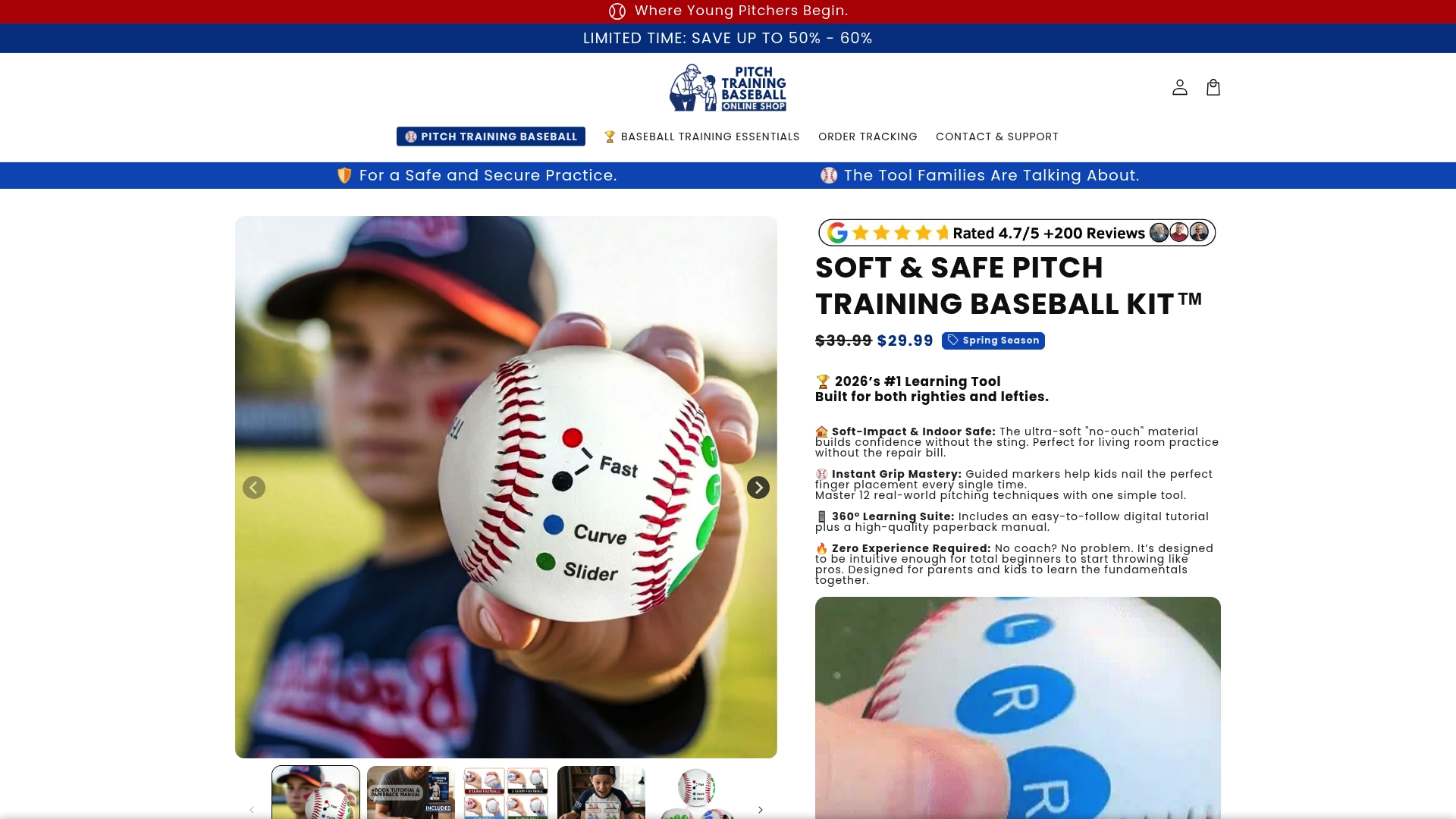
Pitchtrainingbaseball offers training equipment built specifically for youth pitchers who are working on the fundamentals. The Pitching Target Net with Strike 9-Zone gives pitchers a clear visual target that rewards proper posture and follow-through with accurate placement in the zone. When the mechanics are right, the ball hits the target. When posture breaks down, the miss is immediate and visible. That kind of feedback loop accelerates learning faster than verbal cues alone. Pitchtrainingbaseball also offers the core pitch training program for players ready to build a complete mechanical foundation from the ground up.
FAQ
What are the main benefits of proper pitching posture?
Proper pitching posture improves balance on the mound, increases power through efficient kinetic chain sequencing, and reduces stress on the shoulder and elbow. These three benefits directly improve both performance and long-term arm health.
How does posture affect pitching velocity?
Velocity is produced by ground force and hip-to-shoulder separation, not arm strength. Proper posture keeps the kinetic chain connected so the lower body and core drive the pitch, which produces more speed with less arm stress.
What is the most common posture mistake in youth pitchers?
Rushing the balance point is the most common error. Pitchers who fall toward home plate before loading the hip force the arm to compensate, which reduces accuracy and increases injury risk.
How many pitches should a young pitcher throw per outing?
Recommended limits are 50 pitches for ages 7–8, 75 for ages 9–10, and 85 for ages 11–12, with two to three months off overhead throwing each year to protect developing growth plates.
Can parents help monitor pitching posture at home?
Yes. Parents can watch for five warning signs: elbow drop, early shoulder opening, head tilt toward the plate, collapsing the drive leg, and the glove arm flying open. A phone video from the side of the mound captures all five in a single session.
Recommended
- Recommended Daily Pitching Habits for Youth Players – Pitch Training Baseball
- Why Physical Fitness for Young Pitchers Matters – Pitch Training Baseball
- Mastering proper pitching grip: boost youth baseball skills – Pitch Training Baseball
- Signs of Accurate Pitching Form: A 2026 Youth Guide – Pitch Training Baseball