


Hand-eye coordination matters because it links what your eyes see to what your hands do, and that connection shapes nearly every physical task you perform, from catching a baseball to driving safely to writing a grocery list. Neurological research, pediatric studies, and aging data from sources like Harvard Health and the CDC all point to the same conclusion: this skill is trainable, it declines without use, and the gap between good and poor coordination has real consequences for safety, learning, and performance.
Here is what to do with that information right now:
- If you are a parent or coach, watch for consistent struggles with catching, handwriting, or timed tasks. Those are early signals worth addressing.
- If you are an athlete, targeted drills can sharpen the timing loop between your eyes and hands faster than general fitness work alone.
- If you are an older adult, coordination-focused activities like racquet sports, tai chi, and juggling can help maintain independence.
- If daily tasks are genuinely impaired, skip the self-help phase and go straight to a professional evaluation.
Key Takeaways
Hand-eye coordination is a trainable skill that affects sports performance, academic outcomes, fall prevention, and daily independence across every age group.
| Point | Details |
|---|---|
| Coordination is trainable | Poor coordination is not fixed; targeted practice improves it at almost any age. |
| Academic link is real | Motor coordination predicted roughly 20% of variance in academic achievement in schoolchildren. |
| ADHD and motor deficits overlap | Up to half of children with ADHD may also meet criteria for DCD; gaze training helps. |
| Start with at-home checks | Wall-ball catches, coin-sort timing, and reaction-time apps give a useful baseline before seeing a clinician. |
| Use the 4-week plan | Begin with 10-minute sessions, 3 days per week, and track catch percentage or reaction time weekly. |
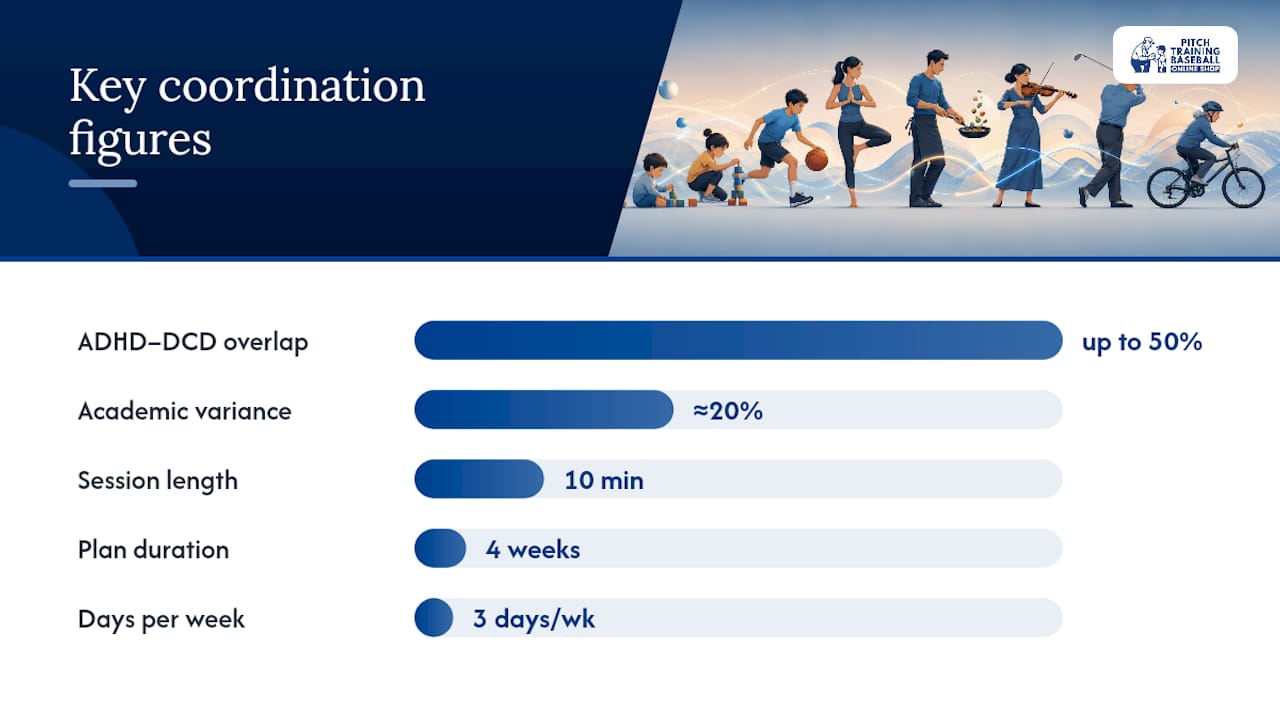
Table of Contents
- Why does hand-eye coordination matter so much?
- The real benefits of hand-eye coordination across sports, school, and daily life
- How hand-eye coordination looks in different groups
- How can you tell if hand-eye coordination needs attention?
- Practical ways to improve hand-eye coordination
- What vision therapy, occupational therapy, and structured training look like
- A 4-week beginner practice plan you can start today
- The compounding effect of small daily practice
- Sources
Why does hand-eye coordination matter so much?
The simplest definition: hand-eye coordination is your ability to use visual information to guide your hands in real time. Your eyes track a target, your brain plans a movement, your hands execute it, and sensory feedback from your muscles and joints tells your brain whether to adjust. That loop runs continuously, often in fractions of a second.
Think of it this way: your eyes act as GPS, your brain as the driver reading the map, and your hands as the car responding to the steering wheel. Break any link in that chain and the whole system loses precision.
The neural mechanism involves predictive gaze strategies. Your eyes typically fixate on a target slightly ahead of where your hand is moving, giving the motor system spatial data before it needs it. In high-accuracy tasks, planning time increases, which is why a pitcher staring down a strike zone takes a split second longer to commit than someone tossing a ball casually.
Two broad categories of tasks rely on this skill:
- Fine-motor tasks: handwriting, buttoning a shirt, threading a needle, typing, using a mouse or touchscreen
- Gross-motor tasks: catching, batting, throwing, dribbling, swinging a racquet, driving
Both categories matter. A child who struggles with fine-motor coordination may fall behind in classroom writing tasks. A youth athlete with poor gross-motor timing will struggle to make contact at the plate, no matter how hard they swing.
The real benefits of hand-eye coordination across sports, school, and daily life
The importance of hand-eye coordination shows up differently depending on where you look, but the payoffs are consistent across age groups and settings.
-
Sports performance. Batting a baseball is one of the most demanding visual-motor tasks in sports. The ball travels from the mound to the plate in roughly 400 milliseconds, and a hitter must decide whether to swing within the first 150 milliseconds. That timing depends entirely on how quickly and accurately the visual system feeds the motor system. Better coordination means earlier, more accurate reads on pitch trajectory.
-
Academic and fine-motor tasks. Visual-motor coordination predicts school performance in children ages 8–14, accounting for roughly 20% of the variance in academic outcomes in one cross-sectional study. Handwriting, drawing, cutting, and using classroom tools all require the same eye-to-hand loop that sports do.
-
Driving and activities of daily living. Steering, parking, and reacting to sudden hazards all depend on fast, accurate hand responses to visual input. The same applies to cooking, using tools, and managing personal care tasks.
-
Injury and fall prevention. Reaching out to catch yourself when you stumble requires a rapid visual-motor response. Older adults with declining coordination are at higher risk of falls, and the CDC links regular physical activity to reduced cognitive decline, which supports the neural systems underlying coordination.
-
Mood and social confidence. Children who struggle with coordination often avoid sports and group activities, which affects peer relationships and self-esteem. Improving coordination tends to open those doors back up.
Statistic to know: A cross-sectional study published in Frontiers in Psychology found that motor coordination scores predicted approximately 20% of variance in academic achievement among schoolchildren, a larger share than many teachers or parents expect.
How hand-eye coordination looks in different groups
Children
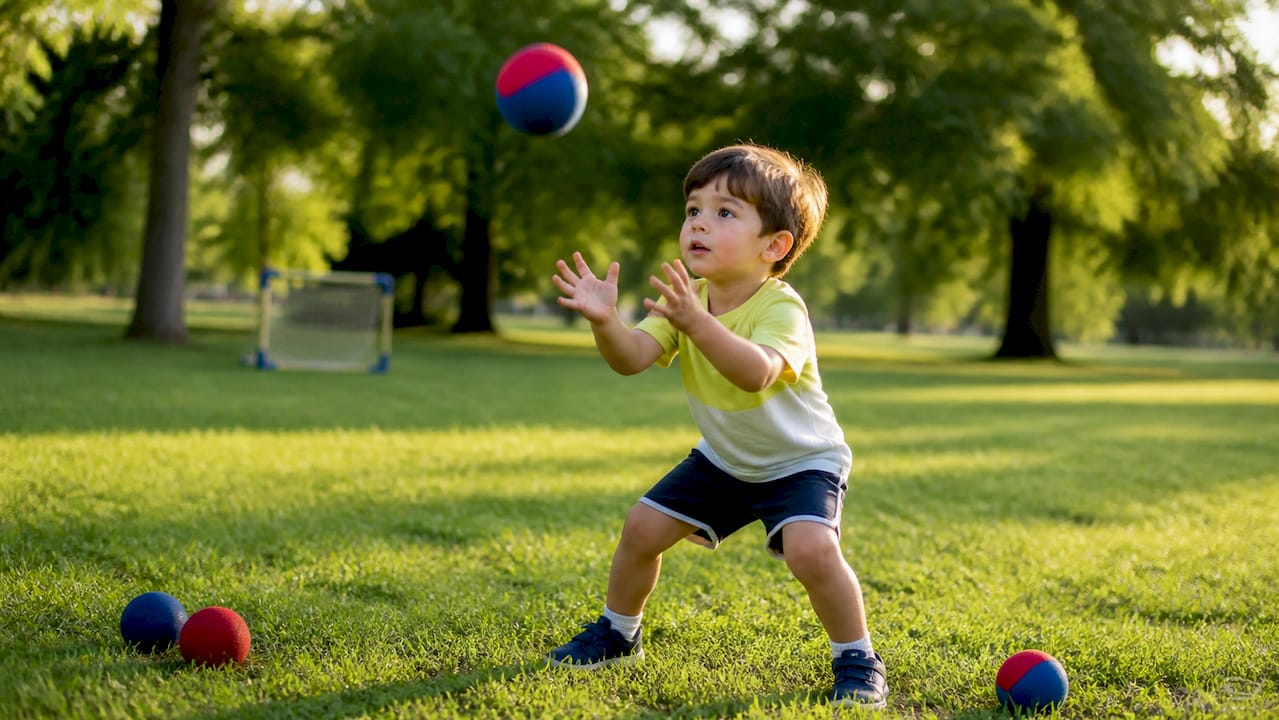
Coordination develops rapidly between ages 2 and 7, then continues refining through adolescence. Early gaps in fine-motor skills can affect handwriting, classroom participation, and self-confidence. Children with DCD frequently struggle with both fine and gross motor tasks, and the condition commonly co-occurs with ADHD.
People with ADHD
Children with ADHD show measurable fine-motor deficits and perform worse on timed coordination tasks like the Grooved Pegboard. In some clinical samples, up to half of children with ADHD also meet criteria for DCD. The underlying issue is often attentional rather than purely motor: the child’s gaze control is inconsistent, which disrupts the visual input the motor system needs. A 5-week quiet-eye training program produced significant improvements in fine visuomotor accuracy and attentional engagement in children with ADHD in a controlled trial, suggesting that training the gaze itself, not just the hands, is a productive intervention.
Youth athletes
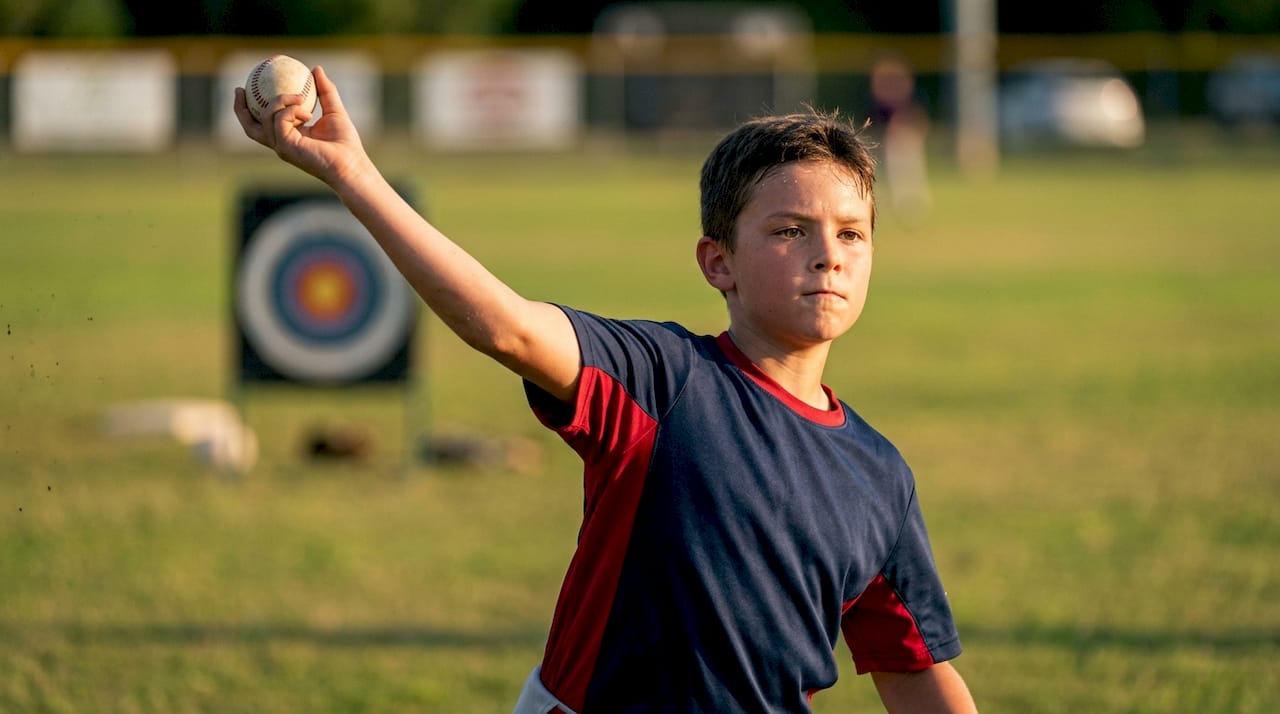
For young baseball players, sport-specific coordination practice transfers directly to performance. Catching, fielding, and batting all train the same visual-motor loop, and repetition builds the predictive gaze strategies that separate good hitters from great ones. The throwing accuracy drills and fielding progressions used in structured youth programs directly target this loop.
Older adults

Coordination naturally declines with age due to slower neural processing, reduced proprioceptive sensitivity, and, in some cases, small vascular changes in the brain. Harvard Health notes that targeted activities including racquet sports, tai chi, swimming, and juggling can improve eye-hand coordination and help older adults maintain independence. Tai chi in particular has shown coordination and cognitive benefits in clinical trials, according to the National Center for Complementary and Integrative Health.
How can you tell if hand-eye coordination needs attention?
Start with simple at-home checks before scheduling a clinical evaluation. Consistent difficulty on multiple tasks is more meaningful than a single bad day.
At-home checks to try:
- Toss a tennis ball against a wall and catch it with one hand, then the other. Note how many you drop out of 10.
- Time yourself completing a simple pegboard-like task: place 20 coins into a cup one at a time, alternating hands.
- Track your accuracy clicking small targets on a screen, or use a free reaction-time app for a baseline score.
- For children: watch whether they avoid activities that require catching, struggle with scissors or pencils, or frequently knock things over.
Clinical tests used by professionals:
- Grooved Pegboard Test: a timed task requiring precise placement of pegs into shaped holes; used by neuropsychologists, occupational therapists (OTs), and physical therapists (PTs).
- Beery-Buktenica Developmental Test of Visual-Motor Integration (Beery VMI): commonly used with children to assess visual-motor integration.
- Bruininks-Oseretsky Test of Motor Proficiency (BOT-2): a standardized battery used by OTs and PTs across age groups.
- Timed coordination tasks: used by pediatricians and neuropsychologists to screen for DCD or ADHD-related motor issues.
Red flags that warrant professional evaluation:
- A child who is significantly behind peers in catching, handwriting, or self-care tasks by school age
- Frequent unexplained falls or near-misses in an older adult
- Daily tasks (cooking, driving, dressing) becoming noticeably harder over months
- A known diagnosis of ADHD, DCD, or neurological condition where motor function has not been formally assessed
Pro Tip: Before your first clinical appointment, keep a one-week log of specific tasks that cause difficulty and how often. Clinicians can triage much faster with concrete examples than with general complaints.
Practical ways to improve hand-eye coordination
Targeted, regular practice produces measurable improvement across ages. General fitness helps, but sport-specific and vision-focused drills build the precise visual-motor loop faster.
Exercise categories and examples:
- Vision-focused drills. Quiet-eye practice: before throwing or catching, hold your gaze on the target for one full second before initiating movement. This trains the predictive gaze strategy the brain uses in high-accuracy tasks.
- Ball skills. Start with large, slow-moving balls and progress to smaller, faster ones. Wall-ball (throwing against a wall and catching the return) is one of the most efficient drills because it requires continuous adjustment.
- Fine-motor drills. Pegboards, bead threading, and coin-sorting tasks build the precision end of the spectrum. Ten minutes daily is enough to see progress within 3–4 weeks.
- Bilateral and midline-crossing activities. Juggling, drumming, and cross-body movements (touching right hand to left knee) train both hemispheres to coordinate, which transfers to most sports and many daily tasks.
- Digital drills. Reaction-time apps like Human Benchmark or sport-specific vision training platforms provide measurable baselines and track improvement over time.
Progression framework:
- Beginner (weeks 1–2): 10–15 minutes, 3 days per week. Large targets, slow pace, focus on accuracy over speed.
- Intermediate (weeks 3–4): 15–20 minutes, 4 days per week. Reduce target size or increase ball speed. Add a second task (e.g., call out the color of a ball before catching it).
- Advanced (weeks 5+): 20–30 minutes, 5 days per week. Sport-specific drills under mild time pressure. Track a measurable metric each session.
Most people notice a meaningful improvement in accuracy or reaction time within 4–6 weeks of consistent practice. Free options (wall-ball, coin-sorting, reaction apps) cost nothing. Low-cost equipment like a pitching target net or a set of practice balls adds structure and measurability to youth baseball drills. Professional therapy runs higher, but insurance may cover it under medical necessity.
Pro Tip: Short, frequent sessions beat long, infrequent ones. Ten minutes daily outperforms a 70-minute session once a week for building the neural pathways that underlie coordination.
Understanding neuromuscular efficiency helps coaches and parents see why coordination drills and strength work belong together, not in separate silos.
What vision therapy, occupational therapy, and structured training look like
Professional therapy is worth considering when everyday tasks are genuinely impaired or when self-guided practice stalls after 6–8 weeks without progress.
Three main professional options:
- Vision therapy: Led by a developmental optometrist. Focuses on the visual processing side of the loop: eye tracking, convergence, fixation stability, and visual-motor integration. Common for children with reading or handwriting difficulties tied to visual-motor deficits. Sessions typically run 45–60 minutes, once a week, over 3–6 months. Outcomes are measured with standardized visual-motor tests.
- Occupational therapy: Led by a licensed OT. Addresses the full sensory-motor picture, including proprioception, fine-motor control, and daily-life function. Commonly used for children with DCD, ADHD, or developmental delays, and for older adults recovering from strokes or managing age-related decline. Frequency and duration vary by diagnosis and insurance coverage.
- Sports vision training: Led by a sports vision specialist or certified coach. Targets the specific visual-motor demands of a sport, including reaction time, dynamic visual acuity, and gaze control under pressure. Most relevant for competitive athletes who have plateaued with standard skill work.
Questions to ask any provider before starting:
- What standardized tests will you use to measure my baseline and track progress?
- How many sessions do you typically recommend before reassessing?
- Does my insurance cover this under a medical necessity code?
- What can I do between sessions to reinforce progress?
The CDC’s guidance on physical activity and brain health supports exercise-based programs broadly, and coordination-focused activities appear to add cognitive benefit beyond general aerobic work alone.
Pro Tip: Ask for a written progress report after every 6–8 sessions. Providers who track outcomes with standardized measures are easier to evaluate and more likely to adjust the program when something is not working.
A 4-week beginner practice plan you can start today
Four weeks of consistent, targeted practice can produce a measurable improvement in catching accuracy, reaction time, or fine-motor speed. The plan below works for children (with adult supervision), youth baseball players, and older adults with minor modifications.
Weekly layout:
-
Week 1 (Foundation, 3 days/week, 10 minutes/session):
- Wall-ball catch: 3 sets of 10 throws, dominant hand only. Focus on watching the ball all the way into your hand.
- Coin sort: place 20 coins into a cup one at a time, timed. Record your baseline.
- Quiet-eye drill: before each throw, hold your gaze on the target for 1 full second.
-
Week 2 (Add non-dominant hand, 3–4 days/week, 12 minutes/session):
- Wall-ball catch: alternate hands each set.
- Coin sort: switch to non-dominant hand. Compare times.
- Add a reaction-time app baseline (Human Benchmark or similar).
-
Week 3 (Increase difficulty, 4 days/week, 15 minutes/session):
- Reduce ball size or increase throw distance.
- Add a color-call task: call out a color before catching.
- Fine-motor: bead threading or pegboard, timed, both hands.
-
Week 4 (Sport-specific or task-specific, 4–5 days/week, 15–20 minutes/session):
- Youth baseball players: accuracy throwing drills with a target net, 3 sets of 10 throws. Track hits per set.
- Older adults: tai chi warm-up (10 minutes) followed by wall-ball or coin sort.
- Children: juggling scarves or balloon-tapping to build bilateral coordination.
Metrics to track each week:
- Catch percentage (catches made / throws attempted)
- Coin-sort time (seconds, dominant and non-dominant hand)
- Reaction-time app score (milliseconds)
Adaptation notes:
- Children under 8: use larger, softer balls and shorter sessions (5–7 minutes). Prioritize fun over precision.
- Youth baseball players: tie every drill to a baseball context. A training glove and a target net add game-realistic feedback.
- Older adults: sit for fine-motor drills if standing balance is a concern. Progress slowly and prioritize consistency over intensity.
For parents choosing gear, this guide on training aids in youth sports covers what to look for in age-appropriate equipment.
The compounding effect of small daily practice
The most underestimated thing about coordination training is how much a short daily habit compounds. Ten minutes of deliberate, targeted practice, done consistently, builds neural pathways faster than occasional long sessions because the brain consolidates motor learning during rest between sessions, not during the session itself.
What this means practically: the 4-week plan above is not a sprint. It is the beginning of a habit. Athletes who build coordination practice into their daily warm-up routine, even for 10 minutes before a full workout, tend to see the biggest long-term gains. Children who practice catching and fine-motor tasks at home, separate from team practice, close the gap with peers faster than those who rely on one weekly session.
Poor coordination is not a fixed trait. Neurologists and clinicians are clear on this: it is a trainable skill at almost any age. The research on quiet-eye training, tai chi, and structured motor programs all point in the same direction. Start small, track something measurable, and add difficulty gradually.
For youth baseball players, the connection between coordination and pitching performance is direct. Pitchtrainingbaseball’s training tools are built around exactly this principle: safe, repeatable practice that builds the visual-motor loop through consistent, measurable reps.
Sources
- Activities to sharpen your eye‑hand coordination - Harvard Health
- Fine motor deficits and attention deficit hyperactivity disorder in primary school children - PMC
- Motor coordination, cognitive function and academic achievement in schoolchildren - Frontiers in Psychology
- Boost brain health — Centers for Disease Control and Prevention (CDC)
Recommended
- Mastering proper pitching grip: boost youth baseball skills – Pitch Training Baseball
- Why Invest in Youth Sports Equipment: A Parent’s Guide – Pitch Training Baseball
- Why Proper Pitching Technique Matters for Young Players – Pitch Training Baseball
- Arm Strength in Young Players: A 2026 Parent and Coach Guide – Pitch Training Baseball