


Portable training aids are the single most practical investment a parent or coach can make for a young pitcher. They deliver more quality reps, immediate “felt feedback,” and safer solo practice than waiting for field time ever will. Research on youth neuroplasticity confirms that childhood and early adolescence are the window when correct mechanical neural pathways form fastest, and the tool that triggers that formation is immediate, physical feedback, not a coach’s voice from 60 feet away.
The core case for portable aids, in three lines: Accessibility: practice happens in a backyard, garage, or park, not just at a scheduled field session. Feedback: a strike target or containment net tells a pitcher instantly whether the throw was on or off. Safety: containment prevents property damage and lets young arms throw at full effort without hesitation.
Three things make portable aids worth the money right now:
- Accessibility — no field, no teammate, no travel required
- Immediate feedback — the aid responds to every throw, not just the ones a coach catches
- Safety and containment — full-effort throws without worrying about windows or neighbors
Table of Contents
- Why portable training aids matter more than extra field time
- Are portable aids as effective as fixed or field training?
- Which portable aid fits which training scenario?
- What to look for when buying a portable training aid
- Six drills that work in a 10’ x 10’ space
- Safety rules, age guidance, and keeping gear in shape
- What does it cost, and when will you see results?
- Pitchtrainingbaseball products that match this guide
- Key Takeaways
- A coach’s honest take on portable aids
- Get started with Pitchtrainingbaseball gear
- Useful sources for parents and coaches
Why portable training aids matter more than extra field time
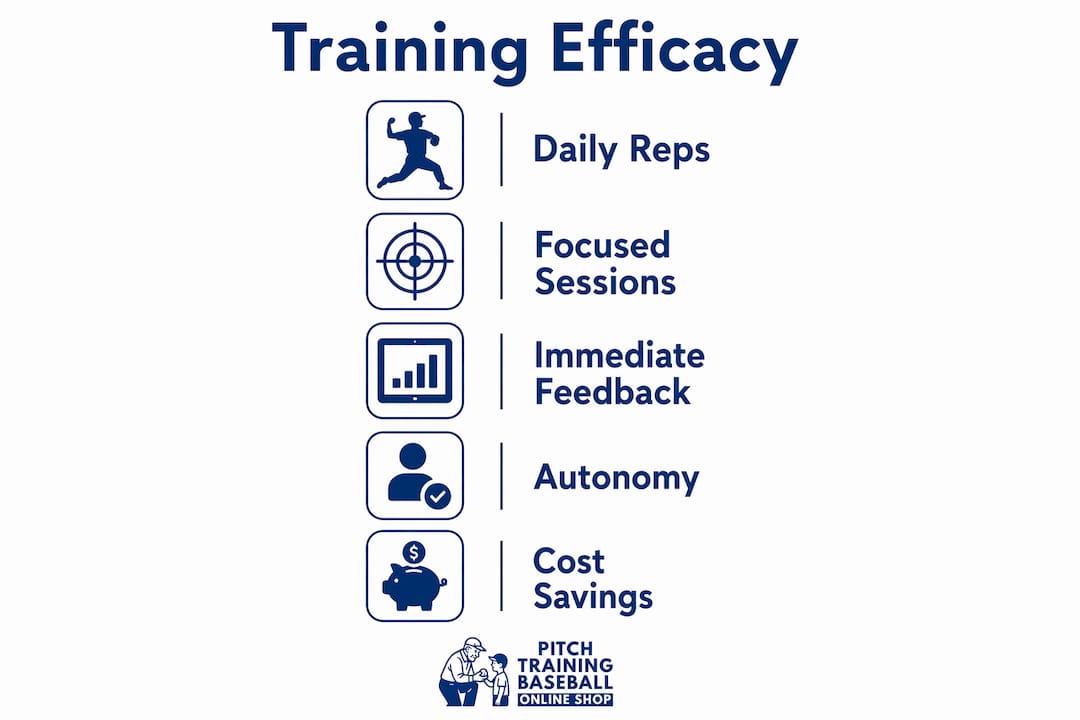
The biggest friction point in youth pitching development is not talent. It is repetitions. A typical team practice gives a pitcher a limited number of throws before the session moves on. A portable net and strike target in the backyard can deliver that same volume in under ten minutes, every single day.
Short daily sessions of focused practice consistently outperform one long weekly workout. Portability is what makes that consistency possible: when setup takes under five minutes and teardown is quick, there are no excuses to skip. Families with busy schedules get the same developmental edge as players with access to year-round facilities.
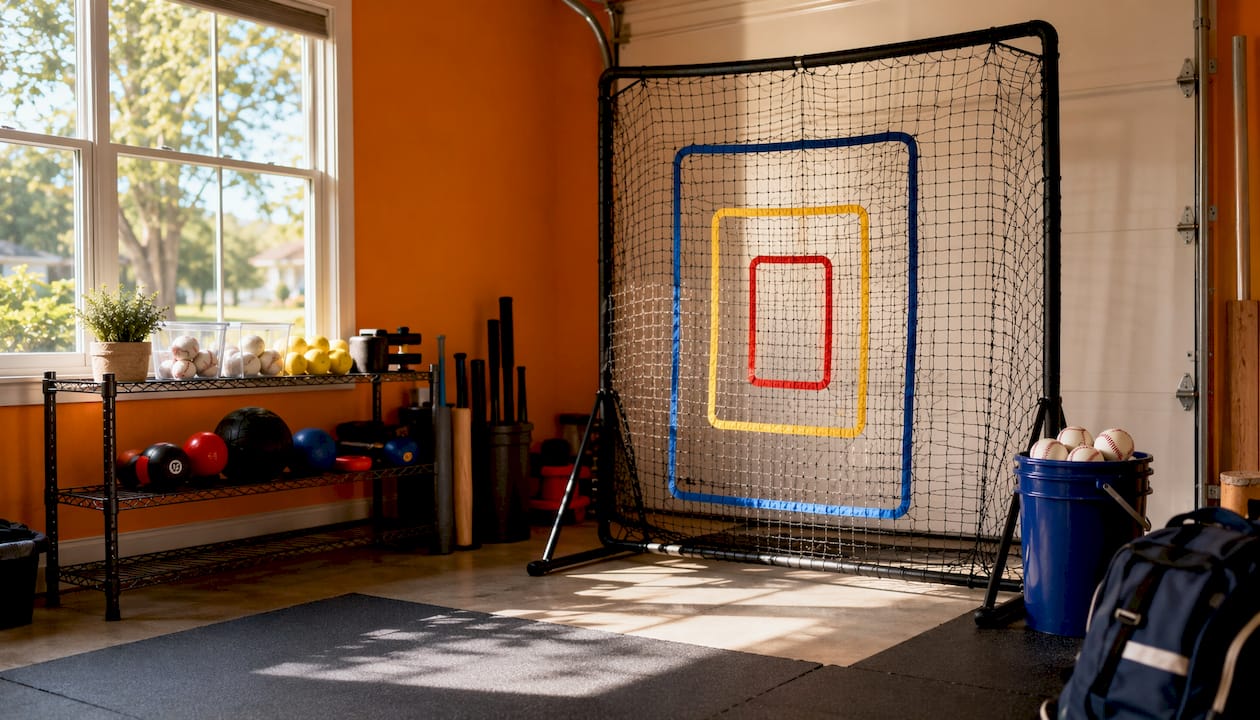
Cost matters too. Repeated cage rentals or private lesson fees add up fast. A mid-range portable net and a set of training balls pay for themselves within a few weeks of regular use.
Pro Tip: Set the net up before dinner and leave it out. A pitcher who sees the target every evening will throw at it. Out of sight genuinely means out of habit.
Are portable aids as effective as fixed or field training?
The short answer: yes, when the design is right. Modern collapsible frames can match field-level stability in a footprint as small as 10’ x 10’. “Portable” no longer means wobbly or flimsy.
The science behind the reps: Tools that force correct mechanics and deliver immediate physical feedback produce measurable improvements in technique, as explained in detail in why eccentric loading builds explosiveness in athletes. Specialized training tools, from strike-zone targets to constrained-flight balls, accelerate skill acquisition by giving the nervous system a clear signal after every throw, something a coach watching from the side cannot replicate at the same frequency.
Coaches increasingly recognize that a lightweight, tool-free portable setup also builds athlete autonomy. When a 10-year-old can set up the station alone and run a drill without adult help, ownership of the practice transfers to the player. That ownership is what turns a drill into a habit.
Which portable aid fits which training scenario?
| Aid Type | What It Trains | Best Setting | Feedback Type | Age Range |
|---|---|---|---|---|
| Pitching net (containment) | Arm action, effort, containment | Backyard, garage | Immediate (ball stops) | 7+ |
| Strike-zone target (9-zone) | Accuracy, zone control | Backyard, park | Immediate (visual hit) | 8+ |
| Batting tee + net | Swing mechanics, contact | Garage, basement | Immediate (contact feel) | 6+ |
| Soft/foam training balls | Safe indoor volume reps | Any indoor space | Immediate (feel) | 6–10 |
| Pickeballs | Pitching volume, arm speed | Backyard, park | Immediate (flight path) | 8+ |
Families with limited space consistently choose compact portable setups because they store flat and move to a park when the weather cooperates. A strike target paired with a containment net covers accuracy and safety in one purchase.
What to look for when buying a portable training aid
Not every portable net or target is built the same. Run through this checklist before buying:
- Stability and anchoring — Does the frame include ground stakes or a weighted base? A net that tips over mid-session is a safety hazard and a rep-killer.
- Netting material — Look for knotted or reinforced mesh. Thin netting tears after a season of hard throws.
- Frame construction — Fiberglass or heavy-gauge steel poles outlast thin aluminum in outdoor conditions.
- Footprint — Measure your space first. A 7’ x 7’ net fits most garages; a 10’ x 10’ backyard setup handles full-effort pitching.
- Setup time — Tool-free assembly under five minutes is the standard for aids that actually get used.
- Portability features — A carry bag and a frame under 15 lbs means it travels to clinics and parks without a second thought.
- Durability for transport — Reinforced pole connectors and a padded bag protect the frame from car-trunk wear.
- Age and safety markings — Manufacturer guidance on ball type (foam vs. rubber vs. leather) by age protects young arms.
When space is the constraint, prioritize smallest footprint and fastest setup. When the player is under 10, prioritize soft-ball compatibility and low anchor weight.
Six drills that work in a 10’ x 10’ space
A solid home training station pairs a net with a strike target and a bucket of training balls. That combination covers most of the drills below.
Setup checklist: flat surface, net staked or weighted, 3-foot safety buffer behind the pitcher, age-appropriate balls ready.
Micro-session principle: Focused practice sessions over time improve skills. Pick two drills per session and track progress consistently.
- Zone accuracy sequence (ages 8+) — Throw 10 pitches targeting the low-outside zone of a 9-zone target. 3 sets. Tracks location control.
- Pickleball volume program (ages 8+) — 30 throws with pickeballs at 70% effort. Builds arm speed and release feel without overloading the elbow.
- Tee front-toss progression (ages 6+) — Tee contact, then soft front toss into the net. 3 sets of 8. Develops contact mechanics.
- Quick-release pitch accuracy (ages 10+) — Catch a soft toss, set, and throw to the target in under two seconds. 3 sets of 6. Trains game-speed release.
- Rebounder reaction throws (ages 9+) — Throw into a rebounder net and field the return. 2 sets of 10. Builds fielding reflex and footwork.
- Catch-and-release fielding (ages 8+) — Partner rolls a ball, player fields and throws to target. 2 sets of 8. Connects fielding to throwing accuracy.
Pro Tip: Film one set per session on a phone. Watching a 30-second clip after practice is the cheapest feedback loop available, and kids actually enjoy reviewing their own mechanics.
Safety rules, age guidance, and keeping gear in shape
Portable nets contain errant throws and let young pitchers throw at full effort without hesitation. That confidence is a real performance benefit, not just a safety nicety.
- Under age 10: use foam or soft rubber balls only; no hard leather balls indoors
- Under age 12: adult supervision during every session
- All ages: Maintain sufficient clearance behind and to the sides of the pitcher for safety
- Anchoring: always stake or weight the base before throwing; an unanchored net tips under hard throws
- After each session: dry the netting before storing to prevent mold and fiber breakdown
- Monthly check: inspect pole connectors, netting seams, and anchor points for wear
For youth injury prevention, follow pitch-count guidelines and never push through arm soreness. Portable aids make it easy to over-practice, so build rest days into the weekly schedule.
Pro Tip: Replace anchor stakes at the start of each season. Bent or rusted stakes are the most common cause of net tip-overs, and replacements cost almost nothing.
What does it cost, and when will you see results?
| Price Band | Typical Features | Expected Timeline |
|---|---|---|
| Entry ($35–$60) | Basic net, minimal anchoring, no target | 6–12 weeks with daily use |
| Mid-range ($60–$100) | Reinforced net, strike-zone target, carry bag | 4–8 weeks with daily use |
| Premium ($100+) | Heavy-gauge frame, full 9-zone target, ground stakes, storage bag | 4–6 weeks with daily use |
The timeline reality: Consistent micro-sessions of 15–20 minutes daily produce measurable mechanical gains in 4–12 weeks. The variable is not the price of the gear. It is whether the setup is easy enough that practice actually happens every day.
Mid-range gear covers the needs of most youth pitchers ages 8–14. The return on investment in youth sports equipment compounds quickly when daily reps replace weekly field trips.
Pitchtrainingbaseball products that match this guide
Pitching Target Net with Colorful Strike 9-Zone
The Pitching Target Net with Colorful Strike 9-Zone is the anchor product for any backyard pitching station. Nine color-coded zones give pitchers immediate visual feedback on every throw. It fits the mid-range price band, sets up tool-free, and includes anchoring hardware. Best for ages 8 and up working on zone control.
Pitch Training Softball
The Pitch Training Softball is designed for youth players who need a safe, durable ball for high-volume indoor and outdoor sessions. Firm enough to give real flight feedback, soft enough for younger arms. Pairs directly with the containment net for daily accuracy work.
5 Pickeballs
The 5 Pickeballs pack is built for volume. Pickeballs are lightweight training balls that develop arm speed and release mechanics without the load of a full baseball. Ideal for the pickleball volume drill above, ages 8 and up, and easy to store in any gear bag.
| Product | Stability | Footprint | Setup Time | Best Use Case |
|---|---|---|---|---|
| Pitching Target Net (9-Zone) | High (staked) | 10’ x 10’ | Under 5 min | Zone accuracy, backyard/park |
| Pitch Training Softball | N/A | Pocket-size | Instant | Indoor/outdoor volume reps |
| 5 Pickeballs | N/A | Pocket-size | Instant | Arm speed, volume pitching |
All three products ship with Pitchtrainingbaseball’s standard packaging protection and are backed by the brand’s return policy. Product specs and current availability are listed on each product page.
Key Takeaways
Portable training aids deliver more quality reps, immediate feedback, and safer solo practice than field time alone, making them the highest-leverage tool for youth pitchers ages 8–14.
| Point | Details |
|---|---|
| Daily micro-sessions consistently outperform less frequent long sessions for mechanical gains. | |
| Portability removes friction | Tool-free setup under 5 minutes means practice actually happens consistently. |
| Safety enables full effort | Containment nets let young pitchers throw hard without hesitation, improving rep quality. |
| Timeline is 4–12 weeks | Measurable mechanical improvement arrives in 4–12 weeks with consistent daily use. |
| Pitchtrainingbaseball starter set | The 9-Zone Target Net plus 5 Pickeballs covers accuracy and volume training in one purchase. |
A coach’s honest take on portable aids
The argument against portable aids usually goes like this: “Nothing replaces real game reps.” That is true. But it misses the point entirely. The question is never portable aids versus game reps. It is portable aids versus doing nothing on the six days between practices.
What I have seen consistently is that the players who improve fastest are not the most talented. They are the ones who throw every day, even for fifteen minutes, even in a driveway. Portable aids make that possible for families who cannot afford daily lessons or live 40 minutes from the nearest cage. The coaching methods that work best pair structured team practice with autonomous home reps, and portable aids are the bridge between those two environments.
One more thing worth saying: athlete autonomy matters. A kid who sets up their own net, runs their own drill, and tracks their own zone hits is building something beyond pitching mechanics. They are building the habit of self-directed practice, which is the real long-term edge.
Get started with Pitchtrainingbaseball gear
The fastest way to build a home pitching station is a net-plus-balls bundle. Pitchtrainingbaseball’s Pitching Target Net with Colorful Strike 9-Zone paired with the 5 Pickeballs gives you everything needed for the zone accuracy and volume drills in this guide, in a package that fits a backyard or garage and ships ready to use.
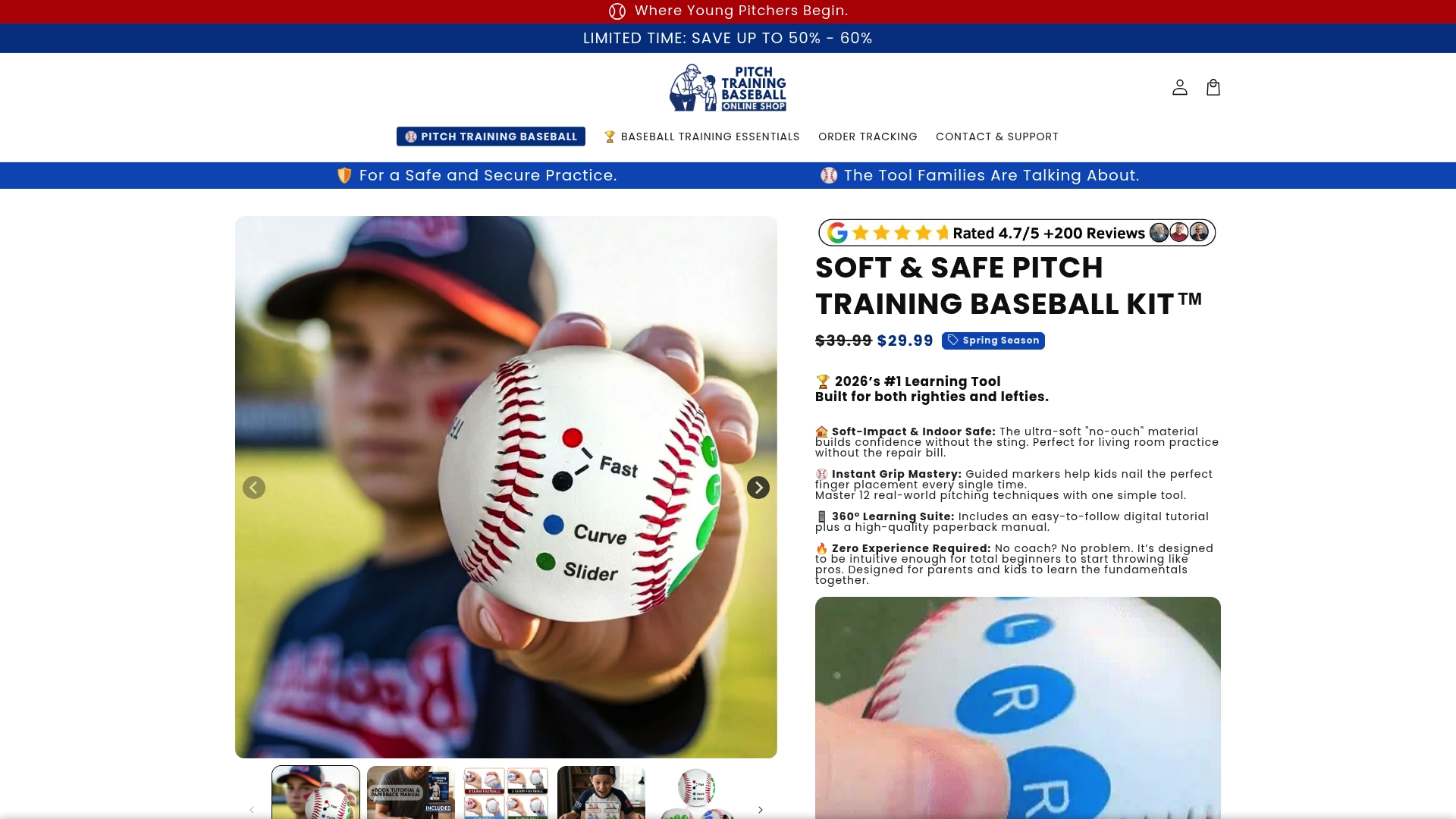
Three steps to your first session: order the bundle, spend five minutes on setup following the included guide, and run the zone accuracy sequence and pickleball volume drill back-to-back for two weeks. That is your baseline. From there, add the Pitch Training Softball for indoor days and you have a complete year-round system. Browse the full lineup at Pitchtrainingbaseball and pick the setup that fits your space and budget.
Useful sources for parents and coaches
| Source | What It Covers |
|---|---|
| Science-Backed Guide to Baseball Training Tools | Neuroplasticity, immediate feedback, and tool-driven skill acquisition for youth players |
| Best Baseball Training Aids for Youth Players | Micro-session frequency, consistency research, and product category guidance |
| Portable Baseball Nets Guide | Setup, anchoring, containment, and athlete autonomy with portable nets |
| At-Home Baseball Training Station Setup | Space planning, stability advances, and solo pitching station recommendations |
| Benefits of Portable Baseball Training | Pitchtrainingbaseball’s own guide to portable training benefits for young athletes |
| Safe Baseball Training for Youth | Injury prevention, pitch counts, and age-appropriate safety practices |
Recommended
- Benefits of Portable Baseball Training for Young Athletes – Pitch Training Baseball
- The Real Role of Adjustable Pitching Trainers – Pitch Training Baseball
- Top pitching workouts for youth baseball: build skill safely – Pitch Training Baseball
- Training Aids in Youth Sports: A 2026 Parent and Coach Guide – Pitch Training Baseball