


Follow-through in pitching is defined as the final phase of the delivery where the pitcher’s body continues moving forward after ball release to safely decelerate the arm and absorb force. This phase is recognized as phase six in pitching biomechanics frameworks, making it the closing act of every pitch. Young pitchers, coaches, and parents who understand follow-through mechanics gain a direct advantage in both performance and arm health. Skipping or shortening this motion is one of the most common and damaging mistakes in youth baseball. This guide explains what follow-through is, why it matters, and how to build it correctly from the ground up.
What is follow through in pitching?
Follow-through in pitching is the continuation of the arm and body’s motion after the ball leaves the hand. The pitcher does not stop at release. The arm swings down and across the body, the trunk rotates forward, and the weight shifts fully onto the front leg. This sequence is not optional. It is the body’s natural braking system.
The kinetic chain describes how energy flows from the legs through the hips, trunk, and arm during a pitch. Follow-through is where that chain ends. Without a complete finish, the energy generated by the lower body has nowhere to go, and the shoulder and elbow absorb the excess force instead. That is the root cause of most pitching injuries in young players.
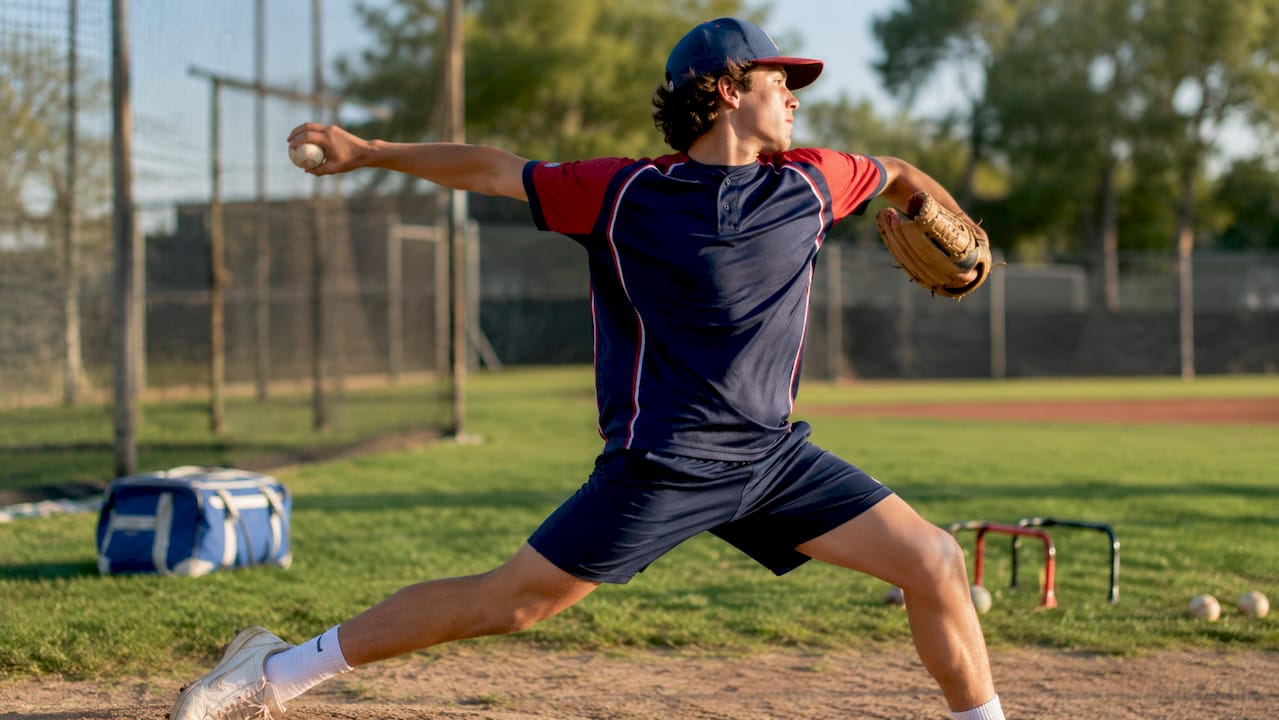
A proper follow-through also leaves the pitcher in a balanced, athletic stance. After the arm finishes across the body, the pitcher’s feet are roughly shoulder-width apart, weight centered, and eyes on the batter. That position matters for defense. A pitcher who cuts the motion short often stumbles or falls off the mound, leaving them unable to field a ground ball or line drive.
Pro Tip: Watch your pitcher from the side during bullpen sessions. If their throwing arm stops above the waist after release, their follow-through is incomplete. The hand should finish near the opposite hip or thigh.
What are the mechanical components of proper pitching follow-through?
Proper follow-through mechanics involve the entire body, not just the arm. Each component works together to complete the pitch safely and set up the next play.
- Full arm extension through release. The arm reaches maximum extension toward the target just before the ball leaves the hand. This extension maximizes velocity and sets the arm on the correct path for deceleration.
- Arm sweeping across the body. After release, the throwing arm continues downward and across the torso, finishing on the outside of the opposite hip. This path is the natural deceleration route for the shoulder.
- Trunk rotation completing forward. The chest and shoulders rotate fully toward the target. Stopping trunk rotation early forces the arm to do extra work, which increases joint stress.
- Weight transfer from back leg to front leg. Body momentum shifts entirely onto the plant foot. The back leg lifts naturally and swings forward as a counterbalance.
- Plant leg absorbing force. The front leg acts as a brace. It bends slightly to absorb the forward momentum of the body and prevents the pitcher from falling toward the plate.
- Balanced fielding position at finish. The balanced fielding stance after follow-through positions the pitcher to react to any batted ball immediately.
Each of these elements connects to the next. A breakdown in one, such as stopping the trunk rotation early, creates a chain reaction that throws off the arm path and the final balance point.
Pro Tip: Have young pitchers practice the finish position as a static pose first. Hold the end position for three seconds after each throw during warm-ups. This builds body awareness before adding speed.
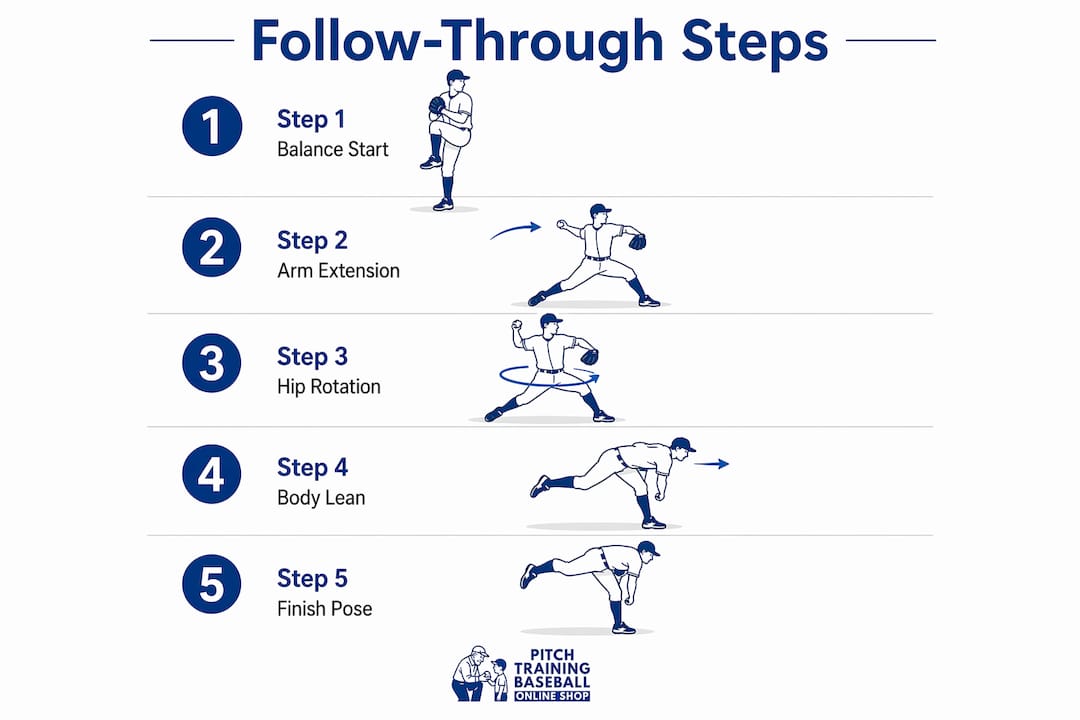
The arm finishing across the body is the most visible sign of a complete follow-through. Coaches and parents can spot it from the stands. If the throwing hand ends up near the glove-side hip, the motion is complete. If the arm stops at chest height or swings outward instead of across, something in the chain broke down.
Why is follow-through important for injury prevention and performance?
Follow-through protects the shoulder and elbow by spreading the deceleration force across the entire body instead of concentrating it in the joints. The arm generates enormous speed during a pitch. Without a controlled finish, the muscles and tendons around the shoulder must absorb all of that force alone.
Cutting the follow-through short increases mechanical stress on the shoulder and elbow by up to 30%. That single habit, repeated over hundreds of pitches, is a direct path to overuse injuries like Little League elbow and rotator cuff damage.
That 30% figure is not abstract. For a young pitcher throwing 50 pitches per practice session, a short follow-through means 50 repetitions of excess joint loading. Over a full season, that accumulates into serious injury risk. The kinetic chain disruption caused by poor follow-through also leads to energy leaks that reduce velocity and accuracy at the same time.
Follow-through also directly affects pitch control. When the arm finishes on a consistent path across the body, the release point stays repeatable. A repeatable release point means the ball goes where the pitcher intends. Pitchers who cut their follow-through short often develop inconsistent release points, which shows up as wildness in the strike zone.
The defensive benefit is real too. A pitcher in a balanced stance after follow-through can field a comebacker or cover first base without an extra step to regain balance. Pitchers who fall off the mound after release are a liability in the field. Proper follow-through solves both problems at once.
Building proper pitching technique from an early age creates habits that protect young arms through high school and beyond. The follow-through is not a finishing touch. It is a load-bearing part of the entire motion.
How can young pitchers improve their follow-through technique?
Building a reliable follow-through takes deliberate practice with specific drills. Two drills stand out for youth pitchers because they isolate the mechanics without requiring full-effort throws.
-
Knee Drill. The pitcher kneels on the throwing-side knee and throws to a partner or target from that position. Kneeling removes the lower body from the equation and forces the pitcher to focus entirely on arm action and follow-through. The Knee Drill is recommended for 20–30 pitches per training session. It builds the muscle memory of the arm sweeping across the body without the distraction of footwork.
-
Towel Drill. The pitcher holds a small towel in the throwing hand and goes through the full pitching motion, snapping the towel toward a target. The Towel Drill grooves extension and deceleration mechanics safely at 15–20 reps per session. Because there is no ball, the pitcher can focus entirely on the feel of the arm path and the finish position without worrying about velocity or accuracy.
-
Mirror Drill. The pitcher stands in front of a full-length mirror and goes through the motion in slow motion, pausing at the finish. This drill builds visual awareness of what the finish position looks and feels like. Coaches can use video on a phone to achieve the same result.
-
Balance Finish Drill. After each throw in a bullpen session, the pitcher holds the finish position for a count of three before stepping off the mound. This trains the body to complete the motion rather than rush to reset.
-
Over-exaggerated follow-through reps. Coaches encourage deliberate, extended finishes during drill work to build muscle memory. Exaggerating the arm sweep past the hip and holding the trunk rotation teaches the body what a full finish feels like. Once the exaggerated version becomes natural, the game-speed version falls into place.
Pro Tip: Keep drill sessions short and focused. Ten minutes of deliberate follow-through work at the start of practice beats an hour of full-effort throwing with bad habits. Consistency over weeks builds lasting mechanics.
Tracking daily pitching habits alongside drill work helps coaches and parents see progress over time. A pitcher who logs their reps and notes how their finish feels each session develops self-awareness faster than one who just throws without reflection.
What are common follow-through mistakes and how to fix them?
Young pitchers make predictable errors in follow-through. Knowing what to look for makes correction faster for coaches and parents.
| Mistake | What it looks like | How to fix it |
|---|---|---|
| Cutting the arm short | Throwing hand stops at chest or shoulder height after release | Towel Drill, 15–20 reps focusing on arm sweeping past hip |
| Poor weight transfer | Pitcher stays on back leg or falls toward plate | Balance Finish Drill, hold finish for 3 seconds each rep |
| Arm swinging outward | Throwing arm finishes away from body instead of across torso | Knee Drill, 20–30 reps isolating arm path |
| Trunk stopping early | Chest faces third base side instead of target at finish | Mirror Drill in slow motion, coach cues “chest to target” |
| Drifting off the mound | Pitcher’s body moves sideways instead of toward target | Draw a straight line on the mound, practice staying on it |
The most damaging mistake is cutting the follow-through short. It is also the most common. Young pitchers often do it because they are focused on the result of the pitch rather than the motion itself. Coaches can redirect that focus with a simple cue: “Finish the pitch, then watch where it goes.”
Common signs coaches and parents should watch for during practice include:
- The throwing elbow rising above the shoulder after release
- The pitcher’s back foot never leaving the rubber
- The glove arm collapsing instead of pulling back toward the hip
- The pitcher losing balance and stepping sideways after the throw
Each of these signs points to a specific breakdown in the follow-through chain. Addressing them one at a time, using the drills above, produces faster results than trying to fix everything at once. Pairing drill work with youth pitching performance assessment gives coaches a clear picture of which errors are improving and which need more attention.
Key Takeaways
Proper follow-through is the single most important habit a young pitcher can build to protect arm health and improve performance at the same time.
| Point | Details |
|---|---|
| Follow-through definition | The final phase of pitching where the body decelerates safely after ball release. |
| Injury prevention impact | Cutting follow-through short increases shoulder and elbow stress by up to 30%. |
| Key drills to build it | The Knee Drill (20–30 reps) and Towel Drill (15–20 reps) are the most effective starting points. |
| Most common mistake | Stopping the arm at chest height after release, which concentrates force in the joints. |
| Defensive benefit | A complete follow-through leaves the pitcher balanced and ready to field immediately. |
What I’ve learned coaching follow-through that most guides skip
Most pitching guides treat follow-through as the last item on a checklist. In my experience coaching youth players, it is actually the first thing worth fixing. When a young pitcher cleans up their finish, everything upstream in the motion tends to improve on its own. The arm path gets cleaner. The release point gets more consistent. The velocity ticks up without any extra effort.
The hardest part is getting young athletes to slow down. Kids want to throw hard. They want to see the ball pop the catcher’s mitt. Asking them to focus on what happens after the ball leaves their hand feels counterintuitive. The way I frame it: the follow-through is what tells your arm it is safe to throw hard again next pitch. When the body learns to finish properly, it stops protecting itself by holding back.
Parents play a bigger role here than they often realize. A parent who watches for the finish position during catch in the backyard and gives a simple cue like “finish across your body” reinforces what coaches teach at practice. That repetition between sessions is where real habit formation happens. Integrating safe pitching workouts at home with proper follow-through focus accelerates development faster than practice alone.
The pitchers I have seen develop the fastest are not the ones with the most natural talent. They are the ones whose coaches and parents stayed consistent with the fundamentals, including the finish, every single session.
— Albert
Training tools that make follow-through practice easier
Building a reliable follow-through requires the right environment for repetition. A backyard or gym setup with a quality target gives young pitchers a place to practice the Towel Drill and Knee Drill without needing a full team or field.
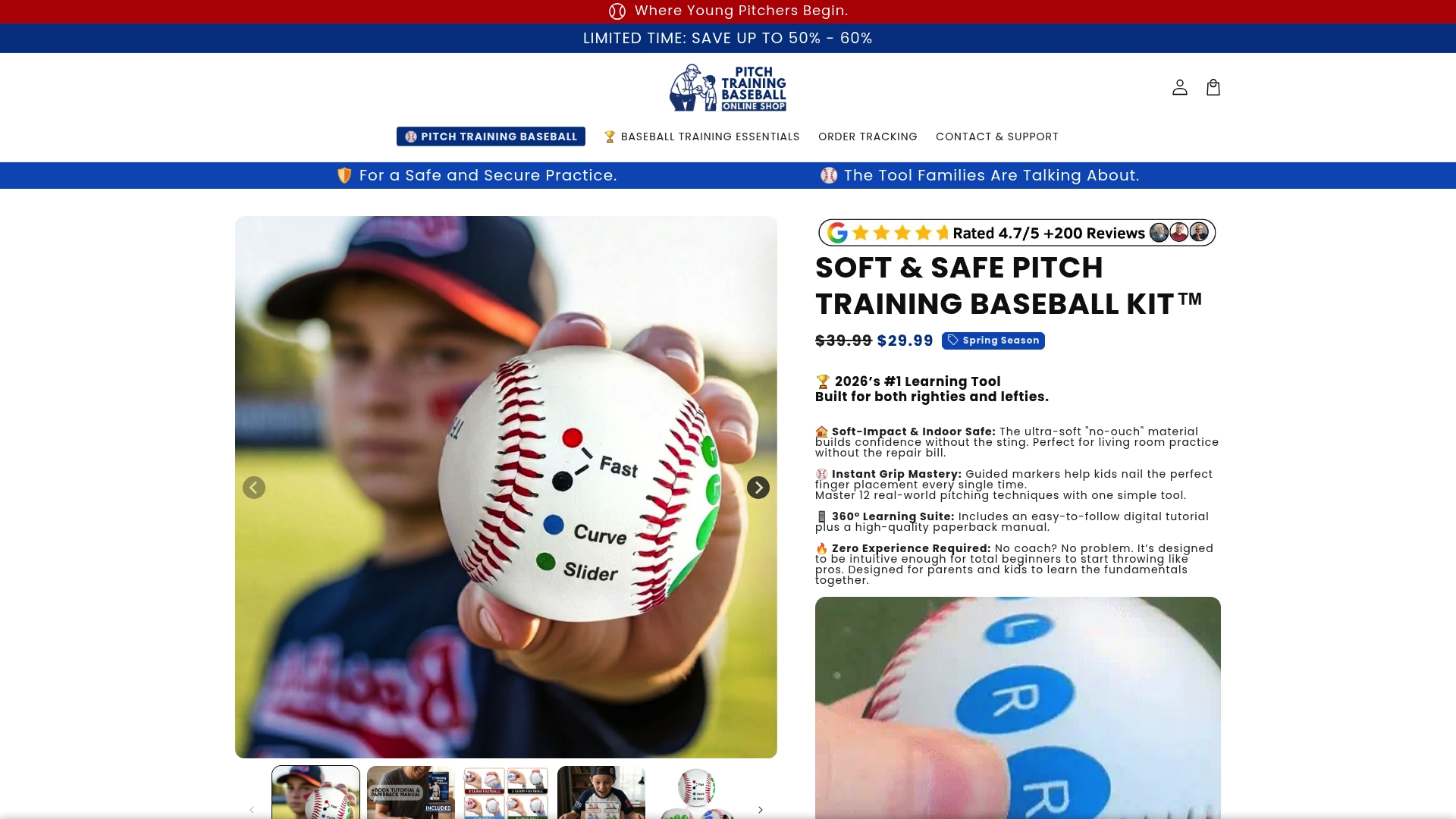
Pitchtrainingbaseball offers training tools built specifically for youth mechanics development. The Pitching Target Net with Strike 9-Zone gives pitchers a clear visual target for every rep, which reinforces the habit of finishing toward the plate. For drill work without ball stress, the pitch training balls from Pitchtrainingbaseball are designed for safe, high-repetition mechanics sessions. Consistent reps with the right tools build the follow-through habits that protect young arms all season long.
FAQ
What is the follow-through phase in pitching?
Follow-through is phase six of pitching, the final deceleration stage where the arm sweeps across the body and the pitcher settles into a balanced stance after releasing the ball.
Why does cutting follow-through short cause injuries?
Stopping the arm early increases joint stress on the shoulder and elbow by up to 30%, forcing those joints to absorb force the rest of the body should be distributing.
What is the best drill to improve follow-through for young pitchers?
The Towel Drill is the safest starting point. It uses 15–20 reps per session to practice full arm extension and deceleration without the stress of throwing a ball at full speed.
How do I know if my pitcher has a good follow-through?
Watch where the throwing hand finishes. It should end near the opposite hip or thigh. If the hand stops at chest height or swings away from the body, the follow-through is incomplete.
Does follow-through affect pitching accuracy?
A complete follow-through keeps the release point consistent, which directly improves throwing accuracy. Pitchers who cut the motion short develop inconsistent release points and tend to miss their spots more often.
Recommended
- Defining Youth Pitching Mechanics: A Coach’s Guide – Pitch Training Baseball
- What Is Pitch Command? A Guide for Youth Baseball – Pitch Training Baseball
- What Is Pitch Selection? A Youth Baseball Guide – Pitch Training Baseball
- How to assess youth pitching performance step by step – Pitch Training Baseball