


Why purposeful practice is the foundation of pitching skill
The role of practice in skill development is not about how many pitches a young arm throws. It’s about what happens during those pitches. Purposeful practice, where each repetition has a specific mechanical goal and the player is mentally engaged, produces real improvement. Mindless repetition, throwing without focus or feedback, can actually cement bad habits.
For youth pitchers, the most important elements of effective practice are:
- Mechanics first: Balance, arm path, stride direction, and follow-through before any focus on velocity
- Controlled pitch counts: Age-appropriate limits that protect developing arms
- Mental focus: Treating each rep as intentional, not automatic
- Feedback integration: Using coaching cues, video, or training tools to correct errors in real time
- Progressive challenge: Drills that grow harder as the player’s skill grows
At young ages, mechanics matter more than speed. A pitcher who builds a clean, repeatable delivery at 9 years old will develop command and velocity naturally. One who throws hard with poor mechanics is building toward injury.
Does quality of practice actually outweigh quantity?
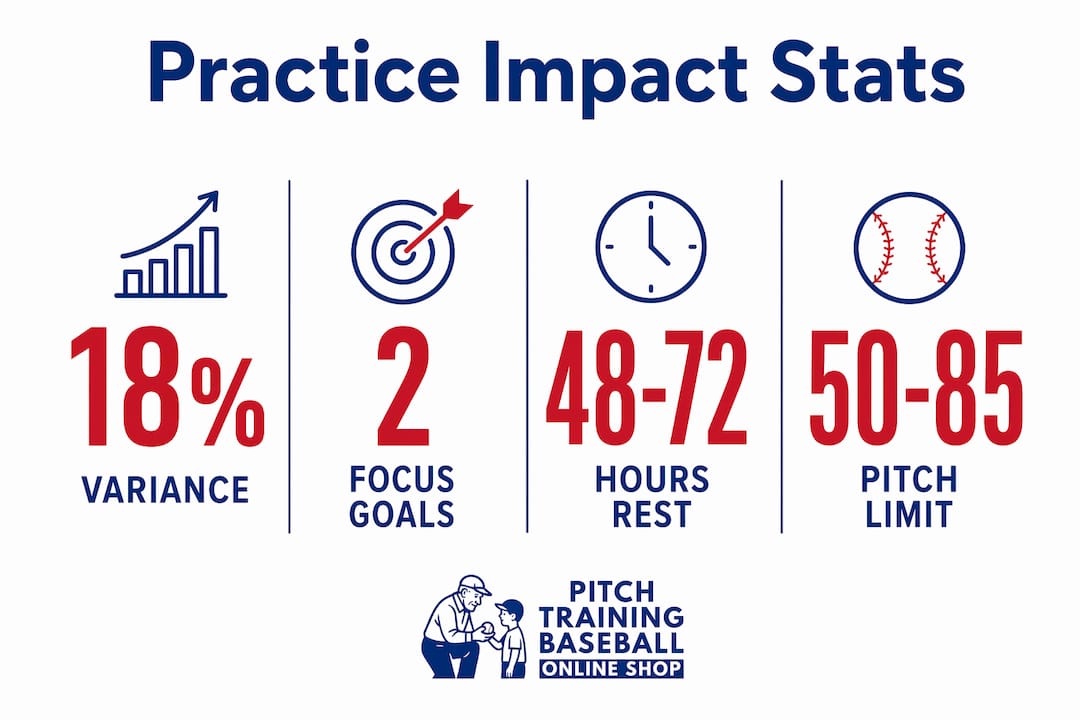
Yes, and the research is clear on this. Deliberate practice accounts for about 18% of the variance in sports performance overall. That number tells you two things: practice matters, and it is not the only thing that matters. How you practice shapes the return you get from every hour on the mound.
Varied, challenging conditions produce stronger long-term skill retention than blocked repetition of the same motion. When a young pitcher only throws fastballs to the same spot in the same sequence, the brain stops adapting. Introduce a different target location, a new drill, or a change in the practice environment, and the neural demand goes up. That demand is what drives learning.
Overemphasizing volume creates a real ceiling. Players who rack up high pitch counts without focused mechanics work often plateau early, because they have drilled a flawed pattern deeply into muscle memory.
Pro Tip: Structure each bullpen session around one or two specific mechanical goals. Write them down before the session starts. If a pitcher can’t name what they’re working on, the session is already unfocused.
For coaches looking to build better session structures, youth baseball coaching methods offer practical frameworks for organizing purposeful reps by age and skill level.
What are the safety guidelines every youth pitcher needs to follow?
Little League Baseball sets pitch count maximums at 50 pitches per outing for ages 7–8, 75 for ages 9–10, and 85 for ages 11–12. These limits exist because young arms are still developing bone density and tendon strength. Exceeding them, even occasionally, raises injury risk significantly.
Mechanics over velocity is not just a coaching philosophy. A pitcher throwing 50 mph with correct mechanics puts less stress on the elbow and shoulder than one throwing 60 mph with a flawed delivery. Speed is a byproduct of good mechanics, not a goal to chase separately.
| Age Group | Max Pitches Per Outing | Primary Focus |
|---|---|---|
| 7–8 | 50 pitches | Basic mechanics, balance |
| 9–10 | 75 pitches | Arm path, stride direction |
| 11–12 | 85 pitches | Command, repeatable delivery |
Drills should be introduced progressively. Start with the balance point hold and stride direction work before any live pitching. Marking the landing foot location on the mound is a simple, often overlooked technique that enforces consistent stride direction without requiring constant verbal correction.
How do training tools and feedback speed up skill development?
Pitching mechanics happen in under a second. Hip rotation, arm path, elbow height, and stride direction all occur simultaneously, and a coach watching live sees only the outcome, not the cause. Slow-motion video from a side and front angle reveals every element of the delivery sequence clearly. A single clip showing elbow drop at release is more effective than multiple verbal coaching sessions on the same flaw.
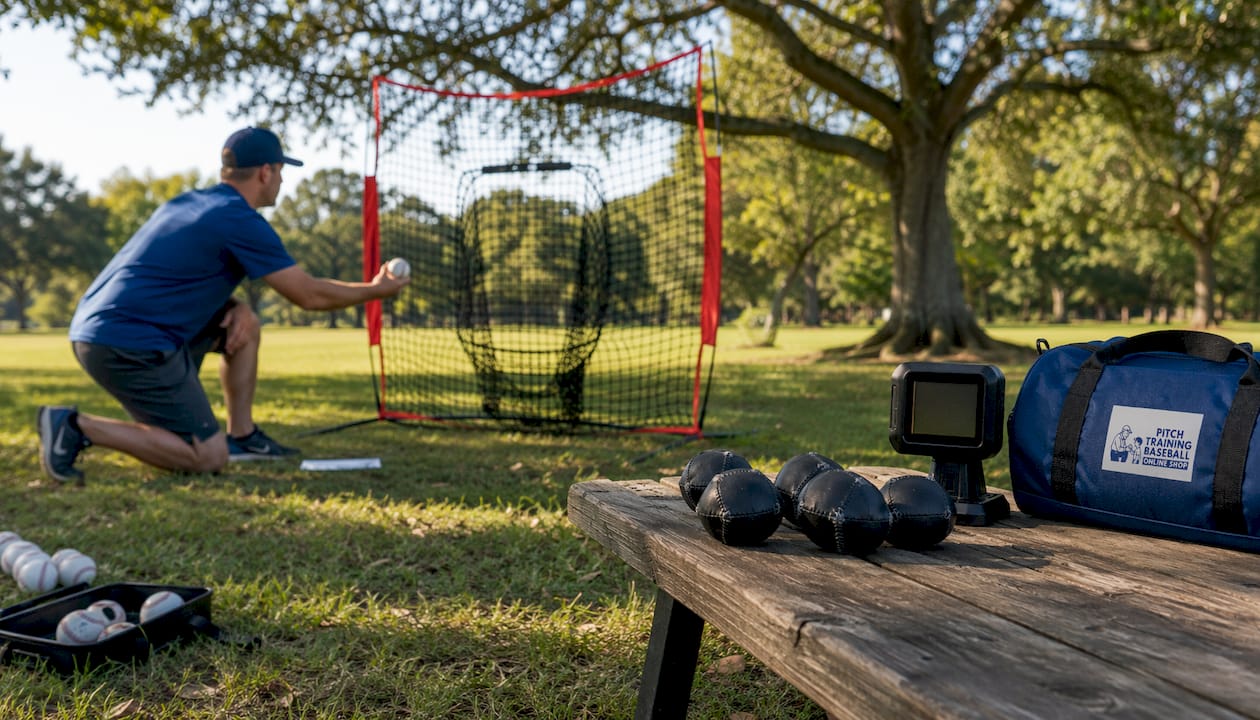
Training aids accelerate the feedback loop further. Pitching targets give players immediate visual confirmation of location, which builds command faster than throwing to a catcher alone. Training nets allow high-rep mechanics work without the fatigue of full-distance throwing.
Key tools that support skill acquisition through practice:
- Pitching targets with strike zones: Immediate accuracy feedback on every rep
- Training nets: High-volume arm path and extension work at reduced intensity
- Weighted and training-specific balls: Build arm strength and reinforce grip mechanics safely
- Video analysis (side and front angle): Catches mechanical errors invisible to live observation
Pitchtrainingbaseball.com offers pitching targets, nets, and training balls designed specifically for youth pitchers, trusted by coaches and parents who want safe, effective practice tools. The role of training balls in building mechanics and arm health is worth understanding before choosing equipment.
Feedback accelerates learning. Players who watch their own delivery alongside a mechanical model make corrections in the next bullpen session that would otherwise take multiple seasons of live coaching to produce.
How often should youth pitchers practice, and for how long?
Focused sessions multiple times per week with adequate rest days between throwing sessions are recommended for most youth pitchers. Session length matters less than session quality. A 30-minute bullpen with clear mechanical goals outperforms a 90-minute session where the pitcher is mentally checked out after the first 20 minutes.
Flat-ground work and towel drills can fill non-throwing days without adding arm stress. These drills develop arm path and extension, two of the most important mechanical habits, without the load of live pitching. For managing practice time effectively, the key is matching session intensity to the player’s recovery, not to a fixed weekly schedule.
Younger players, ages 7–10, generally benefit from shorter, more frequent sessions focused on one mechanic at a time. Older players in the 11–12 range can handle slightly longer sessions with more complex drill sequences, provided pitch counts stay within age-appropriate limits.
What injuries come from too much pitching, and how do you prevent them?
Overuse injuries in youth pitchers cluster around the elbow and shoulder. Little League elbow, a stress injury to the medial epicondyle growth plate, is the most common. Shoulder impingement and rotator cuff irritation follow. All three are directly linked to throwing volume beyond what a developing arm can handle.
Prevention starts with pitch count compliance, but it does not end there. Mechanics flaws, particularly early arm action and excessive elbow drop, increase stress on the joint even within safe pitch counts. A player throwing 50 pitches with poor arm path may be accumulating more joint stress than one throwing 75 with clean mechanics.
Rest is not optional. Young arms need 48–72 hours between pitching sessions to recover. Coaches and parents who push through fatigue signals, arm soreness, velocity drops, or loss of command, are trading short-term performance for long-term arm health. Athlete program stability and consistent rest protocols are among the most underrated factors in keeping young pitchers healthy across a full season.
How do you track and measure progress during practice?
Tracking progress gives coaches and players a clear picture of what is actually improving, not just what feels better. The most useful metrics for youth pitchers are strike percentage, consistency of landing foot placement, and arm path repeatability on video review.
Keep a simple session log: date, pitch count, mechanical focus, and one observation about what improved or what needs work. Over four to six weeks, patterns emerge. A pitcher who consistently misses arm side on flat ground is showing a stride direction problem, not a grip problem. That distinction changes the drill prescription entirely.
Video comparison across sessions is the most reliable progress tool available. Comparing a clip from week one to week six shows mechanical change that verbal feedback alone cannot confirm. For coaches who want to build a feedback-rich training environment, consistent video review paired with a session log creates a development record that benefits the player for years.
Pitchtrainingbaseball has the tools to make every rep count
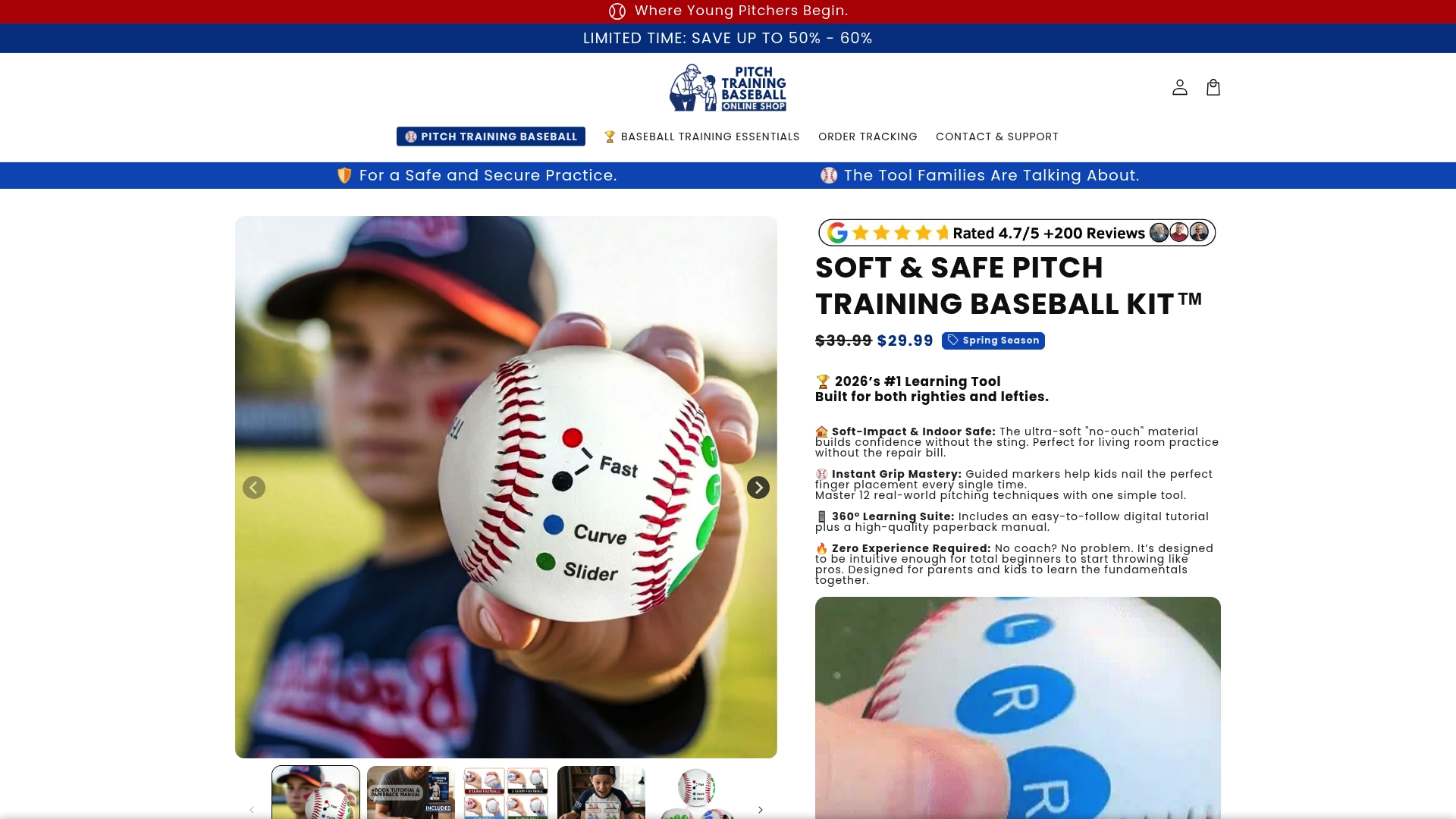
Purposeful practice requires the right equipment. Pitchtrainingbaseball carries pitching targets, training nets, and specialized balls built for youth pitchers at every skill level. The Pitching Target Net with Strike 9-Zone gives players immediate zone feedback on every pitch. The Pitch Training Baseball is designed to reinforce proper grip and arm mechanics safely. Every product ships with the goal of making quality practice accessible for coaches, parents, and players who take development seriously.
Key Takeaways
Purposeful, mechanics-focused practice with age-appropriate pitch counts and consistent feedback is the most effective path to safe, long-term pitching skill development in youth baseball.
| Point | Details |
|---|---|
| Quality beats quantity | Deliberate practice accounts for about 18% of variance in sports performance; how you practice shapes the return. |
| Mechanics before velocity | A pitcher throwing 50 mph with correct mechanics puts less arm stress than one throwing 60 mph with flawed form. |
| Follow pitch count limits | Little League sets maximums at 50 pitches for ages 7–8, 75 for ages 9–10, and 85 for ages 11–12 per outing. |
| Use video and tools | Slow-motion video reveals mechanical flaws invisible to live coaching; training targets build command faster. |
| Track sessions consistently | A simple log of pitch count, mechanical focus, and video comparison reveals real progress over four to six weeks. |
What coaches and parents consistently get wrong about pitching practice
The most common mistake is treating arm soreness as a sign of productive work. It is not. Soreness after a pitching session usually signals that volume exceeded what the arm could handle, or that mechanics broke down under fatigue. Neither outcome builds skill. Both build injury risk.
There is also a persistent belief that velocity is the primary measure of a young pitcher’s development. Parents watch radar guns. Coaches celebrate hard throwers. But command development at ages 8–12 is a far better predictor of long-term pitching success than early velocity. A pitcher who can locate the ball at 52 mph is more valuable to a team, and more likely to still be pitching at 16, than one who throws 65 mph and walks three batters per inning.
The mental side of practice gets underestimated too. Focus during a 25-pitch bullpen session matters more than the number of pitches thrown. Pitchers who treat each rep as intentional, visualizing the target, feeling the mechanics, processing the outcome, build neural pathways faster than those who just throw. That mental engagement is what separates practice that produces growth from practice that just fills time.
Recommended
- Game-like pitching practice: Raise youth baseball skills fast – Pitch Training Baseball
- Managing Practice Time for Pitchers: 2026 Youth Guide – Pitch Training Baseball
- Recommended Daily Pitching Habits for Youth Players – Pitch Training Baseball
- Defining Youth Pitching Mechanics: A Coach’s Guide – Pitch Training Baseball